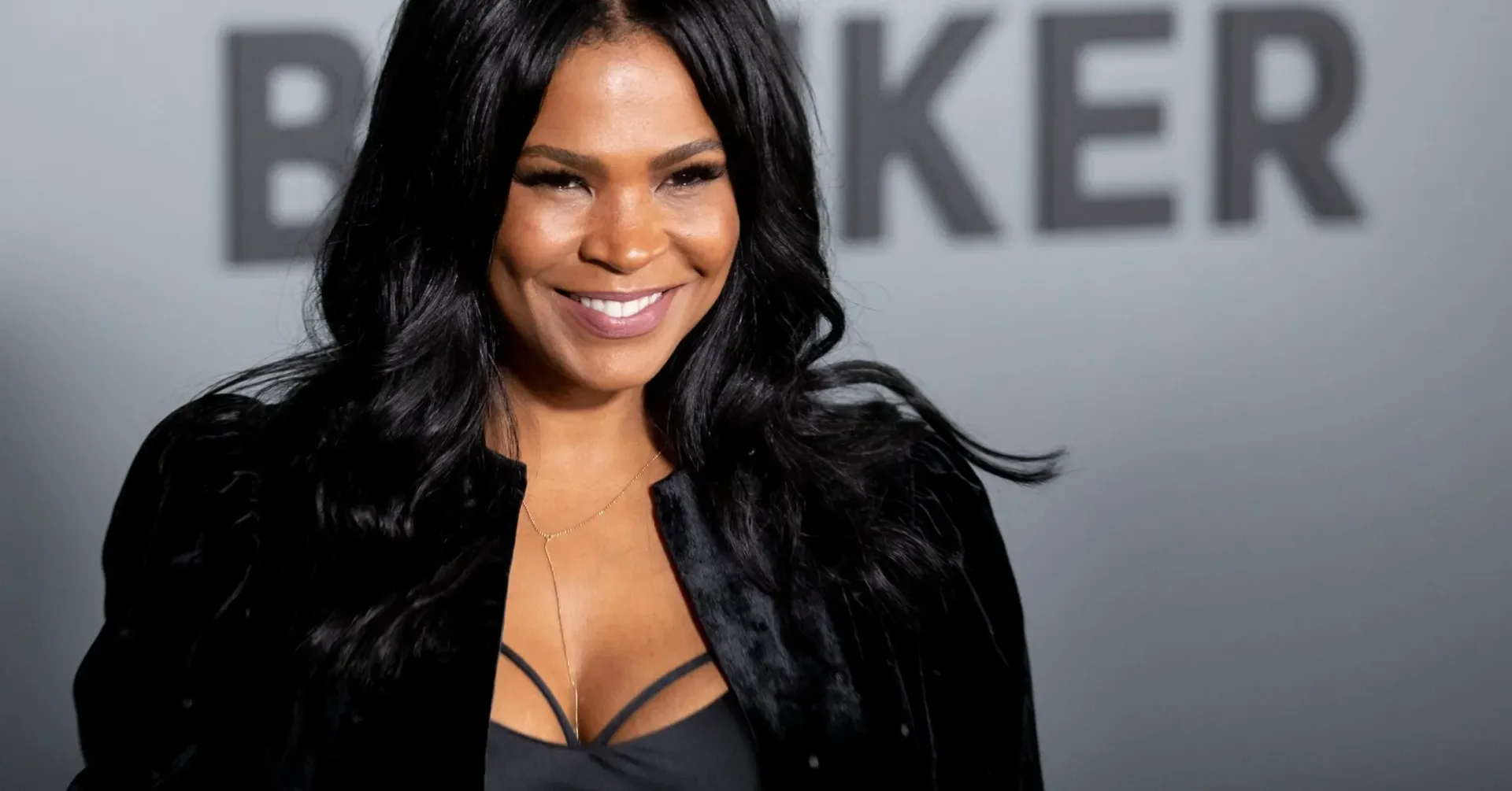
Nia Long now has a permanent place on Hollywood Boulevard. The actor received the 2,857th star on the Hollywood Walk of Fame on Wednesday, an honor recognizing a screen career that has moved across multiple eras of film and television and stayed especially vivid in the memories of audiences who grew up with her work.
The ceremony was not framed solely as a tally of credits. It was also a celebration of what those roles have meant to viewers, particularly within Black popular culture. Snoop Dogg, one of the ceremony’s guest speakers, made that point with an affectionate and funny tribute. He arrived wearing a jacket decorated with Long’s image, then delivered the line that most neatly summarized the occasion’s mood:
“Nia wasn’t just in the culture; Nia is the culture.”
He followed with a joke about the generations of men who saw Long on screen and imagined they had a chance with her. The laugh landed because it pointed to something larger than celebrity admiration: Long’s roles have remained part of everyday cultural recall long after their original releases. They are revisited not simply as old titles, but as touchstones.
A Hollywood Boulevard memory comes full circle
The location carries personal weight for Long. Before she had a career in movies, her mother drove a city bus through Hollywood. Long has recalled walking down the boulevard as a child, looking at the names embedded in the sidewalk and asking about the people represented there.
That childhood curiosity makes the new star more than a professional milestone. Long has described the recognition as an honor for her mother as well, since she was the one who brought the family to Los Angeles. The image is a potent one: a child seeing famous names on a street, years before knowing she would become one of them.
A Walk of Fame star is a public monument, but it can also work as a compressed symbol of a career. In Long’s case, the ceremony connected the early experience of looking down at Hollywood’s icons with a body of work that has made her recognizable to several different generations.
The films and television roles behind the recognition
Long’s filmography includes titles that have endured as central reference points for audiences: Boyz n the Hood, Friday, Love Jones and The Best Man. Her work on The Fresh Prince of Bel-Air also introduced her to another broad television audience.
The significance of that range is worth separating from a simple list of projects. Film and television careers can be long without being continuously present in public memory. Long’s distinction is that several of her roles have remained actively revisited. Her characters and performances are still discussed because the movies themselves continue to occupy space in conversations about romance, comedy, friendship, Black cinema and 1990s screen culture.
That is the difference between a credit and a cultural touchstone. A credit identifies a job on a résumé. A touchstone is a work people keep returning to when they talk about a period, a feeling or a shared experience. Snoop Dogg’s tribute leaned into the latter idea. He was not only recognizing the number of films and shows Long has made; he was recognizing their emotional afterlife with viewers.
Long most recently portrayed Katherine Jackson in Michael, which became a major box-office success earlier this year. The role places a new performance alongside the work that made her a familiar face decades earlier, showing that the Walk of Fame recognition arrives during an active stretch rather than as a closing chapter.
Snoop Dogg returns the support
Snoop’s presence had a clear personal history behind it. Long attended his own Walk of Fame ceremony in 2018, when Dr. Dre, Quincy Jones and Jimmy Kimmel were among those honoring the Long Beach rapper. Eight years later, Snoop took part in Long’s celebration as an official guest speaker.
That return of support gave the event a sense of community rather than ceremony-by-formula. Walk of Fame events often use guest speakers to contextualize a honoree’s importance through colleagues and peers. Here, the connection did more than establish familiarity. It illustrated the overlapping relationships among performers whose work has helped define pop culture across music, film and television.
Producer Graham King, associated with Michael, also spoke at the ceremony. Angelique Jackson served as emcee. Together with Long’s family, friends and admirers, the gathering placed her accomplishment in both a professional and personal setting.
Why the honor resonates beyond a plaque in the pavement
The Hollywood Walk of Fame is physically simple: a named star set into a busy public sidewalk. Its cultural function is much bigger. It turns an entertainment legacy into a visible destination, allowing visitors to encounter an honoree’s name outside the usual contexts of a movie screen, television schedule or streaming catalog.
For Long, the symbol has an especially direct link to place. Hollywood Boulevard was part of her childhood landscape because of her mother’s bus route. The eventual star joins a street Long already associated with wonder and questions about who gets remembered.
Recognition like this can also prompt audiences to revisit the work attached to it. For viewers who know Long through Love Jones, it may renew attention to her collaborations with Larenz Tate. For people whose starting point was Friday or The Fresh Prince of Bel-Air, it offers a reminder of the breadth of a career often discussed through its most quoted or beloved moments. And for newer viewers encountering her through Michael, the star is an invitation to look backward.
That kind of cross-generational reappraisal matters. A performer can be introduced to new audiences by a current project while longtime fans bring the context of older roles. Long’s ceremony sat at that intersection: a public acknowledgement of longevity, paired with evidence that more work is still ahead.
There is a useful parallel in the way public figures can become associated with work that feels personal to audiences, whether through an enduring screen performance or a carefully shaped public-facing collaboration. Celebrity projects can gain meaning when they connect with a recognizable personal story; Long’s Walk of Fame moment draws power from the similarly personal story of a girl looking at the boulevard’s stars with her mother.
More projects are already in motion
Long has recently wrapped work on Netflix’s Don’t Ever Wonder, a project that reunites her with Love Jones co-star Larenz Tate. The film draws inspiration from Maxwell’s Urban Hang Suite, linking Long to a creative work that already carries a strong place in R&B culture.
She has also said that Ice Cube is preparing another script that could bring the pair back together following their Are We There Yet? films. The wording remains important: a possible reunion is not the same as a confirmed finished production or release. Still, it suggests another potential connection between Long’s present-day work and partnerships viewers already associate with her career.
Those prospective projects reinforce why the ceremony feels timely. Long’s star honors more than three decades in entertainment, but the supplied details do not position her as someone looking only to the past. There is a major recent film role, a completed Netflix project and the possibility of another familiar-screen-partner reunion.
“Nia is the culture” is the point
Snoop Dogg’s phrase was short, but it described the central case for the honor. Long’s legacy is not limited to appearing in acclaimed or fondly remembered productions. Her presence in them has become part of the way audiences remember those productions at all.
That does not reduce the achievement to nostalgia. Nostalgia is often about returning to what a person once loved. Long’s body of work has also retained relevance because it remains discoverable by viewers who were not there for its first wave of popularity. The emotional connection may begin with a favorite scene, a romantic drama, a sitcom appearance or a comedy, but it extends through the consistency of her screen career.
On Wednesday, Hollywood Boulevard added Nia Long’s name to its concrete. For the actor, it recalls the child who used to examine the stars while walking with her mother. For audiences, it offers a public marker for performances that have long had a place in their own cultural map.