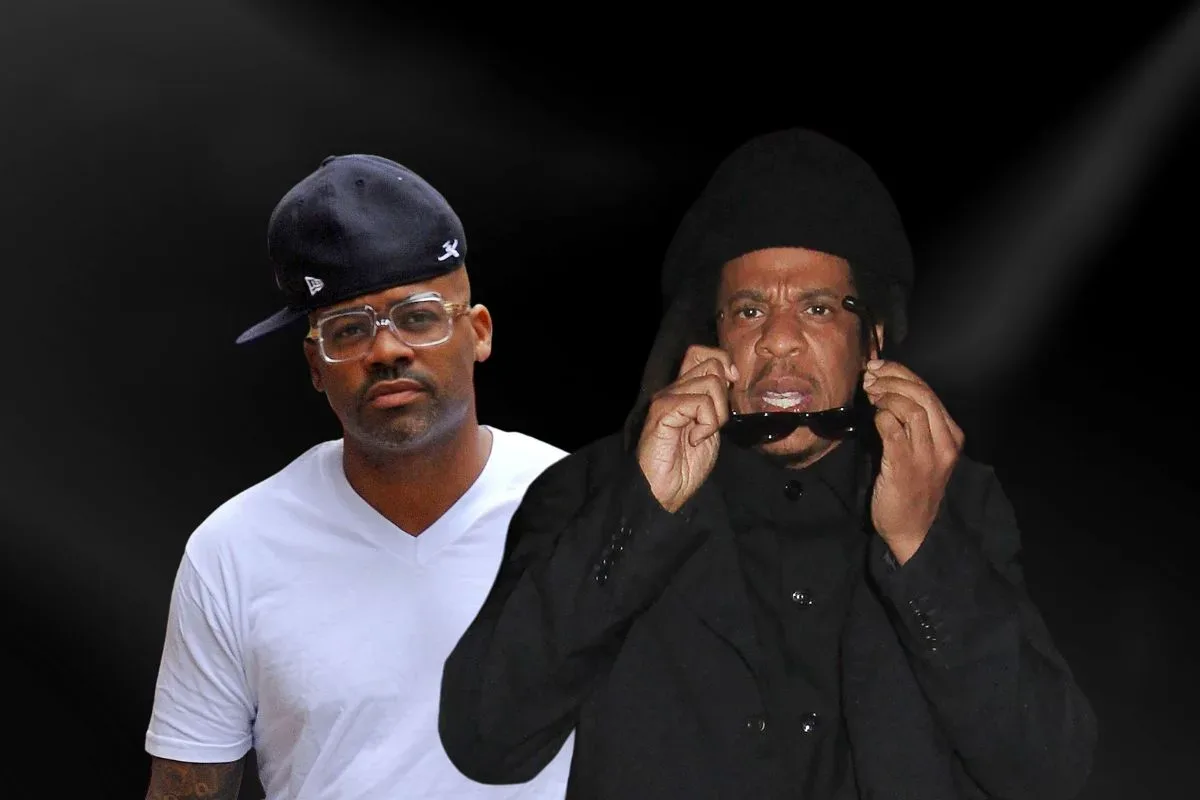
Jay-Z’s Reasonable Doubt is often framed as the opening chapter of a major commercial empire. A new book instead puts close attention on the mechanics underneath that origin story: how Roc-A-Fella Records got the 1996 debut album into shops, what the founders gave up to make distribution happen, and why control of the record’s master recordings later became a high-stakes point of dispute.
The Blueprint: Inside the Business of Roc-A-Fella Records, by music journalist Sowmya Krishnamurthy, is due December 1 from Simon & Schuster. Its subject is Roc-A-Fella’s early life as an independent label, formed by Jay-Z with Damon Dash and Kareem “Biggs” Burke after major labels passed on Jay-Z. The book’s account of Reasonable Doubt offers a useful corrective to the simple idea that a respected debut and a famous founder must have immediately produced huge returns.
Krishnamurthy has said the album earned less for the three founders than many listeners may presume. Her explanation rests on two connected realities: its early sales and the conditions attached to getting the record distributed. That distinction matters because an album can be culturally important, establish an artist’s public identity and create the foundation for a label without delivering the kind of direct financial outcome that later success can make people assume was inevitable.
Distribution was the immediate problem
Reasonable Doubt reached stores through a distribution agreement with Priority Records, not a conventional major-label artist deal. In plain terms, distribution is the system that moves a finished release from the label into retail channels. Making a record is only one stage of the process. For an independent label, getting physical product delivered to stores and made available to buyers can be an equally fundamental hurdle.
That is the business problem Roc-A-Fella faced after choosing to operate independently. The founders had music and an artist, but they still needed a route into the marketplace. The Priority arrangement provided that route. The book’s premise is not that the decision lacked value; without distribution, the album’s ability to find an audience would have been severely constrained. Rather, it examines the trade-off involved when a new label accepts terms in order to secure that access.
That is also why the story is bigger than a familiar debate over whether an artist should sign or remain independent. “Independent” does not mean every part of the business is self-contained. A label may retain meaningful autonomy while relying on outside companies to perform essential functions. The leverage in those conversations can depend on how established the artist is, how urgently a release needs to reach stores and how many viable alternatives are on the table.
A milestone with two different measures of success
Krishnamurthy describes Reasonable Doubt as both a musical and business milestone. Those descriptions are compatible, even if they do not mean the album made everyone involved wealthy at the time.
Musically, the record introduced Jay-Z’s debut-album statement. Commercially and strategically, it demonstrated that Roc-A-Fella could put out a project, get it distributed and build a platform around it. The book also follows how the Jonathan Manion cover and the album’s music videos supported Jay-Z’s image as a successful hustler before the label had a major-label partner.
Related coverage includes Jay-Z’s First Roc-A-Fella Deal Gets a Closer Look in New Book.
That presentation was part of the label’s business story, not merely packaging around the music. A cover photograph and a video campaign help define how an artist is recognized, particularly when a new label is asking audiences to understand both an artist and a brand at once. In this case, the visual identity reinforced the persona central to Jay-Z’s early public image while Roc-A-Fella was still building its position.
The practical lesson is that “success” should be separated into categories. There is immediate revenue. There is visibility. There is leverage for the next negotiation. There is long-term value in a catalog. An early deal can look modest in one category while being pivotal in another. The book appears designed to hold those possibilities together rather than flatten the era into a hindsight story in which every move was already guaranteed to win.
The Def Jam agreement changed the company’s structure
Roc-A-Fella’s subsequent relationship with Def Jam offers the book a contrast with the earlier Priority distribution arrangement. Def Jam took a 50% stake in Roc-A-Fella, becoming a partner in the company rather than merely signing Jay-Z as an artist.
A stake is an ownership interest. The difference is significant. An artist contract generally concerns the performer and the releases covered by a deal; a company partnership involves an interest in the label itself. In Roc-A-Fella’s case, the later arrangement represented a changed level of recognition and bargaining position for the operation Jay-Z, Dash and Burke had built.
It also illustrates why the early Reasonable Doubt deal deserves examination on its own terms. The Def Jam partnership came after Roc-A-Fella had already demonstrated an ability to operate and establish an identity. It should not be treated as proof that the founders had enjoyed the same choices or leverage when they were initially trying to place Jay-Z’s debut in stores.
Entertainment deals are often remembered through their final outcomes: the famous album, the larger partnership, the brand that became widely known. But the sequence matters. The earlier distribution deal addressed an immediate access problem. The later Def Jam partnership involved ownership in an already-functioning label. Those are different business arrangements solving different problems at different stages.
Questions of ownership and creative labor remain central across entertainment technology as well. In another corner of the industry, discussion of AI-assisted post-production and performance similarly shows why the technical process behind a finished work can carry consequences beyond what audiences see on screen or hear in a recording.
Masters, shares and copyrights are not interchangeable
The book also addresses the later conflict over Reasonable Doubt’s master recordings. This is where discussions of a label’s ownership can become confusing, because several forms of rights can be involved at once.
A master recording is the recorded audio asset from which releases are made. Copyright in an album concerns the legal rights connected to the work. Shares in a company are ownership interests in that company. They may be economically valuable, but they are not automatically the same thing as a right to sell a particular work owned by the company.
That distinction was at the heart of a later lawsuit in which Roc-A-Fella accused Dash of attempting to auction an NFT tied to Reasonable Doubt. An NFT, or non-fungible token, is a blockchain-based token that can be marketed as connected to a digital item or asset. The existence or sale of a token does not by itself transfer copyright. Rights depend on the legal terms and on who has authority to convey them.
The settlement distinguished between Dash’s ability to sell his Roc-A-Fella shares and any ability to sell the label’s copyright in the album. That is a narrow but consequential boundary: a shareholder may dispose of a personal ownership interest, while the company’s intellectual property remains a separate asset governed by the company’s rights and authority.
For fans, this may read like paperwork far removed from a classic album. Yet the paperwork directly shapes who can authorize uses of a work, who can attempt to monetize its legacy and what exactly a buyer is obtaining when a high-profile asset is put on the market. The dispute also underlines why an album’s status as a landmark does not eliminate the need for precise definitions of ownership.
Why the early Roc-A-Fella story still has weight
The value of revisiting Roc-A-Fella’s first years is not simply in confirming that Reasonable Doubt matters. Its reputation is already well established. The more revealing question is how the record functioned as a product, a visual statement, a distribution challenge and eventually a valuable piece of intellectual property.
Krishnamurthy’s account places Jay-Z, Dash and Burke’s decisions within the conditions they actually faced: major labels had passed, the founders went out on their own and they needed a way to reach stores. From there, the story moves through a later 50% Def Jam stake, a separation between founders and a dispute that required a careful distinction between company shares and album copyright.
That timeline makes the Roc-A-Fella story less like a straight line from debut to dominance and more like what it was: an independent business navigating access, negotiation, presentation and control. For readers interested in music-industry structure as much as in Jay-Z’s catalog, those details are the point. They explain how a record can become foundational long before the full value of that foundation is visible.
Krishnamurthy is also scheduled to discuss and sign the book on December 6 at Book Passage’s Ferry Building location in San Francisco.