Netflix marked its 10th year in Korea with a Seoul fan festival that put major hits, upcoming series and the scale of Korean production in the same frame. The Oct. 24-25 event, called Netflix Janchi, took place at Sangam Oil Tank Culture Park and drew thousands of attendees for themed booths, games, merchandise and live music.
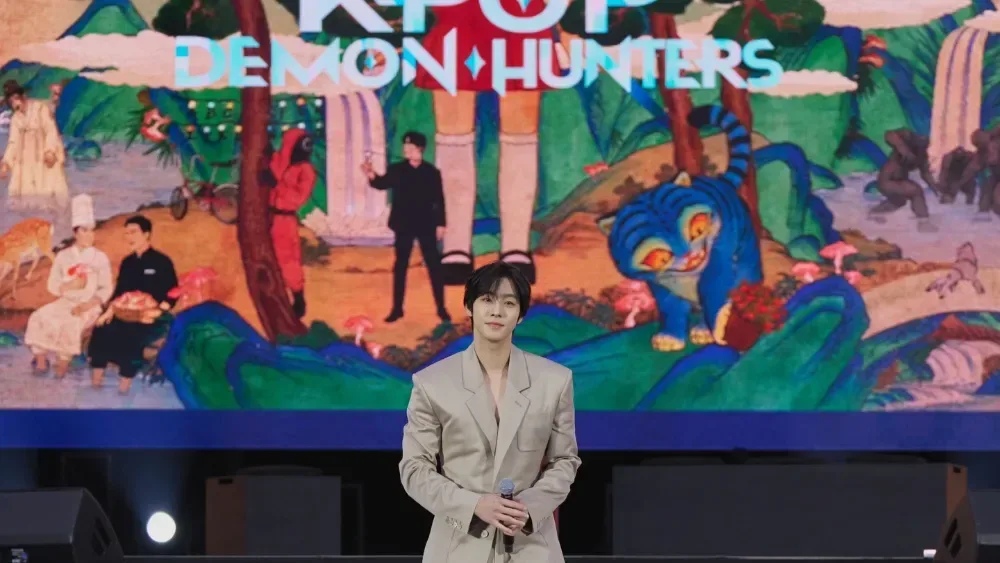
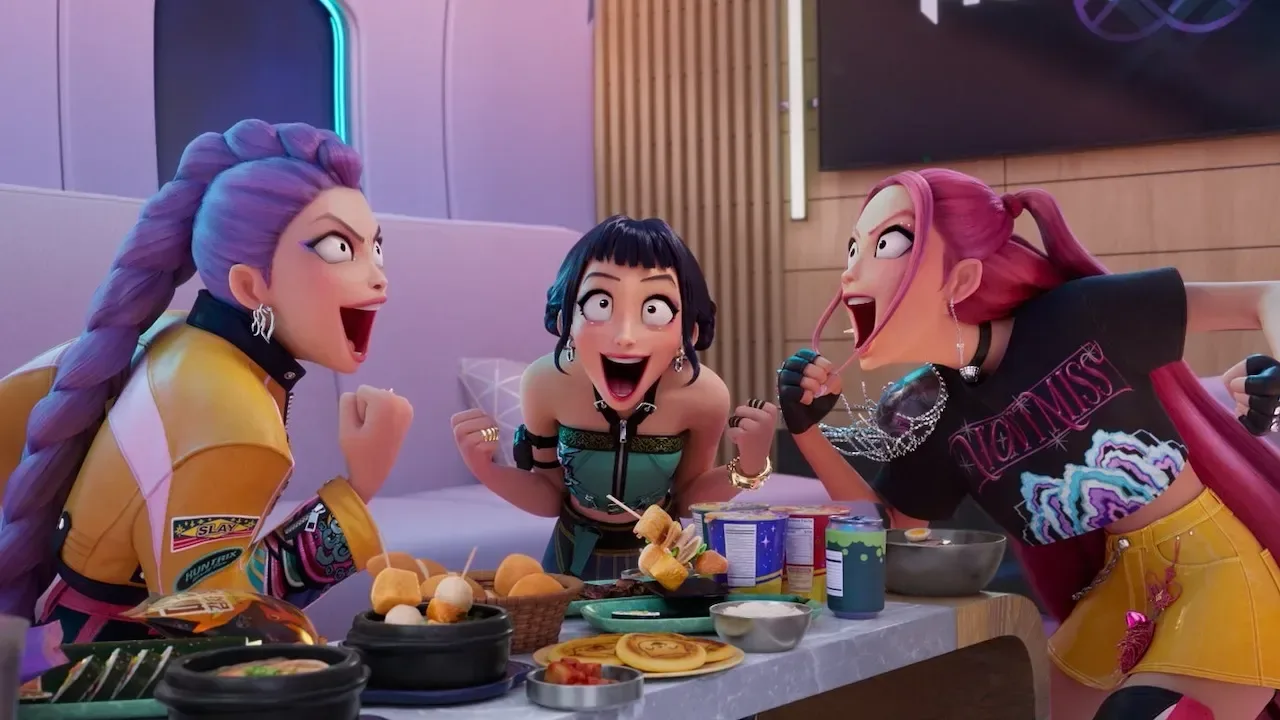
Its onstage guest list reflected the breadth of the company’s Korean catalogue. Lee Jung-jae, Lee Byung-hun and Park Hae-soo represented Squid Game; Ahn Hyo-seop appeared for KPop Demon Hunters; and other participants included D.P. actors Koo Kyo-hwan and Jung Hae-in, Hellbound actor Kim Hyun-joo, Mask Girl actor Yum Hye-ran and The Devil’s Plan participant Lee Se-dol.
The occasion was a fan-facing celebration, but it also served as a clear statement of what Korean programming now means to Netflix: not merely a regional library, but an ongoing production engine with global viewing, extensive localization and a growing group of creators gaining their first major credits.
Ted Sarandos, Netflix’s co-CEO, described Korean storytelling as central to the company’s global ambitions. The company’s own figures make the case for that claim: more than four in five subscribers worldwide have watched at least one Korean title, while Korean content accumulated more than 12 billion viewing hours on the service between April 2025 and March 2026. That placed it behind only U.S. productions in viewing hours.
What is arriving next
The nearest dated releases presented at the event are Possible Love, due Nov. 6, and Tantara, due Dec. 11. Possible Love is directed by Lee Chang-dong and features Jeon Do-yeon, Sul Kyung-gu, Cho Yeo-jeong and Jo In-sung. Tantara stars Song Hye-kyo, Gong Yoo and Kim Seol-hyun.
A further group of titles was discussed without release dates. That slate includes Grand Galaxy Hotel, starring Lee Do-hyun and Shin Si-a; She, Wolf, formerly known under the working title Beauty in the Beast, with Kim Min-ju, Lomon and Moon Sang-min; All of Us Are Dead Season 2, featuring Park Ji-hu, Yoon Chan-young, Cho Yi-hyun and Lomon; and Solo Leveling, with Byeon Woo-seok.
For audiences, the important caveat is simple: an undated project is a project in development or production without a confirmed launch window, not a promise of an imminent release. The names attached to these shows make them high-profile, but the only supplied dates are Nov. 6 for Possible Love and Dec. 11 for Tantara.
The upcoming slate also underlines how wide the Korean offering has become. It makes room for a filmmaker-led feature such as Possible Love, a new series headed by established Korean stars, a returning zombie drama in All of Us Are Dead, and an adaptation titled Solo Leveling. That range matters because global interest in Korean titles has not been built around a single genre or one breakout phenomenon, even if Squid Game remains the largest individual benchmark.
Related coverage includes Netflix Marks 10 Years in Korea With Seoul Fan Festival and New Series Preview.
From local launch to a global Top 10 force
Netflix launched in Korea on Jan. 6, 2016. Bong Joon Ho’s Okja was its first international film. The first Korean original was the March 2018 stand-up special Yoo Byung Jae: Too Much Information, followed by Kingdom, identified as its first Korean series, in January 2019.
In July 2021, Kingdom: Ashin of the North became the first Korean show to enter the Global Top 10, appearing in 58 countries. The Global Top 10 is Netflix’s company chart for titles with the most viewing during its measured periods; it should not be confused with an all-time critical ranking. Since the chart began in June 2021, Netflix says more than 200 Korean titles have appeared on it.
Squid Game is still the standout in that record. Season 1 spent 32 consecutive weeks on the Global Top 10, including nine weeks at No. 1. Its three seasons are described as Netflix’s three most-watched non-English series ever. Teach You a Lesson holds No. 10 on that non-English list, making it the company’s next-largest Korean show after Squid Game.
Those numbers clarify why a festival can bring together an enormous survival drama, a music-linked title and reality programming under one banner. The strategy is not solely about finding another Squid Game. It is about sustaining a catalogue in which different Korean formats can travel, be discovered and, in some cases, become repeatable international formats.
Physical: 100 illustrates the latter point. It became the first unscripted, non-English show to lead the Global Top 10. Local editions have followed in Italy and Mexico, with U.S., French and Swedish versions also planned. In television terms, an unscripted format is a show structure that can be reproduced with new contestants and local production teams, rather than a scripted series being remade scene for scene. The reported international versions suggest that the appeal lies not only in the original season’s personalities but also in the underlying competition concept.
Why localization is more than subtitles
Global viewing does not happen solely because a series becomes popular in its home market. Netflix says it now works with 122 localization partners globally, 119 of them dubbing studios. Localization is the process of making a title accessible across languages and markets. It can include subtitles and dubbed voice tracks; in this case, the large number of dubbing partners points to the importance of viewers being able to watch Korean stories in their preferred language.
That infrastructure does not erase the original language or local setting. Instead, it reduces an access barrier for audiences who may otherwise skip a foreign-language title. It is a practical explanation for how a Korean drama can play in dozens of countries without being rebuilt for each one.
The festival also highlighted a technological side of the production change. Colorist Park Jin-young, whose credits include Possible Love and Good News, said Netflix’s arrival coincided with HDR becoming commercially viable. HDR, or high dynamic range, is a display and mastering technology that expands the range between dark and bright parts of an image and can deliver more detail and color variation on compatible screens.
Park compared the shift to gaining a much larger palette of paints after working with a limited selection for years. It is a useful creative description rather than a guarantee that every viewer sees the same result: HDR depends on a compatible display and the way that display is set up. Still, the comment points to how a streaming platform’s technical specifications can influence work behind the camera and in post-production, not just where a completed show is watched.
A production ecosystem, not just a catalogue
Netflix says it partnered with more than 80 Korean production companies between 2016 and 2025. Those productions employed more than 20,000 actors and crew members, plus 70,000 extras and day workers. Filming took place in over 100 cities and towns, more than half outside the Seoul Capital Area, including Busan, Jeonju and Jeju.
These figures matter because screen production has a long supply chain. A series or film requires performers and directors, but also lighting teams, locations, transport, food services, equipment, visual post-production and many other suppliers. Netflix said When Life Gives You Tangerines alone involved nearly 4,000 suppliers and a cast and crew of 600, contributing more than KRW90 billion, or $60.4 million, to the Korean economy.
The company also said its skills and training programs reached more than 6,500 people in Korea from 2021 through 2025. Two careers highlighted during the anniversary demonstrate what development within a production ecosystem can look like. Park Yoon-seo, previously an assistant director on Kingdom Season 2, made his directing debut this year with YA horror series If Wishes Could Kill. Baek Seung-min, once a second lighting assistant on Kingdom, now leads lighting on All of Us Are Dead Season 2.
Park said he recommended casting newcomers for If Wishes Could Kill so the series would feel fresh, and that the proposal was approved despite the absence of famous names. That is notable as a creative choice, not evidence that stars have ceased to matter. The event itself was full of established actors. But it shows that a platform’s production strategy can include pathways for unfamiliar faces and first-time filmmakers alongside reliable marquee names.
There is a wider entertainment-industry context here, too: popular screen work depends on the creative labor and conditions behind it, a subject also raised in recent coverage of SAG-AFTRA’s leadership structure. Netflix’s Korean numbers give a sense of the large workforce involved when a regional production slate grows into a global one.
Tourism, food and language: the off-screen effects
Netflix also connected Korean viewing with travel, dining and language learning, though these are correlations and viewer-reported interest rather than proof that a show alone caused every change. The company said 72% of subscribers who watch Korean content have said they want to visit Korea.
Jeju received about 2.24 million overseas visitors in 2025, its highest total in nine years, during the period When Life Gives You Tangerines premiered. Visits to the show’s Gimnyeong Beach location increased roughly 96%. Meanwhile, Chef Choi Hyun-seok’s restaurant Choi recorded a 300% sales increase after Culinary Class Wars Season 1, and bookings at restaurants operated by the second season’s contestants rose 303%.
Language data tells a related story. New Korean learners on Duolingo in the United States rose 37% in the week Squid Game Season 3 arrived. Applications for Korea’s TOPIK exam surpassed 550,000 in September 2025, three months after KPop Demon Hunters, exceeding the total for all of 2024. TOPIK is the Test of Proficiency in Korean, an exam used to assess Korean-language ability.
None of those statistics means every viewer becomes a traveler, diner or language learner. They do, however, show how a successful entertainment title can direct attention outward: toward an actual filming location, an unfamiliar cuisine, a performer’s work outside the show, or the language in which the story was first made.
Netflix Janchi therefore looked backward and forward at once. It celebrated a decade that began with a Korean launch in 2016 and a first Korean original in 2018, while presenting a pipeline that includes veterans, new talent, returning franchises and undated projects still awaiting their release windows. For viewers, the immediate watchlist starts with Possible Love on Nov. 6 and Tantara on Dec. 11. The broader message is that Korea remains a continuing center of production rather than a completed chapter in Netflix’s global expansion.