Nelly has shared a characteristically vivid account of a Taylor Swift performance request: a Houston trip to perform “Hot In Herre” that, he says, involved a private jet, a presidential suite and a $50,000 payment he requested in a McDonald’s bag.
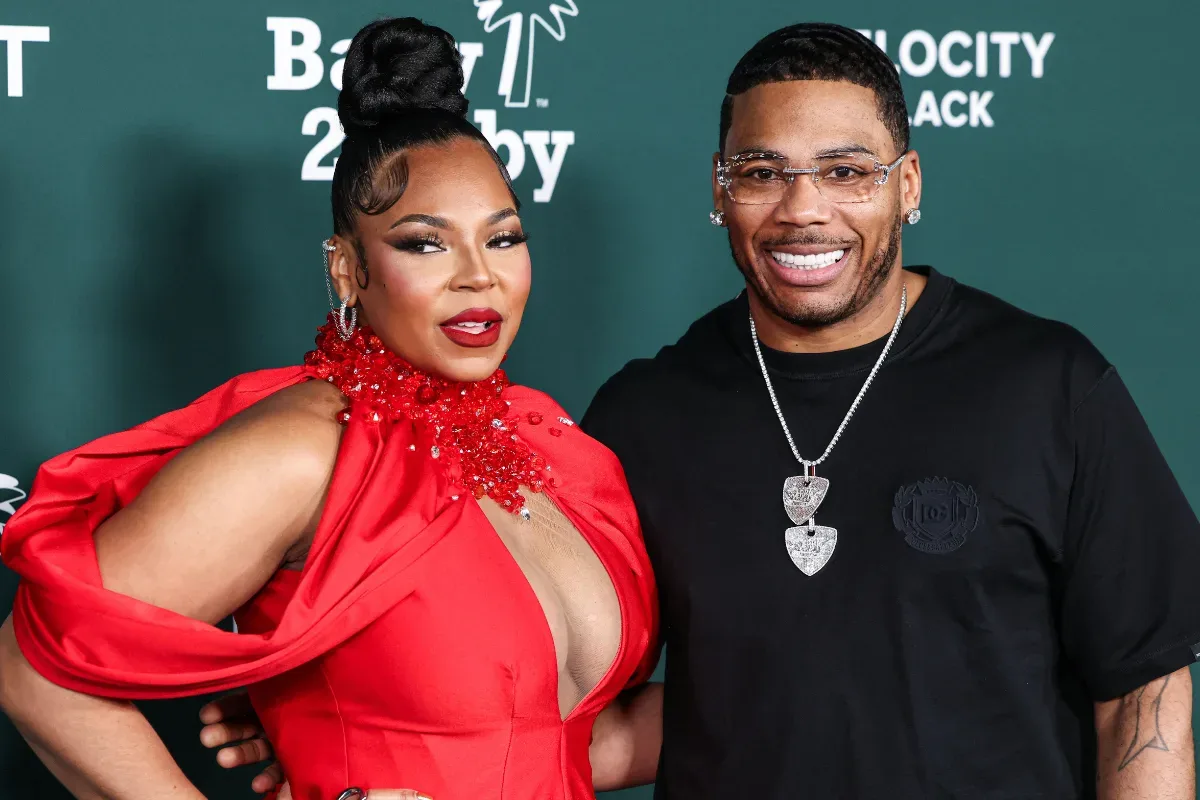
Speaking alongside Ashanti on The Breakfast Club, Nelly said Swift contacted him after she and friends had created a dance to his 2002 hit. In his telling, the travel plans were extravagant from the outset: Swift sent a G5 private jet for Nelly and his children, then put the group in a presidential suite. Nelly said the performance fee was $50,000.
The exact year of the Houston event was not established in his recollection, so the account is best understood as Nelly’s description of the booking rather than a newly documented timetable for it. Still, it aligns with a wider, public record of Swift and Nelly crossing musical paths in the middle of the 2010s.
The $50,000 story, and what is actually known
The central details come directly from Nelly’s account: Swift called after a dance to “Hot In Herre” caught her attention; he says she arranged air travel and hotel accommodation; and he says he was paid $50,000 for the Houston appearance. His McDonald’s-bag request is the detail likely to travel furthest online, but it sits inside a larger story about a song with enough cultural reach to move easily between hip-hop, pop-tour spectacle and a private performance request.
“Hot In Herre” is one of Nelly’s signature records, which helps explain why it could function as the focal point of a requested performance rather than simply a catalogue deep cut. The available account does not identify the venue, audience, date, or any additional performers for the Houston appearance. It also does not establish whether the payment was physically delivered in the requested bag or merely that Nelly asked for it that way. Those distinctions matter when a colorful anecdote becomes a headline.
There is no need to turn the story into a broader claim about how celebrity bookings usually work. A private jet, a hotel suite and a five-figure fee are specific elements of Nelly’s retelling, not a published guide to event-performance terms. The useful takeaway is narrower: Swift’s relationship to Nelly’s music was substantial enough that it extended from dancing to a hit song to calling on him for a Houston performance.
A public St. Louis collaboration in 2015
One firmly dated chapter arrived on September 29, 2015, when Nelly appeared during Swift’s 1989 World Tour stop in St. Louis. The set connected their catalogues in two stages. Nelly and Swift performed “The Fix,” after which Haim joined for “Hot In Herre.”
The moment was also a farewell appearance of sorts for Haim: it was the trio’s final night opening on that tour. Swift and the sisters danced during the Nelly number, while Nelly later shared footage and playfully credited Swift and Haim as his background singers. Haim wore coordinated white outfits and subsequently likened the look to Charlie’s Angels.
That performance matters because it supplies public context for the Houston recollection without filling gaps that the anecdote itself does not answer. It demonstrates that Swift, Nelly and Haim had already shared a major-tour stage and that “Hot In Herre” was not an unexpected pick for that group. Swift also posted clips of the routine, helping preserve the moment as part of the tour’s social-media-era afterlife.
In practical music terms, a guest appearance can do several jobs at once: it can give a stadium crowd a surprise, put a different genre in front of another artist’s audience and make a familiar song feel tailored to a particular city or night. The St. Louis performance was especially apt on that front. Nelly’s career is closely associated with St. Louis, and the combination paired an established rap hit with Swift’s pop-tour framework and Haim’s stage presence.
“Dilemma” brought them together again
Swift and Nelly also performed “Dilemma” together at Karlie Kloss’ birthday party in August 2016. In that setting, Swift took the vocal role originated by Kelly Rowland on the record.
That is a meaningful distinction for listeners who know the song primarily as a duet. “Dilemma” was released in 2002, reached No. 1 on the Billboard Hot 100 and won the Grammy for Best Rap/Sung Collaboration. The latter category recognizes recordings that bring rap and sung vocals together; it is especially fitting for “Dilemma,” whose identity depends on the exchange between Nelly’s performance and Rowland’s melodic counterpart.
Swift filling that part at the birthday-party performance did not replace or revise the original recording. It was a live, event-specific interpretation of a well-known duet. But alongside the 2015 St. Louis show, it illustrates that the musical connection was not confined to one song or one night.
The three episodes now form a clear, if incomplete, timeline: the Houston event described by Nelly at an unspecified date; the public 1989 World Tour collaboration in 2015; and the 2016 party performance of “Dilemma.” The Houston story may be the newest detail, but the earlier appearances give it context that is more useful than treating it as an isolated celebrity oddity.
Nelly and Ashanti’s next television season
Nelly’s recollection arrives as he and Ashanti prepare to return to television with season two of Nelly & Ashanti: We Belong Together. The new season is set to arrive on Peacock on November 19, with all eight episodes releasing that day.
The series follows the artists as they balance their careers with raising their toddler son, Kareem, known as KK. Its stated subjects include the practical pressure of tours taking the couple to different places, and their deliberations around whether and how much of their child to share on social media.
Another thread is Ashanti’s effort to obtain ownership of her master recordings through rerecording her music. A master recording is the original recorded performance from which releases are made; ownership of it can affect who controls and benefits from uses of that recording. Rerecording means making a new version of a song rather than altering the old master. The series presents Ashanti’s rerecording effort as part of her professional life, alongside the family decisions facing the pair.
That focus on control over recorded work makes the show’s music-business material particularly notable. Artists’ public careers can be reduced to stage appearances and hit songs, yet the underlying recordings are a separate part of the business. The series is positioned to place that issue beside the logistics of parenting and touring rather than treat either one as a footnote.
For now, the $50,000 Houston account stands as an entertaining addition to Nelly and Swift’s intermittent performance history: a private request tied to “Hot In Herre,” followed by the more visible evidence of a St. Louis tour collaboration and a later “Dilemma” duet. It is also a reminder of the way a durable hit can keep creating unexpected live moments long after its original release.
For another look at the business side of music payments, see this report on Cam’ron’s publishing-payment claim.