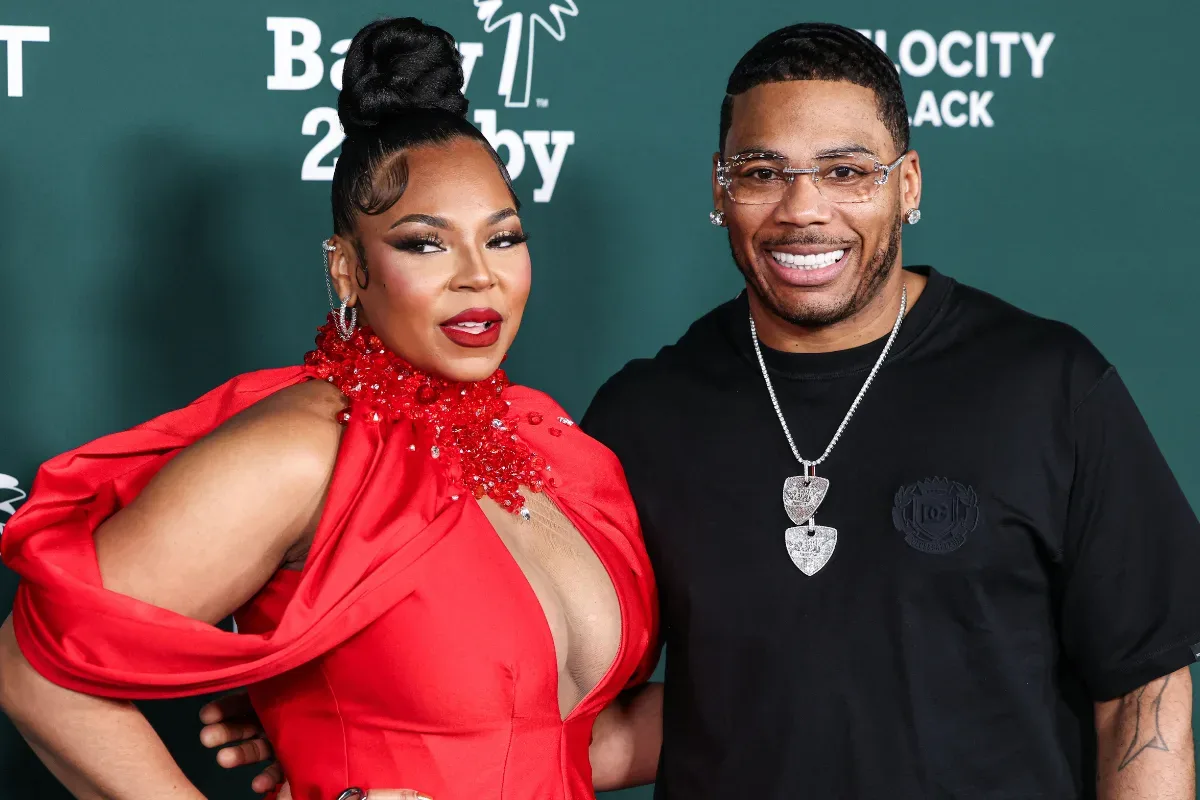
Nelly and Ashanti: We Belong Together will return for a second season on Peacock on November 19, with all eight episodes scheduled to arrive at once. The new run centers on two pressures that can sit behind the glossy surface of a music career: Ashanti’s effort to create and own new recordings of her early work, and Nelly’s consideration of the physical demands of sustained touring.
That framing gives the series more to work with than relationship milestones alone. Ashanti’s re-recording project concerns control over recordings that have remained important to her catalog for more than two decades. Nelly’s story, meanwhile, addresses the toll that a road-based career can take over time. The season also follows Ashanti as she makes new music, performs live, balances motherhood and travels between St. Louis and New York City, with friends forming part of her support system.
The couple began dating in 2003, reunited in 2023 and married later that year. Their show first debuted in June 2025 and was renewed in March 2026. Season 2’s November release makes its central creative and professional questions particularly clear: what does it take to revisit a defining album on an artist’s own terms, and what does longevity cost when performing remains a major part of the job?
Ashanti’s project is about new master recordings
Ashanti’s self-titled debut album arrived in 2002. It included “Foolish,” “Happy” and “Baby,” and it earned triple-platinum certification. Those songs are not simply old material being dusted off for a television storyline; they are core recordings from an album that established a major part of her musical identity.
The key distinction in her current work is the difference between a song and a recording. A master recording is a particular captured performance: the specific recorded vocal, instrumental track and production released as a song. Re-recording a song does not turn an older master into a new one. Instead, it creates a separate recording of that composition.
That is the practical objective Ashanti has described. By remaking songs from her debut, she aims to own the new versions rather than the recordings originally released with the 2002 album. The project has been in view well before the current season: in a 2021 television appearance, she discussed her plans to remake her first album, emphasized the importance of understanding record agreements and credited her legal team.
Her public comments have consistently framed the effort as an ownership issue. She has urged artists to understand the business side when they write and produce, and has stressed the importance of owning records and masters. That does not mean the original versions disappear or that the new recordings are identical to them. It means the newly recorded performances exist as distinct masters, with ownership at the center of their purpose.
For viewers, that technical point is likely to be the most useful lens for the season. “Re-recording” can sound like a straightforward studio exercise, but its significance is contractual and creative. It involves revisiting songs closely associated with a younger version of an artist, while building a new set of recordings under a different ownership arrangement.
Related coverage includes Ashanti’s Masters Push Takes Center Stage in Nelly & Ashanti Season 2.
Why revisiting a debut album carries weight
A debut album can become a fixed public snapshot: the sound, the performances and the songs listeners attach to a particular moment. Ashanti’s project asks her to return to that material after more than 20 years while continuing to make new music and perform. The work therefore has two tracks at once. It is a forward-looking ownership move, but it is also a return to music that audiences already know intimately.
“Foolish” remains especially meaningful in that regard. Ashanti has said that it still receives a strong response in concert, describing the experience of hearing large crowds sing lyrics she wrote decades ago as a performance highlight. That ongoing connection explains why a new recording is more complicated than merely repeating a familiar hit. The material carries audience expectations, personal history and the challenge of translating a signature song into a fresh performance.
The season synopsis positions that work beside live shows, new creative material and family life rather than isolating it as a single studio task. That structure matters because ownership decisions do not happen outside an artist’s everyday obligations. The show will place the project within the movement between St. Louis and New York City, motherhood and the people Ashanti relies on to remain grounded.
There is a broader cultural context, too, though the details of each artist’s agreements and recording plans are their own. Artists have increasingly made ownership and recording control part of the public conversation around music careers. Ashanti’s stated goal is notably concrete: she wants to own the new performances of songs tied to her first album. Readers interested in another recent discussion of music ownership can find it in this look at ownership in a Death Row-related deal.
Nelly’s story shifts attention to the human cost of touring
The other major thread in the new season is Nelly’s reflection on the physical strain of years spent touring. The available details do not specify a medical issue, a retirement decision or a change to a touring schedule. What they do establish is that the show will confront the wear of a career built in part around regularly being on the road.
That is an important boundary to keep in mind. “The physical toll” is a broad description, not a diagnosis. It can encompass the cumulative challenge of travel and performance without revealing a particular condition. The series appears set to explore that reality as part of Nelly’s own story, rather than presenting nonstop touring as an uncomplicated marker of success.
Placed beside Ashanti’s recording project, the contrast could give the season a useful internal rhythm. Her work concerns gaining control over new versions of past recordings. His concerns the limits of maintaining the live-performance side of a long-running career. Both threads deal with durability, but from different directions: one about creative assets and one about the person expected to keep delivering onstage.
It also keeps the show tied to present-tense work. Ashanti’s catalog remains active in performance, and Nelly’s touring history remains central enough to prompt a serious evaluation of its effects. The result is a premise rooted less in nostalgia than in what it takes to carry a public career forward.
What is confirmed for November 19
Peacock has set November 19 for the second season, and all eight episodes will be available that day. The episode-drop approach means viewers will not need to wait week to week for the show’s separate storylines to develop.
- Series: Nelly and Ashanti: We Belong Together
- Season: 2
- Release date: November 19
- Platform: Peacock
- Episode count: Eight
- Release format: All episodes arrive on the same day
The confirmed story setup includes Ashanti re-recording her debut album, working on fresh music, performing live and navigating family and travel between two cities. It includes Nelly considering the impact of years of touring. Beyond those points, viewers should be wary of assuming specific business outcomes, track lists, health details or decisions that have not been announced.
A relationship show with a career-focused premise
The title signals the couple at the center, and their history remains a natural part of the series: they first got together in 2003, reunited in 2023 and married the same year. Yet the second season’s stated focus suggests a show interested in how partnership intersects with work that is demanding, public and ongoing.
There is room for warmth in that setup. Ashanti has called Nelly her favorite collaborator, and a prior video-call appearance included a playful interruption from him and a kiss on the cheek. But Season 2’s larger stakes lie in the projects around the couple: the attempt to build ownership into a newly recorded catalog, the persistence of audience connection to older songs, and the acknowledgement that life on the road has real physical consequences.
Those are subjects with enough complexity to support a fuller picture than celebrity relationship television often permits. The episodes will determine how deeply the series examines contracts, studio work, travel and the personal tradeoffs involved. What is already clear is that Ashanti’s re-recording effort and Nelly’s touring reckoning are not incidental plot points. They are the professional questions shaping this next chapter.