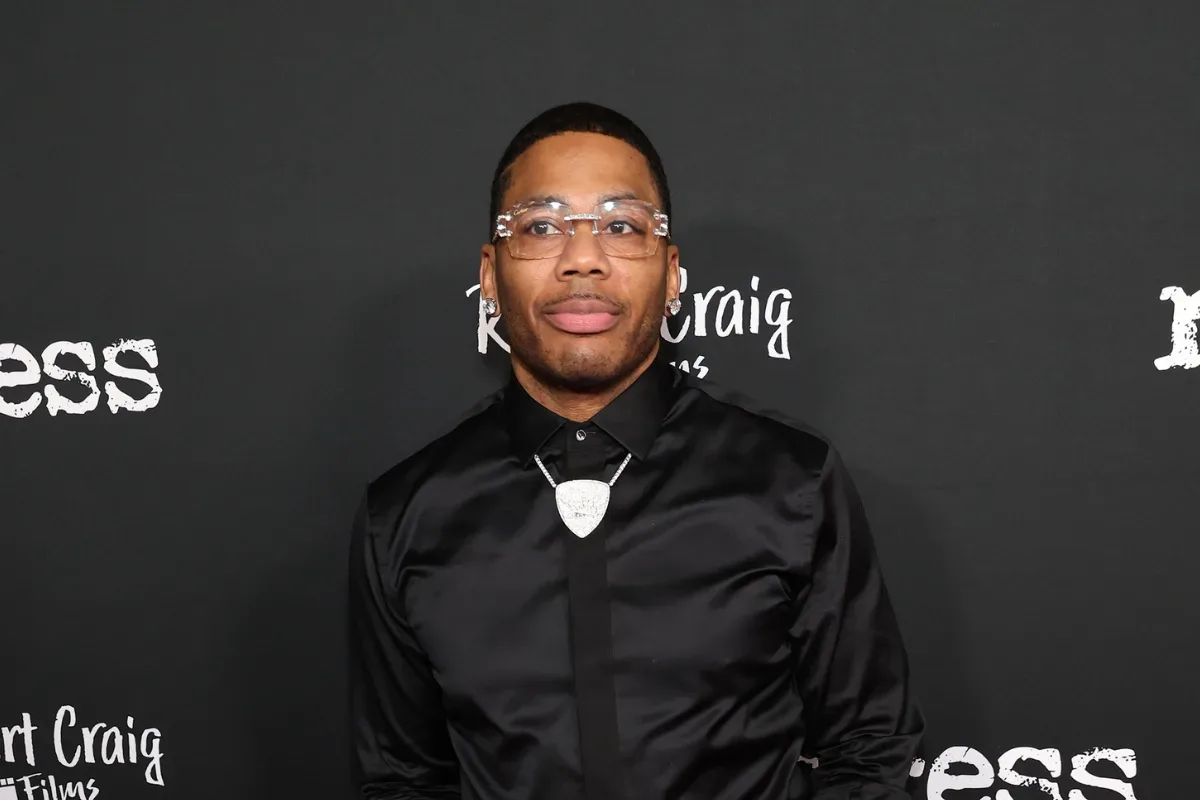
Nelly is set to headline India’s Shillong Cherry Blossom Festival, joining a lineup that includes Khalid, Swae Lee, Boys Like Girls, Darshan Raval, Galantis and Elliot James Reay. The two-day festival is scheduled for November 20 and 21 at Madan Kurkalang in Bhoirymbong, Meghalaya.
The booking places one of the defining hitmakers of the early-2000s squarely within the event’s stated concept for this year: “Year of Generations.” Rather than treating its lineup as a single undifferentiated playlist, the festival is organizing the weekend around two broad musical eras. November 20 is intended to spotlight millennial and Y2K sounds, while the second day shifts toward Gen Z and contemporary music.
Nelly will perform on that opening, nostalgia-oriented date alongside Boys Like Girls and Darshan Raval. The structure makes the festival’s premise unusually explicit: songs and artists associated with distinct listening eras are not simply sharing a poster, but helping define separate days of programming.
A Y2K bill built around recognisable eras
“Y2K,” in this setting, is shorthand for the pop-cultural period around the turn of the millennium and the early years that followed. It is often used to describe fashion, visual design and media trends from that period, but music programming uses it more broadly: a way to group artists and hits that shaped radio, television and club culture in the late 1990s and 2000s.
Nelly is a clear fit for that framing. His career includes three Grammy wins and 12 nominations. He won Grammy awards in 2003 for Hot In Herre and Dilemma, followed by another in 2004 for Shake Ya Tailfeather. His album Country Grammar received a Best Rap Album nomination in 2001, while Nellyville was nominated for Album of the Year in 2003.
Those credentials explain why Nelly’s appearance does more than add a familiar name to the bill. The festival’s first-day theme depends on artists whose catalogs immediately communicate the intended period. His Grammy-recognised run supplies that association without the organizers needing to turn the day into a museum piece; it is a live festival set, but one designed around a particular shared frame of reference.
Boys Like Girls joining the November 20 schedule further broadens that era marker beyond a single genre. Darshan Raval adds a major Indian pop presence to the opening-day roster. The result, based on the announced names, is a cross-genre program rather than a narrowly defined rap or pop event.
The event’s international and regional balance
Shillong Cherry Blossom Festival’s announced performers extend beyond its headline names. Khalid and Swae Lee are on the bill, while Galantis and British singer Elliot James Reay are also listed among the international acts. On the Indian and regional side, the lineup includes Jessie Lyngdoh, Gingerfeet, Scribe, W.I.S.H. and Bhayanak Maut.
That mix matters because the festival is pairing globally familiar performers with artists connected to India and the surrounding region. In practical terms, it gives audiences multiple entry points: a set tied to Y2K memories, contemporary international performers, and regional acts who are part of the event’s local musical identity.
The lineup was unveiled at Shillong’s Meghalayan Age Pavilion at Ward’s Lake, where Meghalaya government Commissioner and Secretary Rosetta Mary Kurbah was present. The setting underlines the event’s connection to Meghalaya rather than positioning it solely as a touring package dropped into the area.
The festival is also planning more than a sequence of concerts. Organizers have announced cosplay and fashion programming, beatboxing, eating contests, ziplining and a Ferris wheel. These attractions turn the weekend into a broader public event, with activities that may appeal to visitors who are not attending solely for one artist’s set.
Cosplay, in particular, is a costume-based fan activity in which participants dress as fictional characters or other recognizable subjects. Its inclusion alongside music and fashion programming suggests a festival experience built around participation and visual spectacle as much as listening. That kind of broader event design can help connect audiences across the generational divide implied by the theme: one attendee may arrive for a particular performer, while another may be drawn by fashion, fan culture or the non-music attractions.
Music festivals increasingly have to make that balancing act work. A multi-day bill asks attendees to navigate different tastes, and a theme such as “Year of Generations” gives those differences a visible structure. The concept does not mean every listener belongs neatly to one age bracket. Instead, it offers a simple programming lens: the first day looks back to a defining pop era, while the second emphasizes music associated with the present.
A summit before the stages open
The festival’s plans begin before the November 20 opening day. A Music Summit is scheduled for November 19 in collaboration with India International Music Week. It is intended to bring workshops and discussions for Meghalaya’s musicians, with opportunities to meet booking agents, label representatives and concert promoters from other countries.
This is a notably different function from the headline shows. A festival performance is public-facing: artists play for an audience in a limited time window. An industry summit is intended for professional connection and knowledge exchange. Booking agents arrange performance opportunities; label representatives work on recorded-music and artist-development interests; concert promoters organize and market live events. Access to people in those roles can be meaningful for local artists seeking opportunities beyond their immediate scene.
The announced summit therefore gives the festival an industry-facing component alongside its public entertainment program. It is not merely an extra event on the calendar. Its workshops and discussions are designed to put local musicians in contact with people who can affect where artists play, how their work is presented and which professional relationships become possible.
For a festival that is bringing in international names, that pre-show focus is especially practical. The value is not just watching established acts perform. The stated aim is to create a setting where Meghalaya musicians can speak directly with professionals who work across markets and countries.
Nelly’s appearance arrives alongside a touring-life TV storyline
Nelly’s Shillong date also lands one day after the scheduled return of Nelly and Ashanti: We Belong Together. Season two of the Peacock series is due November 19, and Nelly’s storyline is set to examine the physical toll of years of touring.
That timing creates a straightforward connection between an upcoming television narrative and a newly announced overseas festival appearance. Touring is central to a performing artist’s professional life, but it also involves travel, changing schedules and repeated live commitments. The series is expected to address that physical dimension; the Shillong booking is one of the live appearances that puts the continuing importance of touring in view.
It also gives viewers two distinct ways to encounter the same career moment: through a television program about the demands that surround touring, and through a festival bill that presents Nelly as an artist whose early-2000s catalog remains central to a themed live-music day.
The broader live-event landscape continues to make room for performers whose landmark releases belong to earlier decades, particularly when a festival’s programming deliberately uses nostalgia as a feature rather than an afterthought. That does not make the opening day exclusively retrospective. Its combination of Nelly, Boys Like Girls and Darshan Raval points to several audiences and styles meeting under the Y2K-and-millennial umbrella.
For another example of how contemporary events combine music with a large-scale theme, Uncle Waffles joining Megan Thee Stallion’s circus-themed Hottieween event illustrates how an overarching concept can shape the presentation around performers.
What attendees can take from the announcement
The clearest details currently announced are the dates, venue, generational split and roster of performers and activities. The festival will run November 20 and 21 at Madan Kurkalang in Bhoirymbong, Meghalaya. Nelly is slated for the November 20 opening day, the date dedicated to millennial and Y2K sounds. The Music Summit is planned for November 19.
For listeners interested specifically in Nelly, the first day is the key date. For people more interested in the festival’s current-music framing, the second day is positioned as the Gen Z-focused half of the weekend. And for Meghalaya-based musicians, the November 19 summit may be the portion with the most direct professional relevance.
Shillong Cherry Blossom Festival’s “Year of Generations” theme is, ultimately, an organizational promise: two days meant to represent different eras while sharing one event space. With Nelly anchoring the opening night’s early-2000s identity, the festival has made its first-day proposition easy to understand.