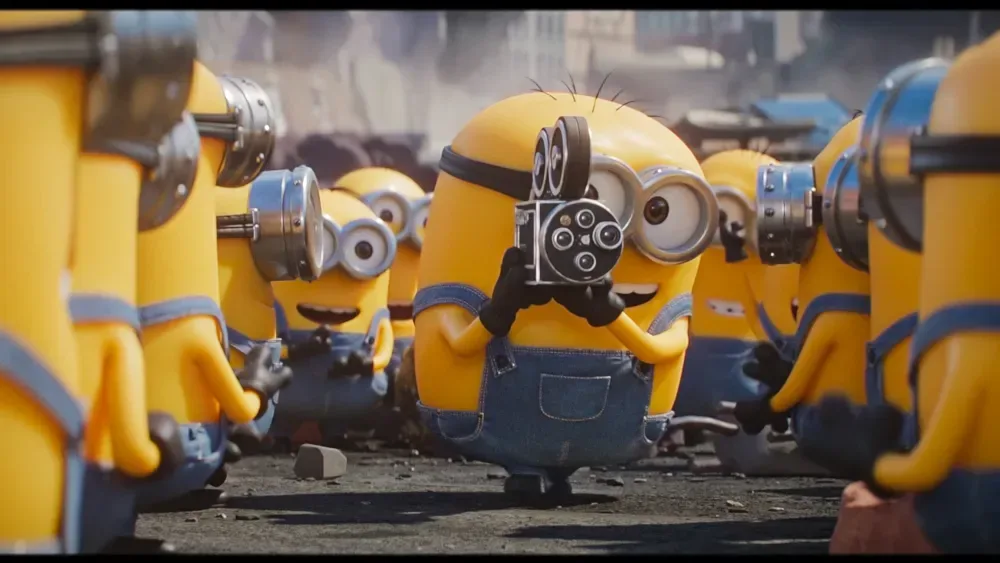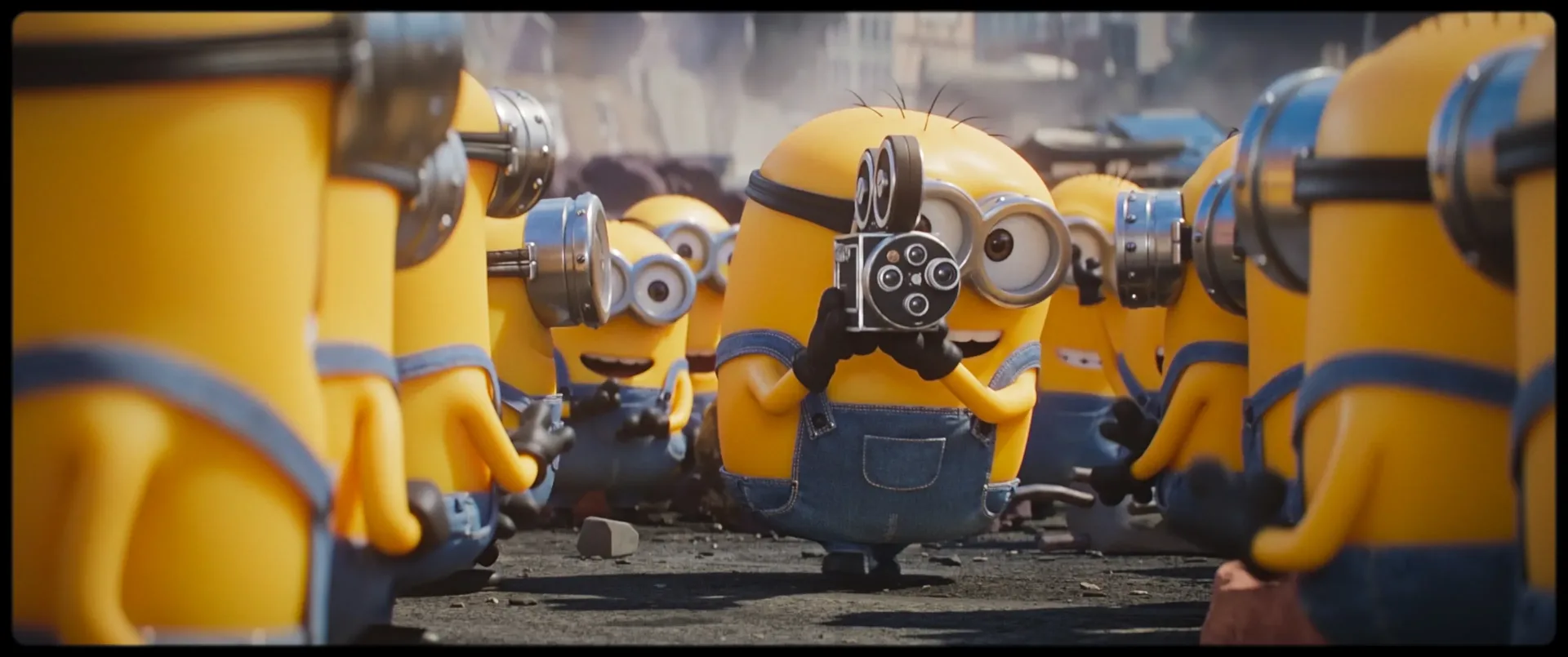
Minions & Monsters will begin streaming on Peacock on Oct. 28. The film is the seventh entry in the Despicable Me franchise and opened in theaters on July 1. Its Peacock arrival gives the yellow agents of disorder a new stage for a story built around an especially funny problem for a group whose speech has never exactly been designed for subtitles: Hollywood is moving into sound, and nobody can understand Minionese.
That setup places the film in 1920s Hollywood, a period of rapid change for the movie business within the story. For the Minions, the arrival of sound is not simply an aesthetic shift in filmmaking. It is an immediate professional and existential obstacle. Their language, Minionese, does not translate cleanly to the new sound-driven screen environment. The response, naturally, is not a disciplined reinvention campaign. The Minions accidentally unleash monsters into the world, turning an industry-transition premise into the sort of large-scale chaos the characters are known for.
A streaming date for the franchise’s seventh film
The Oct. 28 Peacock date follows the movie’s July 1 theatrical release. Minions & Monsters comes after 2022’s Minions: The Rise of Gru and 2024’s Despicable Me 4, continuing a series that began with the first Despicable Me in 2010. That original film introduced Steve Carell as the supervillain Gru and established the larger world from which the Minions became breakout characters.
The franchise’s scale is substantial: the Despicable Me films became the first animated franchise to pass $5 billion at the global box office. That record provides useful context for why a new Minions-centered installment remains a notable streaming addition. The Minions are no longer merely comic side characters orbiting Gru; their spinoff films and their place in the broader series have made them a central part of the franchise’s identity.
For viewers catching up before the Peacock release, the immediate recent sequence is straightforward:
- Minions: The Rise of Gru arrived in 2022.
- Despicable Me 4 followed in 2024.
- Minions & Monsters opened theatrically on July 1 and streams on Peacock beginning Oct. 28.
There is no indication here that viewers need to complete homework before watching the new film. Still, the basic appeal of the series is clear: a recognizable animated ensemble, broad physical comedy, and a premise that lets historical movie culture collide with deliberately unruly characters.
Why the 1920s setting matters
The film’s setting does more than supply old cars, studio backlots, and vintage-Hollywood visual gags. The transition to sound gives its main comic conflict a built-in irony. Silent filmmaking relied on visual performance, while the Minions’ behavior is intensely visual even when they are talking—or, more accurately, chattering in Minionese. A move toward spoken dialogue should be an opportunity for performers, but it becomes a liability for characters whom audiences can understand through tone, context, and mayhem rather than conventional language.
Minionese is the invented speech used by the Minions. Pierre Coffin, a co-creator of the series and the voice of the Minions, has explained that it draws on sounds and elements associated with Japanese, Filipino, Korean, Hindi, German, and Indonesian dialects. The term does not describe a real-world language, and the film’s premise plays on that distinction: the Minions can communicate their energy and intent to the audience, but the fictional film industry around them cannot readily package that speech for sound pictures.
That makes the monster outbreak more than a random escalation. It is the Minions’ characteristic answer to a problem they cannot solve neatly. They encounter an entertainment business that expects linguistic clarity and technological adaptation, then transform the situation into a creature-filled disaster. The contrast between a polished old-Hollywood setting and uncontrolled monsters is a natural fit for the franchise’s comedy.
Classic-film references are part of the joke
Minions & Monsters reportedly includes nods to Hollywood classics including Citizen Kane and The Blob. The pairing signals a broad approach to movie reference: one title is frequently associated with the canon of classic cinema, while the other evokes science-fiction creature features. In a story involving monsters and a 1920s movie-industry setting, those references can work at two levels—visual or narrative jokes for younger viewers, and recognitions for adults familiar with the history being playfully remixed.
The film also makes its director-name gag explicit through Max, voiced by Christoph Waltz. When Max calls out Minions’ names, they include Federico and Erich, invoking Federico Fellini and Erich von Stroheim. The joke is small but well matched to the setting: names that may initially register as arbitrary Minion names carry an added layer for viewers who recognize the filmmakers behind them.
That kind of reference is worth separating from a requirement to know film history. A homage is an intentional nod to an earlier work, creator, or style. It can reward recognition without stopping the plot for an explanation. Here, the supplied details point to a film that uses old-Hollywood material as texture and comic fuel, not as a barrier to entry.
The setting also puts the Minions in a particularly fitting version of show business. Their comedy has long relied on exaggerated movement, failed tasks, sudden reversals, and visual confusion—tools that remain legible even when their dialogue is not. A story about the beginning of sound films gives that largely physical style a premise-specific reason to be under pressure.
The voice cast behind the mayhem
Pierre Coffin directed Minions & Monsters with Patrick Delage. Coffin’s role is unusually central to the series: alongside being a co-creator, he voices the Minions themselves. That combination links the franchise’s creative direction with the sound and cadence of its most identifiable characters, which matters especially in a film centered on whether those characters can be understood.
The lead voice cast includes Allison Janney, Jeff Bridges, and Jesse Eisenberg. Zoey Deutch, Bobby Moynihan, and Trey Parker also provide voices, while George Lucas appears in the movie. Christoph Waltz voices Max. The collection of performers suggests a cast built around distinct vocal personalities, while Coffin remains the key performer for the Minion ensemble.
Lucas’s appearance is another detail that sits comfortably within the movie’s interest in film history and Hollywood self-reference. The provided information does not specify the nature of that appearance, so it is best treated as a cameo detail rather than evidence of a larger role in the story.
What Peacock viewers can expect
Based on the known premise, Peacock viewers can expect a Minions-focused animated adventure in which the shift from silent films to sound becomes the starting gun for a much messier crisis. The major story elements are clear: 1920s Hollywood, a communication problem created by Minionese, and monsters accidentally released by the Minions. The film is also positioned to layer in references to classic cinema, from individual titles to filmmaker-name wordplay.
The blend makes sense for a franchise that has successfully moved between Gru-led stories and Minions spinoffs. Its longevity comes partly from that flexibility: the characters can be dropped into a tightly defined genre or era and turn its rules into a comedy engine. This time, the rules belong to a Hollywood learning to speak, while the Minions face the unfortunate discovery that speaking is not the same thing as being understandable.
For more entertainment-business context beyond this animated release, see OBB Studios’ new London hub and its focus on branded entertainment and unscripted production.
Minions & Monsters starts streaming on Peacock on Oct. 28.