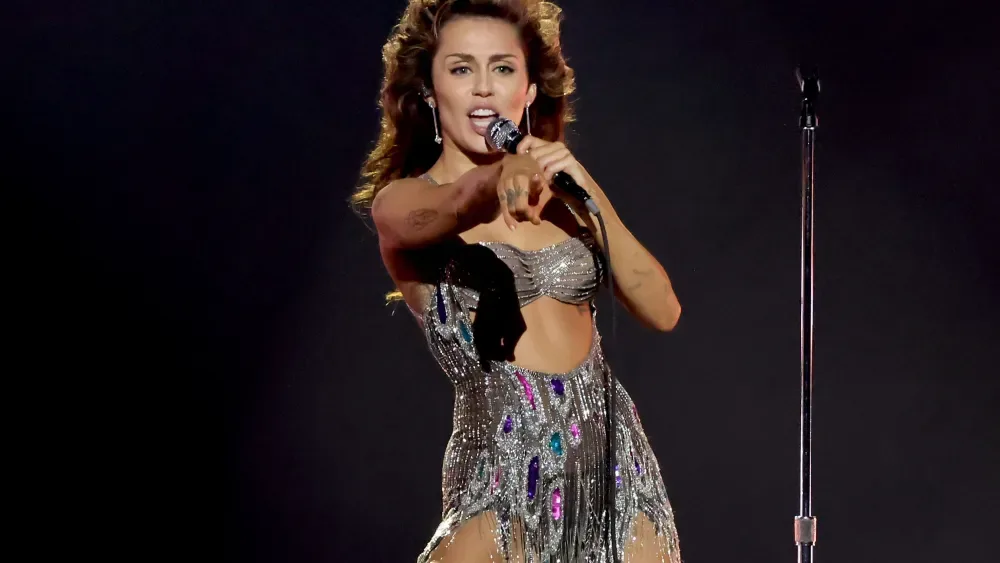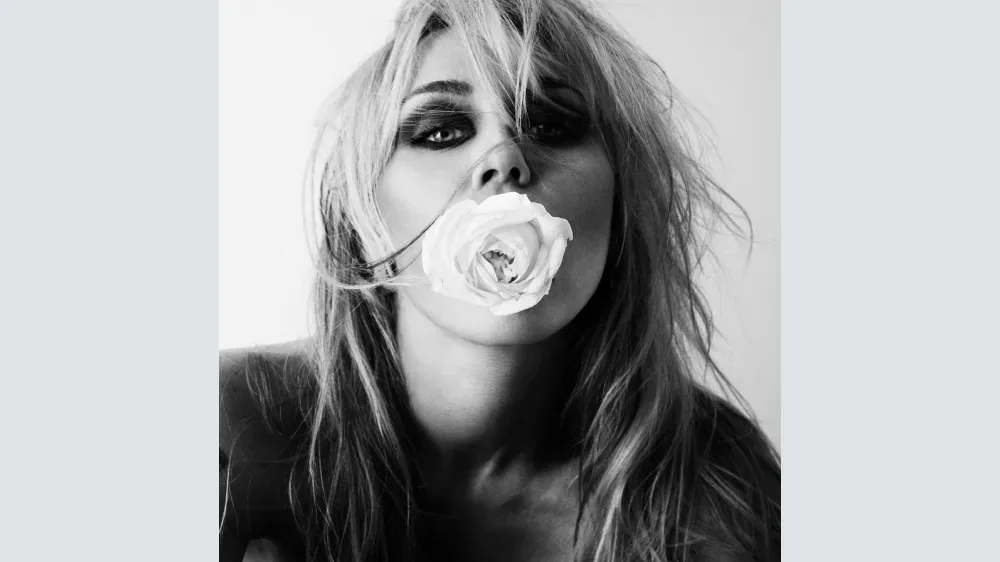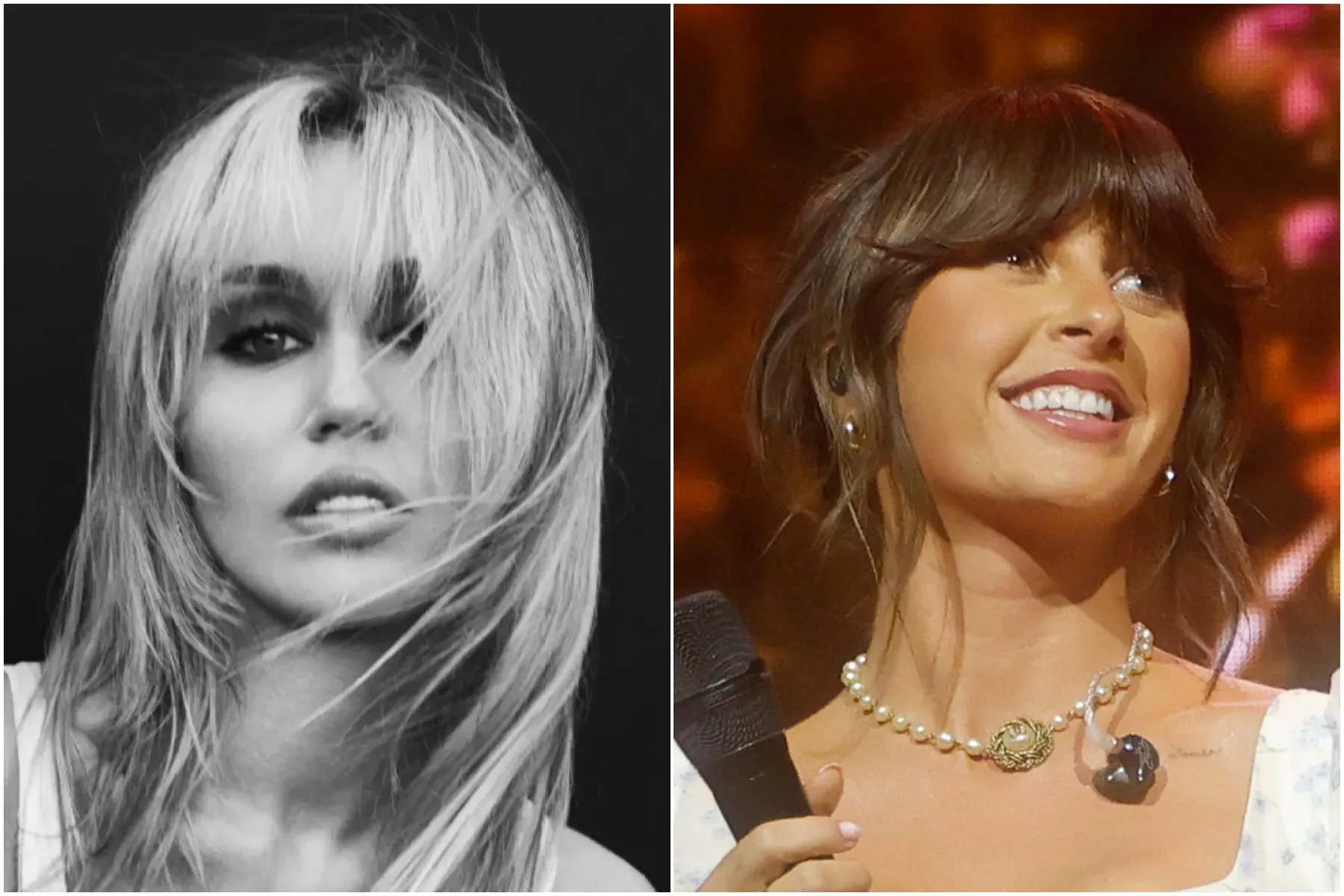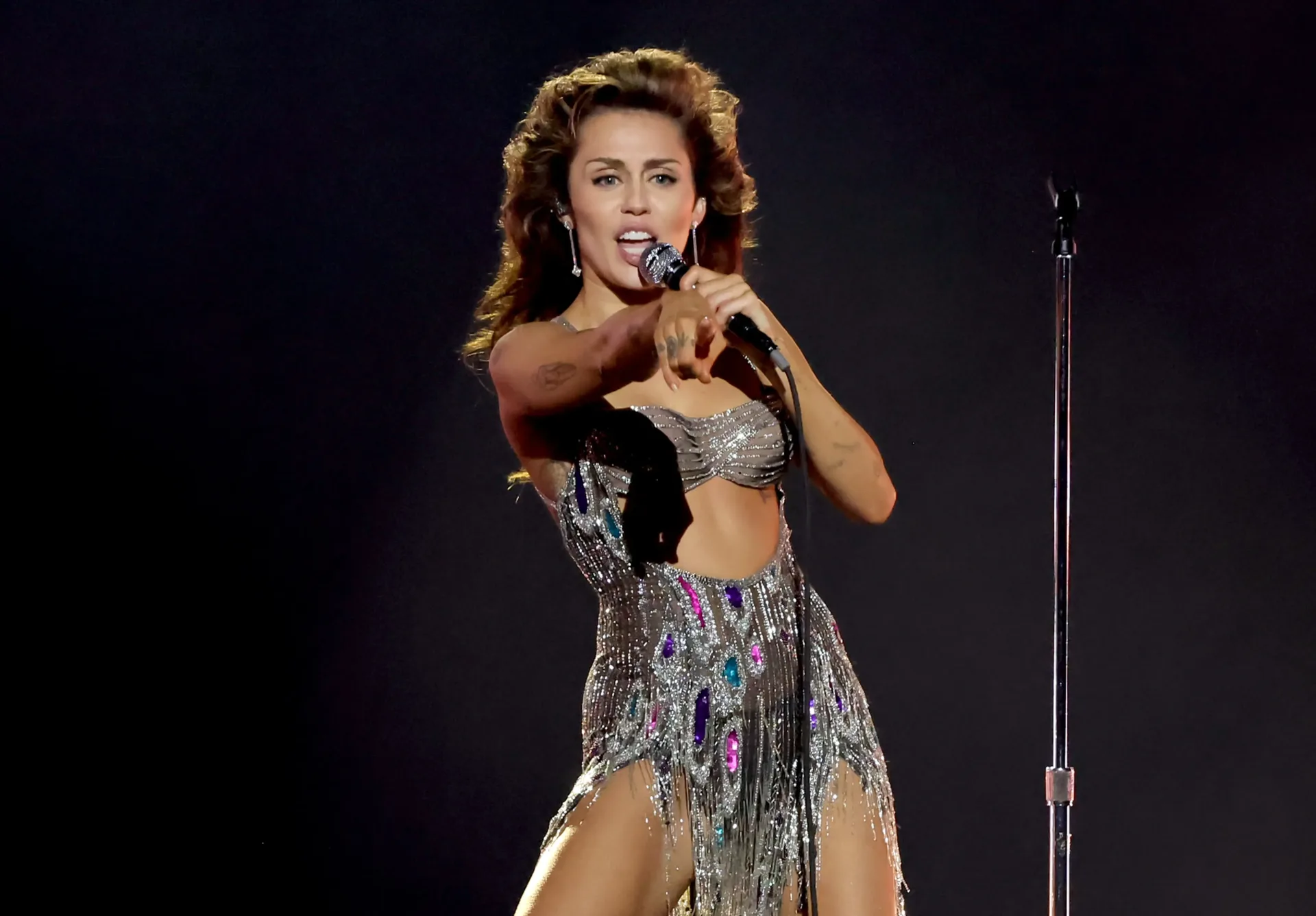
Miley has returned to headlining with Miley: Bass Persuades – Live at the Hollywood Bowl, opening a two-show run at the Los Angeles venue with a setlist that connects her newest material to several of her most enduring songs. The Friday performance was followed by a second Bowl date scheduled for Sunday.
The show carries extra weight because it marks Miley’s first headlining performance in years outside festival settings. Her last full-scale tour was the Bangerz tour in 2014, while more recent appearances have been selective: a Paris performance for Spotify’s Billions Club Live, a fan-focused TikTok event at the Chateau Marmont tied to Something Beautiful, and a performance connected to the taping of a 20th-anniversary Hannah Montana special.
Rather than presenting the Hollywood Bowl as the start of another conventional touring cycle, Miley has described the dates as a “dress rehearsal” and has indicated that residency-style performances hold more appeal to her than an extended tour. That context makes the two-night stand a useful indicator of what a more destination-focused Miley live model could look like: audiences travel to a limited run, and the artist can build a show around one location rather than moving city to city.
The reported Hollywood Bowl setlist
The opening-night sequence balanced songs from Bass Persuades with catalog staples and collaborations. The reported setlist was:
- “Orbit”
- “Different Religion” with Model/Actriz
- “Bass Persuades + Remixx”
- “Handstand”
- “Jolene” (Dolly Parton cover)
- “Walk of Fame”
- “Redlights”
- “Do You Realize??” with Wayne Coyne
- “Karen Don’t Be Sad” with Wayne Coyne
- “We Can’t Stop”
- “Wrecking Ball”
- “Snow”
- “Used to Be Young”
- “Party in the U.S.A.”
- “Let’s Get Married”
A new-album showcase, not a nostalgia-only victory lap
The placement of “Orbit,” “Different Religion,” “Bass Persuades + Remixx,” “Handstand,” “Walk of Fame,” and “Redlights” demonstrates that the Bowl show is substantially connected to the current Bass Persuades era. Miley announced the album alongside the Hollywood Bowl performances, with the record released September 18 through Atlantic Records.
For an artist whose most broadly recognized songs span multiple eras, this is an important setlist decision. A return after a long gap can easily turn into a greatest-hits-only exercise. Here, the newer material has a prominent role, while “We Can’t Stop,” “Wrecking Ball,” “Used to Be Young,” and “Party in the U.S.A.” supply familiar anchors across the latter half of the show.
Setlist sequencing matters. In concert terms, sequencing is the order in which songs are placed to establish pace, emotional contrast, and a sense of progression. The available running order suggests an opening stretch that introduces the new era, a middle section strengthened by covers and guests, and a closing run that draws on songs with particularly wide recognition. That is not proof of the show’s staging or musical arrangements, neither of which are detailed here, but it does show a deliberate attempt to make new work and established material coexist.
Guests connect the set to collaborators and influences
Two guest elements stand out. Model/Actriz joined Miley for “Different Religion,” while Wayne Coyne appeared on both “Do You Realize??” and “Karen Don’t Be Sad.” “Do You Realize??” is associated with Coyne’s band, the Flaming Lips, so his appearance gives the performance a direct connection to the song’s original creative world.
Related coverage includes Miley Opens Hollywood Bowl Run With ‘Bass Persuades’ Setlist.
“Jolene,” meanwhile, brings another meaningful musical link into the set. The song is a Dolly Parton cover, and Parton is Miley’s godmother. Its inclusion complements a program otherwise divided between new songs and pop hits, offering a recognizable standard with an especially personal relevance to Miley’s career.
These choices do more than add surprise names to a bill. Guest spots and covers can give a limited engagement an identity separate from a routine album tour. With only two scheduled Hollywood Bowl dates, a set that includes collaborators, a Parton song, and a Flaming Lips connection has the potential to feel designed for the occasion rather than merely transported from a larger itinerary.
Why the Hollywood Bowl dates are a notable return
Miley previously explained that, after the Bangerz tour, the question was not whether she was capable of touring but whether that lifestyle matched what she wanted. She later said that people can come to her, framing the Bowl performances as evidence that a fixed-location approach may be a better fit.
A residency usually means a run of shows based in one venue or city, rather than a tour that continuously travels between markets. Miley did not announce a residency in the information available here. But she has said she is more open to that format, and the Hollywood Bowl pairing illustrates the practical appeal: one high-profile location, a concentrated audience, and fewer demands of constant travel.
That does not establish a wider plan beyond these concerts. Still, it explains why the event deserves to be viewed as more than a simple one-off. The Bowl shows can function as a test of an approach to live performance that accommodates both fan demand and Miley’s preference for remaining close to home.
The catalog choices span distinct Miley eras
“Party in the U.S.A.” arrives near the end as one of Miley’s defining pop songs, while “We Can’t Stop” and “Wrecking Ball” bring the Bangerz-era connection back into focus. “Used to Be Young” adds a more recent career reflection to that mix. Together, they make the show’s back half a compact cross-section of songs that have remained central to public perceptions of Miley as a performer.
It is also notable that the set does not rely solely on those titles. “Snow” and “Let’s Get Married” are included alongside the major hits, and the new Bass Persuades songs occupy the show from the opening. For listeners tracking how contemporary pop artists approach limited live runs, that balance is the central takeaway: the show recognizes the songs an audience expects without treating the current record as an afterthought.
Miley is performing under the single name “Miley” for this era, another detail that emphasizes a specific creative presentation around Bass Persuades. The Hollywood Bowl engagement arrives as a focused statement rather than the launch of a sprawling announced tour, pairing a new album with a venue Miley has said she long admired as an audience member.
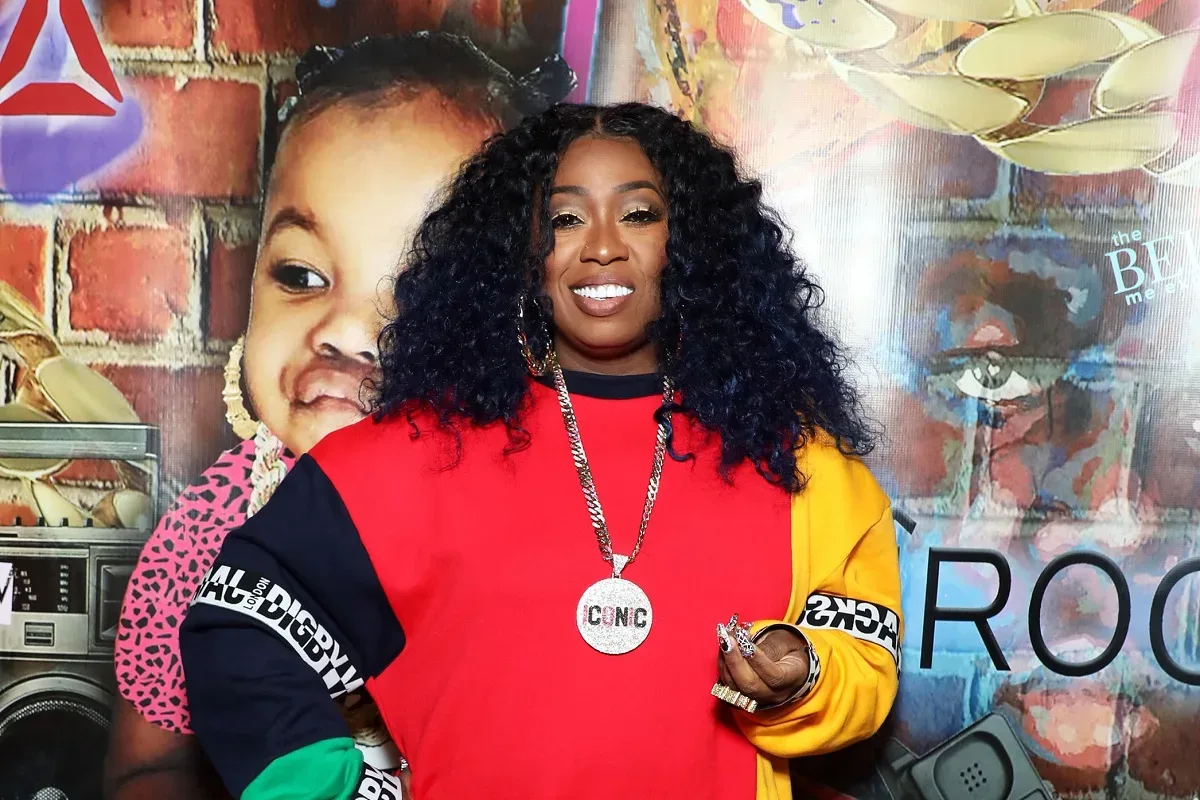
The night also lands amid a broader run of music-world milestones and honors, including Missy Elliott’s upcoming Gala of the Stars Icon Award. In Miley’s case, the attention is on the shape of a return: a selective live appearance, a contemporary album at its center, and a setlist broad enough to meet fans across multiple chapters of her catalog.
What to take from the opening night
- New music led the program: Multiple Bass Persuades tracks appeared early and throughout the set.
- Major hits were preserved: “We Can’t Stop,” “Wrecking Ball,” and “Party in the U.S.A.” all made the reported running order.
- Guests shaped the middle of the show: Model/Actriz and Wayne Coyne contributed to three songs.
- The format fits Miley’s stated preferences: The two-date Bowl run aligns with her interest in destination performances and possible residencies over sustained touring.
- No larger tour is established here: The available information supports these Hollywood Bowl dates, not a confirmed extensive touring plan.
For now, the opening-night setlist presents a clear template: Miley’s current era has room for collaborations, covers, new songs, and the pop landmarks that have followed her across more than a decade. Whether that template develops into additional fixed-location performances remains uncertain, but the Hollywood Bowl has given the new chapter a high-profile live starting point.