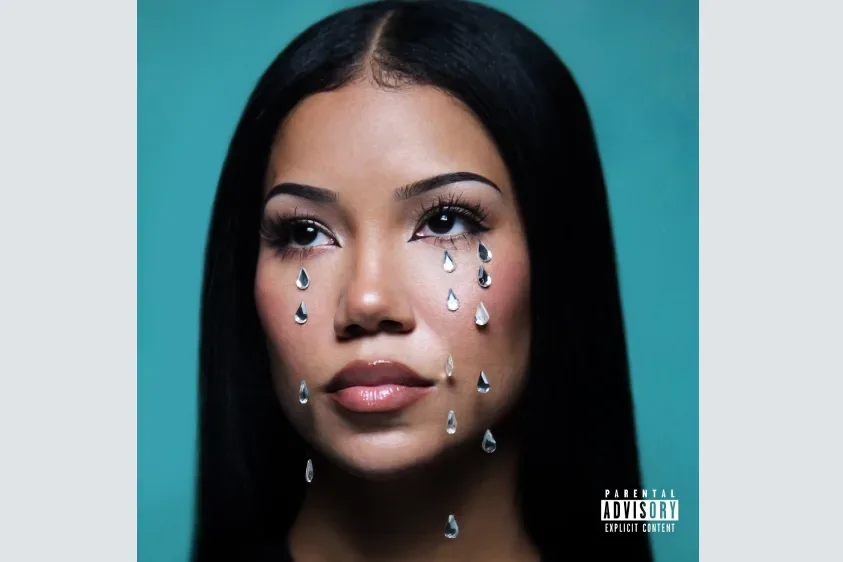
Miley has returned to the summit of the Billboard 200 with Bass Persuades, opening at No. 1 with 61,000 equivalent album units. It is her sixth album to lead the chart and her first to do so since Bangerz in 2013—a 13-year gap between chart-toppers.
The arrival is especially notable because the top of the albums chart was remarkably close. Ella Langley’s Dandelion held No. 2 with nearly 61,000 units, while Riley Green’s That’s Just Me followed at No. 3 with 60,000. In other words, this was not a runaway victory. A relatively small difference separated the three highest-ranking records.
What the No. 1 debut means
The Billboard 200 is an album chart, and its equivalent album units measure is designed to account for more than traditional album purchases. The metric groups album consumption into one overall chart figure rather than treating a purchased album as the only meaningful form of listening. That makes a total of 61,000 units the key number for the chart race, but it does not by itself spell out how much came from each listening or purchasing method.
For Miley, the immediate takeaway is straightforward: Bass Persuades had enough first-week activity to edge two closely competing releases and claim the highest album-chart position. The result also lifts her broader top-10 tally to 16 projects.
There is a useful distinction between a debut position and a long-term chart run. Opening at No. 1 demonstrates concentrated interest around release week; it does not automatically forecast how many weeks an album will remain near the top. With the margins here so narrow, subsequent weeks will be worth watching, particularly as listeners settle into the album and competing releases continue accumulating activity.
A long interval, not a quiet career
The 2013-to-2026 span matters because a No. 1 album is an unusually specific benchmark. It is not the same as releasing music, having an audience, or appearing in the top 10. Miley has now achieved all three milestones in different ways: Bass Persuades is her sixth Billboard 200 leader, while it is her 16th project to enter the chart’s top 10.
That context prevents the “first No. 1 in over a decade” headline from being mistaken for a 13-year absence from the album charts. The new release marks a return to the very top, not a first return to relevance. The difference is important: chart peaks measure a particular week’s competitive outcome, whereas a catalog and a sequence of top-10 projects reflect a longer arc.
Miley is also the third act in 2026 reported to have waited at least a decade between Billboard 200 leaders. Bruno Mars reached No. 1 with The Romantic in March, and A$AP Rocky did so with Don’t Be Dumb in January. The common thread is endurance. Reaching No. 1 again after a long interval requires a release to cut through a crowded present-tense market, not merely benefit from an earlier era’s success.
Related coverage includes Miley’s ‘Bass Persuades’ Debuts at No. 1.
The compact rollout behind ‘Bass Persuades’
Bass Persuades was announced in early September, only weeks before its release. The title track and its video arrived as the first single, and the album followed on September 18. That is a compact campaign by design: a title, a lead song, a video, then the full project in short order.
In her announcement, Miley framed the title around music’s ability to move through different emotional states—joy, vulnerability, strength and heartache among them. The wording positioned the record as an expression of feelings rather than an attempt to define the project through a list of technical promises or genre labels.
The artist is using the mononymous name Miley for this era. Mononymous simply means performing under one name, a creative and branding choice that places the focus on a single, immediately recognizable identity. It does not alter the album’s chart credit in the bigger sense, but it is part of how this release cycle is being presented.
The short window between announcement and release may also help explain why the first-week outcome should be read carefully rather than reduced to a single narrative. A tight rollout concentrates attention into a brief period, while the close chart totals show just how contested that period was. The available figures establish the win; they do not establish which individual audience behavior was most responsible for it.
Hollywood Bowl shows bring the era to the stage
Miley is scheduled to return to the stage next month for two Hollywood Bowl performances in Los Angeles, set for October 16 and October 18. Model/Actriz, which appears on Bass Persuades, is slated to join as a special guest.
The two dates give the album’s release period a live component without implying a broader tour, which has not been detailed here. For fans, the practical point is that these are specifically identified shows, not evidence of additional performances elsewhere. The special-guest billing also creates a direct connection between the record and the stage dates through Model/Actriz’s involvement on the album.
Live appearances can become major moments in a release cycle, but the chart result already stands on its own: Bass Persuades entered at No. 1 before those October performances. The shows are better understood as the next visible chapter of the era, rather than the explanation for an opening-week victory already recorded.
Ella Langley still owns the Hot 100 headline
Although Miley won the albums race, Langley remains a dominant force on the singles side. “Choosin’ Texas” has logged a 24th week at No. 1 on the Hot 100. The song had already surpassed Mariah Carey’s “All I Want for Christmas Is You” for the most weeks atop that chart, and it has now also reached 19 weeks at No. 1 on the Digital Song Sales chart.
The two chart stories show why it is risky to treat “the charts” as one single contest. The Billboard 200 tracks albums, while the Hot 100 is a song chart. Digital Song Sales, meanwhile, is a separate ranking focused on digital song purchases. An artist can be No. 1 in one category while another leads in a different one, as this week demonstrates.
Langley’s No. 2 album placement—nearly level with Miley’s total—makes the split even sharper. Dandelion narrowly missed the top album position, but “Choosin’ Texas” continues an historic run on the song charts. Miley’s win and Langley’s ongoing single dominance are not competing descriptions of the same result; they are separate achievements measured by separate rankings.
For a wider snapshot of the current music-television landscape, the 2026 VMAs’ cross-network audience figures offer another reminder that music’s biggest moments are now measured across multiple formats and platforms.
The rest of a crowded top 10
Below the top three, Morgan Wallen’s I’m the Problem lands at No. 4, followed by Olivia Rodrigo’s You Seem Pretty Sad for a Girl So in Love at No. 5. The second half of the top 10 consists of Noah Kahan’s The Great Divide, Beabadoobee’s Pylon, Jhené Aiko’s Westside Whimsy, Drake’s Iceman, and Kahan’s Stick Season.
Kahan appears twice in that top 10, with The Great Divide at No. 6 and Stick Season at No. 10. The broader list spans several artists and album campaigns, underscoring the crowded field that Bass Persuades overcame in its opening week.
Still, the defining number for Miley is No. 1. After last leading the Billboard 200 with Bangerz in 2013, she has added another chart-topper in 2026—and did it in a race close enough that every unit at the top carried unusual weight.