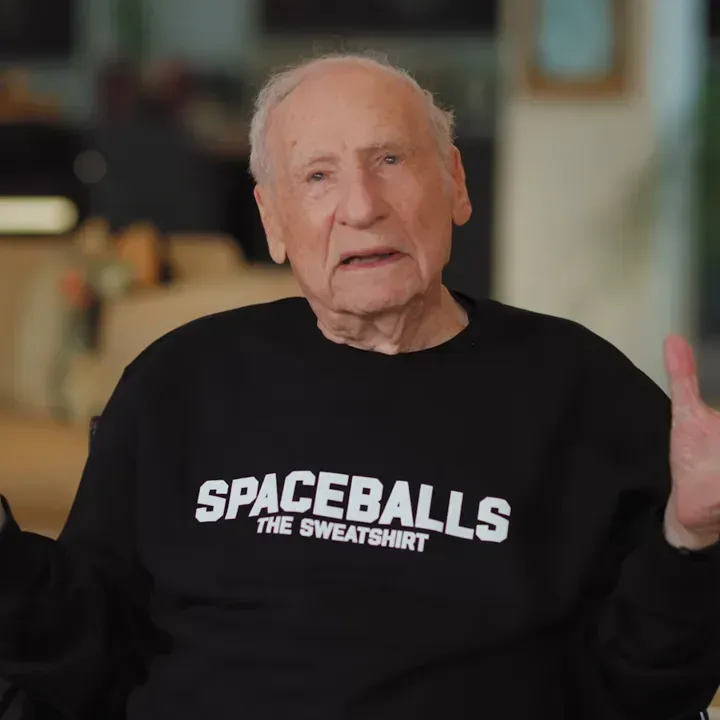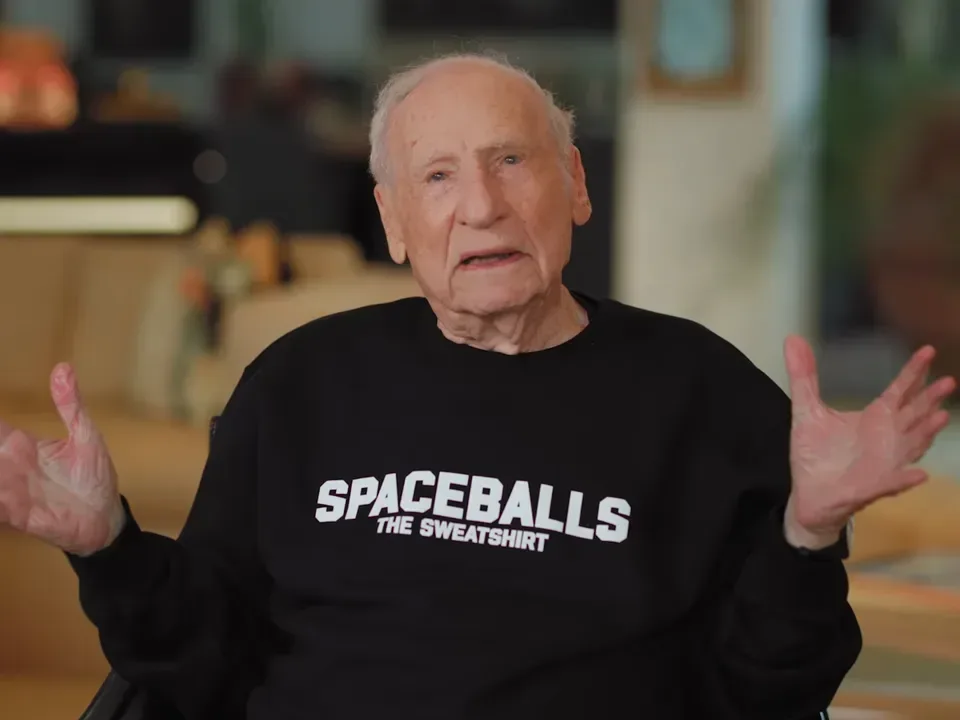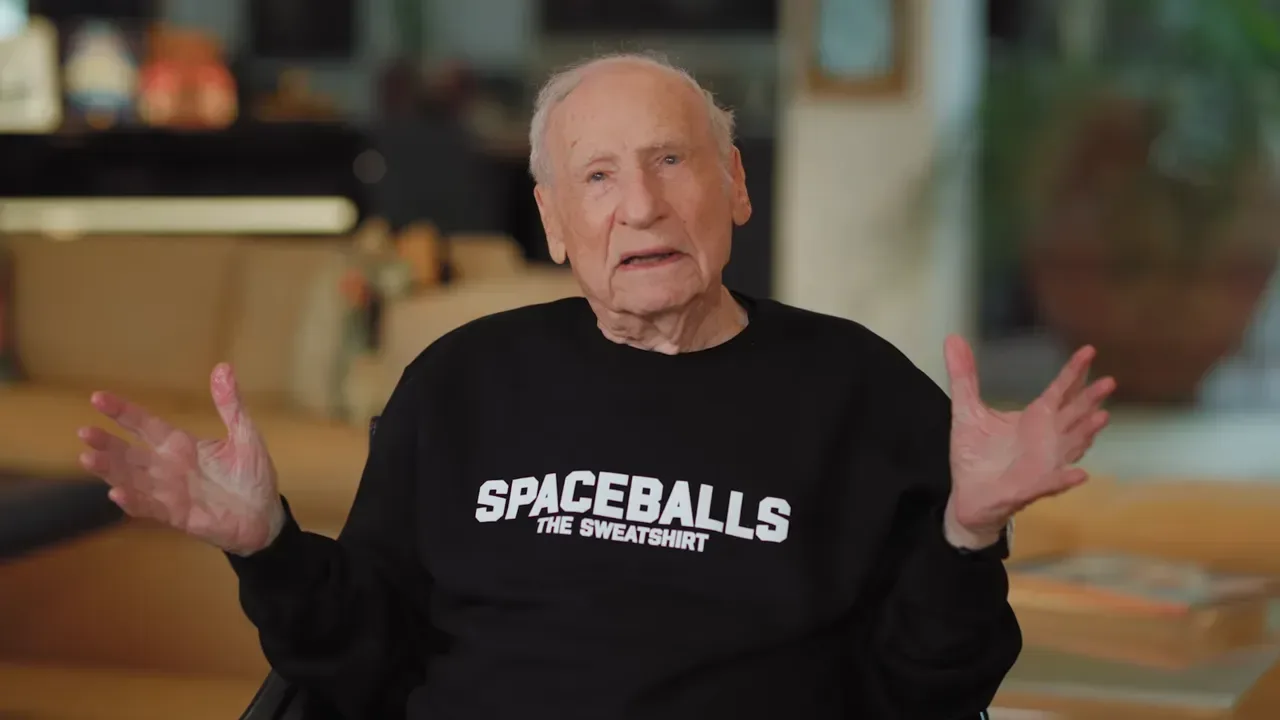
Mel Brooks has already filmed his scenes as Yogurt for Spaceballs: The New One, and the reason is as direct as it is perfectly suited to a Spaceballs gag. Daphne Zuniga, returning as Vespa, said Brooks wanted his work done before the rest of the production because he is 100 years old.
“You better film me now because I’m 100” is both the reported motivation and, in its plainspoken self-awareness, the kind of line that feels inseparable from the character of Yogurt. Brooks directed the original Spaceballs and worked with the writers on the upcoming sequel, so completing his material early does more than secure a cameo: it preserves the involvement of the filmmaker most closely associated with the property.
Amazon MGM Studios is set to release Spaceballs: The New One in 2027. It will bring back several major figures from the original alongside a new generation of characters, while its promotion has already made clear that the franchise has not abandoned its appetite for mocking entertainment-industry habits.
Why filming Yogurt early matters
In production terms, filming a performer’s scenes ahead of the principal shoot is a scheduling choice. It can allow a production to capture the actor’s required dialogue and coverage at a time that suits their availability, then build the remaining schedule around that footage. The supplied details do not establish exactly how Yogurt fits into the sequel’s plot, how long Brooks appears, or whether he shared scenes in person with other returning cast members. Those are meaningful distinctions, and they remain unknown.
What is known is that Brooks’ material was intentionally prioritized. Zuniga said he completed his portion before filming started more broadly. That makes the decision a practical safeguard, not merely an amusing behind-the-scenes anecdote. A long-delayed follow-up to a comedy with such a strong creator-performer identity would face a different challenge if Yogurt were absent. Capturing Brooks’ contribution early gives the film the chance to include his performance regardless of how the larger production schedule develops.
It also places Brooks in an active creative relationship with the movie rather than treating him solely as a legacy presence. Zuniga said he worked with the writers and remains a major influence on the project. That matters because Spaceballs is not simply a science-fiction setting with recurring names. Its identity is tied to broad parody, abrupt meta jokes, and a willingness to puncture its own premise. Brooks’ participation gives the new film a direct connection to that comedic approach.
Yogurt is returning, but the sequel is expanding the family
Yogurt is not the only familiar face aboard this particular Schwartz-powered return trip. Zuniga reprises Vespa, who is now Queen, while Bill Pullman returns as Lone Starr. Their child, Prince Starburst, will be played by Lewis Pullman, Bill Pullman’s real-life son.
That setup indicates a generational shift within the film’s central cast without replacing the original characters outright. The supplied information does not reveal what Prince Starburst’s role will be, whether he follows either parent’s path, or how the new family dynamic drives the story. Still, the casting establishes a literal bridge between the returning leads and the sequel’s newer characters.
Rick Moranis is also set to return as Dark Helmet, with George Wyner back as Colonel Sandurz. Their return is especially notable because Dark Helmet and Sandurz supplied a large share of the original film’s villain-side comedy. The sequel’s roster additionally includes Josh Gad as Mawg, Keke Palmer as Destiny, and Anthony Carrigan in an as-yet-unspecified role.
The names alone should not be taken as a plot map. The promotional material described so far has emphasized jokes and imagery rather than detailed story information. But the cast configuration does suggest that Spaceballs: The New One is being built as a continuation involving established heroes, established antagonists, and new characters rather than a detached remake.
The marketing is already parodying the sequel machine
The campaign’s clearest statement of intent may be its mockery of franchise-building itself. It has spoofed an 11-film “Spaceballs Cinematic Universe,” teased a digitally enhanced Yogurt with conspicuously ripped abs, and parodied the table-read image associated with The Force Awakens.
A “cinematic universe” is a connected set of films designed to share characters, continuity, and often a long-term release plan. In contemporary studio marketing, the phrase carries an expectation of future installments and interconnected intellectual property. Spaceballs has a long history of taking recognizable genre conventions and pushing them into deliberately ridiculous territory, so an invented 11-film slate is less a promise of eleven actual movies than a joke about the familiar practice of announcing expansive plans before audiences have even seen the next film.
The digitally muscular Yogurt image works on a similarly contemporary target. It pairs an intentionally artificial makeover with a beloved older comic figure, making the manipulation itself the gag. The table-read parody likewise identifies a modern publicity ritual and turns it into part of the entertainment. Rather than waiting for the film to arrive before teasing its targets, the campaign is already treating promotional culture as material for Spaceballs-style satire.
That strategy is useful because it conveys tone without disclosing the plot. The official images and jokes do not tell viewers what Mawg, Destiny, Prince Starburst, or Carrigan’s character will do. They do signal that the sequel intends to engage with the media environment that grew up after the original film: legacy sequels, digital alterations, elaborate franchise maps, and highly curated cast-reunion moments.
A creative team with comedy and animated genre credentials
Josh Greenbaum is directing Spaceballs: The New One. His previous work includes Barb and Star Go to Vista Del Mar. The screenplay is credited to Benji Samit, Dan Hernandez, and Josh Gad. Samit and Hernandez have credits including Lego Star Wars: Rebuild the Galaxy and TMNT: Mutant Mayhem.
The mix is notable in a limited but concrete way. The project combines a director associated here with a broad comedy, writers whose cited credits include irreverent, youth-oriented genre material, and Gad, who is also part of the on-screen cast as Mawg. It does not prove exactly how the sequel will balance homage, parody, and new ideas; no story details supplied establish that. It does show that Brooks’ input exists alongside a team with experience in contemporary comedy and franchise-adjacent worlds.
That balance is often the central assignment for a legacy continuation. A sequel can repeat references until it becomes a museum piece, or it can discard the original’s voice until the shared title is doing all the work. The early campaign points toward a third option: use the franchise’s old habit of spoofing pop culture to satirize the current machinery of pop culture. Bringing Yogurt back, with Brooks having already recorded his scenes, makes that connection far more tangible.
What audiences can reasonably take from this update
The most solid takeaway is not a plot revelation. It is confirmation that Brooks’ Yogurt will be part of the finished film if production proceeds as described, and that his involvement extended to working with the writers. For fans, that provides a clearer answer to a basic question surrounding any late-arriving sequel: whether the original creative force has a place in it. In this case, he does.
There is also a defined returning ensemble: Zuniga as Queen Vespa, Bill Pullman as Lone Starr, Moranis as Dark Helmet, and Wyner as Colonel Sandurz, with Lewis Pullman joining as Prince Starburst. Gad, Palmer, and Carrigan round out the announced cast. Beyond those facts, viewers should be cautious about reading too much into promotional jokes. The faux cinematic-universe slate, digital Yogurt image, and table-read spoof explain the film’s comic posture; they do not confirm an 11-film plan or provide a scene-by-scene preview.
For a broader look at why older properties can find a new audience when revisited rather than simply left on the shelf, see this look at the case for reviving deep-cut favorites. Spaceballs: The New One faces a different task, of course: it is a new feature rather than a remaster. But its early material shows an awareness that a return has to acknowledge both what audiences remember and what has changed around the franchise.
For now, the schedule-related detail has delivered perhaps the sequel’s most fitting early joke. At 100, Brooks made sure Yogurt was filmed first. It is a pragmatic move, a reminder of the filmmaker’s continuing role, and a line so cleanly tuned to the Spaceballs sensibility that it could almost be an on-screen punchline.