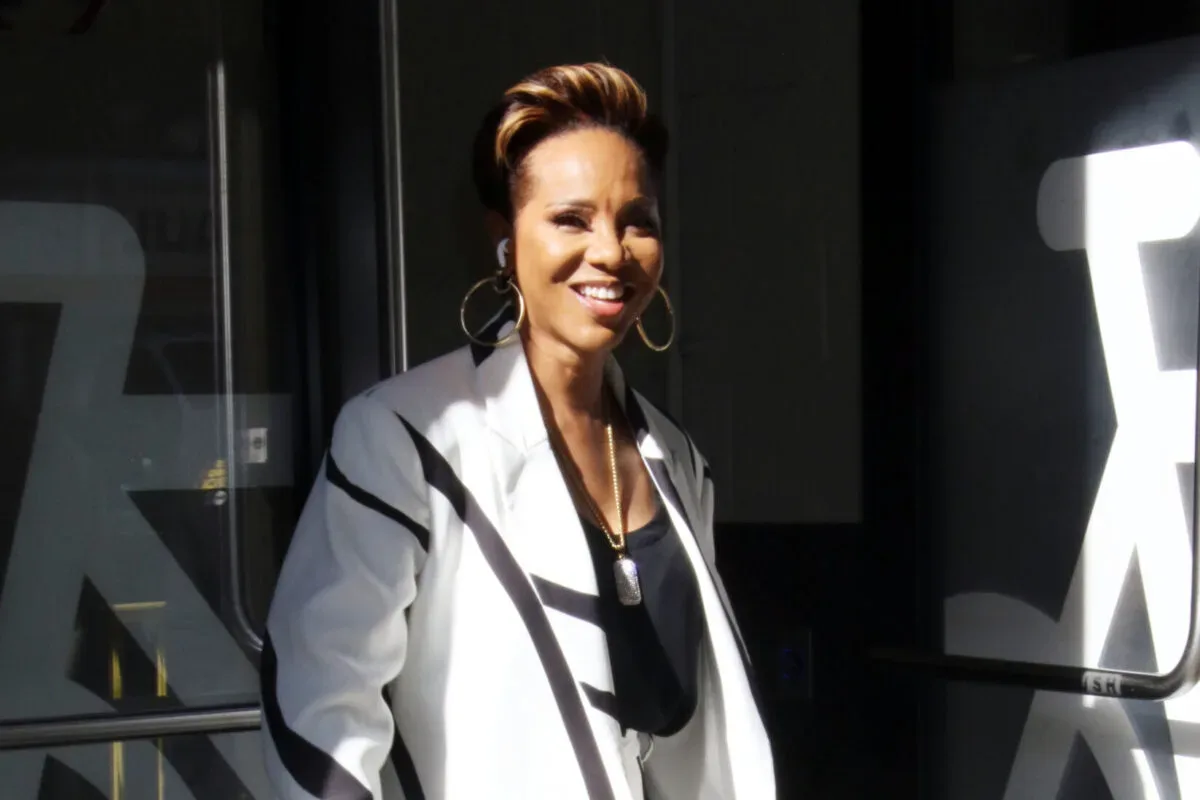
MC Lyte is scheduled to perform at halftime of the WNBA Finals Game 7 between the Golden State Valkyries and Atlanta Dream at Chase Center in San Francisco on Saturday, October 31. The league’s first Finals Game 7 follows Atlanta’s Thursday result that evened the series at three games apiece.
Tipoff is set for 8 p.m. Eastern, or 5 p.m. Pacific. Glide Ensemble is slated to perform the national anthem.
A Game 7 is the final, winner-take-all contest in a best-of-seven series: there is no next matchup and no room for a team to recover from a loss. That makes halftime a particularly concentrated stage. Fans will arrive focused on a championship outcome, while the performer has a limited window between two high-stakes halves of basketball. The format is very different from a full concert, but it puts an artist in front of an audience gathered for a singular live moment.
A championship-stage booking in a notable year
The halftime appearance arrives during a prominent period for Lyte. She is included in the Rock & Roll Hall of Fame’s 2026 class in the Musical Influence category. The recognition places the rapper’s body of work within a larger conversation about artists whose contributions have shaped music and its culture.
Her career milestones include becoming the first solo female rapper to receive a Grammy nomination, for “Ruffneck.” That history is relevant to the Game 7 booking beyond simple nostalgia. A WNBA Finals halftime set connects a foundational hip-hop voice with a women’s championship event, creating a crossover occasion centered on performance, competition and legacy.
The setting also makes a compact set more meaningful than its length might suggest. Halftime performers do not have the space to construct the kind of gradual, expansive show possible on tour. The job is to establish energy quickly, deliver a clear artistic identity and return the arena’s attention to the game on schedule. An artist with a well-established catalog can treat that constraint as an advantage: a few selections can serve as an introduction for newer listeners and a recognition point for longtime fans.
How the halftime set differs from Lyte’s tour format
Lyte has described her “Road To The Hall Of Fame” tour as something considerably more expansive than a hits-only appearance. She planned sets of roughly 90 minutes, with room for songs as well as stories and direct conversation with the audience. Her stated goal was to reconnect with supporters in cities connected to her career.
That approach frames a useful contrast with a Finals halftime performance. A tour stop can create time for context: why a song matters, what a city represents or how a career has developed. A halftime slot has to work more like a distilled version of that same identity. The audience is shared by basketball diehards, casual viewers, people attending for the event and fans who may know Lyte’s work in different degrees.
Related coverage includes MC Lyte Set for Halftime Performance at WNBA Finals Game 7.
Lyte has said she can anchor performances in her own catalog rather than depend on guest appearances. Friends might join when circumstances allow, but she did not present cameos as the engine of her live show. For a tightly timed sports-event performance, that self-contained approach carries a practical benefit. The performance can remain focused on the artist’s own material and stage presence, instead of requiring an audience to follow a chain of surprise appearances.
She has also discussed acting, directing and work involving VanVan, Ariel and DJ Germaine, underscoring that the current moment is not defined by one lane alone. The Chase Center booking, however, is specifically a music-performance assignment on one of the season’s highest-pressure basketball stages.
Why Game 7 changes the atmosphere
Not every championship game carries the same emotional temperature. With the series tied 3-3, the Valkyries and Dream enter Game 7 knowing the result decides the title. The absence of a later game changes how every possession is received in the building. Momentum shifts can feel sharper; individual plays carry more weight; and even the break between halves becomes part of the event’s rhythm.
That is why halftime entertainment at a deciding game is not merely a scheduling filler. It has a specific role: provide a reset without dissolving the arena’s intensity. A successful performance can sustain the crowd’s energy while giving players, coaches and viewers a defined pause before the decisive second half.
The combination of a veteran rapper, a title-deciding contest and the league’s first Finals Game 7 gives the night a deliberately event-sized profile. It is also a reminder that championship broadcasts and arena productions are built from more than the action on the court. Anthem performances, halftime music and the audience’s reaction all shape the shared live experience around the game.
Music advocacy remains part of Lyte’s public work
The appearance comes alongside Lyte’s continued focus on artist compensation. In August, she received the Music Fairness Award from SoundExchange for her support of the American Music Fairness Act. The organization cited her advocacy for the proposed legislation and said she again met with lawmakers during the summer to encourage its passage.
That work followed a Capitol Hill visit in 2024 with DMC and Melle Mel. Lyte has described advocacy as part of her purpose, positioning it as an ongoing component of her career rather than a one-off campaign connected to an award.
The underlying topic is artist pay. In practical terms, that means attention to how performers and rights holders are compensated when music is used or played. While a halftime performance is a live event rather than a policy debate, the booking lands during a period in which Lyte’s public profile includes both entertainment and industry advocacy.
She also operates Lyte Up Your Empire, an initiative intended to help newer artists learn the business side of music. That educational work matters because an artist’s career can involve far more than recording and performing: understanding agreements, revenue, professional relationships and rights is part of navigating the industry. Lyte’s recent activities present those business concerns alongside the creative work that made her name.
What fans can expect from the schedule
For viewers, the essential details are straightforward: Golden State hosts Atlanta at Chase Center on October 31; Game 7 tips off at 5 p.m. Pacific; MC Lyte performs at halftime; and Glide Ensemble handles the national anthem.
For fans looking beyond the Finals broadcast, Lyte’s itinerary lists Atlanta dates on November 9 and November 10, followed by Nashville on November 11. Those dates belong to the broader touring activity in which she has planned room for the longer, story-driven presentation that a halftime slot cannot accommodate.
The Game 7 performance therefore sits between two complementary modes of live music. One is the concise, high-visibility arena appearance designed for a major sports broadcast. The other is the extended concert setting where Lyte can explore her catalog, speak directly with attendees and reconnect with audiences city by city.
Either way, the booking brings an artist with a substantial place in hip-hop history to a title-deciding WNBA game. For more on how legacy, output and audience connection can shape rap conversations, see this discussion of output, recall and fan connection.