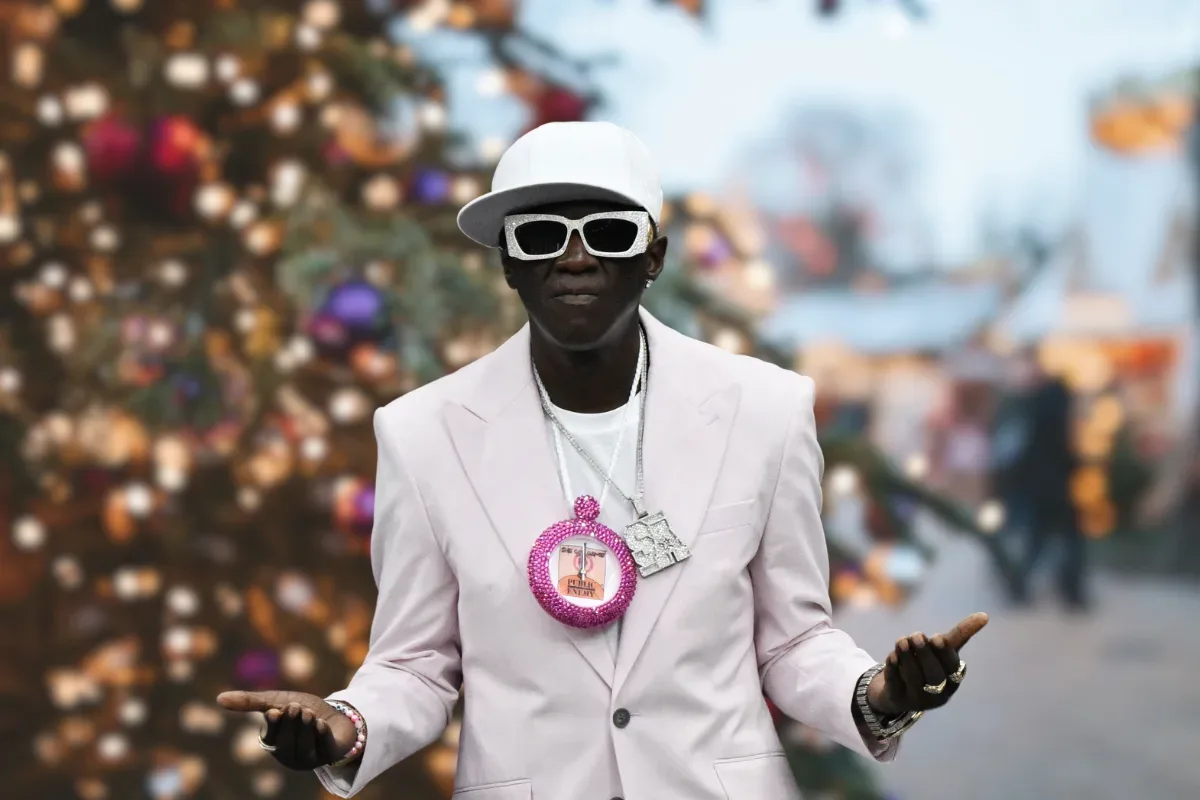
Flavor Flav has supplied WNBA Finals viewers with the one document workplace policy manuals almost certainly do not recognize: a signed, celebrity-issued request to make a weekday game into a paid holiday.
Posted ahead of Game 6 between the Golden State Valkyries and Atlanta Dream, Flav’s mock work note asks employers to excuse fans so they can watch. Its central gag is blunt and deliberately oversized: Thursday should be a paid holiday because he says it is. He signed the note while styling himself both “The World’s Greatest Hype Man” and an “Official Supporter of Women’s Sports.”
The joke has a practical target. The listed game time is 12:30 p.m. Eastern on October 29 at State Farm Arena in Atlanta, a time that places a championship-stage contest squarely within many viewers’ workdays. USA and Peacock are listed as the broadcast and streaming homes. Fans who have been unhappy about the daytime window now have a shareable response, even if it is a theatrical one rather than anything an HR department is obliged to honor.
To be clear, the note is a joke, not an official leave authorization. It does not change an employer’s attendance rules, paid-time-off process, or schedule. But its point is less about persuading a manager than drawing attention to the mismatch between a major game and the everyday responsibilities that can stop fans from seeing it live.
A hype man’s answer to a scheduling problem
Flav’s public persona makes the format especially fitting. A hype man’s job is to amplify attention, excitement, and participation around an event or performer. Here, he has applied that role to a women’s basketball audience: the employee who needs to ask for time off, the viewer who cannot quietly put a game on at work, and the fan who believes a Finals game deserves a more accessible time slot.
A midday tipoff does not merely affect whether people are free at the opening whistle. It changes how a sporting event travels through a community. Prime-time games are easier for workers, students, families, and groups of friends to organize around. Early-afternoon games can instead become a contest of calendar flexibility, access to a television or stream, and whether a workplace tolerates a little scoreboard checking.
That is why a novelty excuse note can land beyond its literal usefulness. It gives supporters a simple, funny way to say that their interest should not be treated as disposable. The message is not that every workplace must close for basketball; it is that women’s sports audiences are real audiences with schedules, commitments, and expectations of their own.
It also transforms a complaint about programming into something more sociable. A fan posting or sending the note is participating in the promotion of the game, not just lamenting a conflict. Flav’s signature makes the post feel like an invitation to join in the bit.
Related coverage includes Flavor Flav Offers Mock Work Excuse for WNBA Finals Game 6.
What the note does—and does not—represent
The mock document is an endorsement gesture, not a league policy statement or a confirmed solution to broadcast scheduling. It should not be read as an indication that the game time will change, that businesses will provide paid leave, or that Flav has formal authority over the teams, venue, broadcaster, or employers.
Its value is cultural rather than administrative. It borrows the visual language of an excuse letter—something ordinarily associated with school or work—to spotlight a bigger question: what does it take for fans to be able to follow a marquee event in real time?
That distinction matters. A viral gesture can elevate an issue without resolving it. It can encourage people to plan around a game, use legitimate leave if available, or follow the broadcast through the channels listed for it. It cannot substitute for workplace approval or establish any right to paid time away.
The Game 6 details fans need
For viewers able to tune in, the available schedule information places Game 6 in Atlanta:
- Matchup: Golden State Valkyries vs. Atlanta Dream
- Date: October 29
- Venue: State Farm Arena, Atlanta
- Tipoff: 12:30 p.m. Eastern
- Viewing: USA and Peacock
Those specifics are why the mock note is aimed so tightly at work schedules. A 12:30 p.m. Eastern start will fall at a different local hour around the United States, but it remains a daytime window for a substantial share of the country. For people planning to watch, the sensible route is still the unglamorous one: check the broadcast options, confirm the time in the relevant time zone, and make any needed work or household arrangements through normal channels.
Flav’s post is better understood as fan morale than official paperwork—an all-caps nudge to make room for the game if possible.
Part of a broader record of backing women athletes
The joke lands in the context of Flav’s wider activity around women’s sports. Earlier, he held SHE Weekend in Las Vegas from July 16 through 19. SHE stands for Sports, Hospitality and Entertainment, and the gathering brought approximately 150 female Winter Olympians and Paralympians to the city.
The weekend combined celebration with practical opportunities. MGM Resorts provided more than 100 complimentary hotel rooms, Delta Air Lines covered flights, and Dove participated as a sponsor. A fundraiser connected with the event surpassed $133,000 before the weekend concluded.
Public festivities included a parade and a free outdoor concert, with Public Enemy performing. The program also included meetings intended to connect athletes with brands and executives. That business-facing element is significant because sponsorship is not simply a logo on a jersey or a social-media post. It can be a relationship that helps turn athletic visibility into professional opportunity, whether through campaigns, partnerships, or future work.
SHE Weekend’s blend of hospitality, entertainment, fundraising, and introductions shows a more sustained approach than a single social-media gag. The work-excuse post is lighthearted, but it comes from someone who has also helped assemble travel support, lodging, fundraising, public events, and networking opportunities for women athletes.
Flav has also publicly emphasized allyship in other contexts. On October 12, he backed Dan Levy after Levy objected to Shane Gillis’s comments about women’s gym clothes during a “Saturday Night Live” monologue. Flav described Levy’s response as “Important allyship.” The common thread is the use of a large public platform to signal that women deserve support, respect, and room to thrive in public-facing spaces.
Why playful advocacy can still have a point
Celebrity support can be shallow when it stops at attention. In this case, however, the humor is paired with a recognizable obstacle for fans: access is not only about whether a game is carried on television or streaming. It is also about whether people are free when it airs.
The work note does not pretend that a celebrity can erase that obstacle. Instead, it makes the obstacle visible. Its absurdity—declaring a paid holiday by personal decree—is what makes the underlying frustration legible. Plenty of supporters may laugh, repost it, and still remain at their desks when tipoff arrives. That tension is the entire joke.
There is a useful difference between a promotional stunt and a promise. The former invites conversation and enthusiasm; the latter implies an outcome. Flav has offered the former. Fans should enjoy it for what it is: a conspicuous vote of confidence in women’s basketball and its audience, delivered with a signature large enough to match the persona behind it.
For more sports-and-culture coverage, see this report on Roc Nation Sports and Nevada Pierre.