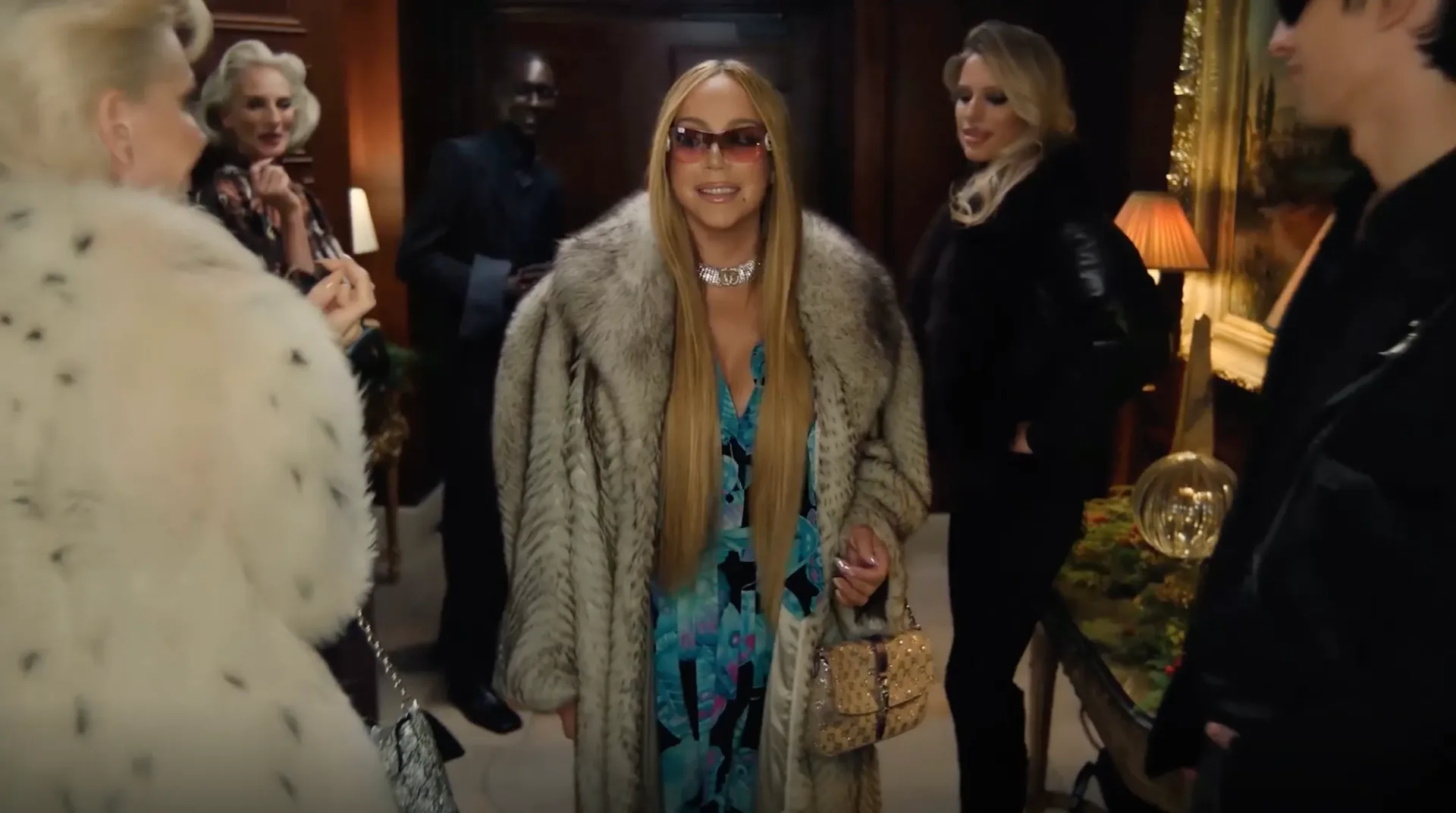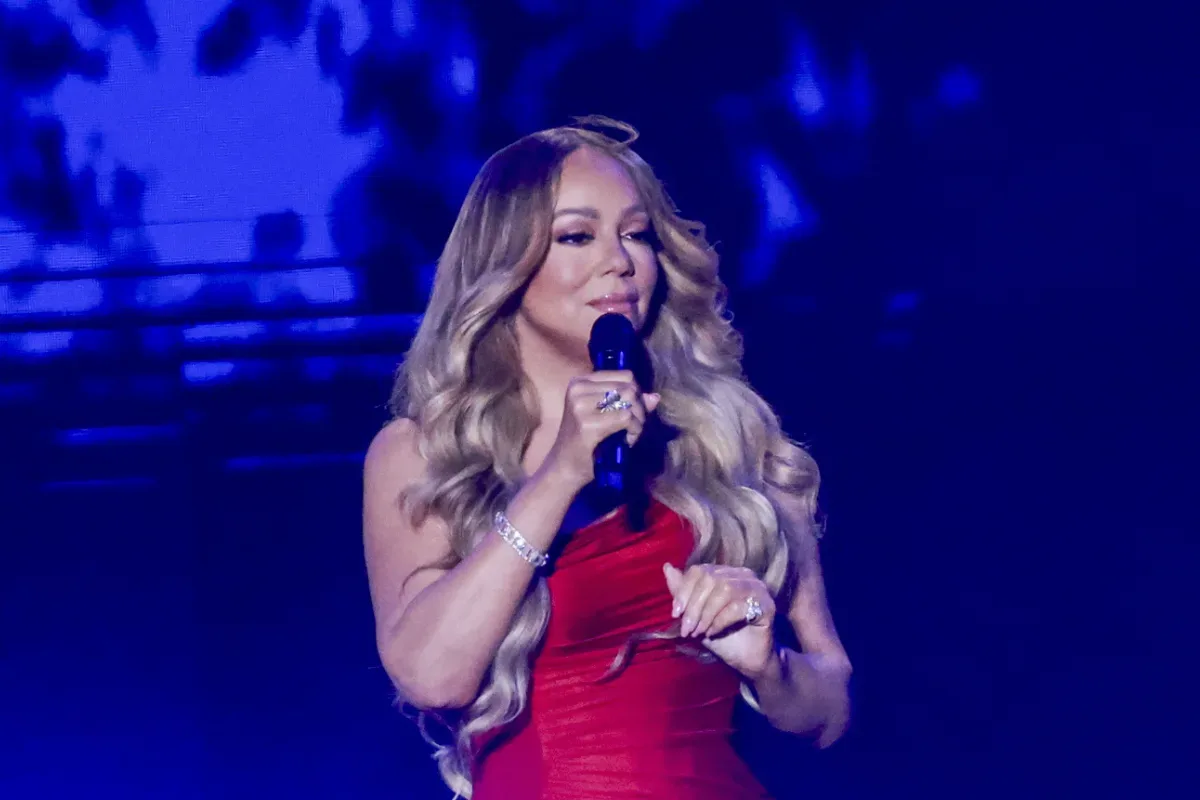
Mariah Carey has revived hope for one of pop’s most unusual unreleased albums with a short, conspicuously chosen response: “#notyet.” During a Reddit Ask Me Anything on October 30, Carey was asked once again about the grunge project she recorded while making Daydream in 1995. She said the subject comes up about weekly, then added that the hashtag was a hint.
That is not a release announcement, a date, or confirmation that a finished edition is ready to go. It is, however, more pointed than a simple non-answer. Carey has discussed the material before, said listeners will hear it, and explained that the recordings represented a rare creative outlet during a constrained period of her career. Her new wording leaves the key message intact: the project remains on the table, but fans should not read the exchange as a promise of an imminent release.
What the unreleased album actually is
The music in question is Carey’s version of Someone’s Ugly Daughter, a rock record created under the name Chick during the Daydream sessions. An edition of the album was released with Carey’s friend Clarissa Dane handling lead vocals. The version fans continue to seek is different: it is the set of recordings with Carey herself singing lead.
That distinction matters because this is not merely a request for another pressing of an already available album. It is a request for a different vocal presentation of the same project, one that could substantially change how listeners understand it. Lead vocals are generally the performance placed at the center of a song: they carry the principal lyric and melodic identity. Background vocals, by contrast, support, echo, harmonize with, or add texture around that main performance. Carey’s participation on the released Chick version was in the background-vocal role, while her own original leads were recorded under the pseudonym “D. Sue.”
In practical terms, the public record and the sought-after Carey-led recordings occupy separate places in the archive. A release would require the original vocal material to be located and prepared, rather than simply making the existing Chick album available again with a new cover. Carey noted in a 2022 interview that shelved recordings still needed to be found, which is an important limitation on any assumptions about timing.
A creative detour shaped by industry pressure
Carey’s grunge experiment has endured as a point of fascination precisely because it sits so far outside the version of her career that was marketed in the mid-1990s. The supplied history describes label concern that a rock detour could disrupt her mainstream image. That pressure helps explain both the pseudonym and why the released record foregrounded another singer.
It also frames the project as more than a novelty. Carey has characterized the sessions as a form of freedom at a time when she felt she had little of it elsewhere. “I had no freedom during that time. That was my freedom,” she said in a 2024 interview. The quote gives the record a more personal dimension than an entertaining what-if: it was a space to make music without the same expectations attached to Mariah Carey as a commercial pop identity.
Grunge is often used broadly to describe guitar-driven alternative rock associated with a rougher, less polished presentation than mainstream pop. The available information does not establish every sonic detail of Carey’s recordings, so it would be premature to promise a particular sound or claim that the album fits neatly into any one rock subgenre. What is clear is that Carey herself has identified it as her grunge album, and that it was made alongside one of the defining pop releases of her catalog.
Related coverage includes Mariah Carey Hints Again at Her Unreleased Grunge Album.
That pairing is part of the intrigue. Daydream is the highly visible Carey album from 1995; Chick’s Carey-led material represents work made in the margins of that public campaign. Archive releases often attract attention because they let audiences revisit an artist’s past. This case potentially offers something more specific: a chance to hear an artist working outside the role that business expectations had assigned to her at the time.
“Not yet” is a hint, not a timetable
Carey’s Reddit wording was carefully bounded. She did not say “soon,” name a label partner, identify a format, or reveal whether the recordings have been recovered and mastered. Mastering is the final audio-preparation stage used to ready recordings for distribution; without confirmation on the status of the underlying tapes or files, it is impossible to know how far a potential release may be from completion.
Still, “#notyet” carries more weight than silence because Carey explicitly called it a hint. It reinforces her earlier 2024 statement that people will hear the album, while preserving her freedom to decide when and how. For listeners, the sensible reading is anticipation with caution. The project’s existence and her interest in it are well established; its schedule is not.
There are several questions the tease does not answer:
- Whether the Carey-led recordings have been fully located.
- Whether the release would include the complete album or selected tracks.
- Whether it would be issued digitally, physically, or in multiple formats.
- Whether the released Chick edition and Carey’s vocal versions would be presented together for context.
- Whether any unreleased demos, alternate takes, or session material would accompany it.
None of those details should be filled in with fan expectation. The most useful takeaway is narrower: Carey knows the demand exists, sees the question regularly, and has again connected that demand to a possible future rather than closing the door.
The teaser arrived during another archive-focused release
The AMA was timed to the 25th anniversary of Glitter, making it an especially fitting setting for an archival question. On the same day, an expanded digital edition of Glitter arrived with 15 additional tracks, and the album returned to vinyl for the first time since 2001.
Its added material included a 1997 version of “Lead The Way,” a Carey-only version of “Want You,” and a rough demo of “Never Too Far.” Those terms describe distinct kinds of archival material. An alternate version can reflect a different recording, mix, arrangement, or stage of development from the familiar release. A demo is generally an earlier working recording rather than a finalized master, valuable because it can document how a song took shape. The anniversary edition also features new collaborations with Channel Tres and Rochelle Jordan.
The Glitter expansion does not prove that the Chick recordings are next. It does demonstrate that Carey’s catalog is currently being revisited through material beyond a standard reissue, including alternate and unfinished forms of familiar songs. That context makes the “#notyet” reply feel especially intentional, even though it supplies no concrete release plan.
Why the vocal version is the central issue
For casual listeners, the history can sound confusing: if Chick’s Someone’s Ugly Daughter already exists, why is there still an unreleased Mariah Carey grunge album? The answer is in authorship and voice. The released version documents the project as it reached the public, with Dane on lead vocals. Carey’s unreleased leads would document the same creative period through the performer who made them and who, by the available account, stepped back because of image-related pressure.
That makes the possible release relevant not only to Carey fans but to anyone interested in alternate versions of a recorded work. A lead vocal changes phrasing, emotional emphasis, tone, and the listener’s relationship to a song. Even if the instrumental tracks were closely related, Carey’s own performances would not simply be interchangeable with the existing release.
It also invites a more complete view of an artist often discussed through genre labels. Pop, rock, R&B, and alternative music can be useful shorthand, but archival recordings often reveal the experimentation hidden by those labels. In this instance, the value is not that Carey needs a retroactive genre makeover. It is that the project appears to preserve a side of her work that had less room to exist publicly in 1995.
For now, the only firm update is the phrase Carey chose: “not yet.” Her Glitter anniversary release offers fans new ways into one part of the archive, while the Carey-led Chick recordings remain a separate, unresolved chapter. Until more information arrives, “#notyet” is best understood as a purposeful nudge—not a countdown clock. For another look at how music programming can spotlight genre and scene, see Kenny Allstar’s official UK rap chart countdown on Radio 1Xtra.