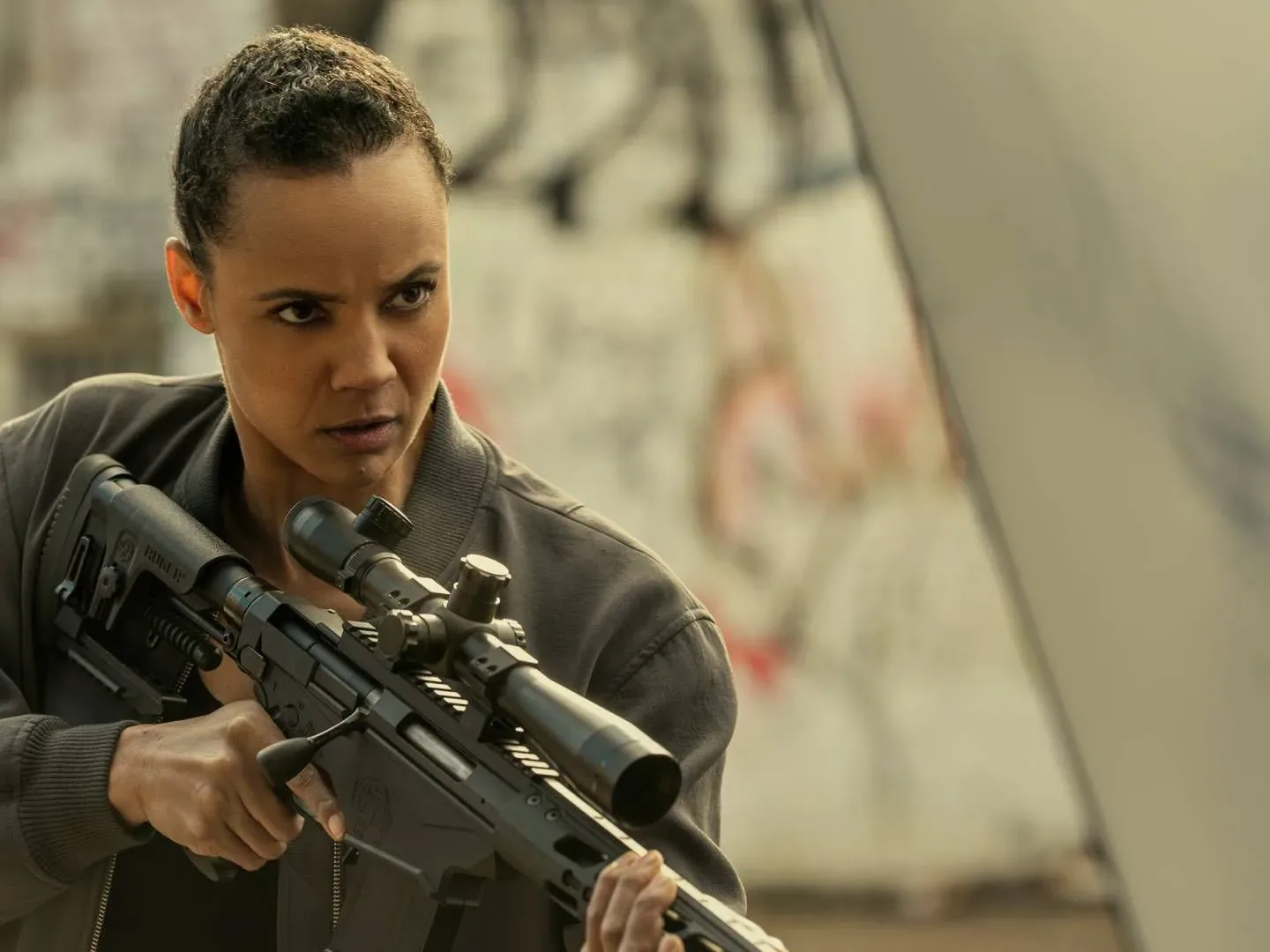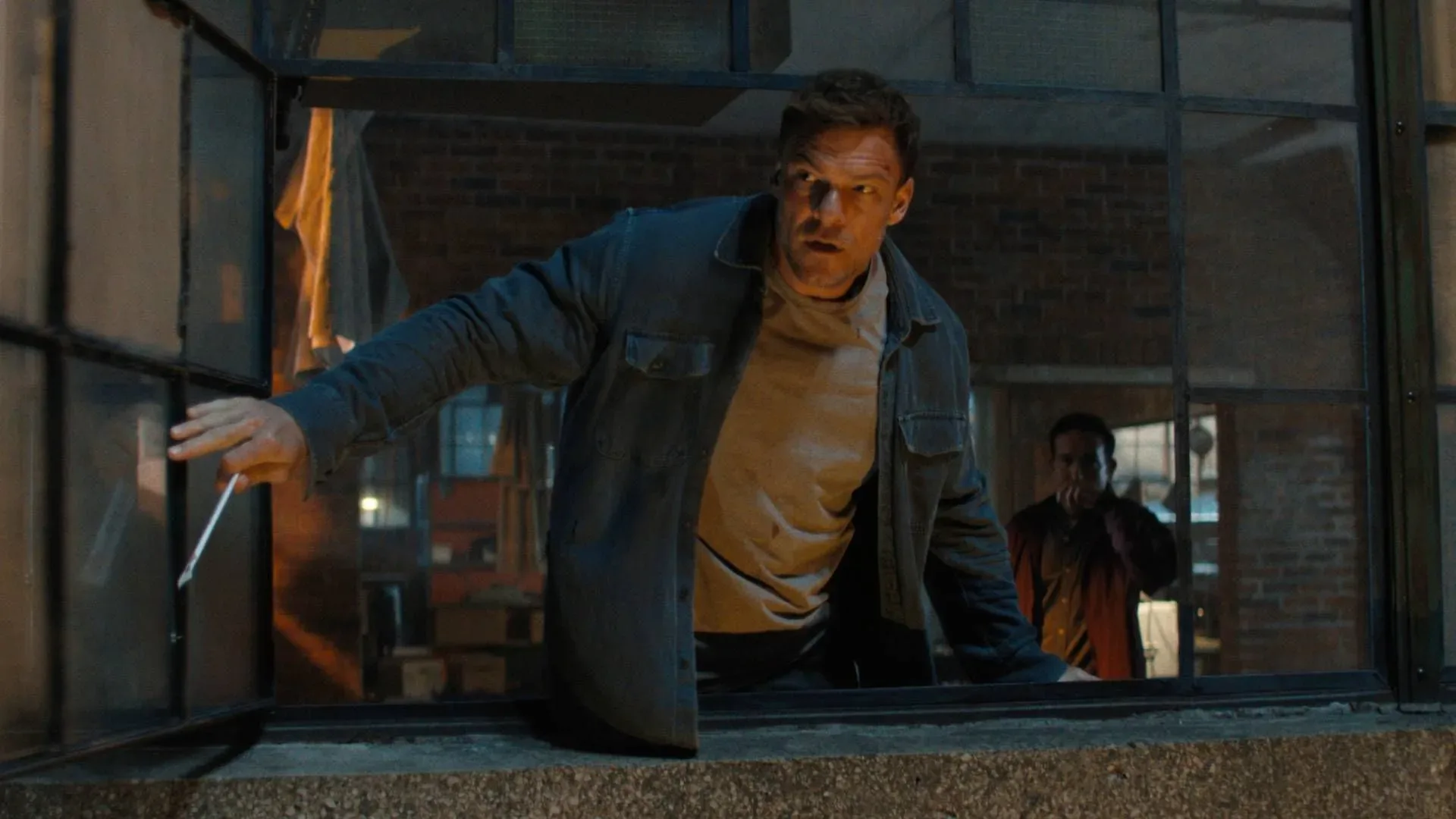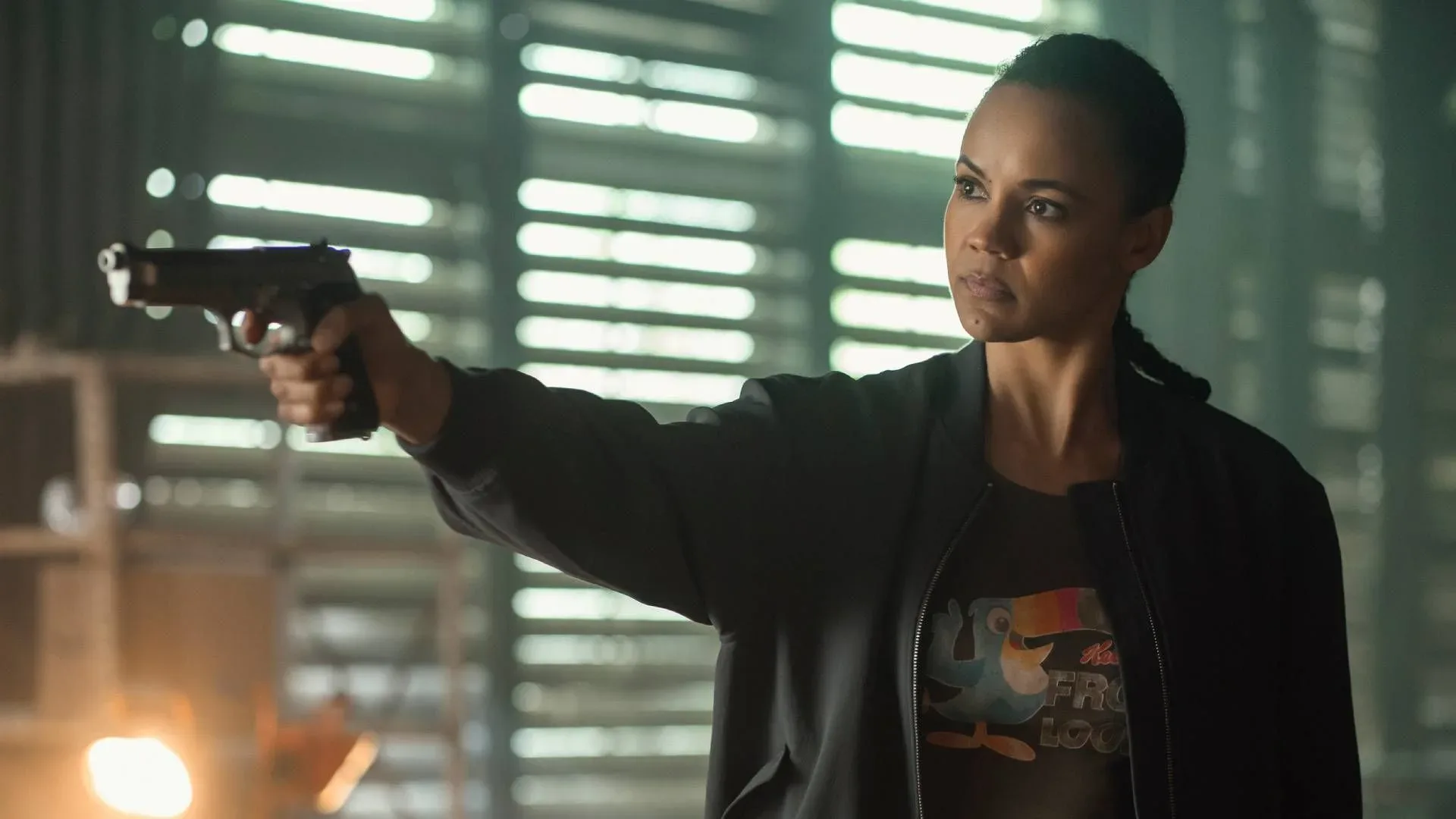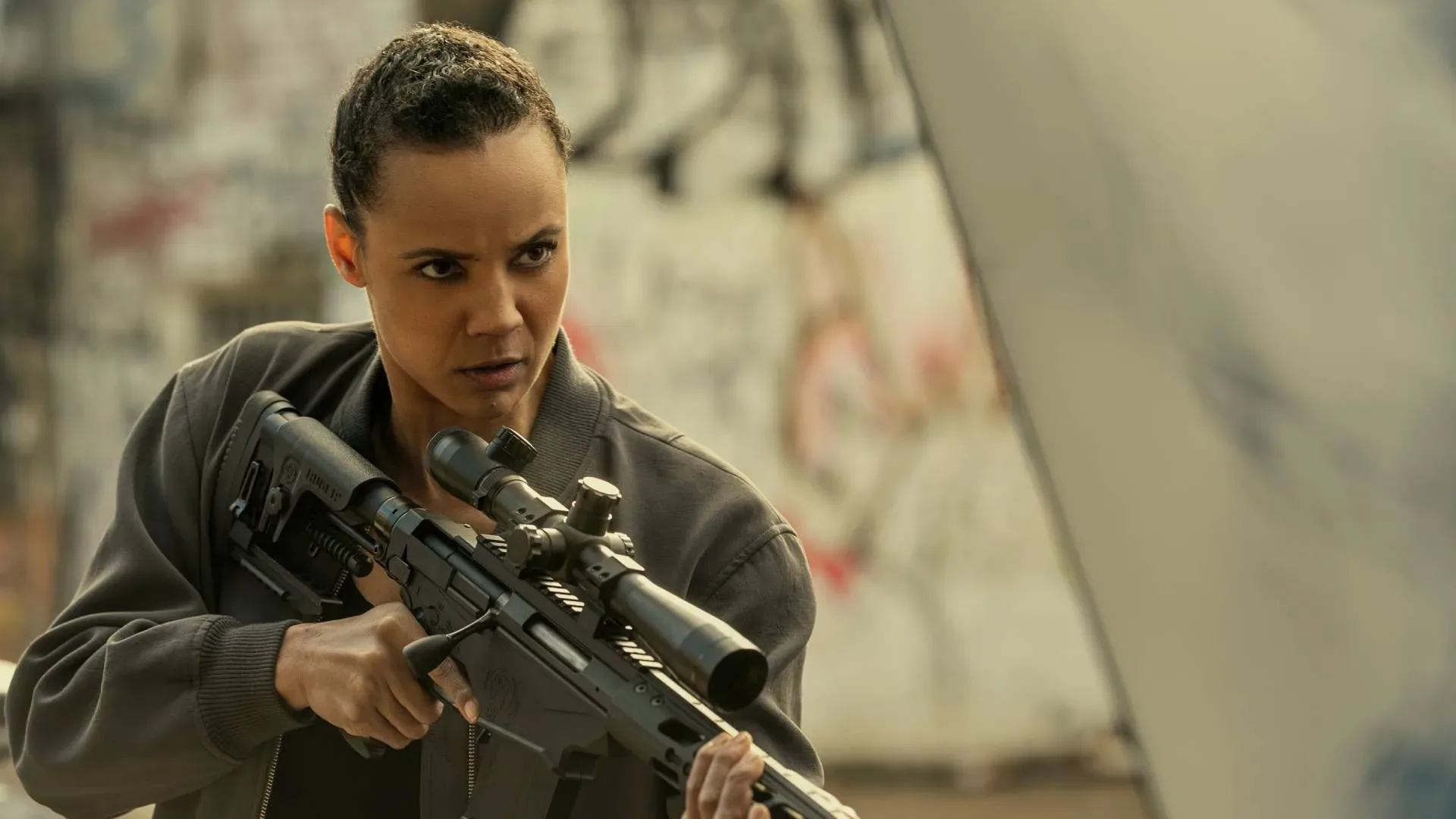
Frances Neagley has spent several seasons proving she can stand alongside Jack Reacher without becoming a mere extension of him. Now Neagley, an eight-episode Prime Video spin-off led by Maria Sten, will move the focus squarely onto the former Special Investigations Unit member—and finally address the history that both the television series and the Lee Child novels have largely kept out of view.
The series arrives September 16, alongside the Reacher season 4 finale, and takes place immediately after the latest season’s events. Its central case begins with the suspicious death of Tommy Crane, identified as a childhood friend of Neagley’s. That death sends her after answers, with the action-thriller machinery viewers expect from this world still in place. The distinction, Sten has indicated, is that the new show makes room for a more emotional investigation into the character herself.
A familiar ally becomes the lead investigator
Neagley is already established as one of the most recognisable people in the television version of the Reacher world. Sten has played her since season 1, and the character has continued to appear even when the source novels did not provide a direct precedent for her involvement. That recurring role made her a dependable ally for Reacher, but it also left a useful dramatic gap: audiences could understand her skills, discipline and reserve without being given a full account of where those traits came from.
A spin-off changes the question from “How can Neagley help solve Reacher’s case?” to “What happens when Neagley’s own past becomes the case?” The premise of Crane’s death supplies the external engine. It gives Neagley a concrete mystery to pursue and an apparent reason for the violence suggested in the setup. Her personal connection to Crane adds a second layer, however. This is not simply another assignment for a highly capable investigator; it is a threat that reaches back into a part of her life viewers have not previously seen in detail.
For more context, explore Buying an Older MacBook in 2026? Start With Apple Silicon, Not the Lowest Price.
That setup also gives the show a clear way to retain the franchise’s hard-hitting genre identity while shifting perspective. An action thriller typically builds momentum through danger, investigation and confrontation. Neagley appears positioned to use those familiar tools while asking what Neagley protects, what she conceals and what it costs her to pursue a case so close to home.
Haphephobia is more than a character detail
One of the specific elements the series will explore is Neagley’s haphephobia. The term means a fear of being touched. In a character known for competence under pressure, it is a significant and unusually personal boundary, not a throwaway eccentricity. The condition has been part of viewers’ understanding of Neagley, but the new series is set to examine it alongside her past trauma.
That matters because a physical boundary can communicate something about a character without requiring her to explain it. It affects how she moves through rooms, interacts with colleagues and handles situations in which closeness is unavoidable. When a show begins to explore the trauma connected to such a response, it takes on a more difficult responsibility than simply using the trait to make a character seem mysterious or distinctive.
Sten described being impressed by the care and creativity involved in blending that emotional material into an overt action series. Her comments point to the core balancing act for Neagley: it needs to deliver a forceful mystery while treating the reasons behind its protagonist’s guardedness with sensitivity. The show’s strongest opportunity lies in allowing those two elements to inform each other rather than treating the personal story as an interruption between set pieces.
For viewers, that likely means the character’s formidable self-reliance should be read differently than it is in a supporting role. On Reacher, Neagley’s precision and control are assets brought into someone else’s battle. As the protagonist, those same qualities may be both strengths and defenses. The difference is subtle but important: competence can solve an immediate problem, while the personal history behind it may be far harder to confront.
An original story inside an established universe
Neagley also marks a departure in how this corner of the franchise is constructed. Every season of Reacher so far has adapted one Lee Child book. The spin-off instead tells an original story set in the same screen universe. That does not mean it discards the novels’ foundation; it means the series has to define how it expands a character whose past was deliberately not fully spelled out on the page.
For an adaptation, an original story is not automatically freer or easier. It can use familiar characters, history and audience investment, but it must also earn viewers’ confidence that new material belongs. This is especially true with Neagley, whose mystery is part of her appeal. Filling in a backstory can enrich a character, yet too much explanation can flatten the very ambiguity that made them compelling.
Sten’s stated priority was to honour the existing foundation while revealing the aspects of Neagley she does not show other people. That is a sensible framework for the character. The goal is not to replace the reserved, sharply defined Neagley audiences already know with a separate version who merely shares her name. It is to add context while preserving the traits that make her recognisable: capability, restraint, loyalty and an insistence on maintaining control.
The distinction between expansion and replacement will be important. Expansion gives prior scenes additional meaning without invalidating them. Replacement asks the audience to disregard what they already understood about a character. Based on Sten’s description, the intention is firmly the former: the show will go deeper into Neagley’s secret sides, but she should remain the same person at the center of the story.
Why the Tommy Crane case is a useful entry point
Tommy Crane’s suspicious death provides a practical narrative bridge between the Neagley of the present and the person she was before becoming part of Reacher’s Special Investigations Unit. Because Crane is a childhood friend, the investigation has the potential to expose details Neagley would not normally volunteer. A conventional case can uncover evidence; a case tied to an old friend can also uncover relationships, memories and unresolved damage.
The available details do not establish who killed Crane, what the motive is, or how deeply the case connects to Neagley’s past. Those are questions for the series itself, not facts to assume from its premise. What is clear is that his death is framed as the catalyst for her mission, and that the mission will be violent. The uncertainty is part of the hook: the audience knows Neagley has reason to act, but not yet what she will discover about Crane, her history or herself.
There is an added benefit to centering a spin-off on a specific personal loss rather than attempting to manufacture a broad franchise emergency. It immediately gives the new show its own emotional stake. Reacher can remain a major presence in the wider universe without the spin-off needing to duplicate his exact storytelling function. Neagley has a distinct point of view, a distinct boundary around physical contact and now a case whose origins predate the audience’s first meeting with her.
What audiences can reasonably expect
- Eight episodes: The spin-off is a self-contained eight-episode season.
- Close continuity: It is set immediately after the events of Reacher season 4 and launches at the same time as that season’s finale.
- A character-led mystery: Neagley investigates the suspicious death of her childhood friend Tommy Crane.
- More context for an established trait: Her haphephobia and past trauma are part of the show’s stated emotional focus.
- New narrative territory: Rather than adapting a single Lee Child novel, the series tells an original story in the established on-screen universe.
The premise does not promise to answer every question ever raised about Neagley, and it should not be presumed to do so before the episodes arrive. But it does signal the most sustained examination of her yet. For a character long defined by what she withholds, that makes Neagley less about stripping away every mystery than about deciding which hidden experiences are essential to understanding her.
Sten’s involvement provides continuity at the center of that process. Having played Neagley from her first appearance in Reacher season 1, she has had time to establish the character’s rhythms before taking on a story designed to reveal more of what lies beneath them. If the series can maintain that continuity while giving Crane’s death and Neagley’s trauma their proper weight, it has a clear reason to exist beyond simply extending a successful action franchise.
Neagley begins streaming on Prime Video on September 16.