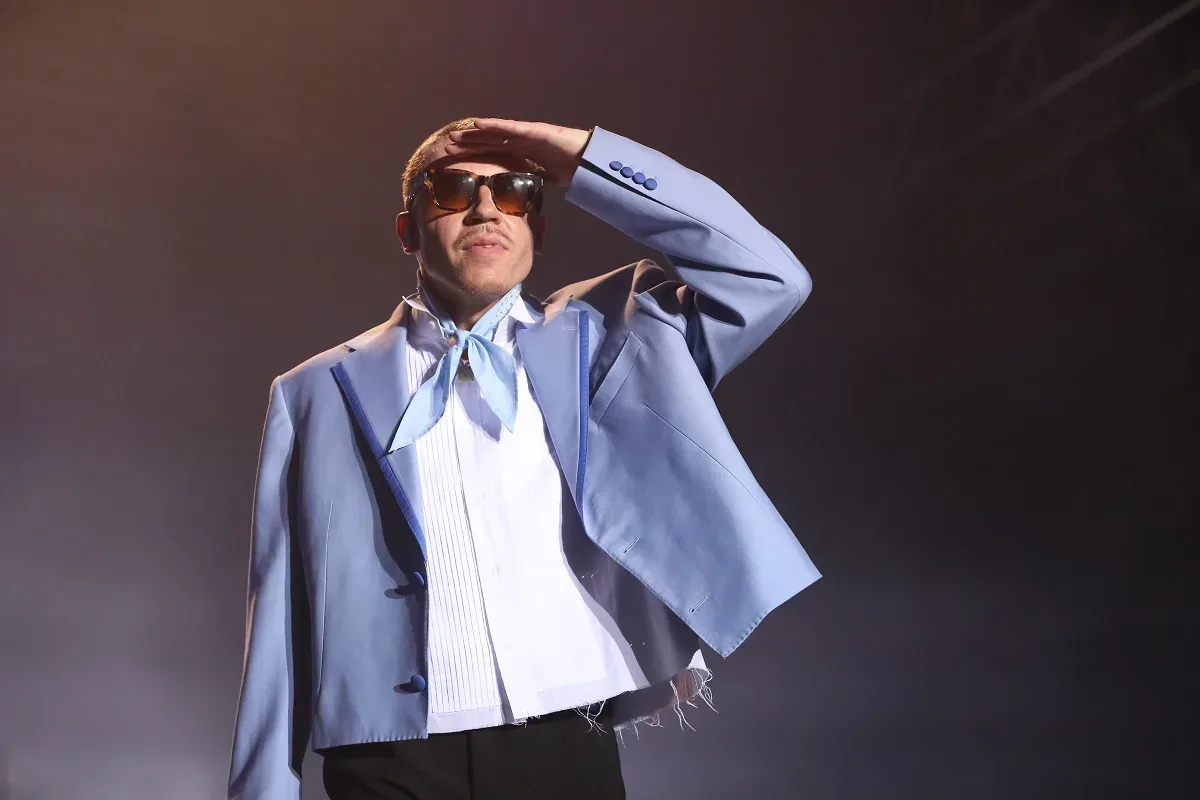
Macklemore says he has been taken off Ed Sheeran’s Loop Tour following the pair’s recent stadium shows, framing the decision as a direct professional consequence of his sustained advocacy for Palestinians. In a statement posted Monday, September 14, the Seattle rapper said he had opened two dates earlier this month but would no longer appear at the eight remaining shows he had been scheduled to support.
The immediate practical outcome is clear: Sheeran’s official tour calendar lists Lukas Graham and Aaron Rowe as support for the September 19 stadium date in Philadelphia. But the circumstances remain contested. Messina Touring Group said certain venues were unwilling to host concerts featuring Macklemore and that preserving the remaining run mattered to hundreds of thousands of ticket holders. Macklemore, meanwhile, offered a far more personal and politically charged account of how the split came about.
His central allegation is that New England Patriots owner Robert Kraft contacted Sheeran and objected to Macklemore performing at Gillette Stadium, which is owned by the Kraft Group. Macklemore further alleged that Kraft had helped assemble pressure from other stadium owners, presenting Sheeran with an ultimatum over the remaining dates.
That allegation has not been independently established. At the time Macklemore published his statement, Kraft, Sheeran and the Kraft Group had not publicly addressed the specific claim. The known venue connection is that Macklemore had been due to support Sheeran at Gillette Stadium on September 25 and September 26; that fact alone does not demonstrate that Kraft coordinated action by other venue owners.
A friendship strained by a public disagreement
Macklemore described Sheeran as a friend of 13 years, saying their relationship included studio time, late-night conversations and shared stages. He did not portray the dispute as a simple falling-out. Instead, he said they had held difficult but respectful private conversations that still led them to a fundamental disagreement about political neutrality.
In Macklemore’s telling, Sheeran was placed in an exceptionally difficult position as objections mounted. He said Sheeran relayed that some people viewed the phrase “Free Palestine” and the Palestinian flag as hurtful, while remaining reluctant to adopt a public political position himself. Macklemore characterized that restraint as an apolitical stance colliding with the realities of a highly visible U.S. stadium tour.
The rapper repeatedly emphasized that neither he nor the other well-known people involved should be treated as the primary victims of the dispute. His statement focused instead on Palestinian civilians killed, displaced, starved or otherwise subjected to violence in Gaza. He maintained that the lost tour dates, along with professional opportunities he says he has previously lost, are secondary to that humanitarian crisis.
That distinction is important to his broader argument. Macklemore says choosing a side has cost him brand partnerships, sponsorships, festivals, private events, relationships and industry access. Yet he insists that neutrality is not possible where he sees oppression and injustice. He did not say his advocacy would change in response to losing the dates.
What happened at MetLife Stadium
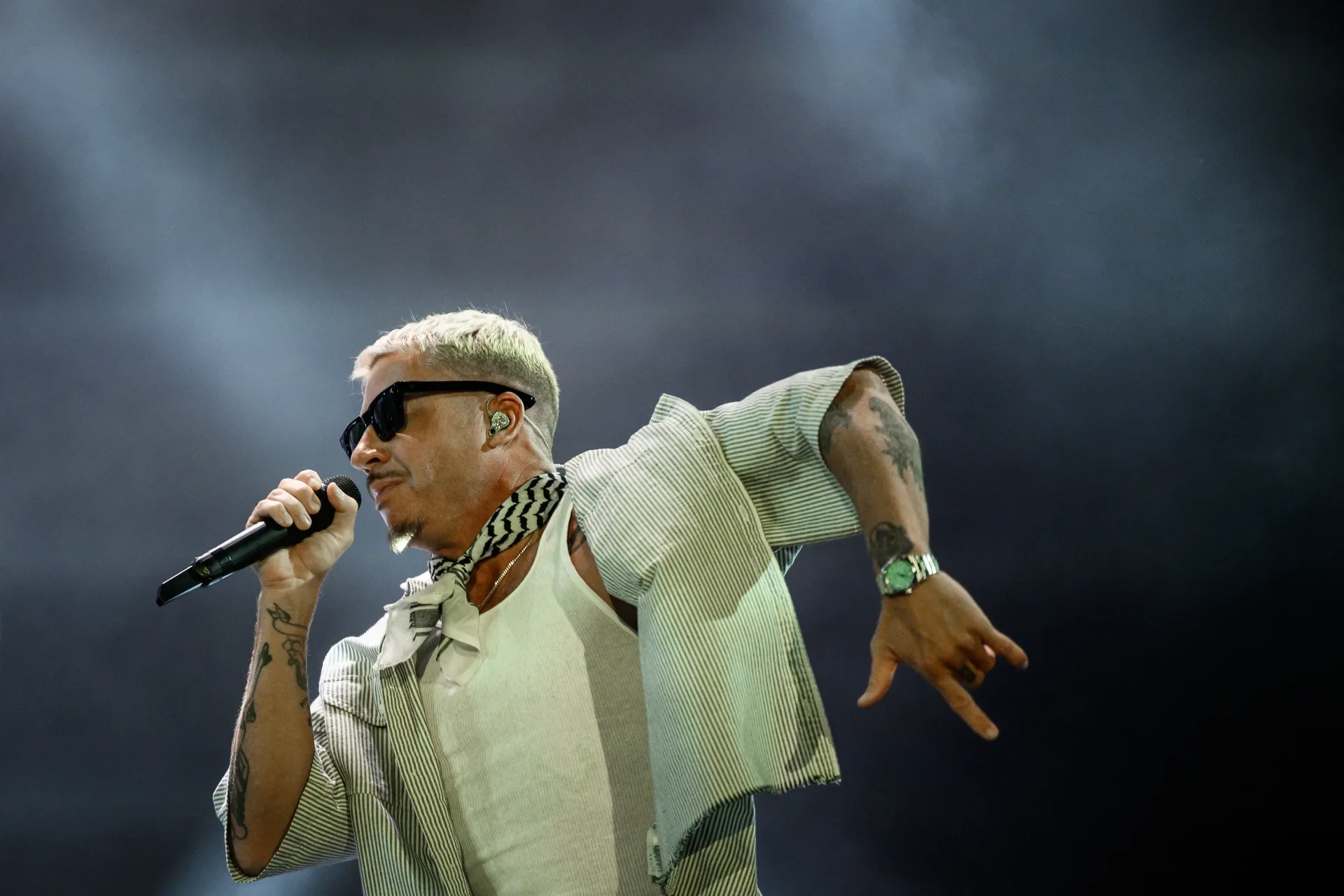
The flashpoint came during Sheeran’s September 4 and September 5 shows at MetLife Stadium in New Jersey. Macklemore performed “Hind’s Hall” while Gaza footage played, wore a keffiyeh and led a crowd of more than 80,000 people in saying “Free Palestine.” He also criticized the Israeli government, called U.S. Immigration and Customs Enforcement a terrorist organization, and urged solidarity with multiple nations.
The presentation prompted swift condemnation from several groups. The Israeli-American Council circulated a petition seeking Macklemore’s removal from the remaining tour dates. The Anti-Defamation League criticized the performance, while StopAntisemitism alleged that concertgoers had been subjected to anti-Israel messaging without expecting it. Pink amplified criticism of the performance, later explaining that she supports Palestinian rights but felt frightened by Macklemore’s presentation as a Jewish mother.
Macklemore returned for the second MetLife date and argued that criticizing Israeli policy or opposing Zionism should not automatically be equated with hatred toward Jewish people. His subsequent statement also acknowledged that antisemitism is real, while contending that the term should not be deployed to block scrutiny of the Israeli state.
For Macklemore, the decisive difference between this moment and earlier speeches was scale. He said he has voiced similar messages from stages internationally for nearly three years. Appearing before Sheeran’s enormous stadium audiences, he argued, brought the message to a level of visibility that made it unacceptable to powerful industry decision-makers. He suggested that a stadium platform can turn a concert stage into a place of political resistance and potentially encourage other artists to speak.
Advocacy that predates the tour dispute
Macklemore’s public comments on the war did not begin with the Loop Tour. On October 19, 2023, he condemned Hamas’ October 7 attacks while also describing Israel’s military response as a genocide and humanitarian catastrophe. At a Washington rally the following month, he acknowledged that he was not an expert, but said he believed he knew enough to call Israel’s campaign genocide.
He later joined Artists4Ceasefire, whose public letter called for humanitarian assistance, the release of hostages and an immediate permanent ceasefire in Gaza. In May 2024, during campus encampments calling on universities to divest from companies connected to Israel, he released “Hind’s Hall.” The song was named for Hind Rajab, the five-year-old Palestinian girl killed with family members after their car came under Israeli military fire. Macklemore said streaming proceeds would go to UNRWA, the United Nations agency serving Palestinian refugees.
That September, he followed it with “Hind’s Hall 2,” featuring Palestinian artists and choirs, and again pledged revenue to UNRWA. His activism had already generated major professional consequences. After he repeated a profane anti-America chant at Seattle’s Palestine Will Live Forever benefit—a moment he later called a slip-up—Neon City Festival removed him from its Las Vegas lineup. The Seattle Kraken and Seattle Sounders also reconsidered business relationships connected to him.
Those earlier events help explain why Macklemore sees the tour decision as part of a continuing pattern rather than an isolated disagreement over one pair of performances. His account is not that the MetLife appearances introduced a new political cause, but that performing the same cause alongside a global pop star, inside some of America’s largest venues, changed the perceived commercial risk.
The business explanation and what remains unanswered
Messina Touring Group’s public rationale centers on venue participation and the viability of the remaining shows. The promoter said Macklemore’s continued place on the bill put the tour at risk after discussions with unnamed stakeholders. That explanation confirms the removal but leaves open major questions: which venues objected, what form did their objections take, and whether any coordinated pressure occurred.
Macklemore’s account fills that gap with his allegation involving Kraft, but readers should keep the status of that claim in view. Gillette Stadium’s ownership provides context because it was on the itinerary, yet it is not proof that a multi-venue ultimatum took place. No public response from Kraft, the Kraft Group or Sheeran had addressed the allegation when Macklemore made it.
Sheeran has not been presented by Macklemore as a political adversary in a simple sense. Macklemore instead described someone he considers a brother caught between friendship, public expectations, venue concerns and an aversion to taking sides. He said he hopes the relationship survives, leaving the door open for future conversation while showing no sign of retreating from his own position.
The episode also illustrates how quickly entertainment, venue ownership and political speech can overlap. Stadium tours are sprawling operations involving artists, promoters, local facilities, contractors and massive ticketed audiences. A support-slot dispute can therefore become larger than an opening set, touching reputational risk, operational planning and the boundaries artists draw around speech on stage. For more music-and-media coverage, see our report on JAŸ-Z and Rick Rubin’s HBO Max series premiere.
Macklemore ended his statement with an Arabic phrase shared by Omar, who worked on subtitles for video from the MetLife performance: La shukra ala wajeb, translated as there being no thanks required for a duty. He used the idea to reject praise for his stance, describing it not as bravery but as a basic human responsibility. Whether the outstanding allegations receive formal replies may determine the next chapter of the tour controversy; the removal itself, however, has already reshaped the remaining dates.