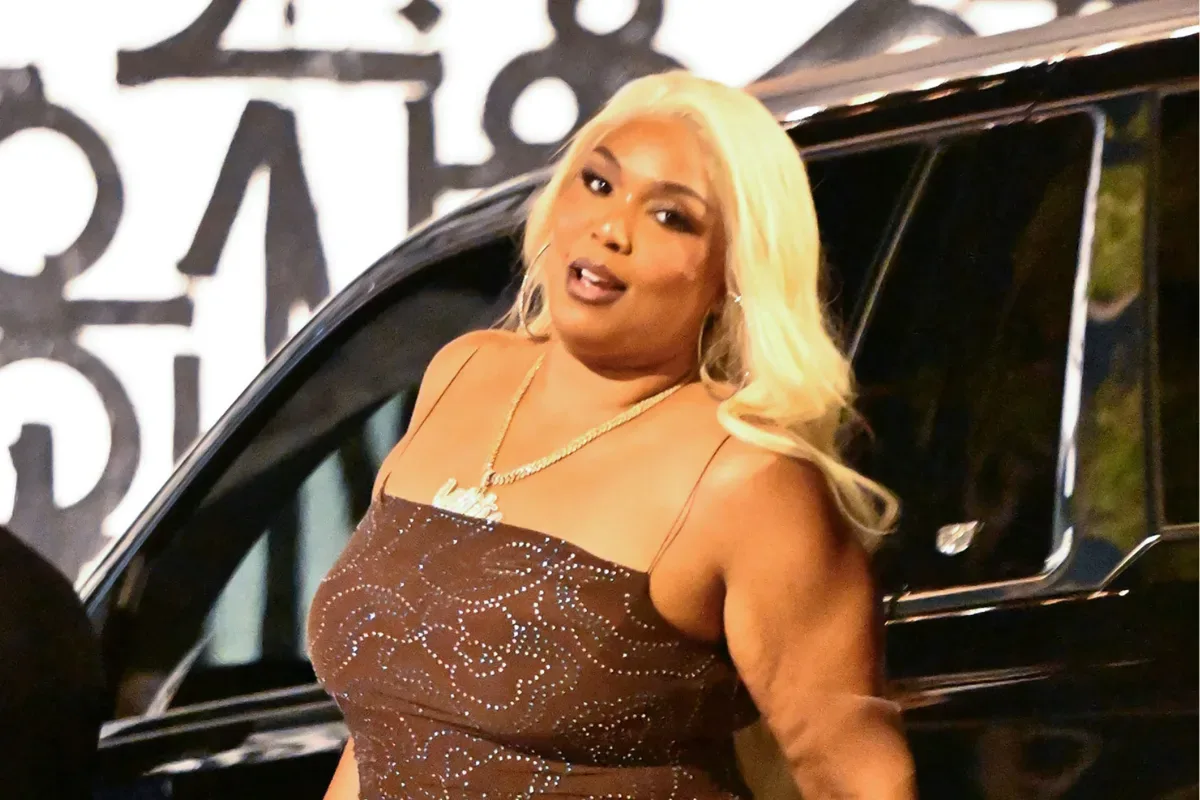
Lizzo is calling a federal court ruling a major victory after the remaining claims in Asha Daniels’ lawsuit against Big Grrrl Big Touring were dismissed before trial. U.S. District Judge Fernando L. Aenlle-Rocha granted summary judgment for the touring company, bringing Daniels’ case to an end at the trial-court level.
The decision concerns a lawsuit brought by Daniels, a wardrobe assistant who worked on Lizzo’s European tour for roughly three weeks. Daniels alleged harassment, discrimination and retaliation involving Big Grrrl Big Touring. Lizzo herself had already been dismissed from the case nearly two years earlier, leaving the touring company as the principal remaining defendant.
Following the ruling, Lizzo said she felt relieved and characterized the outcome as confirmation that the truth had prevailed. She also stressed that she had intended to fight the allegations rather than resolve them through a settlement. Her public response described the lawsuit’s claims as baseless and thanked her legal team, while reiterating her intention to keep using her public platform in a positive way.
What the ruling decided
Summary judgment is a procedural ruling issued when a judge determines that there is no dispute of material fact requiring a jury trial under the applicable legal standard. It does not work like a jury verdict after witnesses testify in open court. Instead, the judge reviews the legal claims and record developed during the case to decide whether the claims can proceed.
In this instance, Judge Aenlle-Rocha dismissed every claim still pending against Big Grrrl Big Touring. The ruling found insufficient evidence of a wider pattern of bias against women, or evidence that women were treated more harshly than men. The court also concluded that the conduct described by Daniels, while potentially rude or unpleasant, did not meet the federal-law threshold for conduct that is sufficiently severe or pervasive.
That distinction matters in employment litigation. A workplace can be described as tense, disorganized, insensitive or hostile in an everyday sense without necessarily meeting the legal definition of unlawful discrimination or harassment. The judge’s decision turned on the evidence and legal thresholds for the specific federal claims in Daniels’ complaint, rather than offering a broad judgment on every interpersonal disagreement alleged during the tour.
The wardrobe-manager allegation
Daniels’ complaint included an assault-related allegation directed at wardrobe manager Amanda Nomura. Daniels alleged that Nomura injured her foot with a rolling clothing rack, pushed her, and declined a request for medical care. However, Daniels voluntarily dismissed Nomura from the lawsuit in April 2024.
The court also addressed the claimed foot and ankle injuries in considering disability-related protections. Judge Aenlle-Rocha found that, despite Daniels’ reported pain, the injuries did not qualify as a disability for purposes of the federal protections asserted in the case.
The original dispute had unusual boundaries from the outset: Daniels did not allege that she met Lizzo during her short time on the European tour. That point helps clarify why the artist was dismissed personally earlier in the litigation and why the later summary-judgment decision focused on Big Grrrl Big Touring and the remaining employment claims.
Daniels’ attorney says next steps are under review
The ruling may end this case unless it is revived on appeal, but Daniels’ legal team has signaled that it is considering its options. Her attorney, Ron Zambrano, argued that the court improperly evaluated evidence that he believes should have been left for a jury to weigh.
That response is important because a summary-judgment loss is not necessarily the final procedural step in a civil case. An appeal, if filed, would not simply retry the factual allegations. It would ask a higher court to review whether the lower court applied the correct legal standard and appropriately resolved the motion based on the record before it. At present, the team has said only that it is weighing what to do next.
For now, the firm fact is narrower: the federal district court has dismissed Daniels’ remaining claims against Big Grrrl Big Touring before trial. Any further action would depend on decisions still to be made by Daniels and her counsel.
A separate lawsuit remains unresolved
The Daniels case should not be confused with the separate lawsuit involving former dancers Arianna Davis, Crystal Williams and Noelle Rodriguez. The cases overlap in public discussion because they involve Lizzo and people who worked in her touring orbit, but they are distinct disputes with different plaintiffs, allegations and procedural histories.
In December 2025, the dancers abandoned an appeal tied to fat-shaming claims after a judge determined that Davis’ secret recording provided justification for her firing. That was a meaningful win for Lizzo in that narrower portion of the dancers’ case.
But it did not resolve everything in that litigation. Sexual-harassment, assault and false-imprisonment allegations brought by the dancers remain active. As a result, it would be inaccurate to treat the dismissal of Daniels’ case as a complete resolution of all legal disputes connected to Lizzo and her touring operations.
Separating those legal threads is more than a technicality. High-profile cases often get compressed into a single celebrity-news headline, even where the parties, claims and rulings are substantially different. Entertainment reporting can turn complicated procedures into a simple scoreboard, but the actual status here is more specific: one case has been dismissed at the district-court level, while separate allegations in another action are still pending.
Why the distinction is worth keeping clear
Public figures carry stories across music, social media, business and the court system, where every update can quickly become a viral fragment. Legal decisions rarely fit that format. A dismissal can be decisive for one plaintiff’s claims and have no direct effect on a separate lawsuit. Likewise, a statement celebrating a courtroom victory can accurately describe a particular ruling without deciding unrelated allegations elsewhere.
It is the same reason audiences benefit from looking beyond the loudest single line in any dramatic story, whether it is a lawsuit, a documentary, or a fictional thriller. The framing of a narrative can shape the response before all its details are considered—a tension also explored in this look at how a cult thriller builds its emotional story.
In legal terms, the immediate update is straightforward. Judge Fernando L. Aenlle-Rocha granted summary judgment to Big Grrrl Big Touring and dismissed all remaining claims brought by Asha Daniels. Lizzo has publicly celebrated the ruling as a vindication. Daniels’ attorney disputes the court’s evaluation of the evidence and says the team is considering potential next steps. Meanwhile, the separate dancers’ lawsuit remains only partially resolved.