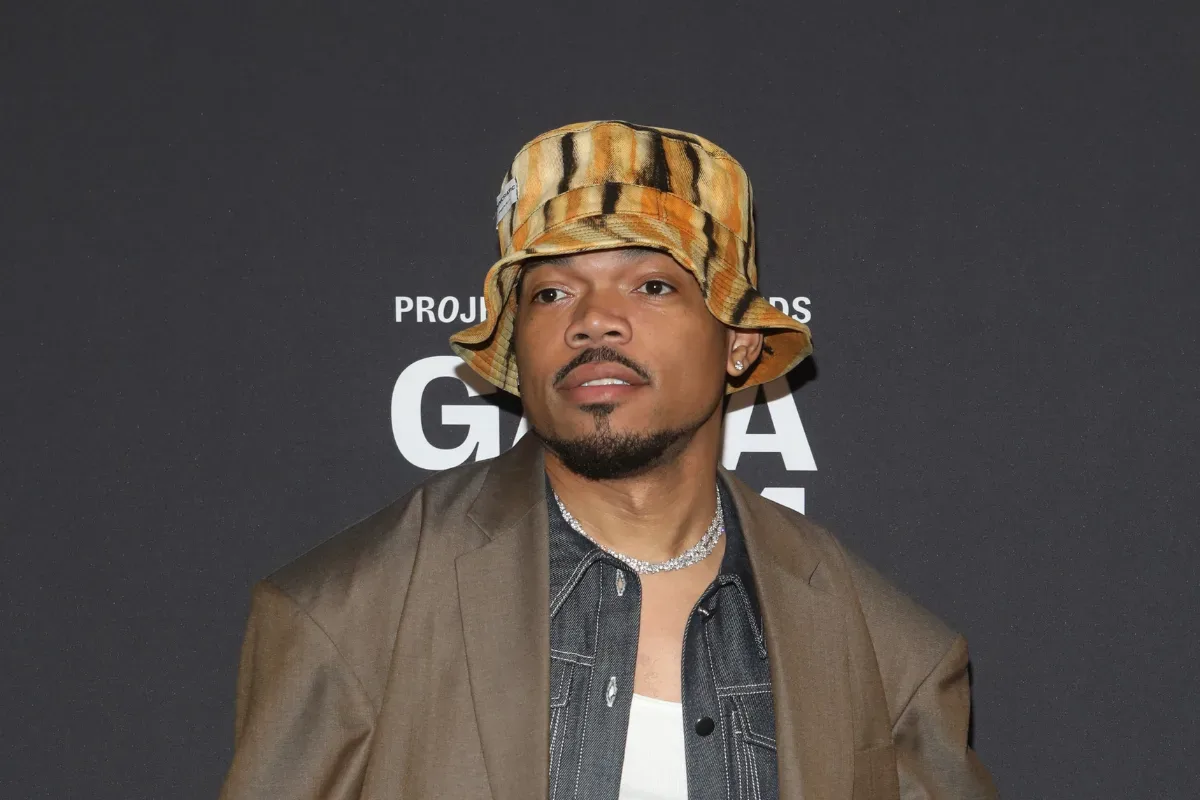
Chance the Rapper has won a further court ruling in his long-running dispute with former manager Pat Corcoran, this time focused on merchandise business rather than the post-split commissions claim that went to a jury earlier this year.
On October 13, Cook County Circuit Court Judge James E. Hanlon Jr. ruled that Corcoran breached duties he owed Chance by pursuing side payments from merchandise vendors without disclosing them to the artist. The ruling requires Corcoran to turn over vendor commissions and merchandise-related management fees connected to the disputed period. It also directs the transfer of chanceraps.com, the domain used to sell Chance the Rapper merchandise, to the artist.
The decision does not yet set the final amount Corcoran must repay. Chance’s representatives have said the recovery could include up to $1.5 million in management fees, in addition to vendor payments, but the court has not established a dollar figure. A late-November court conference is expected to address the calculation.
A separate win after the $35 jury verdict
The new ruling stems from a claim heard by the judge in May. It was separate from the jury trial that concluded in March, a distinction that helps explain why the litigation has produced results that can sound contradictory at first glance.
In March, a jury rejected Corcoran’s $3.8 million claim for unpaid commissions. Chance was awarded $35 on his counterclaims. That small monetary verdict did not decide every issue in the broader conflict, however. The question of whether Corcoran had breached his obligations in connection with merchandise arrangements remained for the judge to decide.
The October ruling therefore changes the practical picture considerably. The earlier $35 award was a completed jury result on the claims presented there; the newer order concerns a different legal issue and can require an accounting and repayment of profits even before the precise total is known.
Chance said in a statement provided by his representatives that he was grateful to be closing the chapter and hoped eventually to tell his side of the story. He also thanked the courts and God for remaining faithful.
What the judge ordered
The order described in the ruling has three central parts:
Related coverage includes Chance the Rapper Secures New Ruling in Pat Corcoran Merchandise Dispute.
- Vendor commissions: Corcoran must return side payments received from merchandise vendors that were not disclosed to Chance.
- Management commissions: He must also return the 15% management commissions he earned from the merchandise business during the period covered by the dispute.
- Website domain: The court directed Corcoran to hand over chanceraps.com, the online address used for the artist’s merchandise sales.
Each item matters for a different reason. Vendor commissions concern money paid by businesses involved in producing or selling products. Management commissions are the percentage a manager receives from the artist’s business income. And control of a domain name can be especially significant because it is the recognizable web address through which fans may find official merchandise.
In plain terms, the ruling addresses both past revenue and an ongoing piece of the merchandise operation. The repayment side will depend on financial records and the court’s eventual calculation. The domain transfer addresses control of the branded sales channel itself.
Why undisclosed side payments were central
The key finding was that Corcoran breached duties to Chance by seeking side payments from merchandise vendors without telling him. The dispute was not simply about whether a manager could be paid for merchandise work. The court separately preserved Corcoran’s compensation for work outside the merchandise arrangements at issue, while ordering the return of the disputed merchandise profits and related commissions.
That limitation is important. Chance had asked for Corcoran to forfeit all past compensation, but the judge did not grant that broader request. Instead, the ruling drew a line around the merchandise arrangements the court found problematic.
Corcoran’s position has emphasized exactly that limit. A spokesperson said the ruling provided no basis for Chance’s claim of more than $10 million in damages and argued that Chance still needed to establish harm in the merchandise business.
So, while the liability ruling is a clear victory for Chance on the merchandise-duty claim, the size of the financial consequence remains unsettled. The next phase is less about relitigating the core finding and more about determining which funds fall within the order and how much must be returned.
How the dispute began
Corcoran sued in 2020 after Chance fired him in April of that year. Their professional relationship began in 2012, but they never entered into a written management contract.
That absence of a written agreement sits at the center of several arguments in the case. Corcoran maintained that a verbal agreement entitled him to commissions for three years after the relationship ended. Chance disputed that he had agreed to make those continuing payments.
Corcoran’s side also argued that he should receive commissions on deals he worked on during his time as manager even if money from those deals arrived after the firing. That is a different question from a straightforward share of future earnings: it turns on whether later payments can be linked to work completed during the relationship.
The March jury rejected Corcoran’s $3.8 million bid for unpaid commissions. The merchandise issue proceeded on its own track, with Chance’s lawyers alleging that Corcoran had put his own financial interests ahead of Chance’s business interests through the challenged vendor arrangements.
What happens at the November conference
The coming court conference is expected to deal with the accounting required by the order. That means the unresolved question is not simply a headline-friendly damages estimate. The parties will need to identify the relevant merchandise-related fees, vendor payments and the 15% management commissions covered by the judge’s decision.
Until the court settles that arithmetic, figures floated by either side should be treated as claims rather than the final amount owed. Chance’s representatives have identified up to $1.5 million in management fees, plus vendor payments, as a potential recovery. Corcoran’s spokesperson has challenged the larger damages theory advanced by Chance’s side.
There is also a meaningful difference between an order to return profits and an award based on an asserted total harm figure. The former focuses on the money the court has determined should be handed back under its ruling. A final calculation will clarify the scope of that repayment.
A case about business controls as much as commissions
For artists and fans, the dispute underscores why merchandise is not merely an add-on to music. Merchandise involves vendor selection, payment arrangements, commission structures, online storefronts and ownership or control of digital brand assets. When those elements are handled by multiple parties, disclosure can become as important as the commission percentage itself.
The chanceraps.com order illustrates that point especially clearly. A domain can function as a major part of a merchandise operation: it can direct customers to a store, carry the artist’s branding and serve as a familiar destination for official products. Court-ordered transfer of the domain means the merchandise ruling reaches beyond historical payments and into who controls that channel moving forward.
The broader entertainment-business lesson is not that every informal working arrangement ends in litigation. It is that a long-standing relationship without a written management agreement can leave major terms open to dispute when the relationship ends. Here, the parties disagreed over post-termination commissions, payments tied to deals worked on before the split, and what Corcoran’s responsibilities required in the merchandise business.
For more on another current dispute involving artist business agreements, see Summer Walker’s effort to void her LVRN deal.
What is settled, and what is not
Several facts are now established by the recent ruling: the judge found a breach of duty concerning undisclosed merchandise-vendor side payments; repayment of specified merchandise profits and 15% management commissions was ordered; and chanceraps.com must be transferred to Chance.
Several important points remain open. The court has not set the ultimate repayment number. It has not accepted Chance’s request for a complete forfeiture of all compensation Corcoran previously received. And Corcoran continues to contest the scale of the claimed damages and whether harm has been demonstrated in the merchandise business.
That makes the late-November proceeding the next key date. It should bring greater clarity to the financial meaning of a ruling that has already reshaped the case: after a jury outcome that left Chance with $35, the separate merchandise decision may result in a much more substantial recovery, but the exact figure still belongs to the court’s forthcoming accounting.