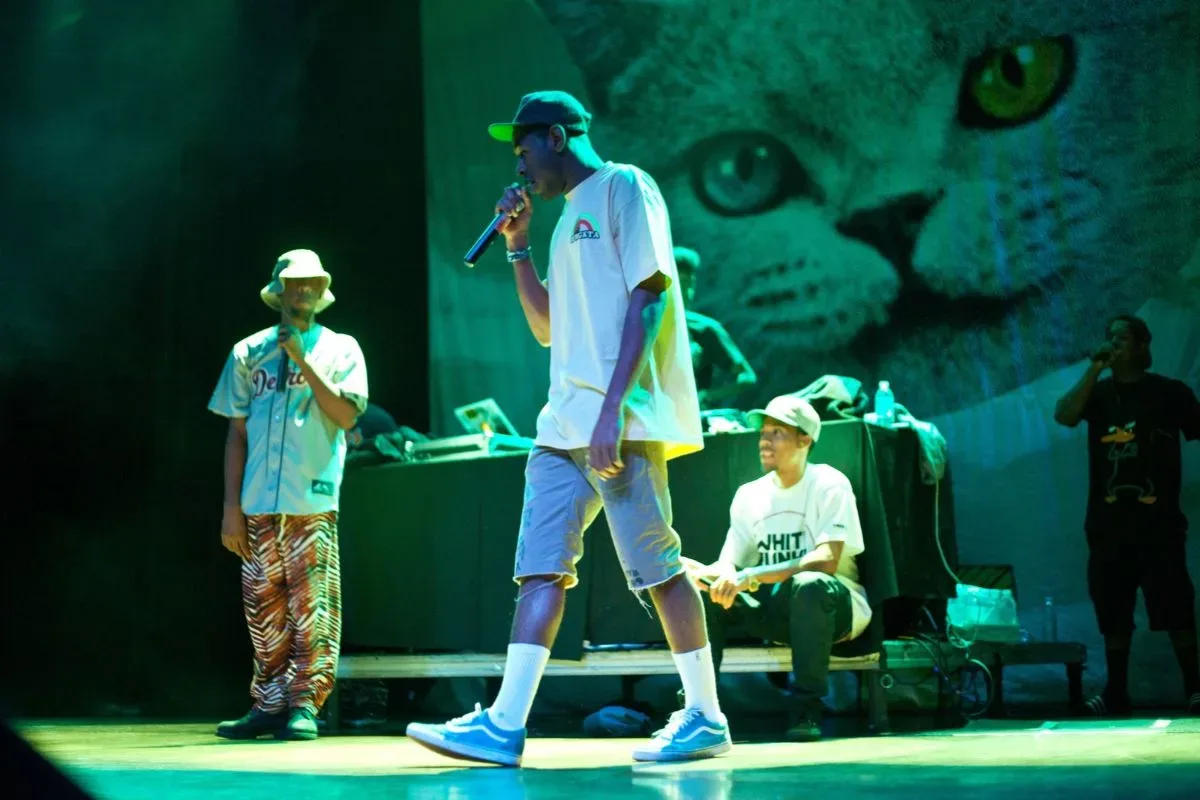
Left Brain turned the closing moments of his Camp Flog Gnaw set into a major personal milestone, proposing to his longtime girlfriend, Melanie Bickel, onstage at Dodger Stadium in Los Angeles on November 14. Bickel accepted the proposal.
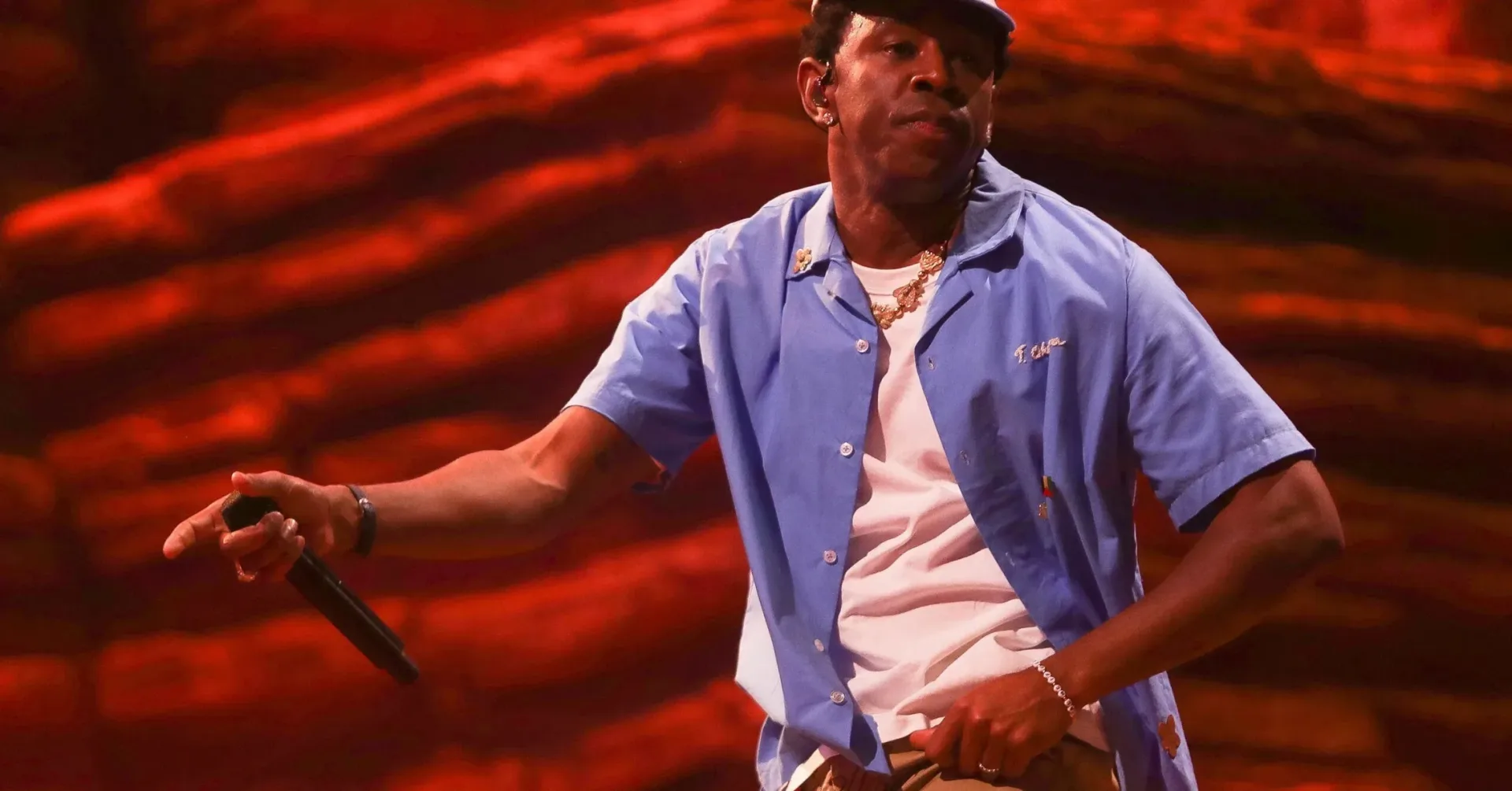
The Odd Future rapper and producer waited until the end of his performance to ask the question. The onstage setting was especially fitting: Camp Flog Gnaw was founded by Tyler, The Creator, Left Brain’s longtime Odd Future collaborator, and the festival gave a foundational member of the Los Angeles collective a stage for both a new performance and a lasting private-life moment made public.
A custom ring built around a shared reference
The engagement ring was made by TITI Atelier. It features a yellow center stone and a concealed lovebird motif, a design detail tied to Left Brain and Bickel’s shared fondness for Tweety Bird. The jeweler said Left Brain got down on one knee and that both members of the couple cried after Bickel said yes.
The hidden lovebird is the kind of detail that shifts a ring beyond its visible centerpiece. Rather than functioning solely as a prominent showpiece, it gives the design an intimate reference intended for the couple. That is particularly notable in a festival proposal, where the public gesture itself is naturally large: the ring’s smaller detail preserves something personal inside it.
There is no information here on a wedding date, additional ring specifications, or future plans. The confirmed news is simply the engagement, Bickel’s acceptance, and the personal inspiration behind the custom piece.
A set that mixed new material, live players and a cover
The proposal capped a performance that also underlined the range of Left Brain’s work as an artist. His Gnaw Stage appearance included live saxophone and trumpet, a new track called “Engage,” and a cover of Rage Against the Machine’s “Killing in the Name.”
Using a saxophone and trumpet changes the onstage framework from a conventional rap set built only around vocals and backing tracks. It does not tell listeners exactly how every song was arranged, but it does establish that live instrumentation was part of this particular show. Likewise, performing a Rage Against the Machine song signals a willingness to place a rock protest anthem alongside Left Brain’s own material without suggesting that it represents a new recorded release or a permanent direction for his music.
Festivalgoers could also find Left Brain Lattes, a coffee stand located away from the stage. Together, the stand, the live elements and the new-song performance made the booking broader than a quick legacy appearance. It was a full Left Brain presentation before it became an engagement celebration.
Why the Odd Future connection matters
Left Brain’s Camp Flog Gnaw appearance carries context beyond the proposal because of his early place in Odd Future. With Hodgy Beats, he formed MellowHype, a duo that released YelloWhite and BlackenedWhite as free downloads through Odd Future’s website in 2010. BlackenedWhite was later reissued by Fat Possum the following year, bringing the project from the collective’s online distribution to retail stores.
That sequence captures a meaningful part of the group’s early path. A free download is a direct method of putting music in front of listeners, while a retail reissue places an existing project into a more traditional release channel. Neither step erases the other: the free release reflects MellowHype’s early connection to the collective’s online audience, and the reissue shows that the music later received a wider commercial rollout.
Left Brain also produced “Rella,” a track on 2012’s The O.F. Tape Vol. 2 that brought Hodgy, Domo Genesis and Tyler, The Creator together on the same song. Production, in this sense, means the creative work behind the instrumental and musical construction of a record; it is separate from, though often closely tied to, the role of the vocalist or rapper performing on it.
His later Mind Gone projects put him on the microphone as well. Left Brain has explained that he began rapping more because he grew tired of sending beats out and waiting for other artists to release them. The shift speaks to creative control: recording his own vocals gave him a way to move material forward without relying on another performer’s schedule or decisions.
“Rap a little bit because producing can get a little boring for me,” Left Brain said in an earlier interview. “I wanna put shit out, so I’m gonna use my voice.”
That background makes the Camp Flog Gnaw slot more than a historical callback. Left Brain arrived as a producer with deep Odd Future roots, an artist who has also developed his own voice as a rapper, and a performer introducing at least one new song. He also returned to a collective setting on the festival’s following day, when Mike G brought out Left Brain and Casey Veggies during a separate Sunday performance.
A homecoming setting, without overstating it
Camp Flog Gnaw was sold out for the weekend, and the event’s connection to Tyler, The Creator naturally puts Odd Future history close to the surface. But the significance of Left Brain’s moment is clearest when kept specific. The festival did not merely provide a nostalgic reunion stage; it hosted his own booking, featured his current material and live setup, and then became the place where he and Bickel publicly marked their engagement.
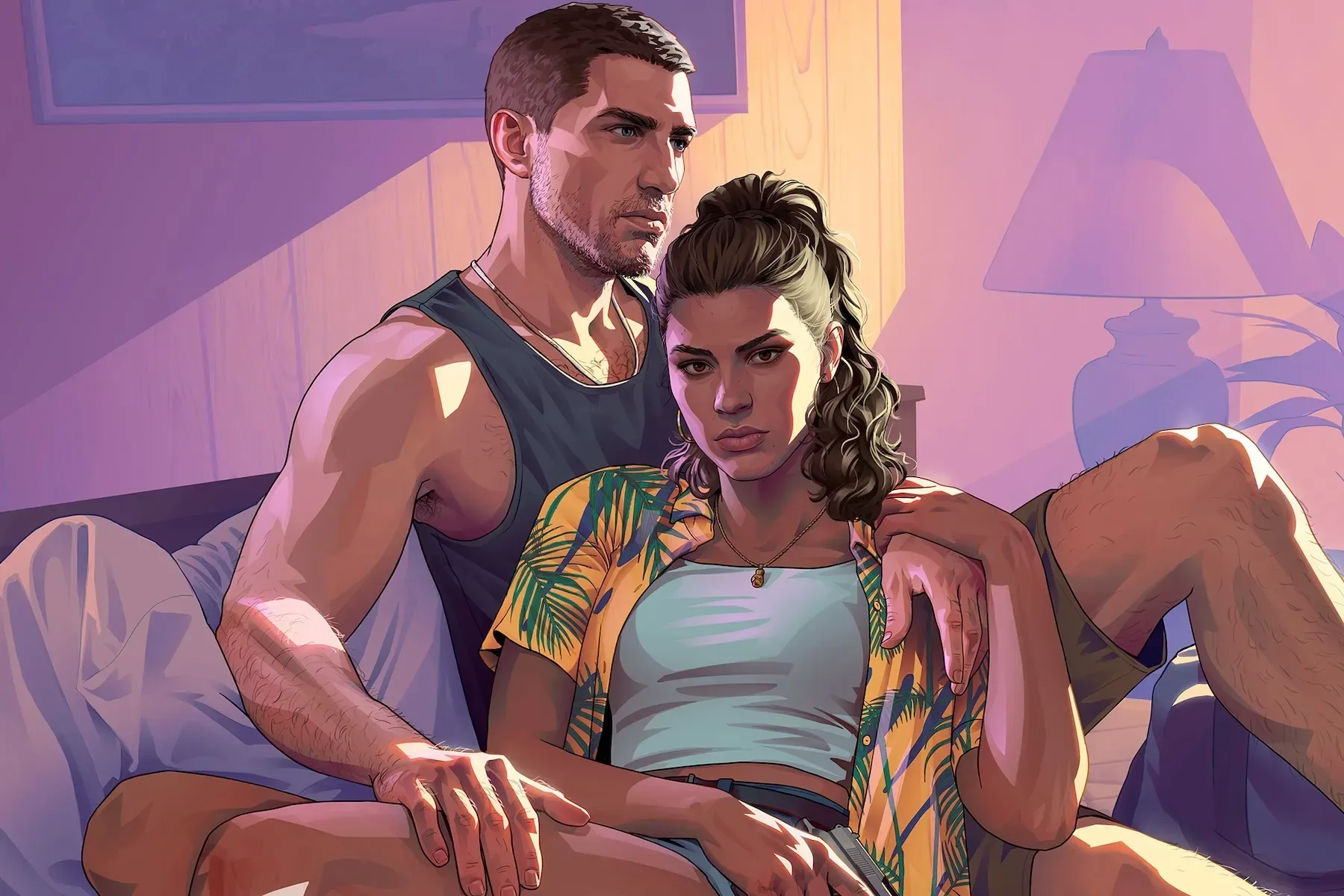
For fans who follow the wider music around games and pop culture, festival performances can also shape the sound-world that travels across both spaces. Music selection remains a major part of the texture around open-world games and other entertainment releases; recent discussion around the scale of GTA 6’s reportedly expansive radio dial is one example of why artist lineups, catalogues and genre crossovers continue to matter outside a single stage.
Still, this was first an artist’s set and a personal announcement, not a game-music reveal or a newly detailed Odd Future project. The available details support a clean picture: Left Brain performed with live saxophone and trumpet, played “Engage,” covered “Killing in the Name,”em> operated a coffee stand presence at the festival, and proposed to Melanie Bickel at the end of the show. She said yes.
It is a straightforward happy ending to a performance rooted in a long-running creative history: a musician associated with Odd Future’s early DIY releases, still making and performing his own work, celebrating an engagement on a stage at a festival created by one of his oldest collaborators.