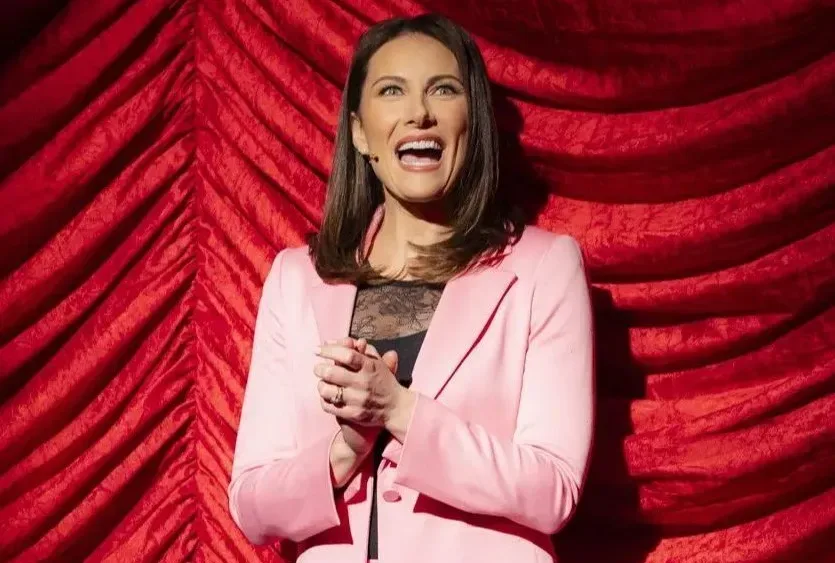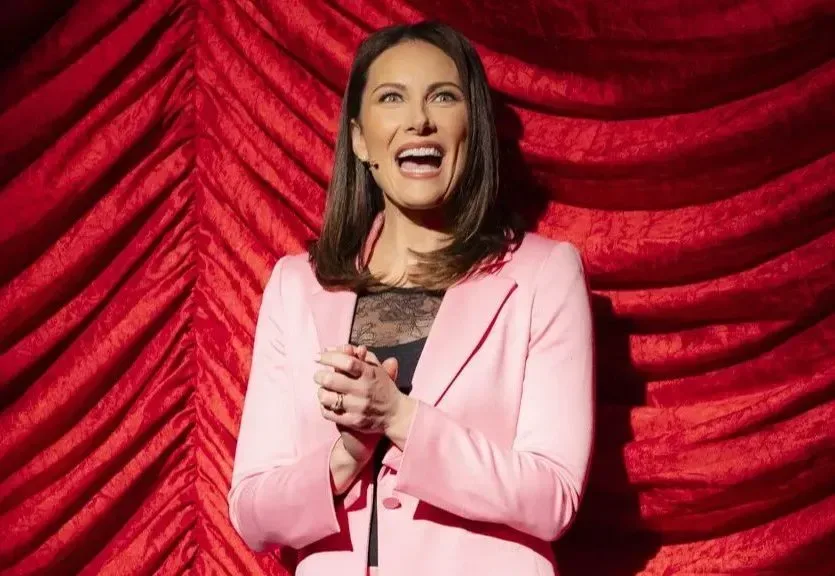
Laura Benanti’s Nobody Cares is built to complicate the neatest possible description of Laura Benanti. It is a one-woman show, but its engine is closest to stand-up: personal stories, carefully constructed jokes, deadpan disclosures, and a willingness to make the hardest material part of the laugh. It is also musical comedy, with five original songs co-written by Benanti and Todd Almond, who appears onstage with her.
What it is not, Benanti stresses, is a conventional cabaret or a retrospective of the Broadway numbers associated with her career. Audiences arriving in hopes of familiar selections from The Sound of Music, Into the Woods, Nine, My Fair Lady, or She Loves Me are walking into something deliberately different: a 16-plus show with adult material, profanity, irreverence, and a focus on her own life rather than an expected songbook.
The distinction matters because Benanti’s theatrical reputation can create a very specific set of expectations. Her early stage work placed her strongly in the ingénue lane—the term for the youthful, often idealized leading woman in theater and drama. Nobody Cares is a conscious move away from that typecasting. Benanti has described herself instead as a “recovering ingénue,” and the new work makes the case that the comic performer was there all along.
What audiences should expect from ‘Nobody Cares’
The show’s subject matter is candid and often heavy: divorce, postpartum depression, perimenopause, motherhood, an injury in which Benanti broke her neck, insecurity, and the pressure to please other people. That list does not make the production a solemn memoir. The material is approached through comic storytelling, a form that uses the rhythm and architecture of jokes to give an audience a way into emotionally difficult territory.
Benanti’s stated approach is rooted in hindsight. Events that were painful when they happened can, with distance, become stories that reveal something true and make room for laughter. In her view, comedy can lower an audience’s guard; after laughter makes a subject feel approachable, a more personal point can land with greater force.
That balance extends to the musical material. The show includes a song called Mama’s a Liar. Its first two sections are comic, while its final movement is sincere. Benanti has noted a difference in how that tonal shift has played across audiences: she felt some discomfort around a heartfelt musical turn during the London engagement, while U.S. audiences have responded to it as a favorite.
That is a useful illustration of what Nobody Cares is trying to do. It is not simply a sequence of jokes separated by songs, nor is it a Broadway concert with funny anecdotes between numbers. The comedy and music share the same personal perspective. A laugh can be followed by a more vulnerable admission, and a song can pivot from absurdity to emotional directness without abandoning the show’s overall voice.
A Broadway performer broadening the frame
Benanti has performed Broadway concerts since she was 22, blending songs with stories. She says audience members often told her that the spoken portions—the “stand-up,” as they called it—were their favorite element. But those bits existed within the safety of a familiar format: a performer known for musical theater singing music that fans expected to hear.
Nobody Cares removes that safety net. The premise is more universal than inside-baseball theater storytelling. Benanti does not require a viewer to know Broadway, appreciate Broadway, or recognize the titles on her résumé. Instead, the show is designed for people who may have been brought by a theater-loving partner, friend, or relative and would otherwise assume a performer with Benanti’s background is not for them.
That broader invitation is central to the project. Benanti wants to retain her musical-theater audience, but the show is also a bid to be seen as more than an interpreter of other writers’ material. She wrote it after Audible commissioned an autobiographical performance piece, though the idea grew from an interest she had already been developing through hosting events and writing monologues and comedy bits.
Her description of joke-writing is revealing: she enjoys its puzzle-like quality, especially when the subject is serious. The “puzzle” is not merely finding a punch line. It is figuring out how to shape difficult information so that an audience can take it in, laugh, and recognize some part of itself in the story.
Benanti initially questioned whether audiences needed another middle-aged white woman’s perspective. Feedback from friends who heard early material in her garage helped change her mind, as did the response from audiences on tour. The show’s title itself carries that tension. It begins from a self-deprecating fear that nobody is interested, then turns toward a more generous proposition: other people may recognize their own shame, fear, or messiness in someone else saying it out loud.
Why she hesitates to call it stand-up
Benanti says Nobody Cares is most similar to stand-up, but she remains cautious about claiming that label. Her hesitation comes from respect for comedians who regularly perform the club circuit and hone material under its particular pressures. She has not followed that conventional route, and does not want to imply that a successful theater career automatically confers the same experience.
Still, the label serves a practical purpose. It tells potential ticket buyers not to expect a standard Broadway evening. Benanti has encountered some audience members who arrive confused by the absence of familiar show tunes and the presence of much more adult comedy. She says no one has visibly walked out, although some initial scowls have occurred.
The reported result is an intergenerational audience, ranging from teenagers to people in their 80s, laughing together by the end. That is not incidental to the show’s appeal. Its experiences may be specific to Benanti, but the underlying concerns—marriage, parenthood, aging, embarrassment, changing identity, and the desire to be liked—do not require theater knowledge to understand.
Her social-media writing offered an earlier public hint of this comedic direction. In the 140-character era of Twitter, Benanti found another constrained joke-writing exercise: delivering a complete comic thought with very little space. The exchange and banter she developed there brought new followers who did not know her stage career, including comedians who recognized the writing.
Melania Trump, impressions, and refusing the people-pleaser role
Another major point in Benanti’s public comic identity was her portrayal of Melania Trump on Late Night With Stephen Colbert. The impression introduced her to viewers who may not have known her Broadway work and demonstrated a different skill set: sketch comedy, character work, and impersonation.
The response was divided. Benanti received substantial positive feedback but also heard from followers who objected to the political satire and said they preferred her as a singer. Her response has become part of the larger lesson behind Nobody Cares: a performer cannot make everyone comfortable, and pursuing universal approval is not a sustainable creative strategy.
That is particularly relevant because people-pleasing is one of the show’s recurring personal concerns. The stage material and the reaction to the Melania work meet at the same point. Benanti is not presenting vulnerability as a method for winning over every listener. She is presenting it as a way to make work that reflects who she is, including the parts of her public persona some people may dislike.
She still uses the Melania character in limited ways, including a medley in theater concerts and occasional social-media appearances, but has not identified a broader future venue for the impression. Her wider ambition is comedy work on television, more original shows to write and tour, and opportunities that make use of the comic voice Nobody Cares puts at the center.
Benanti is also set to return to Mayor of Kingstown, although she has not said when that series will be back. Her comments about pursuing comedy roles point toward a practical professional goal: changing the industry’s understanding of what she can do. That kind of shift often requires an artist to show, not simply state, that an old label is too small. A touring show is a particularly direct way to do it.
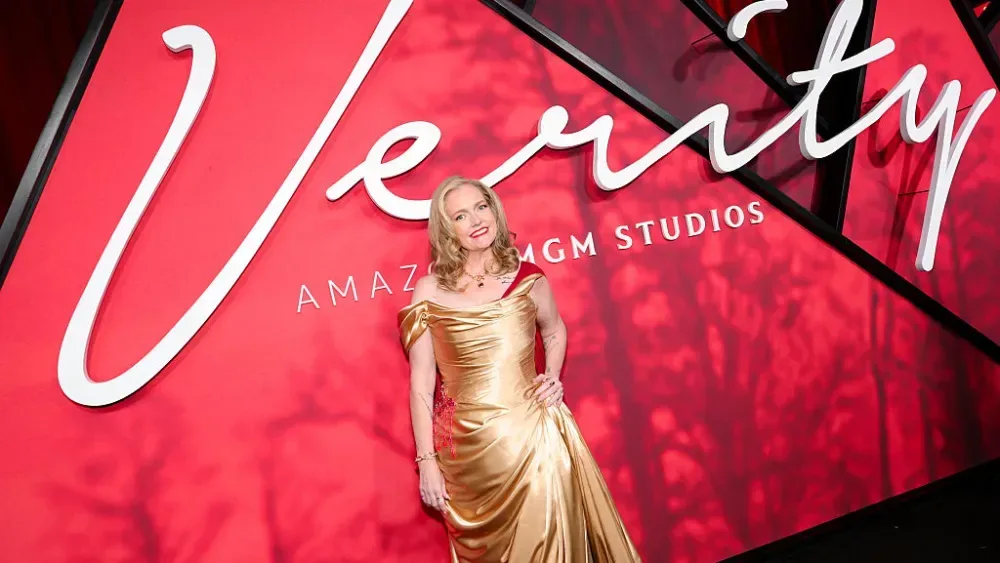
For readers tracking other corners of the screen and entertainment landscape, the site has also covered the upcoming screen adaptation of Verity.
Upcoming California performances and the filmed version
Laura Benanti: Nobody Cares is scheduled for five performances at the Wallis Annenberg Center for the Performing Arts in Beverly Hills: Thursday, Friday, and Saturday at 7:30 p.m., plus Saturday and Sunday matinees at 2 p.m. Benanti then brings the show to South Coast Repertory in Costa Mesa from October 8 through 11.
For people outside those runs, there is no confirmed release date or distributor for a filmed edition. Benanti said the show was filmed in London and that she hopes it will find distribution, but that remains an aspiration rather than a confirmed availability plan. She also intends to keep touring the production and would like to write more shows in this vein.
That makes the current version of Nobody Cares both a personal statement and a career expansion. Benanti is not rejecting theater or the audience that supported her there. She is asking that audience—and people who have never cared about Broadway at all—to meet another version of the same performer: someone who can sing, write, impersonate, confess, and turn the worst day of her life into a joke with a purpose.