A New York Comedy Festival showcase put 10 emerging comedians in front of a Manhattan crowd for a compact program built around a particularly demanding format: seven minutes per performer. The result was a deliberately broad snapshot of contemporary comedy, moving from autobiographical stand-up and a solo corporate character piece to an intentionally overextended acceptance speech and a climactic full-band send-up of alternative rock and nu metal.
The event took place at the Venue on Music Row at the Hard Rock Hotel in Manhattan. Every honoree performed and accepted an award during the program. Jake Lambert hosted, while festival founder Caroline Hirsch and city media and entertainment chief Rafael Espinal also appeared during the evening.
The 10 performers were Josh Ocean Thomas, Adam Friedland, Eilise Patton, Shapel Lacey, Wally Baram, Usama Siddiquee, Olivia Carter and Kyle Gordon, alongside the remaining honorees recognized as part of the 2026 group. The supplied event account identifies the first three performers and Gordon’s closing musical set in detail, and notes stand-up appearances from Lacey, Baram, Siddiquee and Carter.
Seven minutes is enough to establish a comic point of view
A seven-minute comedy set is not simply a smaller version of a headlining hour. It puts a premium on clarity, pace and a quick sense of who the performer is. There is little room for a long introduction, a gradual theme or a premise that needs several detours before its first payoff. In showcase terms, the short slot works as a concentrated calling card: a comedian must make an audience understand the persona, the rhythm and the kind of material they pursue without relying on the patience a longer show can earn.
That constraint also helps explain the variety on display. Rather than having every act pursue the same form of observational stand-up, the lineup included a mixture of personal material, onstage theatricality, a self-contained sketch and music comedy. These approaches can all produce laughs, but they ask the audience to engage in different ways.
Josh Ocean Thomas opened with a high-energy set touching on his mixed-race upbringing and his time at Christian school. Personal stand-up often turns lived experience into a usable comic framework: the performer selects details that establish a setting, a tension or an unexpected contrast, then builds jokes from the audience’s recognition of that framing. The account does not provide the individual jokes, but the subjects themselves indicate a set rooted in identity and formative environments rather than a generic collection of unrelated observations.
Adam Friedland took a more overtly performative route. He brought a lectern to the stage and delivered a partly improvised acceptance speech before receiving the award. The premise creates a comic mismatch between ceremony and timing. An acceptance speech conventionally follows recognition; moving it ahead of the actual award makes the speech itself the joke’s engine. A lectern is useful stage language here, immediately signaling an official occasion and giving the bit a physical structure beyond a conventional microphone-only set.
The phrase partly improvised matters. Improvisation in this context does not necessarily mean an act has no prepared idea. More often, it means a comic begins with a designed premise and allows room to react to the audience, the room or a moment that emerges during performance. That flexibility can make an awards-show parody feel less like a rehearsed sketch and more like a live disruption of the event’s own rituals.
Character comedy brought the finance world into the room
Eilise Patton performed a solo sketch as a Goldman Sachs executive preparing for a difficult phone call. Solo sketch comedy uses character, situation and performance choices to construct a miniature scene without the production scale or ensemble commonly associated with television sketch shows. A single performer may shift posture, voice, status and imagined relationships with unseen people to make the scenario legible quickly.
The premise’s comic potential rests in anticipation. The executive has not simply made a call; she is preparing to make one, giving the performer space to dramatize calculation, anxiety, overconfidence or the gap between professional language and personal stakes. Those are possible mechanics of the scenario, not claims about specific jokes delivered on the night. What is clear is that Patton’s inclusion widened the showcase beyond direct-address stand-up and made character work part of the evening’s larger range.
Shapel Lacey, Wally Baram, Usama Siddiquee and Olivia Carter each delivered stand-up sets. While the available account does not detail their subject matter, their presence is important to the program’s balance. A showcase does not need every comic to use a novel format; it needs performers whose distinct voices can survive the compressed setting. Stand-up remains the clearest test of that proposition because the act has few external elements to lean on: the comic, the audience and the sequencing of ideas do most of the work.
Kyle Gordon closed with a band and a deliberately dated rock vocabulary
Kyle Gordon ended the evening with a full-band performance, bringing an approach that is structurally different from a stand-up closer. His material included the alt-rock satire If You Break Up With Me and Crawl to Me, described as an ode to nu metal. He also led the crowd in an explicit chant during the latter song.
Music comedy can be misunderstood as merely “a funny song.” Its mechanics can be more specific than that. Satire works by adopting recognizable stylistic signals—genre conventions, vocal attitudes, lyrical habits, emotional grandiosity or stage mannerisms—then exposing their absurdity through exaggeration or incongruity. In Gordon’s case, the stated targets are alternative rock and nu metal, two labels that supply the audience with a clear musical frame before the lyric or performance twist lands.
Nu metal is a rock subgenre associated with the fusion of heavy guitar-driven music and influences that can include hip-hop. In a parody setting, its cultural vocabulary can offer especially visible comic material: intensity, melodrama, aggression and catharsis are all traits a performer can heighten until they become knowingly ridiculous. A full band sharpens that effect because the music does not merely reference the style; it can recreate the scale and force of a rock performance while directing that energy toward a comic payoff.
The use of ’90s-rock parody at the event also shows why genre knowledge can be a valuable part of a comedy performer’s toolkit. Recognition is not the entire joke, but it gives the audience a shared code. A listener who knows the genre can spot the imitation’s details; a listener who does not can still respond to the exaggerated theatricality, the band setup and the performer’s command of the room. The same general intersection of persona and music is visible across pop culture, including artists reshaping their sound and public creative identity, as explored in this look at Kenzo B’s move away from drill music.
Why this type of honor carries industry weight
The annual 10 Comics to Watch program began in 2000. Its previous honorees include Zach Galifianakis, Maria Bamford, Patton Oswalt, Louis C.K., Wanda Sykes, Fred Armisen, Nathan Fielder, Nate Bargatze and Nikki Glaser. That history gives the recognition an obvious career-context value: it places a new class of comics into a lineage that includes performers who went on to build major stand-up, television, film and alternative-comedy profiles.
It is important not to treat that lineage as a promise of a uniform career path. The names above point to very different kinds of success and very different comic sensibilities. Some are chiefly identified with stand-up, some with television characters or sketch-adjacent work, and some with formats that deliberately blur performance, reality and awkward social construction. The useful takeaway is not that every honoree will follow one template. It is that the program has historically identified comics working across a wide set of forms.
The 2026 showcase reflected that breadth in practical terms. Thomas used autobiographical material. Friedland turned the event format into part of his premise. Patton staged a character scene. Lacey, Baram, Siddiquee and Carter represented stand-up within the lineup. Gordon made a band performance the closing statement. Those choices collectively suggest that “comic” is being applied broadly here: not as a narrow label for one delivery style, but as a category encompassing live writers and performers who use different devices to create laughter.
A ceremony that became part of the performance
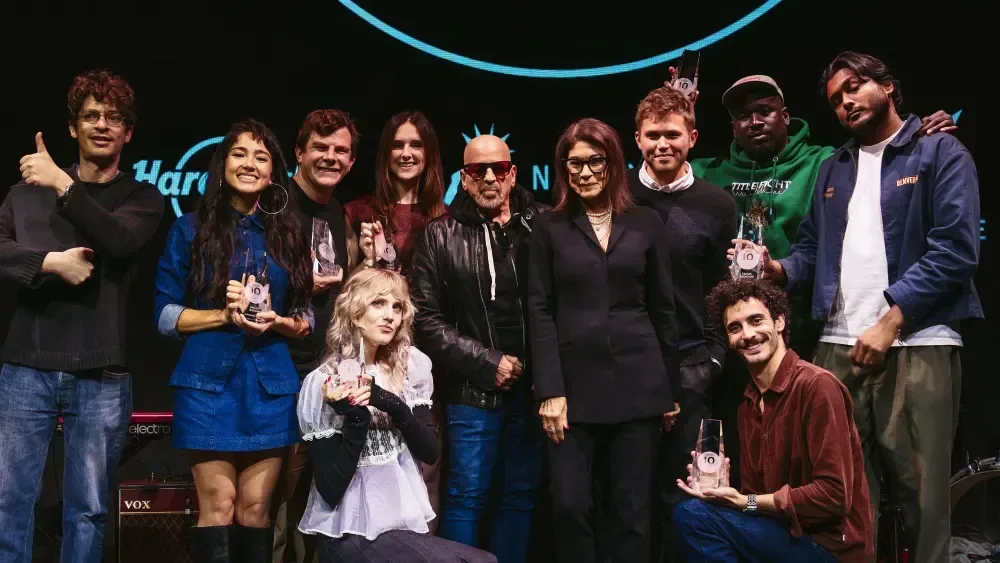
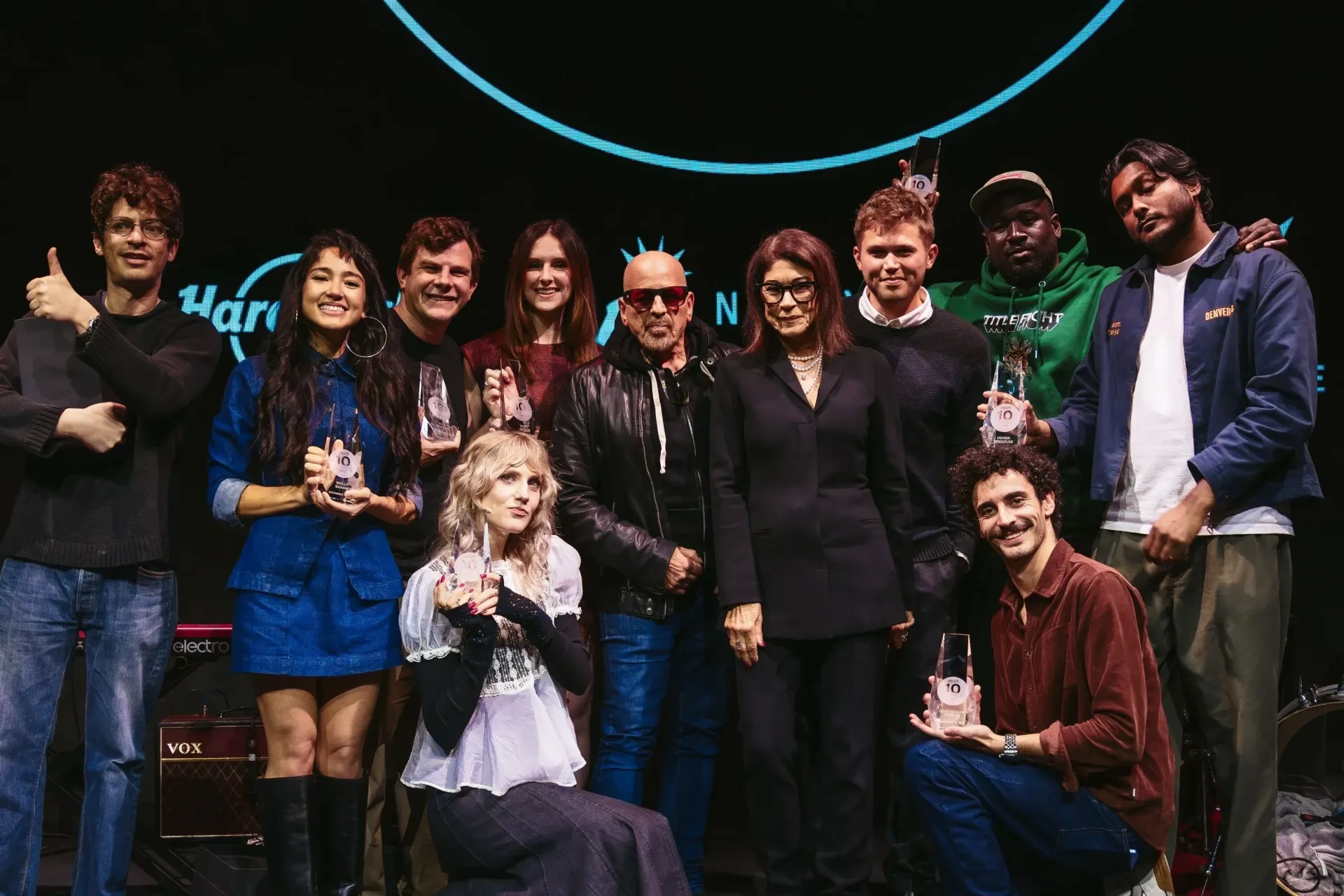
The awards were accepted onstage, followed by a group photograph featuring the honorees, Hirsch and veteran comedy talent booker Louis Faranda. Attendees and industry guests later gathered at the hotel’s rooftop bar for drinks and light bites.
That post-show social setting is a familiar component of entertainment showcases, but the onstage program was the central point. The format offered each performer a brief, public opportunity to demonstrate a voice rather than simply be named on a list. In a crowded comedy field, that distinction matters. An award may introduce a name; a tightly built seven-minute set shows an audience what that name can mean in practice.
For this group, the answer ranged from confession-shaped stand-up to corporate character satire, ceremonial disruption and loud, knowingly crude rock parody. The showcase’s strength was not that every act took the same path to a laugh. It was that the event made room for several paths, then gave each comic just enough time to prove why their approach belongs in the conversation.