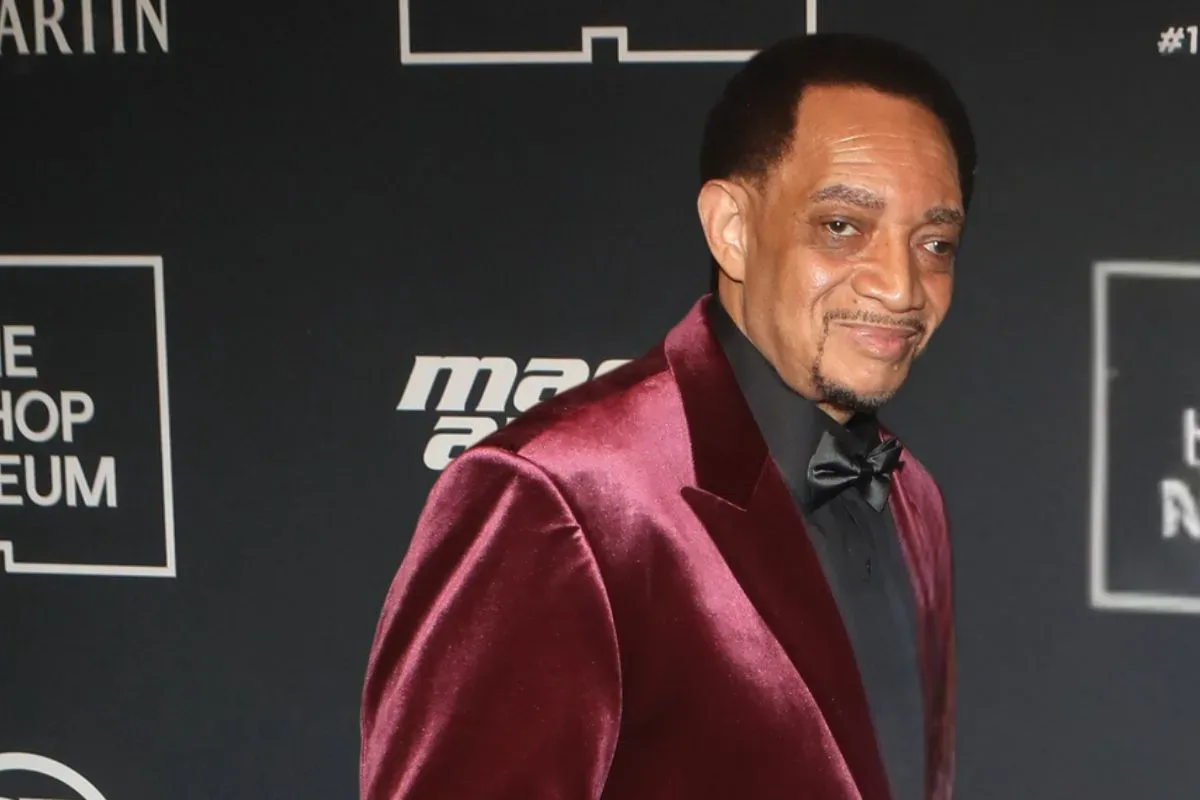
Kool DJ Red Alert is preparing to sign off from radio with a four-hour farewell DJ set on New York’s 107.5 WBLS, scheduled for Monday, November 30, 2026. The Harlem-born radio fixture described the program as his final broadcast for the station in an Instagram announcement, placing a definitive marker at the end of a career that has spanned more than four decades.
That number is significant not merely because of its length. Red Alert’s broadcasts arrived during a period when commercial radio access could decide whether a rap record traveled beyond clubs, neighborhood parties, and the people already immersed in the scene. His work helped connect those places. By selecting records and putting them in front of a mass audience, he became part DJ, part trusted curator, and part early signal booster for artists who would become central to hip-hop history.
A farewell built around the mix
The announced sendoff is a four-hour set, an appropriately substantial format for a DJ whose public identity has always centered on programming and blends rather than a brief on-air goodbye. No complete playlist, guest lineup, or additional broadcast details have been disclosed. What is known is that the program is set for 107.5 WBLS in New York and is being presented as Red Alert’s final radio broadcast there.
For listeners who recorded radio shows onto cassette tapes, the moment also carries a particular generational resonance. Before on-demand platforms, a mix could be an event: hear it live, catch a tape copy from someone else, or miss the sequence entirely. A radio DJ’s selection therefore had an influence that went beyond simply placing a song in rotation. The order of records, the transitions, and the willingness to take a chance on a new act could shape how listeners encountered a developing sound.
That is the practical context in which Red Alert’s farewell matters. Today, listeners can search an artist’s catalogue, follow a playlist, or share an individual track immediately. In the era in which Red Alert established his name, access was more constrained. A respected selector with a commercial-radio slot could turn local momentum into broader recognition.
From Harlem parks to commercial radio
Before his radio career, Red Alert drew inspiration from Kool Herc and brought his own turntables to neighborhood parks in Harlem. That background matters because it places his approach in the social, physical spaces where DJ culture developed: the DJ was not simply playing songs between advertisements, but reading a crowd and choosing what should hit next.
He began broadcasting on KISS-FM in October 1983, at a time when hip-hop was still building a commercial audience. His move from club and park settings to a commercial station created an important bridge. Records that worked in nightlife and community spaces could now reach people listening in cars, apartments, and workplaces across the city.
Commercial radio, in this context, means a station whose programming reaches a large public audience rather than a party, club, or small community gathering. That reach gave radio DJs a form of gatekeeping power: they could help determine which songs and performers were introduced to listeners first. Gatekeeping is not necessarily a negative term here; it describes the real influence involved when access to a major platform is limited and someone must decide what gets played.
Related coverage includes Kool DJ Red Alert Sets Four-Hour WBLS Farewell Broadcast.
Red Alert used that position to support artists associated with Boogie Down Productions and the Native Tongues orbit, including Jungle Brothers, De La Soul, and A Tribe Called Quest. Queen Latifah and Black Sheep also received early exposure through his musical judgment. The important distinction is that this was not the modern streaming model of algorithmic recommendations and infinite catalogues. It was a human DJ making choices in real time for a shared audience.
An ear for artists before the playlist era
The artists linked to Red Alert’s early support represent a broad range of rap styles, which helps explain why his legacy cannot be reduced to one sound or one scene. Boogie Down Productions carried one lane of New York rap’s development, while Native Tongues-associated groups such as Jungle Brothers, De La Soul, and A Tribe Called Quest are widely connected in this account through the early platform Red Alert provided. Queen Latifah, Black Sheep, and Monie Love further show the range of performers in his wider professional orbit.
His connection was not confined to spinning their music. Red Alert’s nephew, Mike G, helped form Jungle Brothers with friends. Red Alert Productions, his management company, worked with Jungle Brothers, A Tribe Called Quest, Monie Love, and Black Sheep. That dual role is worth noting: his influence involved both public-facing radio work and industry-facing management relationships.
Artist management generally refers to the professional work around an artist’s career, which can include representation, planning, and navigating opportunities. The available record here establishes that Red Alert Productions worked with these acts, but it does not require overstating the precise duties performed for each artist. What is clear is that Red Alert’s stake in the culture extended beyond the booth.
For a contemporary audience, his career is a reminder that discovery systems did not begin with apps. Streaming has made the pathway from artist to listener far more immediate, but it has not erased the value of a trusted human voice. The difference is scale and structure. Where an editorial playlist or recommendation feed can offer music to a listener individually, radio gave a city a common schedule and a common point of reference. People heard the same record at the same time, then discussed it, taped it, bought it, or looked for it at a party.
The Bridge Wars and keeping conflict on wax
Red Alert’s KISS-FM years also placed him within the Bridge Wars, a major rap rivalry reflected through competing records and competing radio allegiances. Red backed KRS-One and Scott La Rock of Boogie Down Productions, while Mr. Magic and Marley Marl supported MC Shan from the WBLS side. Red Alert played Boogie Down Productions’ “South Bronx” as the dispute became part of rap history.
The term Bridge Wars refers to that conflict as it unfolded through the music and the surrounding New York radio ecosystem. Its relevance to Red Alert’s story is straightforward: radio did not merely observe a hip-hop debate from the sidelines. DJs and stations could amplify the records, frame the contest for listeners, and make the competition culturally immediate.
Red Alert later described the boundaries he saw in the rivalry in a 2012 interview: “We always kept everything on records and everything verbal.” The comment is a concise explanation of the principle at issue. The competition was expressed through releases and talk, rather than being presented as something outside the art form. That distinction remains useful whenever rap disputes are discussed. As explored in a recent look at keeping rap beef on the record, the line between lyrical competition and real-world escalation is not a trivial one.
Red Alert’s role in this moment illustrates the power of the DJ as a cultural participant. Playing a record in a charged local rivalry was not the same as passively cataloguing it. Airplay could validate an artist’s response, spread the message, and help turn a regional contest into a shared event for the audience.
A career that moved with New York radio
After his initial KISS-FM period, Red Alert’s radio route included Hot 97, a return to KISS, and eventually WBLS. His 2001 return to KISS followed his departure from Hot 97. At that point, he summed up a career-minded philosophy with the line, “The main thing is, if one door closes, another one opens.”
It is a modest statement, but it fits the longer picture. Radio formats change, station relationships change, and music audiences change. Red Alert’s career moved through those shifts without separating his name from the fundamentals that established it: DJ craft, record selection, and a willingness to make room for emerging talent.
The WBLS farewell will not erase that larger record, nor is it simply an endpoint to be measured by the final four hours. It is better understood as a broadcast occasion that puts the spotlight back on the role Red Alert played when hip-hop’s route to new listeners depended heavily on local DJs and their stations. The technology and distribution systems around music have transformed, but the underlying act at the heart of his legacy remains recognizable: a knowledgeable person hears something worth sharing and makes sure other people get the chance to hear it.
What listeners can take from the signoff
For longtime listeners, November 30 offers a chance to hear a farewell from a DJ whose sets accompanied the genre’s rise in New York. For newer listeners, it is an opportunity to consider the infrastructure behind musical discovery before streaming. Artists needed records, audiences, venues, advocates, and radio figures willing to use limited airtime on sounds that had not yet become obvious commercial choices.
Red Alert’s final WBLS broadcast is therefore both a scheduled program and a historical handoff. The medium remains radio; the career being recognized crosses parks, clubs, KISS-FM, Hot 97, and WBLS; and the legacy reaches through artists whose early exposure helped define generations of hip-hop listeners. A four-hour mix is a fitting format for that story, because the story was always told through what came next on the turntables.