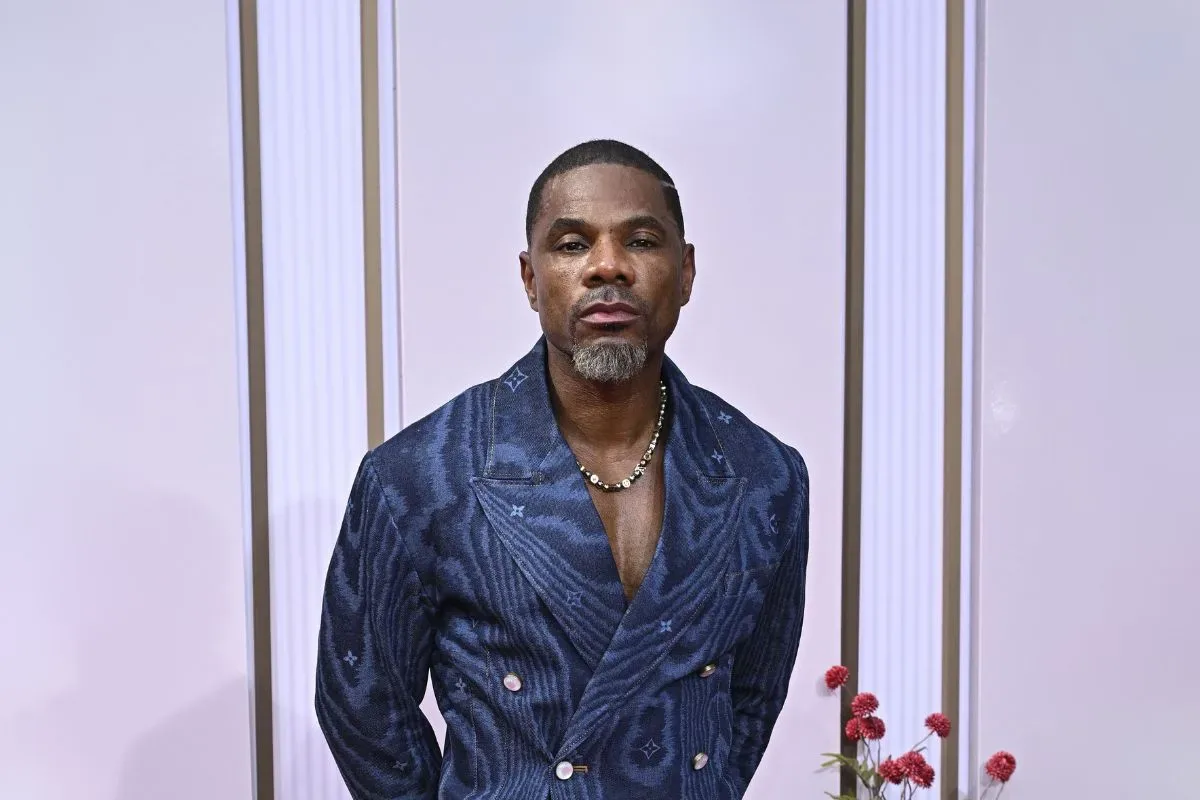
Kirk Franklin is joining a label name with a deep history in hip-hop and R&B. The 20-time Grammy-winning gospel artist has partnered with the relaunched Uptown Records, bringing his project Thank You for Everything, featuring Karen Clark Sheard, into the fold alongside Fo Yo Soul Entertainment and TRIBL Music Group.
It is a notable fit on paper: Franklin is a defining force in modern gospel, while Uptown is one of the most recognizable brands from the late-1980s and 1990s R&B and hip-hop boom. The partnership combines an artist with a decades-long record of shaping gospel’s mainstream reach and a revived imprint associated with artists whose music changed urban radio, fashion, and pop culture.
Franklin described joining the company as an honor, pointing to the team’s enthusiasm and support and expressing excitement about what comes next. There are no additional release dates, distribution details, pricing information, or new music announcements included with the partnership details so far. The central confirmed item is the arrival of Thank You for Everything and its Karen Clark Sheard feature at Uptown.
A gospel career built for a wider audience
Franklin’s place in gospel history is difficult to reduce to a single statistic, although there are plenty available. He has sold more than 12 million albums, earned 20 Grammy Awards, and holds the record for the most number-one singles on the Gospel radio chart. Those achievements tell part of the story. The broader point is that Franklin has consistently presented gospel music as current, collaborative, rhythmically adventurous, and culturally connected rather than sealed off from the rest of popular music.
His 1993 debut with The Family was a landmark. It became the first gospel album certified Platinum and spent 100 weeks on the Billboard charts. That run mattered not simply because it was commercially large, but because it showed that a gospel project could find substantial audiences beyond conventions that had long constrained how the genre was marketed. Franklin’s choir-led arrangements, songwriting, spoken interludes, and connections to contemporary R&B and hip-hop helped make that breakthrough feel immediate.
More than three decades later, the scale has held. Franklin won his 20th Grammy in 2024 for “All Things.” His collaborations with Maverick City Music have also helped carry gospel into broader musical conversations. He remains identified as the biggest-selling male gospel artist in SoundScan history, a status reflecting both the lasting appeal of his catalog and a rare ability to stay relevant across multiple generations of listeners.
That longevity is especially relevant to Uptown’s relaunch. A heritage label does not regain cultural weight merely by displaying its back catalog like a trophy case. It needs artists and projects with a reason to exist in the present. Franklin brings precisely that: a veteran artist whose audience, influence, and artistic identity remain active rather than nostalgic.
Why the Uptown name still carries weight
Uptown Records was founded in 1986 by Andre Harrell, who had previously been a member of Dr. Jekyll and Mr. Hyde. The label became one of the defining institutions of its era by treating hip-hop and R&B as adjoining forces rather than separate worlds. Its output and visual identity helped establish the kind of crossover urban music that could be stylish, street-aware, romantic, radio-ready, and commercially enormous all at once.
The list of artists associated with Uptown explains why its return commands attention: Heavy D & The Boyz, Guy, Jodeci, and Mary J. Blige all passed through the label. Those names represent different corners of an influential musical ecosystem. Heavy D & The Boyz helped supply rap with charisma and crossover ease; Guy was essential to the New Jack Swing movement; Jodeci reset expectations for R&B attitude and vocal intensity; and Mary J. Blige became a foundational figure in the blend of hip-hop and soul often described as hip-hop soul.
Harrell’s impact was also bigger than a release schedule. Uptown projected a complete point of view about presentation, sound, confidence, and lifestyle. That is one reason the imprint’s legacy has endured even through periods when it was not operating as an active artist-development home. After Harrell died in 2020, the label went dormant, while Universal’s distribution infrastructure continued to maintain its legacy in the background.
Now Uptown is officially back in 2026 as it reaches its 40th anniversary. It operates under the Republic Collective umbrella, with Danielle Price Sanders serving as president and Natina Nimene handling artist relations. Its current roster includes Yung Miami, G Herbo, Trap Dickey, 9B Meechie, and producer ATL Jacob. Franklin’s involvement expands the roster’s musical range and makes a statement about the kind of legacy Uptown intends to build in this new chapter.
More than a heritage-label reunion
It would be easy to frame this as a familiar legacy-label move: a famous name returns, an established superstar signs on, and the press-release machinery fires up. But the Franklin partnership has a more interesting dimension. Gospel, hip-hop, and R&B have never been completely separate cultural spaces. Vocal techniques, choirs, songwriting traditions, production ideas, community networks, and messages of resilience have moved among them for decades.
Franklin’s work has often lived at those intersections without losing its gospel foundation. Uptown’s classic catalog similarly reflects a period when genre lines were becoming more permeable and youth culture was being shaped by artists able to move across radio formats and audiences. The partnership does not mean that Franklin has suddenly become a hip-hop act, nor does it rewrite Uptown’s history as a gospel label. It instead recognizes shared cultural terrain: music rooted in Black American traditions, artistry with mainstream ambition, and a belief that emotionally direct records can travel widely.
For pop-culture observers, label identity remains meaningful even in a streaming era. A distributor can put a track everywhere, but an imprint can still communicate lineage, taste, relationships, and intended cultural conversation. Uptown’s name evokes an established standard. Franklin’s catalog carries another. Putting them together gives Thank You for Everything a context that is larger than a single song, feature, or promotional cycle.
The new partnership also arrives during a period when listeners regularly organize their music habits around communities and crossover rather than rigid genre shelves. A fan can move from gospel to R&B, rap, pop, electronic music, podcasts, and gaming-chat audio without treating the boundaries as sacred. For a related look at consumer audio aimed at everyday chat and entertainment use, see our coverage of AirPods 4 and their gaming-chat positioning.
What is confirmed, and what remains open
The announced facts establish a significant business and creative affiliation, but they do not yet answer every practical question fans may have. There is no stated timetable for a larger Uptown-backed album campaign, no announced tour, and no word on further collaborators beyond Karen Clark Sheard on Thank You for Everything. There is also no public detail here about how responsibilities will be divided between Uptown, Fo Yo Soul Entertainment, and TRIBL Music Group.
That uncertainty should not obscure what is already clear. Franklin joins the relaunched imprint with an extraordinary career behind him and continuing relevance in front of him. Uptown returns on its 40th anniversary carrying a catalog and identity that still resonate across hip-hop and R&B. Their connection places an active gospel giant inside one of urban music’s most storied label families.
For Uptown, it is an opportunity to show that a revival can honor history without becoming trapped in it. For Franklin, it offers another platform for music that has repeatedly challenged assumptions about the size, sound, and audience of gospel. And for listeners, the immediate takeaway is straightforward: Thank You for Everything, featuring Karen Clark Sheard, now sits at the meeting point of two major musical legacies.