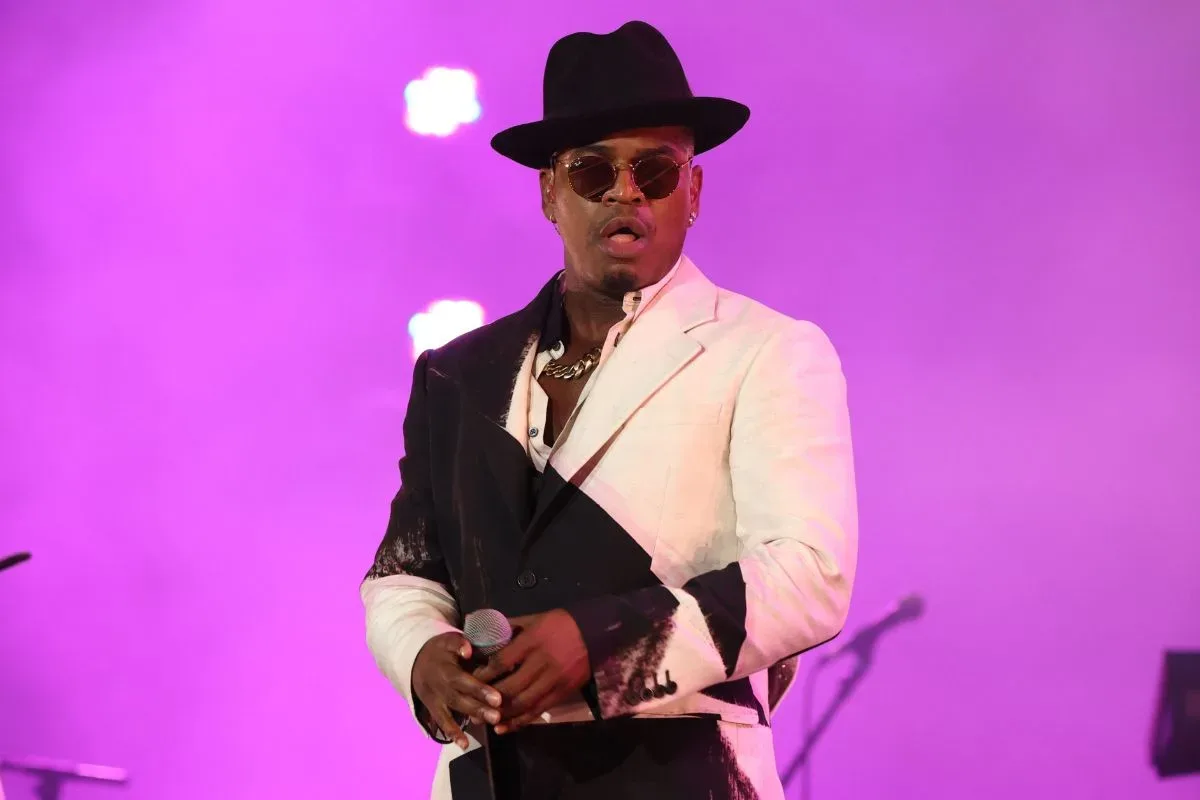
NE-YO will perform the national anthem before World Series Game 4 on Tuesday, October 27, at Tropicana Field in St. Petersburg, Florida. FOX’s game coverage is scheduled to begin at 7 p.m. ET, and Hailey Riggs will provide American Sign Language interpretation during the anthem performance.
The booking places a veteran R&B singer and songwriter on one of baseball’s largest annual broadcast stages. A pregame anthem is brief by design, but it carries a particular kind of pressure: it is performed live, tied to a major sporting event, and viewed by an audience that includes both dedicated baseball fans and viewers arriving for the wider occasion.
A major-event stage for an established performer
NE-YO enters the appearance with a catalog built across singing, songwriting and collaboration. His 2006 debut album, In My Own Words, reached No. 1 on the Billboard 200. That release arrived two decades before this World Series appearance, making the moment another high-profile stage assignment in a career that has moved across recordings, television, film and musical theater.
As a recording artist, his better-known songs include So Sick, Sexy Love, Closer and Miss Independent. The body of work behind the performance matters because the national anthem is not a showcase for an artist’s own hits. Instead, it asks a performer to bring their vocal control and interpretive choices to a familiar composition with fixed words, a compact structure and strong audience expectations.
That is different from a tour stop, where an artist can arrange a set around their own material and establish a rhythm over a full performance. At a World Series game, the anthem functions as a ceremonial opening. The singer has only a few minutes to set a tone before attention turns immediately to the field.
Songwriter, vocalist and collaborator
NE-YO’s career has never been limited to records released under his own name. He wrote Beyoncé’s Irreplaceable as well as Rihanna’s Unfaithful, Russian Roulette and Take a Bow. That songwriting background is relevant to an anthem assignment in a simple sense: it reflects long experience working with melody, phrasing and vocal performance from both sides of the studio.
He is also a three-time Grammy winner and earned his first diamond-certified song through Give Me Everything, the collaboration with Pitbull and Afrojack. A diamond certification is an industry designation tied to a song reaching the required certification threshold; it signals the enormous commercial reach of the track, though it is separate from the artistic demands of singing live at a ballpark.
There is a useful distinction here. Commercial scale measures how widely a recording has connected with listeners over time. Live ceremonial performance asks something else: steadiness, clarity and an ability to carry a song without the usual support of a full concert setting. The World Series slot does not turn into a career retrospective, but it draws on a performer’s accumulated experience in highly visible settings.
Related coverage includes NE-YO Set to Sing National Anthem Before World Series Game 4.
A career that has crossed genres and stages
The World Series appearance follows a period in which NE-YO has continued to work beyond the lane most closely associated with his early hits. His 11-song album Highway 79, released July 10, was recorded in Nashville and brought country influences into his R&B sound. Its songs include Thinking What I’m Thinking, Up Out & Gone and Ms. Tundra.
Genre movement is not the same thing as abandoning an earlier musical identity. In this case, the available description frames the project as country influence meeting NE-YO’s R&B foundation. That context helps explain why a national television event can fit his current profile: his recent work has involved expanding the range of settings and styles associated with his voice.
His theater work offers another example. NE-YO made his Broadway debut as Davis in Alicia Keys’ Hell’s Kitchen, beginning December 4, 2025. The musical uses Keys’ songs in a story centered on Ali, a 17-year-old girl. Unlike a concert built around NE-YO’s own music, that role placed him within a narrative and a songbook associated with another artist.
He had also played the Tin Man in NBC’s The Wiz Live!, while his screen credits include Stomp The Yard and World Of Dance. Taken together, those projects point to a performer comfortable moving between formats. Film and television performances, a live television musical, Broadway and a championship-game ceremony each have different practical demands, even when singing remains central.
Why the anthem format is its own challenge
“The Star-Spangled Banner” has a place in sports that is larger than its running time. Fans often focus closely on anthems because the performance occurs before competition begins, when the stadium and broadcast are already fully attentive. The singer must communicate the melody cleanly while making personal interpretive decisions that do not overwhelm the song itself.
For someone with NE-YO’s background, the assignment highlights a skill set that can be easy to overlook amid hit singles and songwriting credits. R&B singing often values detailed phrasing, emotional inflection and flexibility. A ceremonial anthem, meanwhile, rewards discipline as much as personality. The performer must make the song their own without losing the recognizable shape listeners expect.
That balance is why these appearances remain memorable parts of major sports broadcasts. The game has not started, no score has been recorded and the performer briefly becomes the focus of the venue. Then the spotlight moves on. In practical terms, the anthem is an opening ritual; in broadcast terms, it is a highly concentrated live moment.
Accessibility is part of the presentation
Riggs’ American Sign Language interpretation is an important part of the pregame presentation. ASL interpretation is not simply a word-for-word visual duplicate of a sung performance. It is a distinct language-based interpretation that communicates the content and expression of the piece for Deaf and hard-of-hearing viewers and attendees.
Including an interpreter in a stadium ceremony makes accessibility visible rather than peripheral. It also reflects the fact that a major sporting event is experienced in more than one way: through the in-stadium atmosphere, a television broadcast, captions, interpretation and the shared ritual surrounding the game.
For collectors interested in baseball’s cultural reach beyond the box score, championship games are part of the broader story that surrounds the sport. That story also spans the objects fans preserve, including the prewar sets discussed in a look at T205 and T207 baseball cards. The NE-YO performance belongs to the present-day ceremonial side of that larger baseball culture rather than the collecting market, but both reflect how the sport extends well beyond innings and statistics.
From songwriting comfort to a craving for the stage
Earlier in his career, NE-YO spoke about songwriting initially feeling more comfortable than performing. He later described seeing his own growth after watching recordings of his earliest shows, recognizing that he had become more relaxed onstage.
That development gives the World Series assignment an additional through line. The artist who began with a strong writing identity has spent years taking on increasingly varied public performance settings. He also identified country, folk, rock and heavy metal among the genres he enjoyed, alongside hip-hop and R&B. The recent country-influenced album is therefore consistent with musical interests he had discussed long before its release.
“I’ve always loved to sing, and I’ve developed such a craving for a stage,” NE-YO said in 2006.
On October 27, that stage will be Tropicana Field, just before Game 4 begins. The performance will bring together several threads of his career: a singer associated with enduring R&B hits, a writer whose work has helped shape songs for other major artists, and a performer who has increasingly worked across genres and formats.