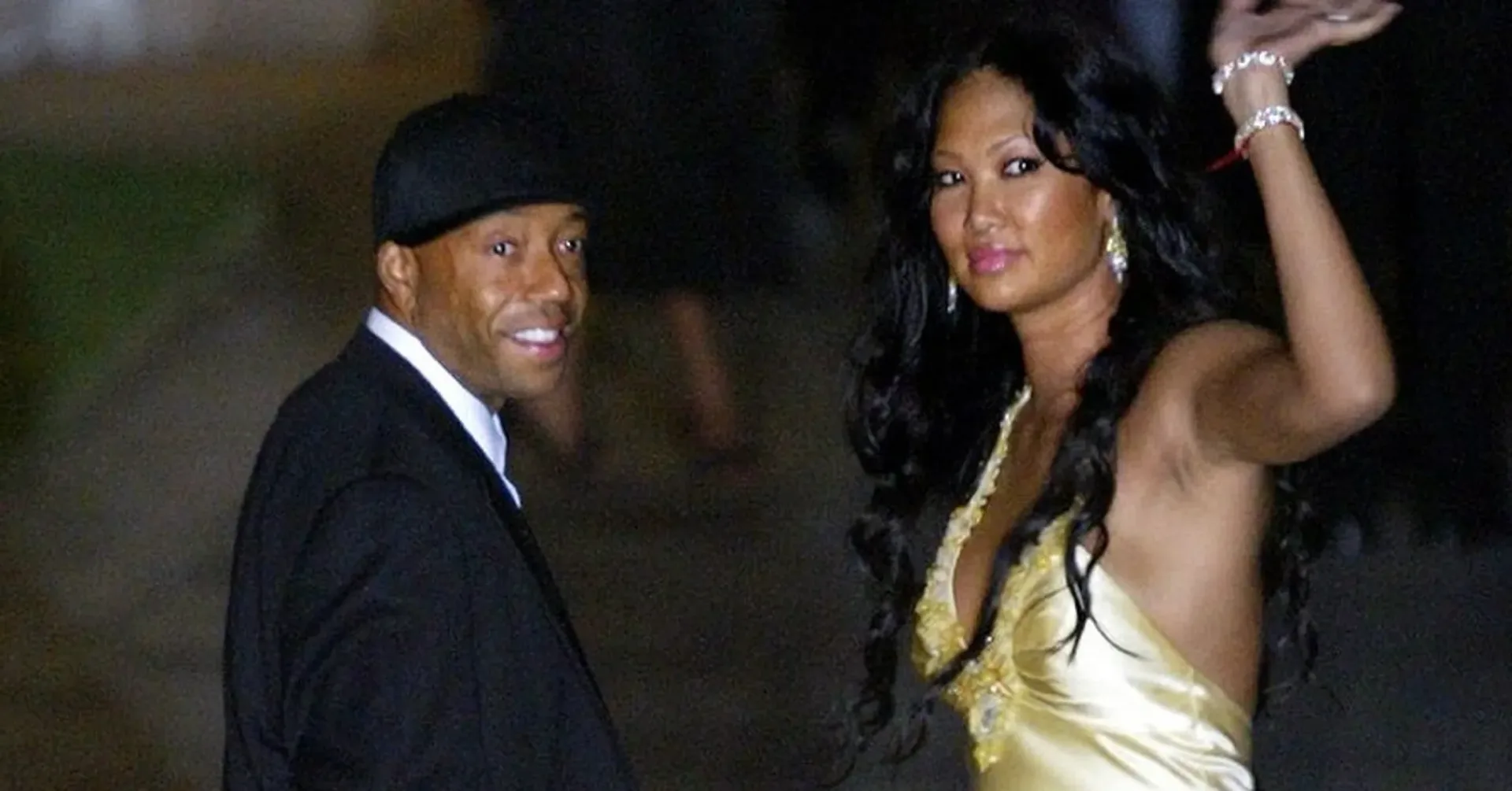
Kimora Lee is revisiting a formative chapter of her life in Kimora Lee: On Her Own, a new Lifetime documentary, and one memory now carries a meaning she says she did not understand at the time: Tyra Banks trying to prevent her from reconnecting with Russell Simmons.
Lee recalls that, when she was a teenage model, Banks kept her at her apartment for an entire weekend so she could not return home and check her voicemail. Lee says Simmons had been appearing at her fashion shows, then sent flowers and called her. At the time, Lee interpreted Banks’ intervention as jealousy. Looking back, she says she sees it as an effort by a friend to protect her.
The account has drawn a response from a representative for Simmons, who disputes a central point in Lee’s timeline: her age when the pair first met. The representative says they met at a Mary McFadden fashion show in February 1993, and argues that Lee—born May 4, 1975—would have been 17 years and nine months old, rather than 16.
That distinction is the focus of Simmons’ response. It does not contest Lee’s account of Banks keeping her away from her voicemail, nor does it address Lee’s present-day description of the relationship and marriage. Simmons has denied allegations of abuse against him.
A memory Lee says she understands differently now
Lee’s recollection is not framed simply as celebrity gossip about a friendship. It is about hindsight: how an action that felt intrusive or competitive when she was young can later be recognized as concern.
Lee says she once thought Banks was “hating” by interfering. Her updated reading is direct: Banks was trying to protect her. The contrast matters because it shows how the same event can be understood differently depending on a person’s age, experience, and sense of what behavior is normal or acceptable in a relationship.
In Lee’s telling, the relevant pattern began with Simmons’ attention at fashion shows and continued through flowers and calls. She says she was 16 when they met and that Simmons was 18 years older. She has since said she did not fully recognize what she characterizes as abusive behavior until later.
Those are Lee’s descriptions of her own experience and her later interpretation of it. Simmons denies allegations of abuse. The available response from his side centers on the age calculation and prior accounts of when the relationship became physical, rather than offering a direct response to Lee’s wider claims about the marriage.
What Simmons’ representative is disputing
The representative’s statement presents a specific alternative timeline. It places the first meeting at a Mary McFadden fashion show in February 1993. Using Lee’s May 4, 1975 birth date, the statement says she would have been 17 years and nine months old at that point.
The response also refers to earlier profiles that described Lee as 17 when Simmons noticed her on a runway. In addition, it cites a later interview in which Lee said, “We didn’t do anything until I was 18.” Taken together, those points are intended to challenge the assertion that Lee was 16 when Simmons began pursuing her.
It is important not to turn that rebuttal into a broader answer than it is. The representative is disputing whether Lee was 16 or close to 18 at the first meeting. The statement, as described, does not challenge the story of Banks’ weekend intervention. It also does not address Lee’s assertion that she only later came to identify parts of the relationship as abusive.
That narrower scope explains why both accounts can be part of the same public discussion while speaking to different questions. One is a dispute over chronology and age. The other is Lee’s personal account of a friend’s warning, a period of pursuit, and the meaning she now attaches to her past.
Why the age dispute remains significant
Age and timing are not minor details in a story about a relationship that began when one person was still in her teens and the other was substantially older. Lee says the age gap was 18 years. Simmons’ representative argues that Lee was not 16 at their first meeting, but 17 years and nine months old.
Those descriptions differ by nearly two years, and the public record presented here does not resolve every part of the timeline. The later interview cited by Simmons’ representative adds another distinction: meeting, being noticed, being pursued, and beginning a sexual relationship are not necessarily the same event. The statement’s quotation that Lee said they did not “do anything” until she was 18 addresses the last of those categories, not necessarily the entirety of Lee’s recollection of contact and attention beforehand.
That is why precision is more useful than flattening the dispute into a single claim. Lee says she was 16 when she met Simmons. His representative says the available date and birth date put her at 17 years and nine months old when they first met. Both sides are addressing the early period, but they frame it differently and emphasize different evidence.
The broader timeline of Lee and Simmons’ relationship
Lee and Simmons later married in 1998. They separated in 2006, and their divorce was finalized in 2009. Those dates establish that the relationship moved from its disputed early timeline into a long marriage before ending.
Lee’s documentary comments ask audiences to look at that history through her current understanding rather than solely through the public image of the couple at the time. Her comments about Banks are especially revealing in that respect. A friend’s attempt to create distance from an older man once seemed, to Lee, like an unfair act of rivalry. She now believes it was an attempt at care.
For viewers, the key distinction is between established chronology and personal interpretation. The marriage, separation, and divorce dates are clear. The precise age at the first meeting is contested. Lee’s description of how she understood Banks’ actions then, and how she understands them now, is her own reflection. Her characterization of the relationship as abusive is also her allegation and perspective; Simmons denies abuse allegations.
How to read competing public accounts responsibly
Celebrity stories often encourage a simplistic choice between competing narratives, especially when a response highlights one measurable fact such as a date of birth. But a correction or dispute over a specific detail does not automatically settle every other claim connected to a larger story.
Here, the safest reading is straightforward:
- Lee says Banks attempted to keep her from contacting Simmons during a weekend at Banks’ apartment.
- Lee says she originally mistook that action for jealousy and now believes Banks was protecting her.
- Lee says she was 16 when she met Simmons and says he was 18 years older.
- Simmons’ representative says the pair met in February 1993 and contends Lee was 17 years and nine months old.
- The representative cites earlier material indicating Lee was 17 when Simmons noticed her, as well as a later statement attributed to Lee that they did not become physically involved until she was 18.
- Lee says she came to view the relationship as abusive only later; Simmons denies allegations of abuse.
Separating those claims prevents two common mistakes. The first is presenting Lee’s personal recollections as if every part has been independently established. The second is treating a disagreement over one date as if it disproves everything Lee says about her friendship with Banks or her own later understanding of the marriage.
It also keeps the human point from being lost. Lee is describing a shift in perspective that many people recognize: protective behavior can look controlling or hostile when someone is young, especially if it interrupts a relationship they believe they want. Time can change that reading without changing what happened in the moment.
Why Tyra Banks is central to this chapter
Banks is not presented as a peripheral name in Lee’s retelling. Her role is central because the incident represents an attempt to intervene before Lee says she had the experience to see the situation as others might have seen it.
Lee’s use of the word “protect” changes the emotional frame of the weekend at Banks’ apartment. Rather than a dispute between friends, Lee now presents it as an act of solidarity. No separate public statement from Banks is included in the available account, so the story should be understood as Lee’s recollection of what Banks did and why she now believes she did it.
The episode also places the public discussion back on friendship and support networks, not merely the disputed number attached to Lee’s age. Whether Lee was 16, as she says, or nearly 18, as Simmons’ representative contends, she was a teenager when the events described occurred. Lee’s retrospective point is that someone close to her was attempting to set a boundary she did not yet appreciate.
That connection between fashion, music, celebrity, and personal history remains part of a wider cultural conversation. For another look at art that places hip-hop history alongside other creative movements, see this feature on Shepard Fairey’s Packard art car.
What remains unresolved
There is no full resolution in the competing accounts presented so far. Simmons’ side has offered a chronological rebuttal based on a claimed February 1993 meeting date and Lee’s birth date. Lee has offered a personal account of being pursued as a teen, Banks’ intervention, and the subsequent understanding she developed about the relationship.
Neither side’s position should be expanded beyond what has been stated. Simmons’ representative has not, in the account available, denied that Banks tried to keep Lee away from him that weekend. Likewise, Lee’s account of the relationship’s early period is disputed by Simmons’ representative on the narrow question of her exact age at their first meeting.
The documentary has therefore brought attention to more than a disagreement over dates. It has put Lee’s changed perspective on friendship, protection, age, power, and her past marriage at the center of the conversation. Her recollection of Banks’ warning is ultimately the emotional core: something she once read as hostility, she now views as an effort to help.