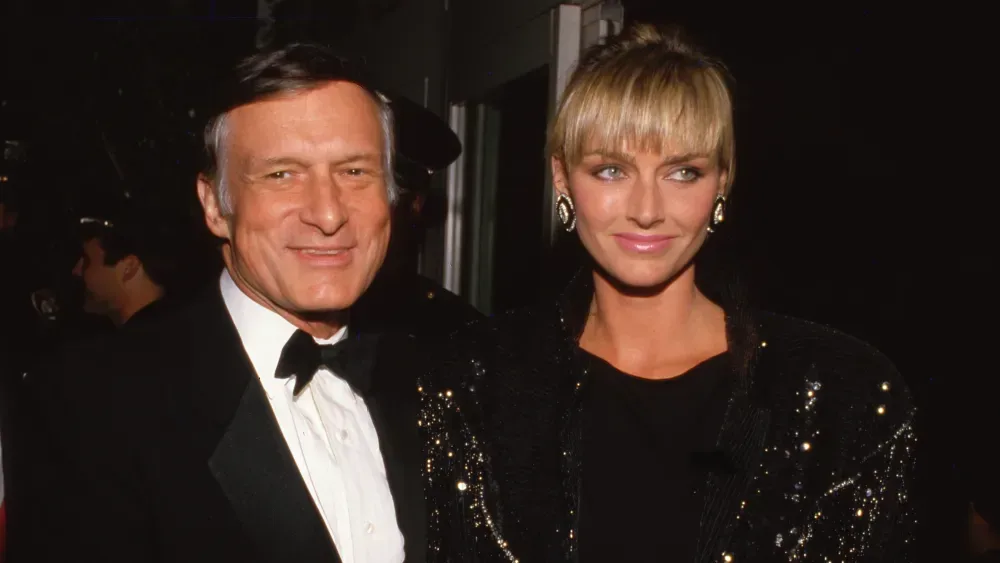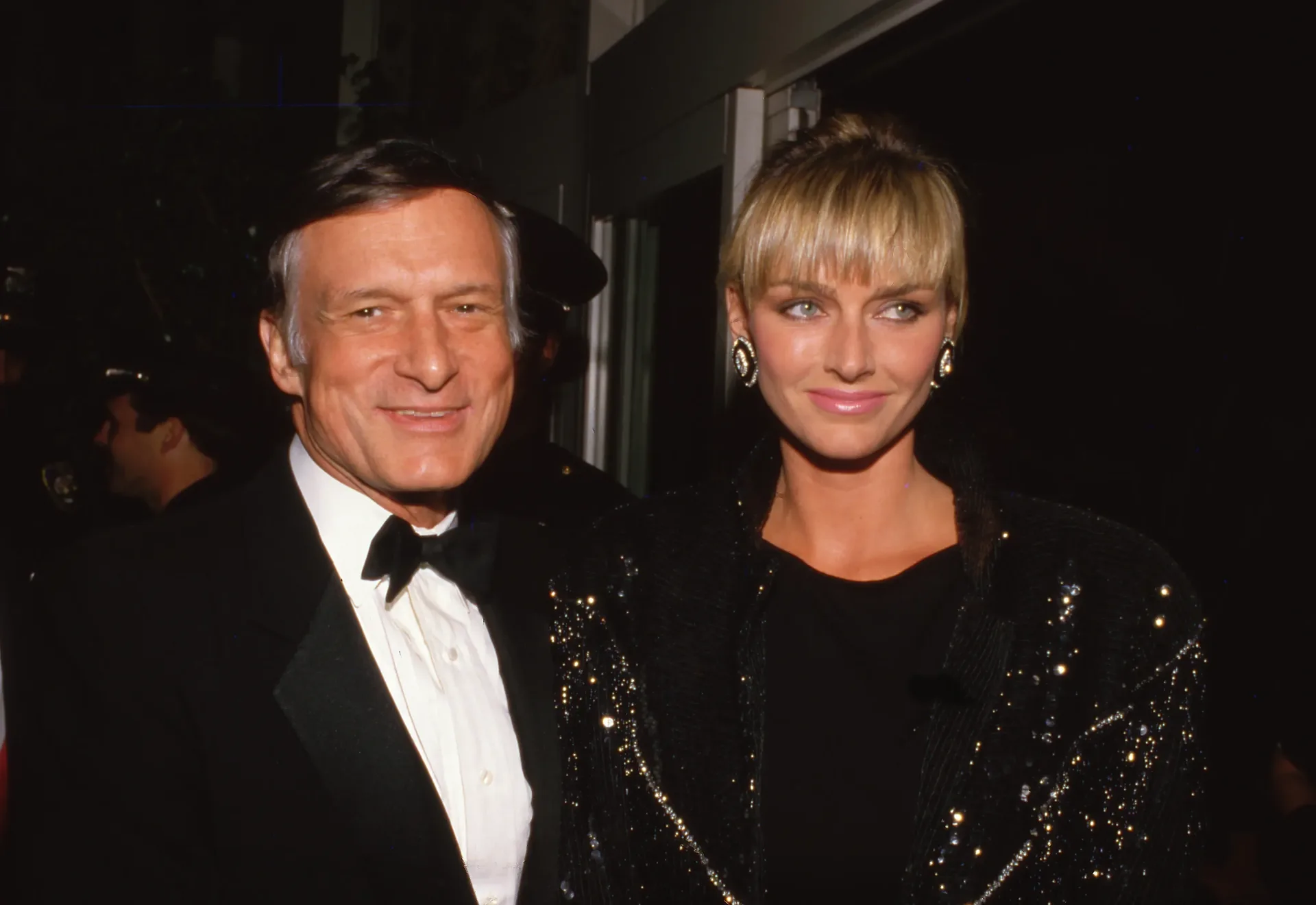
Kimberly Hefner has publicly remembered her late former husband, Hugh Hefner, in warmly personal terms as Playmates, a fictional film set around the Playboy Mansion, takes shape at Searchlight.
Kimberly, who was married to Hugh Hefner from 1989 until their divorce was finalized in 2010, said they shared more than two decades together and raised two sons. Her post described their relationship as loving and said that their bond remained meaningful to her after his death on September 27, 2017.
She also characterized Hefner as a gentleman and as kind, generous, philanthropic and a person of strong character. Kimberly wrote that his death was devastating and that she continues to treasure the life and memories they shared.
The message arrives amid renewed discussion of Hefner and the public mythology surrounding the Playboy Mansion. Crystal Harris, another of Hefner’s former wives, has alleged that she endured sexual, emotional, financial and physical abuse during their marriage. Those are Harris’ allegations and should not be confused with Kimberly Hefner’s distinctly different account of her own relationship and memories.
Both accounts are relevant to the context around a project drawing on the cultural image of Playboy, but they do not represent the same experience. Kimberly’s statement is a personal tribute; Harris’ account was published in her 2024 memoir, Only Say Good Things: Surviving Playboy and Finding Myself, which details her experiences at the mansion.
What Playmates is—and is not
Playmates is not described as a straight biography of Hugh Hefner, Kimberly Hefner or Crystal Harris. Its premise centers on fictional characters navigating a setting associated with the Playboy Mansion and its Playmate of the Month competition.
The film follows Elle, also identified as Indiana Elle, a 13-year-old who considers the mansion a second home. She meets Anna, played by Lily-Rose Depp, one of seven women hoping to become Playmate of the Month. The two form an unlikely friendship, with Elle seeking a magazine cover and Anna wanting a boy.
That distinction matters. A fictional story can borrow the atmosphere, symbols and recognizable power structures of a real institution without presenting itself as a factual account of every person connected to it. It also means viewers should be cautious about treating its characters or plot points as a record of the Hefners’ marriages or of anyone else’s lived experience.
Related coverage includes Kimberly Hefner Defends Hugh Hefner as ‘Playmates’ Takes Shape.
The supplied details identify Jessica Biel as playing a fictional version of Hefner’s wife, while the plot description specifically names Lily-Rose Depp as Anna. The available information does not clarify Biel’s role or reconcile that casting detail with the synopsis, so it is best not to infer more about the character than has been stated.
Lorraine Nicholson will write and direct
Lorraine Nicholson is set to write and direct Playmates. Bill Pullman will play Hugh Hefner. Nicholson is the daughter of Jack Nicholson, though the significant creative detail here is that she is handling both the screenplay and direction, placing the film’s tone and perspective under one creative lead.
That writer-director role generally means the filmmaker is responsible for translating a premise into a screenplay and then shaping how it is realized on screen. It does not, by itself, establish the movie’s eventual viewpoint on the Playboy world, its characters or the conflicting public accounts connected to Hefner. The provided synopsis instead points most clearly to a coming-of-age friendship story set against the competition for a magazine cover.
With Pullman cast as Hefner, the real-world founder is part of the film’s frame. But the announced story remains focused on Elle and Anna. That setup suggests a potentially important separation between a famous public figure’s presence in the background and the fictional characters positioned at the center of the drama.
The real-world relationships behind the discussion
Kimberly met Hugh Hefner while she was modeling for Playboy’s Playmate of the Month centerfold. Their marriage lasted from 1989 until the divorce was finalized in 2010. Her latest statement emphasizes family, intimacy and grief rather than Playboy’s public-facing brand.
Harris met Hefner at a Halloween party at the Playboy Mansion when she was a 21-year-old college student. She moved into the mansion shortly afterward and married Hefner in 2012. They remained together until his death in September 2017.
Harris later published Only Say Good Things in 2024. The memoir’s subtitle, Surviving Playboy and Finding Myself, makes clear that it approaches her time in that environment from a markedly different perspective than Kimberly’s tribute. It is precisely that contrast that makes broad, singular claims about the Playboy Mansion or the people associated with it inadequate.
Personal testimony is not interchangeable simply because people shared a high-profile orbit. Kimberly speaks about a marriage that ended years before Hefner died; Harris writes about a later period and has described abuse. The available information supports reporting those positions accurately, while not using one person’s account to erase or disprove the other’s.
Why fictionalization is a meaningful label here
“Fictionalized” is more than promotional shorthand when a film draws from an institution with a long, complicated public identity. The word signals that the story’s dramatic arc, dialogue and characters should be evaluated as filmmaking rather than as a documentary claim.
For audiences, that raises a practical expectation: pay attention to what the film explicitly depicts and what it does not claim to represent. A character inspired by a general social role—such as a Playboy wife or a Playmate hopeful—is not automatically a portrayal of a named real person. Likewise, a story at the mansion need not be a verdict on every relationship connected to the location.
At the same time, a fictional setting can still evoke genuine cultural baggage. The Playboy Mansion is not a neutral invented backdrop; it is bound to a recognizable media brand and to real people whose descriptions of their time there differ substantially. Those associations are likely to shape how viewers interpret Playmates, regardless of the degree of factual distance between the movie and real events.
The situation is a reminder that entertainment projects often arrive alongside conversations that the films themselves cannot settle. A dramatic feature can explore friendship, ambition and adolescence. It cannot independently adjudicate competing personal accounts, nor should a synopsis be treated as an answer to allegations made in a memoir.
What remains unannounced
No release date, additional cast list, production timetable or platform details are included in the available information. There is also no indication that Playmates adapts Harris’ memoir, dramatizes Kimberly Hefner’s marriage, or otherwise functions as an authorized retelling of either woman’s life.
For now, the clearest confirmed outline is a Searchlight film written and directed by Lorraine Nicholson, starring Lily-Rose Depp as Anna and Bill Pullman as Hugh Hefner, built around the friendship between Elle and a Playmate of the Month hopeful. Kimberly Hefner’s post, meanwhile, offers her own lasting and affectionate perspective on the man she knew privately.
For another recent look at how performers reflect on formative film-set relationships, read Matthew Lawrence’s comments about Sally Field and the Mrs. Doubtfire set.