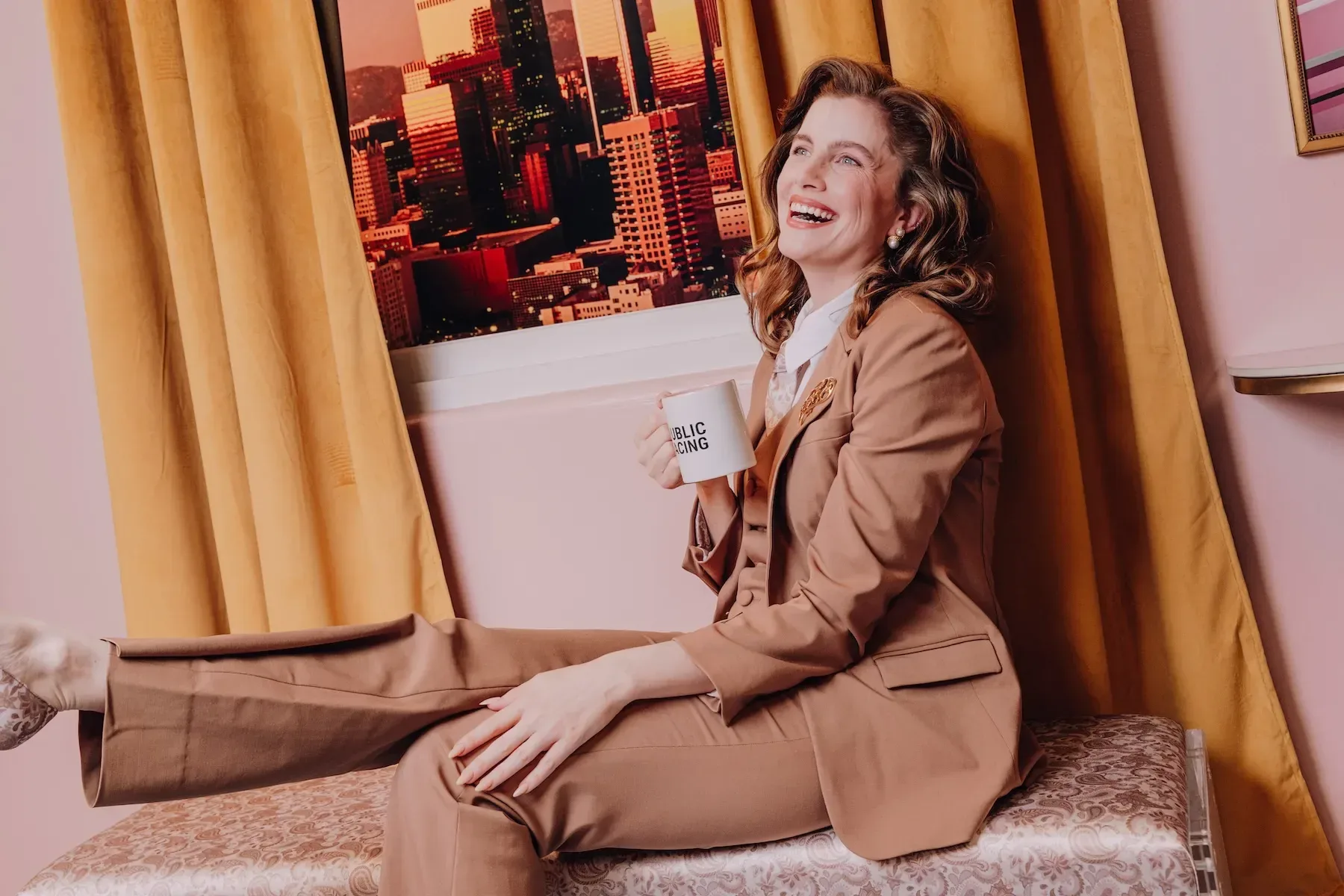

Kandi Burruss is bringing her music, reality-TV and restaurant experience to a new business competition. Bank on Her, set to premiere on OWN on December 4 at 9 p.m. ET/PT, puts three food-and-drink entrepreneurs in front of a panel with a chance to make the case for an investment in their companies.
The format is focused on more than simply introducing a product. Each owner will need to explain where the business stands, articulate what they intend to do next and defend that plan before Burruss, Raquel Graham and DonJuan Clark. The program also offers national exposure and access to business mentors, meaning the participants’ opportunity extends beyond the investment decision itself.
The first group of businesses is rooted in Southern California, but their models are notably different: a wine bar whose selection foregrounds Black-owned labels, a food-tour operation designed to introduce diners to Black-owned restaurants, and a Carson-based prepared-meals business balancing comfort-food dishes with an emphasis on affordability and nutrition. That range should make the panel’s central question less about finding one ideal kind of food business and more about assessing whether each founder’s specific plan is practical for the company they run.
Three businesses, three distinct pitches
Leslie and Le Jones, sisters and the owners of 1010 Wine and Events, will represent Inglewood. Their business is a wine bar situated near Kia Forum and SoFi Stadium, an area tied to major events and heavy visitor traffic. Its wine list places Black-owned labels at the center of the offering.
That positioning gives the company both a hospitality identity and a curatorial one. In straightforward terms, curation means choosing and presenting products around a defined point of view rather than merely stocking a broad assortment. For a wine bar, that can shape the customer’s reason for visiting: patrons may come not only for a glass of wine, but also to encounter producers and labels the business deliberately prioritizes.
Daisy Miles takes a different route through the food economy. Her company uses bus and walking tours to introduce participants to Black-owned restaurants around Los Angeles. Rather than operating a restaurant or selling a packaged item, the venture connects guests with existing dining establishments through an organized experience.
That distinction matters to the kind of growth story Miles may have to tell. A tour business is built around routes, transportation or walking logistics, restaurant relationships and the ability to turn local knowledge into a clear experience for customers. Its value is not confined to one kitchen or storefront; it can also direct attention and diners toward the restaurants included on its stops.
The third contestant, Jinell Singletary, leads Urban Comfort Foods in Carson. The business sells meals including Cajun barbecue chicken with braised collards and red beans. It accepts online orders and provides meal services beyond the food sold at its counter. Its stated focus is making nutritious meals affordable.
Related coverage includes Kandi Burruss Hosts OWN’s ‘Bank on Her’.
Prepared meals can ask a founder to reconcile multiple expectations at once: dishes must feel satisfying, pricing needs to remain accessible, and online ordering plus additional meal services call for an operational plan that works beyond a single point of sale. The available details do not specify what each entrepreneur will request from the panel or what form any investment might take. But Urban Comfort Foods arrives with a model that is already broader than a walk-in counter alone.
What the entrepreneurs will be asked to prove
Bank on Her frames the pitches around plans for the future. In business language, a pitch is a concise presentation explaining what a company does, why its proposition matters and what support would help it meet a proposed next stage. A successful pitch is not necessarily just a persuasive story; it should connect a founder’s ambition to a believable use of resources.
For viewers, that makes the show’s food focus potentially more useful than a simple tasting contest. Food and drink enterprises can look very different from the customer side while facing similarly serious questions in the background: How will the business reach more people? What elements of the offering define its identity? What can expand without losing that identity? And does the founder have a plan they can clearly explain under scrutiny?
The three featured companies provide very different answers to the first of those questions. 1010 Wine and Events offers a destination with a focused wine program. Miles’ tours create guided introductions to a wider local restaurant scene. Urban Comfort Foods sells meals while also handling online orders and additional meal services. Those are not interchangeable approaches, so a one-size-fits-all standard would not accurately reflect what each owner is building.
There is also a community-facing thread across the lineup. 1010 Wine and Events spotlights Black-owned wine labels, Miles’ tours spotlight Black-owned restaurants, and Urban Comfort Foods presents accessible prepared meals as a goal. The show’s setup gives those missions a national stage, while requiring the founders to explain the business choices supporting them.
Burruss and Clark bring restaurant-side perspective
Burruss is best known musically as a member of Xscape and as a songwriter for other R&B artists. Her songwriting credits include TLC’s “No Scrubs” and Destiny’s Child’s “Bills, Bills, Bills.” The Songwriters Hall of Fame has named her a 2027 nominee in its songwriter category, rather than its separate performing-songwriter category.
Her television profile also includes a long tenure on The Real Housewives of Atlanta, which she left in 2024 after 14 seasons. But Bank on Her has a particularly direct link to her experience as a restaurateur. Burruss owns the Atlanta restaurant Old Lady Gang, and Clark previously oversaw operations there. He also appeared on Kandi & The Gang, the series centered on people working at the restaurant.
That background does not reveal how Burruss or Clark will evaluate an individual pitch, and viewers should not assume an investment decision before the program airs. It does, however, establish why restaurant operations are a natural part of the pair’s perspective. Clark’s work involved the practical side of running a restaurant, not merely appearing in a food-business television format.
Graham joins Burruss and Clark on the panel. Together, they will hear the founders’ cases and challenge the plans presented. The program has not been described as a broad restaurant ranking or a cooking series; its focus is on entrepreneurs making a case for what they want their companies to become.
Why exposure and mentorship are part of the stakes
An investment opportunity is the headline incentive, but the show identifies national exposure and advice from business mentors as additional parts of its offer. Those opportunities are distinct. Exposure is visibility: more people becoming aware of a founder or business. Mentorship is guidance from experienced business figures. Neither term guarantees a financial outcome, and neither replaces a completed investment, but both can matter to entrepreneurs trying to communicate a clear identity and next step.
For the wine bar, visibility could bring attention to its location and its emphasis on Black-owned labels. For the tour business, a national platform can help audiences understand that the product is an experience connecting people with local restaurants. For Urban Comfort Foods, the show gives the founder room to explain a business that combines prepared dishes, online ordering and meal services. Those are practical implications of appearing on a competition built around a pitch, rather than claims about results that have not yet occurred.
The larger appeal of the format lies in watching founders translate the day-to-day reality of their work into a forward-looking argument. Restaurant service, wine hospitality, food tourism and prepared meals may all sit under the broad food-and-drink umbrella, but each has a separate rhythm, customer relationship and definition of growth. The panel’s task is to hear those differences rather than erase them.
That theme also fits Burruss’ public career, which has moved across songwriting, performance, television and restaurant ownership. The new series does not turn those disciplines into the same thing. Instead, it places a panelist with experience in both entertainment and hospitality in a setting where entrepreneurs must be specific about their businesses.
Bank on Her is produced for OWN by V10 Entertainment. Its December 4 premiere will determine how the three Southern California businesses present their cases, what questions the panel raises and whether any proposal earns the sought-after investment. Until then, the clearest picture is of a compact competition with three companies, three very different business models and a shared need to show that their plans are ready for the next level.
For more television and entertainment coverage, visit our look at ‘The Squirrel’ and its automated future.