There are conventional ways to persuade a great actor to join a franchise film: a strong script, a compelling character, an admired director, an excellent ensemble. Judi Dench’s account of joining The Chronicles of Riddick adds a considerably more floral option to the list.
In her memoir, Is It Too Late to Make a Run for It?, Dench recalls Vin Diesel coming to see her at London’s Haymarket Theatre to discuss a role in the science-fiction film. Before he arrived, she says, he sent flowers on such an outsized scale that staff could not get the bouquet up to her dressing room. It had to stay by the stage door.
Dench’s description is the detail that makes the story: she compared the arrangement’s dimensions to a kayak, both in length and width. She then joked that a gesture like that makes it difficult to refuse someone, calling herself “cheap as chips” and “far too easily wooed.”
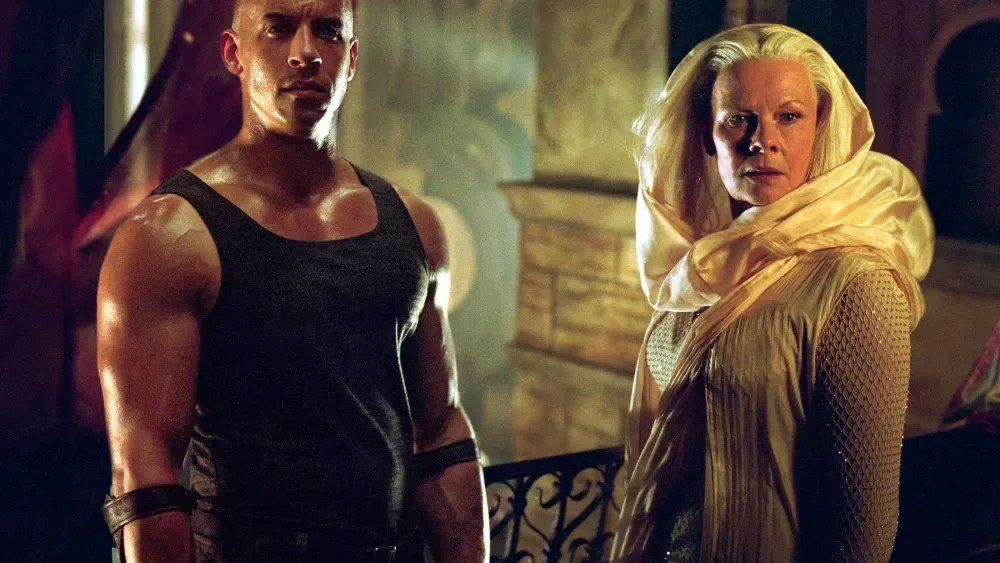
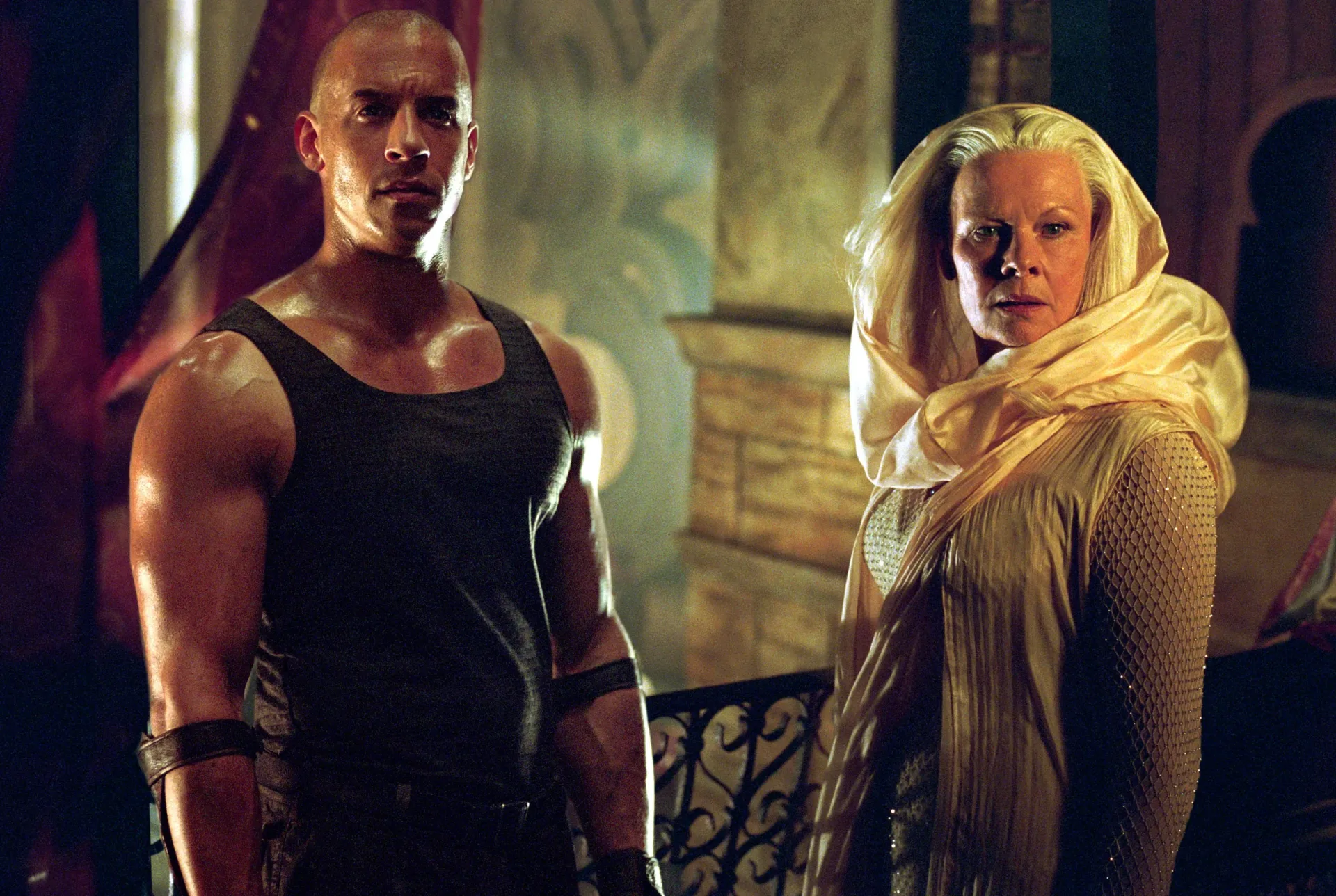
The joke should not obscure the practical result. Dench ultimately played Aereon in the 2004 film, appearing alongside Diesel’s Richard B. Riddick. The character is an elemental ambassador who guides Riddick as he attempts to help old allies and confront the leader of the Necromonger empire.
A memorable route into an unlikely screen pairing
Dench and Diesel make for the sort of casting combination that sounds initially improbable precisely because their screen identities are so distinct. That is part of why the flower story has such staying power. It offers a human, amusingly simple explanation for an appearance in a large-scale sci-fi sequel: an actor made the invitation personally, and made it memorable.
It is also worth separating the anecdote from an over-literal reading of it. Dench presents the bouquet as a comic account of how she was courted for the part, not as a serious claim that casting turns on gifts alone. Her decision plainly led to a finished performance in a film with a specific role for her to play. The flowers are the anecdotal flourish—the theatrical opening act before a professional conversation.
That distinction matters because actors are often approached through several overlapping considerations: the material, the people involved, the scheduling realities and the appeal of working in a different register. Here, Dench’s own telling puts warmth and personal connection at the center. A giant bouquet did not explain every element of the decision, but it made Diesel’s invitation impossible to forget.
For viewers, it also reframes Aereon as more than a curious cameo by a widely celebrated British performer in a science-fiction universe. Dench was not merely dropped into a franchise for a detached prestige flourish. Her recollection suggests a direct invitation from the film’s leading actor, delivered with the confidence of someone who knew the gesture needed to match the scale of the project.
Related coverage includes Judi Dench Says Vin Diesel’s Giant Bouquet Helped Win Her Over for ‘Riddick’.
Aereon’s role in The Chronicles of Riddick
The Chronicles of Riddick places Riddick in a larger conflict involving the Necromonger empire. Within that story, Aereon serves as an elemental ambassador and helps orient Riddick through the dangers around him. An ambassador, in this context, is a representative or intermediary; the term signals that her character exists to convey perspective and guidance amid a conflict beyond one person’s immediate experience.
It is a useful fit for Dench’s presence. Aereon is associated with counsel and explanation rather than being defined solely by physical confrontation. In expansive genre films, a figure who can clarify the wider stakes has a particular function: they help establish the world around the protagonist, while lending authority to information the audience needs to understand.
That kind of work can be easy to underestimate. World-building is the storytelling process of establishing a fictional setting’s rules, factions and pressures. It is not simply scenery or lore for its own sake. When a film asks audiences to follow an empire, old allies, a rescue effort and a central adversary, characters who can guide the hero also help guide the viewer.
Dench’s Aereon therefore occupies an important storytelling position even as the film centers on Riddick’s travels. Her character connects him to the conflict’s bigger frame. The bouquet may be the funny part of the origin story, but the role itself had a clear dramatic purpose.
Kenneth Branagh knew a smaller gift could work, too
Dench’s memoir recollection supplies a second, far more compact example of being persuaded with care. Kenneth Branagh gave her an embroidered handkerchief when asking her to appear in Murder on the Orient Express. The handkerchief bore the initials of the character she would play, Princess Natalia Dragomiroff.
Where Diesel’s flowers were extravagantly large, Branagh’s gift was intimate and tailored. Dench jokingly called him sneaky for knowing that the handkerchief would win her over. Yet she immediately made clear that their working relationship was the larger point: she said she would do anything for Branagh, even if he asked her to play a floor mat in Three Sisters.
That is a different kind of professional signal. The embroidered initials connect the offer to the character rather than merely to the production’s scale. The gesture says, in effect, that the performer is being invited to inhabit a particular person. It is a small prop-like object, but it has the kind of specificity performers often value: someone has thought about the part and about who might bring it to life.
Dench also recalled discovering the broader Orient Express cast little by little, naming Olivia Colman, Penélope Cruz, Johnny Depp and Derek Jacobi among those involved. An ensemble is the group of principal performers who share responsibility for carrying a film. In a mystery drama, the appeal of that ensemble can be especially important, since the genre depends on a web of characters, suspicions and competing accounts.
Dench played Princess Natalia Dragomiroff in the 2017 film, though she spoke of the character with unmistakably mixed amusement. Her shorthand description was of an older woman surrounded by jewelry and two Shih Tzus, one black and one white. It is a sharply comic way to summarize a role without pretending the actor formed a sentimental attachment to every detail of it.
The through-line is personal invitation, not the object
Taken together, the two stories make an appealing contrast. One invitation came with flowers so vast they became a logistical problem at a theatre stage door. The other came with a handkerchief small enough to carry, embroidered with character initials. One was impossible to miss; the other was personal in a quieter way.
Both, however, were gestures attached to a direct ask from collaborators Dench was willing to hear out. That is the useful implication of the anecdotes. The flowers and handkerchief are not a formula for recruiting actors. Their value lies in what they communicated: effort, thought and a genuine desire to work with a specific person.
The stories also underline how casting anecdotes can reveal something about a project without becoming a substitute for the work. Diesel’s approach led to Dench’s Aereon in a 2004 science-fiction film. Branagh’s invitation led to Princess Natalia Dragomiroff in a 2017 mystery drama with a major ensemble. Those are concrete credits; the gifts are simply the memorable details that illuminate the relationships behind them.
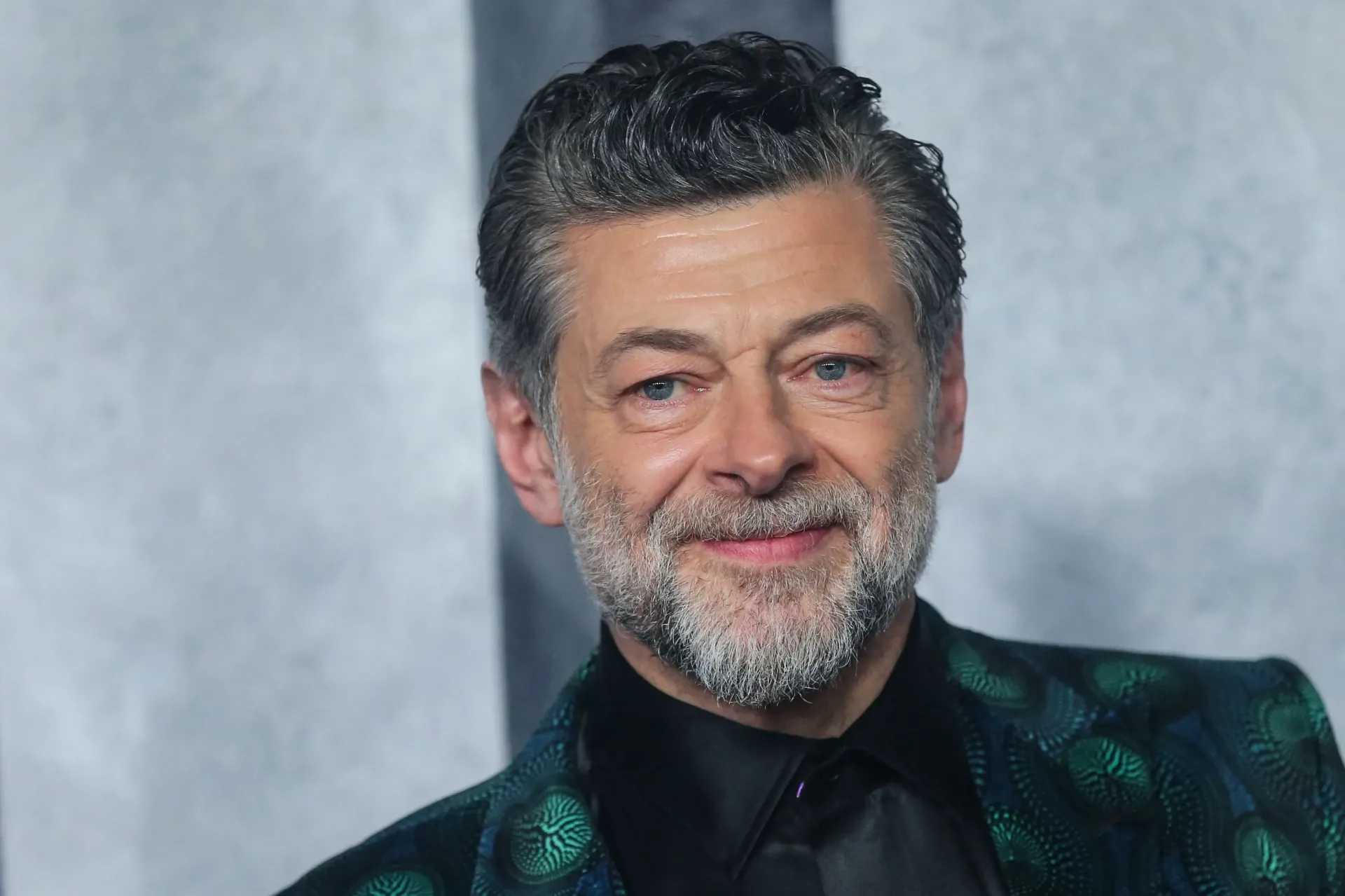
For a related example of performers discussing how audiences interpret work that can look technically unusual from the outside, see Andy Serkis’s comments on the acting behind Gollum’s digital “mask”. Dench’s recollections land in a different area of filmmaking, but they likewise pull back the curtain on a process that can otherwise seem purely transactional.
Most of all, Dench tells both tales with a performer’s sense of timing. The image of a kayak-sized bouquet stranded at the stage door is a punchline with its own staging. The character-initial handkerchief is the deftly placed second beat. Her willingness to poke fun at herself—while also acknowledging the colleagues and casts that made the offers attractive—keeps the memories affectionate rather than self-important.
And it leaves an unexpectedly useful lesson for anybody making an invitation, whether the setting is a film, a creative project or merely a difficult-to-arrange meeting: be specific, be sincere, and perhaps check whether your bouquet can clear the stairs.