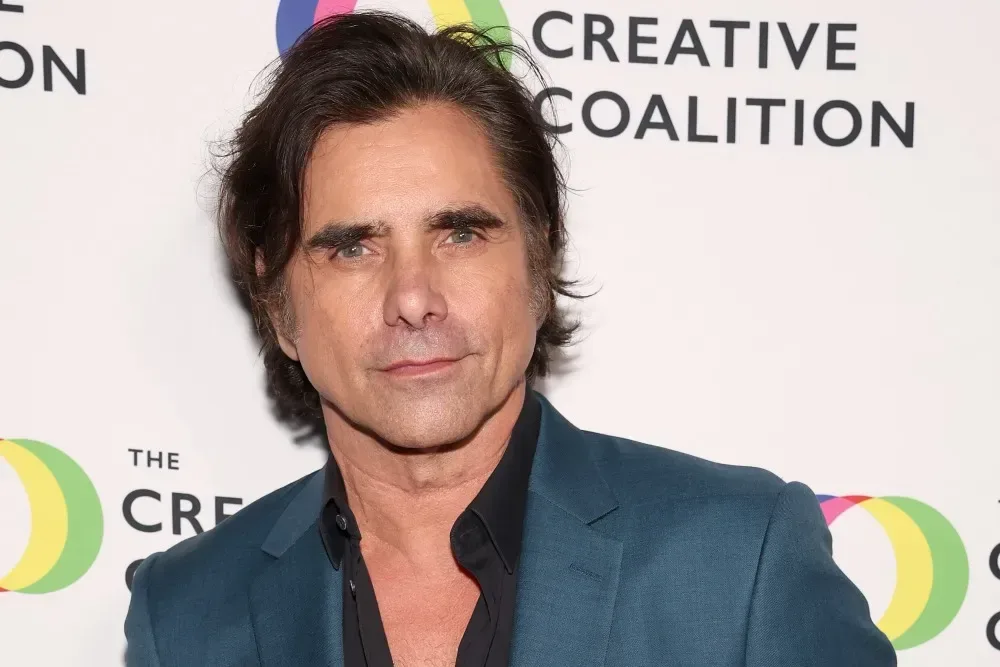
John Stamos used an acceptance speech at The Creative Coalition’s 12th Annual TV Humanitarian Awards to make a simple but powerful case for why advocacy cannot remain abstract. The actor, whose television career made Uncle Jesse a familiar figure to generations of viewers, became visibly emotional while speaking about how becoming a father reshaped his understanding of what children need from adults.
The ceremony took place in Los Angeles on September 10, 2026, and honored a group of television figures whose work and public service have addressed causes ranging from child welfare to caregiving, mentorship, gender equity and reproductive rights. For Stamos, the evening’s recognition reflected an association with the child abuse treatment and prevention organization Childhelp that has lasted nearly four decades.
That length of service matters, but Stamos explained that becoming a parent gave the work a more intimate emotional dimension. He and his wife, Caitlin McHugh, welcomed their son Billy eight years ago. Looking at childhood through the perspective of a parent, Stamos said, made it impossible to ignore the children who do not receive the safety, care and protection that every child should be able to expect.
“Becoming a father has changed the way that I see children,” Stamos said during his speech.
Rather than presenting celebrity advocacy as a detached add-on to a career, he framed his visibility as an obligation. With a typically self-deprecating nod to the scale of attention earned by a man known for playing Uncle Jesse, Stamos said the attention attached to his career can be redirected toward children who need support. In his telling, that is not merely philanthropy; it is responsibility.
A Longstanding Commitment Meets a Personal Turning Point
Celebrity speeches at awards dinners can often become tidy recaps of accomplishments. Stamos’s remarks took another route: they centered on dependency and vulnerability. Children rely on the grown-ups around them to create stability, comfort and security. Parenthood made that reliance immediate in his own household, while also making the absence of those basics for other children much harder to put out of mind.
The distinction is important. Child-focused advocacy is frequently discussed through statistics, institutions and public-policy language. Those conversations are necessary, but personal testimony can give the topic a human focus. Stamos’s message was built around the everyday truth that children cannot create the secure environment they need on their own. Adults, families, communities and care organizations have to show up.
Comedian Jeffrey Ross, described as one of Stamos’s closest friends, presented the honor. The presentation put a longstanding friendship alongside a lifetime of advocacy, while Stamos’s address kept the attention on the children and families at the heart of Childhelp’s mission.
For viewers who know Stamos chiefly through Full House, the moment also connected a TV identity associated with family entertainment to real-world service. That does not erase the distance between a fictional sitcom household and the serious work of child abuse prevention and treatment. It does, however, illustrate why recognizable performers can bring attention to issues that are too easily overlooked once the cameras are gone.
“Love From Above” Turns Family Memory Into a Children’s Book
Earlier in the evening, Stamos also discussed a forthcoming children’s book, Love From Above, created with Billy. The book is scheduled for release on April 20, 2027. Stamos is providing watercolor artwork, while the story deals with grief after the deaths of his parents and the idea of feeling their continued presence through hummingbirds.
The origin of that motif comes from family lore. After Stamos’s father died, a hummingbird appeared in his father’s garden. Billy interpreted it not as an ordinary garden visitor, but as his grandfather returning to make sure the garden was being cared for. The image stuck, becoming a shared family symbol that will now shape the book.
That premise places Love From Above in a familiar but meaningful area of children’s storytelling: giving young readers language and imagery for loss without insisting that grief has a neat ending. The hummingbird is not presented as proof of anything. Instead, it functions as a gentle expression of memory, continuity and a child’s imaginative way of staying connected to someone who has died.
Stamos said Billy has treated the project seriously, and the pair hope to read the book to children in settings including schools and hospitals where possible. Their stated hope is that it may offer comfort to kids who have lost grandparents. The planned release is still months away, so details beyond the core premise, release date and Stamos’s watercolor contributions have not been outlined.
Stories about bereavement can be difficult to discuss across generations, particularly when adults fear saying the wrong thing to children. A book built around a recurring natural image offers one possible doorway into that conversation. It is also notable that this project arrives from a father-and-son collaboration, matching the themes of family connection in the story with the partnership behind it. Readers interested in the different ways screen stories approach mourning can also explore a demanding study of grief in film.
Caregiving, Equality and Mentorship Also Take Center Stage
Stamos was one of several people recognized during the dinner. Simran Baidwan, an executive producer and writer on The Pitt, received an award presented by Patrick Ball, her co-star on the series. Ball, who plays Dr. Langdon, highlighted Baidwan’s role in bringing family caregiving into the show’s storytelling.
His comments drew attention to the people who help relatives through illness, disability, aging and other long-term needs, often without identifying themselves as caregivers. The point was less about a job title than the persistent, frequently unseen work of showing up: devotion mixed with fatigue, sacrifice and care. Baidwan said that depicting caregivers’ journeys can help return a measure of hope to the public conversation around their work.
Lisa Ann Walter was honored as well, with her Abbott Elementary co-star and friend Sheryl Lee Ralph presenting the award. Ralph described Walter’s activism as beginning in childhood, recalling her involvement in anti-Vietnam War demonstrations at age six and advocacy for women’s equality at eight. Walter said her support for reproductive rights and gender equity stems from the belief that inequity is fundamentally unfair.
The evening also recognized director Mary Lou Belli, whose decades of service and mentorship of emerging filmmakers were central to her honor. Scott Bakula presented Belli’s award. Belli said she cried when she learned she would receive the humanitarian recognition, contrasting that reaction with her response to learning, two weeks earlier, that she would have been nominated for a fourth Emmy.
That contrast captured an underlying theme of the event. Industry acclaim and career milestones carry their own significance, but recognition for service can land differently because it acknowledges the effect a person has had beyond a credits list. Belli’s comments suggested that mentorship, especially, is not secondary labor in an entertainment career. It can be part of the legacy that outlasts any one production.
A Television Community Focused Beyond the Screen
Famke Janssen, Cara Buono and other attendees were also among those recognized or present at the awards dinner, which brought together performers, writers, producers and directors from across television. The event’s honorees did not all advocate for the same cause, nor did they describe the same path into service. Yet their remarks shared an emphasis on attention: who is seen, who is protected and whose work is acknowledged.
Stamos focused on children who lack safety and support. Baidwan and Ball focused on family caregivers whose work may be invisible even inside their own homes. Walter spoke about fairness and rights. Belli highlighted the meaning of being recognized for service and teaching. Taken together, those threads made the humanitarian theme less about a single grand gesture and more about sustained effort.
For Stamos, that sustained effort stretches back almost 40 years with Childhelp, while fatherhood changed the stakes of the commitment in his own life. His speech did not offer a simple solution to child abuse or neglect. It did offer an honest description of why refusing to look away matters: once a parent understands how completely a child depends on others, concern for children outside one’s own family becomes impossible to treat as somebody else’s problem.