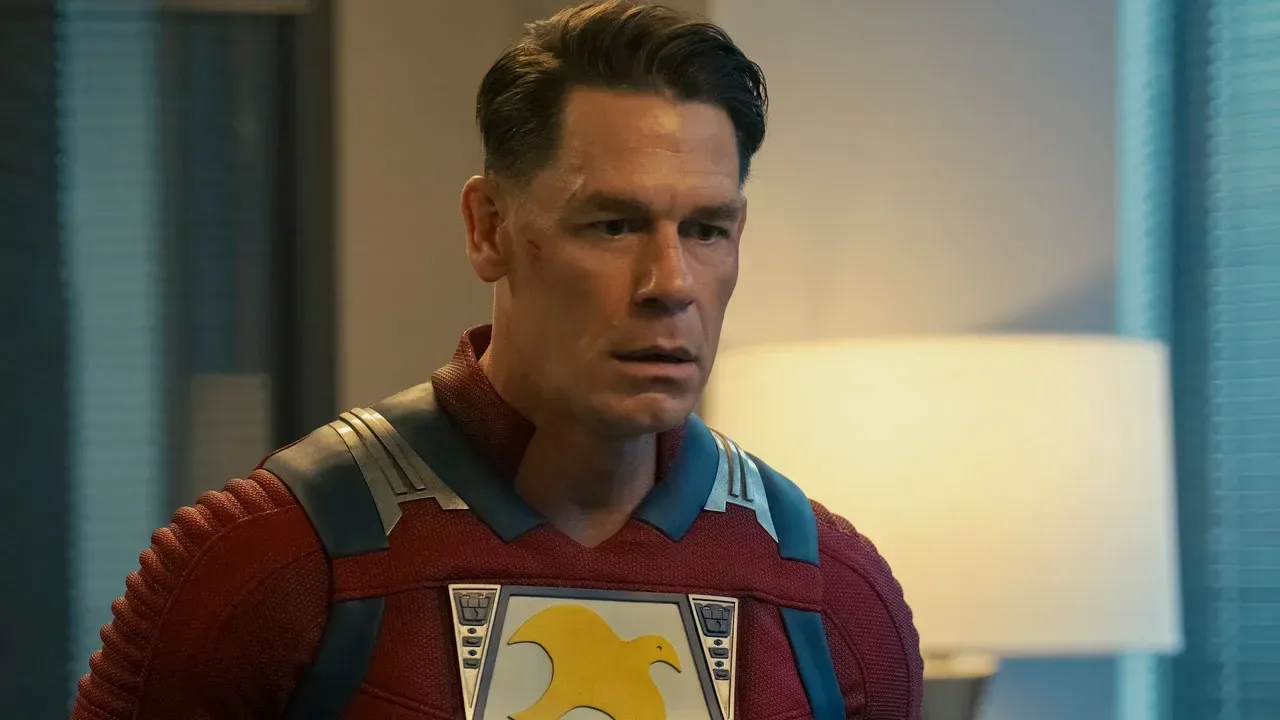
DC continuity questions are about to get a direct answer rather than another round of detective work with screenshots, cameo charts and string pinned to corkboard. James Gunn has said a new, one-episode Official The Suicide Squad “Is It Canon?” Podcast will clarify whether The Suicide Squad belongs to the current DC Universe, as well as share behind-the-scenes material.
The episode is scheduled to debut October 30, following Gunn’s social-media post marking DC Super-Villain month. His wording is notably decisive: the podcast is intended to “lay down the law” on the film’s status. For viewers trying to understand how the rebooted DCU relates to selected projects from the previous DCEU era, that makes this a potentially useful piece of official guidance.
Why The Suicide Squad needs a canon ruling
Canon is the body of story material treated as part of a shared fictional continuity. In practical terms, it determines which past events, characters, relationships and consequences creators can regard as having happened when telling new stories in that universe.
That question has been unusually prominent during the transition from the DCEU to the new DCU. The reboot replaced the now-defunct DCEU, meaning its projects do not simply continue wholesale. Yet the line is not as easy as declaring every earlier production erased: Peacemaker and The Suicide Squad have elements that carried over into the newer continuity.
That partial overlap creates a more complicated situation than a clean start. If a character remains in the new universe, audiences naturally want to know whether their prior adventures remain part of their history. If only some aspects transfer, the next question becomes which ones. An official discussion devoted to The Suicide Squad should at least establish the framework for interpreting that film’s place in the DCU.
It is important not to assume the answer before the episode airs. Gunn has promised a ruling on whether The Suicide Squad is canon, but the available details do not specify which events, characters or details may be retained, altered or excluded. “Canon” can be an all-or-nothing label in casual discussion, but franchise transitions sometimes require more precise distinctions. The podcast’s value will be in replacing assumptions with a stated position.
Continuity is more than a viewing-order debate
For fans, canon can sound like a bookkeeping exercise. It has real narrative consequences, though. A continuity decision can affect how viewers interpret a returning character’s motivations, whether a reference is history or merely a familiar echo, and how much emotional weight an older story carries forward.
It also shapes expectations. If a prior event remains canonical, it can inform what audiences believe a character knows or has experienced. If it does not, new DCU projects are free to establish their own version of that background. Neither route automatically makes a story better; the key point is clarity. Clear boundaries let viewers engage with a new project on its own terms instead of waiting for it to validate every detail from a prior era.
This is especially relevant for a universe using selected continuities rather than presenting every past screen project as one uninterrupted chain. A returning face alone does not necessarily answer every historical question. Casting continuity, character continuity and event continuity can be related, but they are not automatically identical. The announced podcast offers Gunn an opportunity to explain that distinction through a specific, high-profile example.
A familiar podcast format returns
This will not be the first time Gunn has used a podcast to address the subject. He previously released Peacemaker: The Official Podcast with James Gunn, another official audio project tied to a property that sits near the boundary between the previous screen universe and the current one.
Using a dedicated audio episode for The Suicide Squad suggests a format better suited to nuance than a short social post. Continuity discussions often depend on qualifications: what is being addressed, what is not, and whether a point concerns broad character history or a particular plot detail. A longer conversation can make room for those distinctions, alongside the promised behind-the-scenes facts.
It is also a way to make an administrative-sounding topic more approachable. Continuity decisions matter most when they support stories and character arcs, not when they become a barrier to entry. The useful outcome for casual viewers would be simple: an understandable answer about whether they need to treat The Suicide Squad as DCU history. For invested followers, the additional context could help explain why the decision was made.
The Blue Beetle question remains separate
The Suicide Squad is the immediate subject, but it is not the only project Gunn has been weighing. He has previously said he wanted to revisit both The Suicide Squad and Blue Beetle with the current DCU plans in mind. In that earlier discussion, he described wanting to rewatch them knowing what he knows nearly three years into the DCU, with additional scripts actively being filmed or created.
Gunn also floated the idea of later podcast conversations with Jennifer Holland and Steve Agee after Man of Tomorrow. That earlier comment framed the two projects as matters still requiring review, rather than continuity questions that could be resolved casually in a single sentence.
For now, viewers should separate the two issues. The October 30 podcast is specifically described as an The Suicide Squad episode. Nothing in the announced plan promises a final ruling on Blue Beetle at the same time. The two titles may share a broader continuity discussion, but one episode devoted to one film should not be mistaken for a blanket decision covering both.
What to listen for on October 30
The most useful answers may not come only from a yes-or-no statement. Fans listening for practical clarity should pay attention to the scope of the ruling. Does the discussion treat the entire film as DCU history? Does it distinguish between broad character elements and individual plot events? Does it set out a general principle for how material from the DCEU may carry into the reboot?
Those questions are analytical possibilities, not confirmed topics for the episode. The confirmed description is narrower: Gunn and the official podcast will address whether The Suicide Squad is canon and include behind-the-scenes fun facts. Still, the way an answer is framed can matter as much as the headline result. A clear explanation can prevent a new ambiguity from replacing the old one.
- Confirmed: A one-episode official podcast about The Suicide Squad is due October 30.
- Confirmed: Gunn says it will rule on whether the film is canon in the DCU.
- Confirmed: Behind-the-scenes information is planned as part of the conversation.
- Not confirmed yet: The exact canon status of the film and the specific details that may carry over.
- Not confirmed by this announcement: A final decision on Blue Beetle.
What this means for the wider DCU
There is a broader benefit to resolving these questions openly: it establishes an expectation that DCU continuity can be explained rather than left entirely to inference. That does not require every future story to stop and recap old projects. It does mean viewers have an official reference point when a transition between creative eras leaves uncertainty.
It may also help audiences distinguish between continuity as a storytelling tool and continuity as a trivia contest. The purpose of deciding what counts is to give the new universe a coherent foundation while allowing its creators to tell the stories they want to tell. It is not necessarily a demand that every prior detail be preserved or repudiated individually.
That perspective matters beyond DC, too, as shared-universe storytelling remains a major part of pop culture. For another current superhero-related development on the publishing side, Magic: The Gathering’s Darkhold Destiny is set to introduce an original Marvel character. Different franchises have different rules, but both illustrate how audiences increasingly pay attention to where characters and stories fit.
October 30 should therefore bring a concise answer to one of the DCU’s most persistent transition-era questions. Until then, the only firm takeaway is that Gunn considers the issue important enough to address directly: The Suicide Squad is getting its own canon-focused podcast, and the exact verdict is being held for the episode itself.