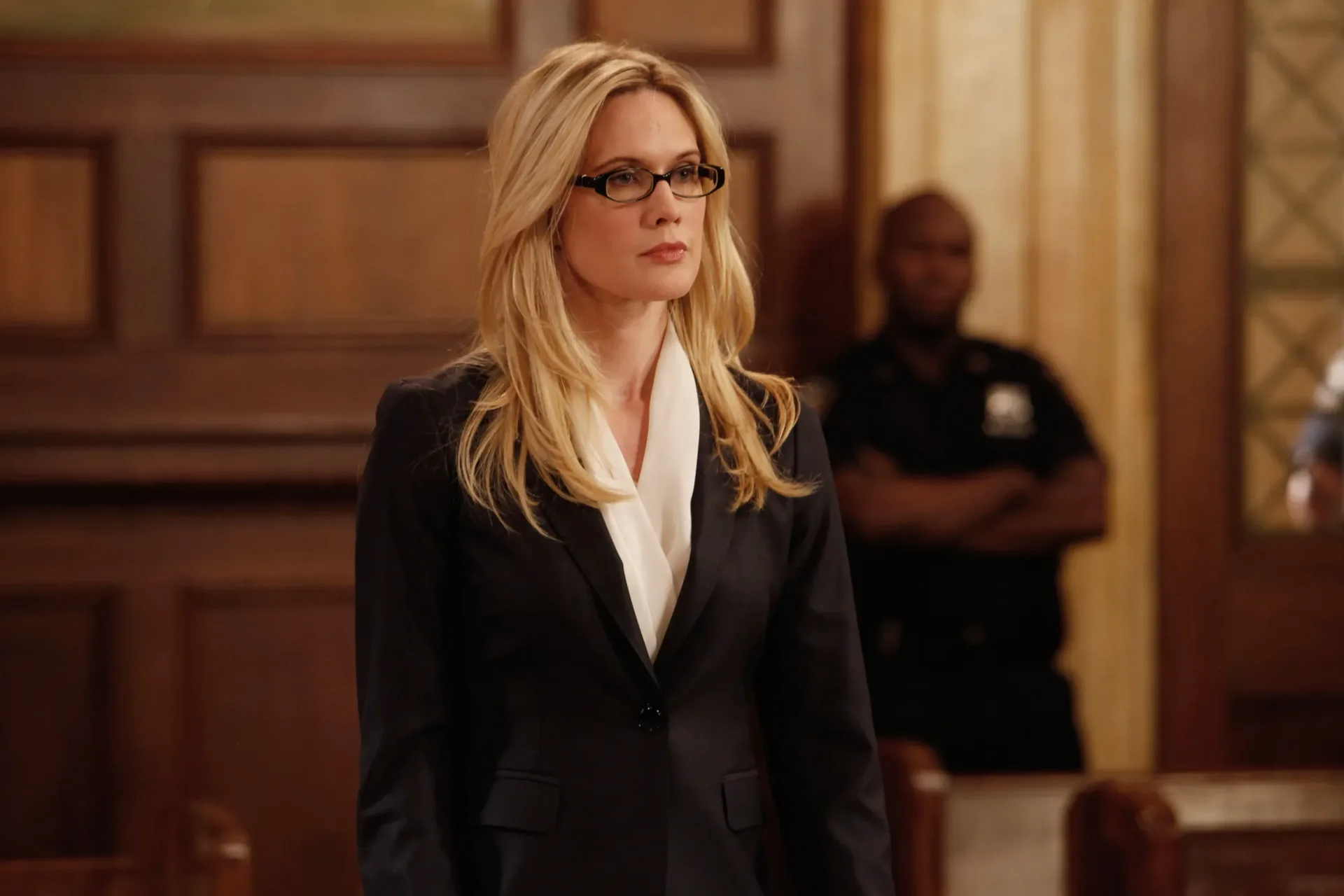
Joe Budden has stepped into the world of Law & Order, making a guest appearance that has quickly become fodder for social-media punchlines. The rapper and podcast host plays a rapper connected to the episode’s victim through a local art scene, putting him in the familiar television-crime-drama position of receiving a visit from detectives.
The response has been mixed in the way celebrity cameos often are: part attention to the performance, part disbelief at seeing a personality from another medium in an interrogation-adjacent scene, and part anticipation that Budden’s own podcast may have plenty to say about the moment. Whatever the balance of praise and joking, the appearance is a notable change of format for a figure best known for music and conversation-driven media.
It is also described as Budden’s scripted primetime acting debut. He has previously appeared in reality television through Love & Hip Hop and Couples Therapy, but reality programming and a scripted procedural ask for very different things from a performer. The distinction helps explain why a relatively brief role can draw so much attention.
A cameo built for a procedural
In a procedural, a TV format organized around a case that moves through recurring stages, guest characters frequently serve a precise narrative purpose. They may know the victim, provide a lead, complicate a detective’s theory, or simply reveal another part of the victim’s life. Budden’s character fits that structure: he is a rapper who knew the victim through the local art world and is approached by detectives.
That does not automatically make the role a verdict on a celebrity’s acting future. A guest spot has limited room for character development, and a scene involving detectives is especially functional. It needs to deliver information, establish a relationship, and maintain the episode’s momentum. Still, it provides a clean on-screen test of a different craft: performing written dialogue within a fictional situation rather than responding as oneself in a podcast or reality-TV setting.
That difference is central to the online reaction. Budden’s public persona is already highly recognizable. Audiences know his voice, conversational instincts, and willingness to scrutinize public events. Seeing that familiar presence inside a fictional police investigation can create an immediate layer of novelty before anyone has evaluated a line reading or the episode’s script.
Why viewers joke about these appearances
Celebrity casting can be funny because it asks viewers to make two interpretations at once. On one level, they follow the character and the case. On another, they recognize the entertainer playing that character and bring years of associations into the scene. The result is not necessarily a dismissal of the cameo; often, the jokes are evidence that the moment was visible enough to become part of the wider conversation.
Budden’s media work adds another angle. His self-titled podcast is built around discussion and feedback, so people have naturally speculated about whether the cameo will receive its own postgame analysis on a future episode. That prospect is amusing because it turns a conventional guest role into material for another format: the performer may be part of the commentary surrounding his own performance.
Related coverage includes Joe Budden Makes Scripted Primetime Debut on Law & Order.
There is a broader hip-hop context, too. Law & Order and its related series have previously featured rappers including Ice-T, Big Boi, Ludacris, Method Man, 2 Chainz, and Snoop Dogg. Ice-T’s case is particularly distinct because he is a main cast member on Law & Order: Special Victims Unit, whereas a one-episode or limited guest appearance operates as a much smaller commitment.
Budden’s role therefore belongs to an established crossover pattern rather than arriving from nowhere. Rappers have long been recognizable figures in television drama, whether as guests or continuing cast members. What makes each instance interesting is less the bare fact of a musician appearing on a crime show than the surrounding fit: the scale of the role, the character’s relation to the plot, and whether the performer’s existing image becomes part of the audience experience.
From reality TV to a scripted set
Reality television can involve cameras, editing, producers, and heightened situations, but it does not operate on the same basic agreement as scripted drama. A scripted acting role calls for a performer to inhabit a written character, deliver dialogue designed for a scene, and support a story that is not about their real life. Budden’s Law & Order appearance is notable precisely because it crosses that boundary.
That does not mean his earlier television experience is irrelevant. Being comfortable on camera is useful across formats, and Budden has spent substantial time in public-facing media. But comfort in front of an audience is not identical to screen acting. This is why the phrase “scripted primetime debut” matters: it identifies the specific professional lane the appearance enters without overstating its size or predicting a long acting career.
For viewers, the practical takeaway is simple. The cameo is a self-contained moment in a long-running crime-drama ecosystem, not confirmation of a recurring role or future acting slate. There is no firm basis here to say whether Budden will pursue additional scripted projects. The available information supports only that this is a new kind of television credit for him.
The Dick Wolf connection
The appearance is less surprising when viewed alongside Budden’s connection to true-crime audio. He has a true-crime podcast, Crime In America, with Law & Order series creator Dick Wolf. That project did not receive a strong initial response, and Budden acknowledged the criticism as constructive while indicating that it would improve.
The two projects should not be treated as the same thing. True crime generally concerns real cases and real-world criminal-justice narratives, while Law & Order is fictional drama. Yet both sit close to the broad cultural territory of crime storytelling, and the Wolf relationship supplies reasonable context for why Budden would enter this television orbit.
It also illustrates how contemporary media careers can cross formats. Budden’s public work includes rapping, podcasting, reality television, and now a scripted TV appearance. None of those roles are interchangeable, but they can introduce audiences to different versions of the same public figure. That portability can create opportunities, while also inviting unusually direct audience feedback when a personality moves into an unfamiliar lane.
What the reaction says—and what it does not
Online roasting is not a formal review, and it should not be mistaken for a reliable measurement of acting quality. Social feeds reward the quickest, sharpest joke, especially when the subject is already a prominent commentator. A wave of memes or teasing can coexist with genuine interest in the episode, curiosity about future roles, or appreciation for the simple unexpectedness of the casting.
At the same time, the reaction underscores the unusual feedback loop around Budden. He operates in a space where discussion itself is part of the product. If the cameo becomes a topic on his show, audiences would not only be reacting to the role; they could also be reacting to Budden’s reaction to the reaction. That recursive quality is likely a major reason the appearance has produced so much playful commentary.
For now, the clearest reading is modest: Budden has made a scripted primetime appearance on Law & Order, playing a rapper with a connection to the case’s victim, and the internet has treated the crossover as a prime opportunity for jokes. It adds a television-drama credit to a career already spread across music and media, without requiring any larger claim about what comes next.
Budden’s appearance also arrives within a hip-hop conversation that remains wider than a single TV scene. For another recent look at an influential rap group’s unresolved future, see Ali Shaheed Muhammad’s comments on A Tribe Called Quest.