Ali Shaheed Muhammad has left the possibility of another A Tribe Called Quest chapter open, but he has made equally clear that the group does not have a settled answer to its most fundamental question: how, or whether, it can move forward without Phife Dawg.
Muhammad said the remaining members “haven’t figured it out yet” when discussing the prospect of performing without Phife. He did not present that uncertainty as a definitive end, however. “I can’t answer, but I’m always open to the possibility of something,” he said.
That distinction matters. It is not a reunion confirmation, a tour announcement, or evidence that new A Tribe Called Quest material is underway. It is an acknowledgement that the door is not locked, coupled with an admission that the practical and emotional issue standing behind it remains unresolved.
Why the question is bigger than finding another performer
Muhammad described the onstage relationship between Q-Tip and Phife as something that cannot simply be swapped out through another performer. In a group setting, that kind of chemistry is more than a matter of covering lyrics or reproducing arrangements. It is the timing, exchange and shared presence that make a performance feel like the group itself rather than a version of its catalog.
For more context, explore Hot Dogs, Horseshoes & Hand Grenades 2 Heads to Meta Quest 3 and 3S on November 12.
That is the central point in Muhammad’s comments. The obstacle is not framed as a technical gap that can be filled by hiring a guest MC. Rather, it is the loss of a defining creative relationship at the heart of the live act.
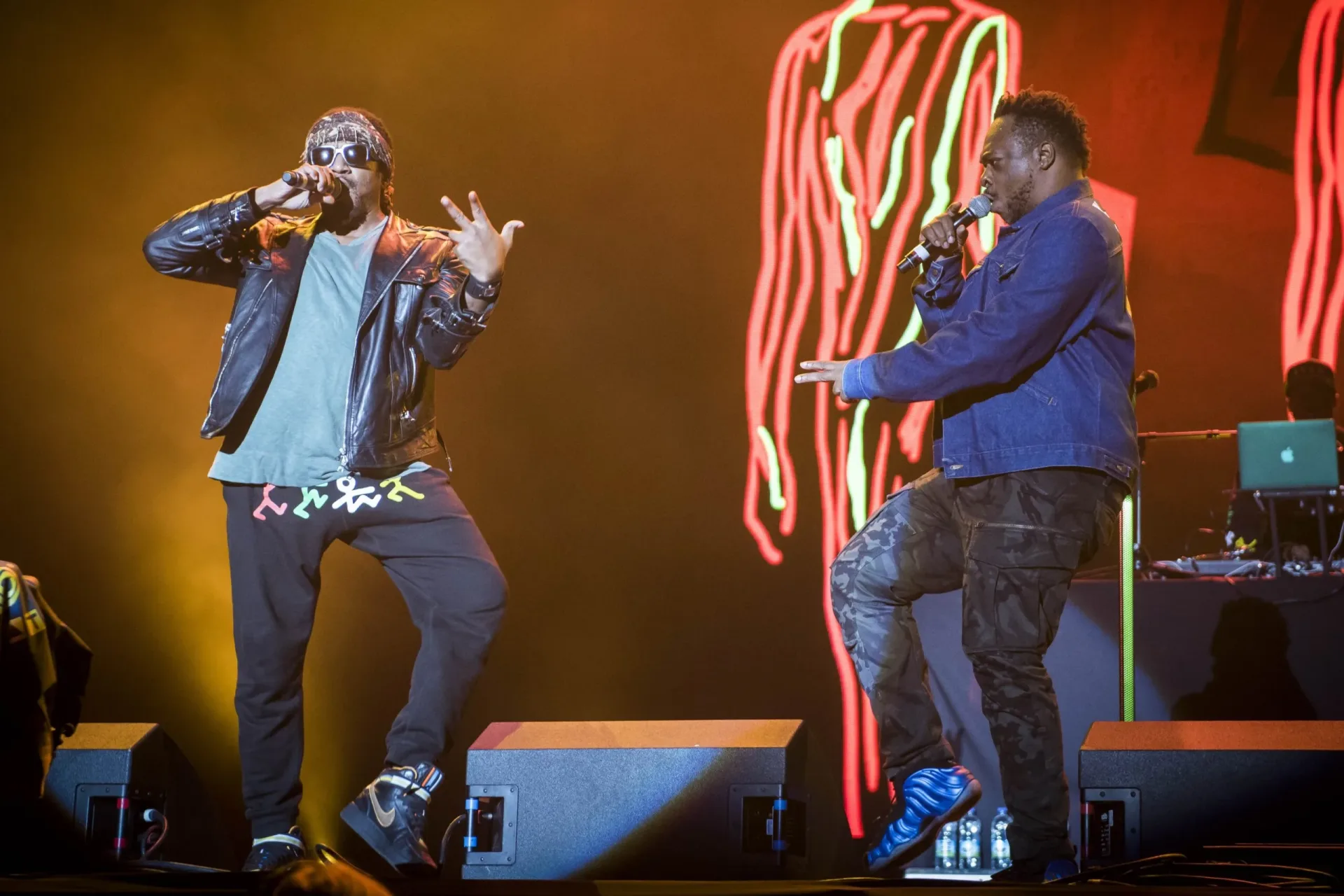
Phife died in March 2016. A Tribe Called Quest later marked a significant endpoint at Panorama in New York City in July 2017, when Q-Tip, Muhammad and Jarobi White told the hometown audience that it would be the group’s last New York performance. Muhammad’s new comments do not undo that moment or specify a different plan. They instead show that the question of what comes next has remained open-ended.
Loss changed Muhammad’s view of other groups
Muhammad contrasted Tribe’s position with De La Soul continuing to perform while Dave was ill. He also said that experiencing Phife’s death gave him a deeper understanding of why the Beastie Boys were reluctant to continue performing after MCA’s death.
Related coverage includes Ali Shaheed Muhammad Keeps A Tribe Called Quest’s Future Open.
Those comparisons should not be treated as a roadmap for what A Tribe Called Quest will do. Each group has its own members, history and circumstances. Their value here is explanatory: Muhammad is describing a perspective shaped by personal loss, and why an audience expectation that a beloved act should simply continue may miss what made that act work in the first place.
For fans, the most accurate reading is a restrained one. Muhammad has not shut down the possibility of something involving the group. At the same time, there is no indication that the members have reached a solution for performing as A Tribe Called Quest without Phife. Openness is not a timetable.
The Midnight Hour’s separate path continues
While Tribe’s future remains undefined, Muhammad’s work with Adrian Younge is moving on a much more concrete track. The Midnight Hour: Lost Tapes JID028 arrived through Jazz Is Dead on October 23.
The record contains nine tracks drawn from work originally recorded for a second Midnight Hour project. Those sessions were put aside in 2020 as Jazz Is Dead became the priority. The “Lost Tapes” designation therefore describes material from a deferred project, rather than signaling a newly recorded follow-up built around a reunion-style campaign.
The Midnight Hour’s first album was released in 2018. Its recordings used a live rhythm section and orchestra, with performances captured directly to tape. In recording terms, “directly to tape” refers to recording onto magnetic tape rather than relying solely on a digital recording system. The method does not automatically define the quality or style of a record, but it does describe a particular production process and is consistent with a project centered on played instrumentation.
The credits offer one specific example of the collaborators’ division of work on the new release. On “The Midnight Stroll,” Muhammad plays electric bass and drums, while Younge performs acoustic piano. That is a compact but useful reminder that Muhammad’s role in the partnership extends beyond his high-profile history in hip-hop: the current project also places him inside the instrumental construction of the music.
A career that crosses group formats and mediums
Muhammad’s career has moved across several collaborative settings. Alongside A Tribe Called Quest, he worked with Raphael Saadiq and Dawn Robinson in Lucy Pearl, a group associated with the meeting point of rap and R&B. His partnership with Younge also reached television through music for Marvel’s Luke Cage, the Netflix superhero series set in Harlem.
That screen work places Muhammad and Younge in a different kind of storytelling framework. A television score or soundtrack contribution must support scene, character and pacing, rather than function only as a standalone song sequence. Their work also appeared on Kendrick Lamar’s untitled unmastered.: “untitled 06,” featuring CeeLo Green, began as music intended for their own project.
The through line is not that every collaboration serves the same purpose. It is that Muhammad’s work has continued to take different forms: group membership, production partnership, television music and instrumental performance. That ongoing output is important context for the careful way he discusses A Tribe Called Quest. The absence of a firm Tribe plan does not mean an absence of creative activity.
What Muhammad has—and has not—said
There are two ideas that can coexist without contradiction. First, Muhammad remains open to the possibility of something involving A Tribe Called Quest. Second, the group has not worked out how to address the absence of Phife in a live context.
- What is clear: Muhammad has not ruled out a future development involving the group.
- What is clear: Phife’s role alongside Q-Tip is viewed as irreplaceable rather than easily reproducible.
- What is clear: The group publicly characterized its 2017 Panorama appearance as its last New York show.
- What is not established: There is no stated date, performance plan, new recording plan or formal reunion announcement.
- What is currently active: Muhammad and Younge’s The Midnight Hour: Lost Tapes JID028 provides a current release with a documented origin in earlier sessions.
For a medium where reunion rumors can quickly harden into supposed facts, that distinction is worth preserving. Muhammad’s remarks provide possibility, not confirmation. They also place the focus where he did: on the emotional and artistic reality of losing a member whose presence was integral to the group’s identity.
Meanwhile, his continuing work with Younge gives listeners a defined project to engage with now. The Midnight Hour’s archival sessions, live-instrument approach and shared credits offer a different lens on Muhammad’s ongoing music-making—one that does not depend on forcing a resolution to A Tribe Called Quest’s unanswered question.