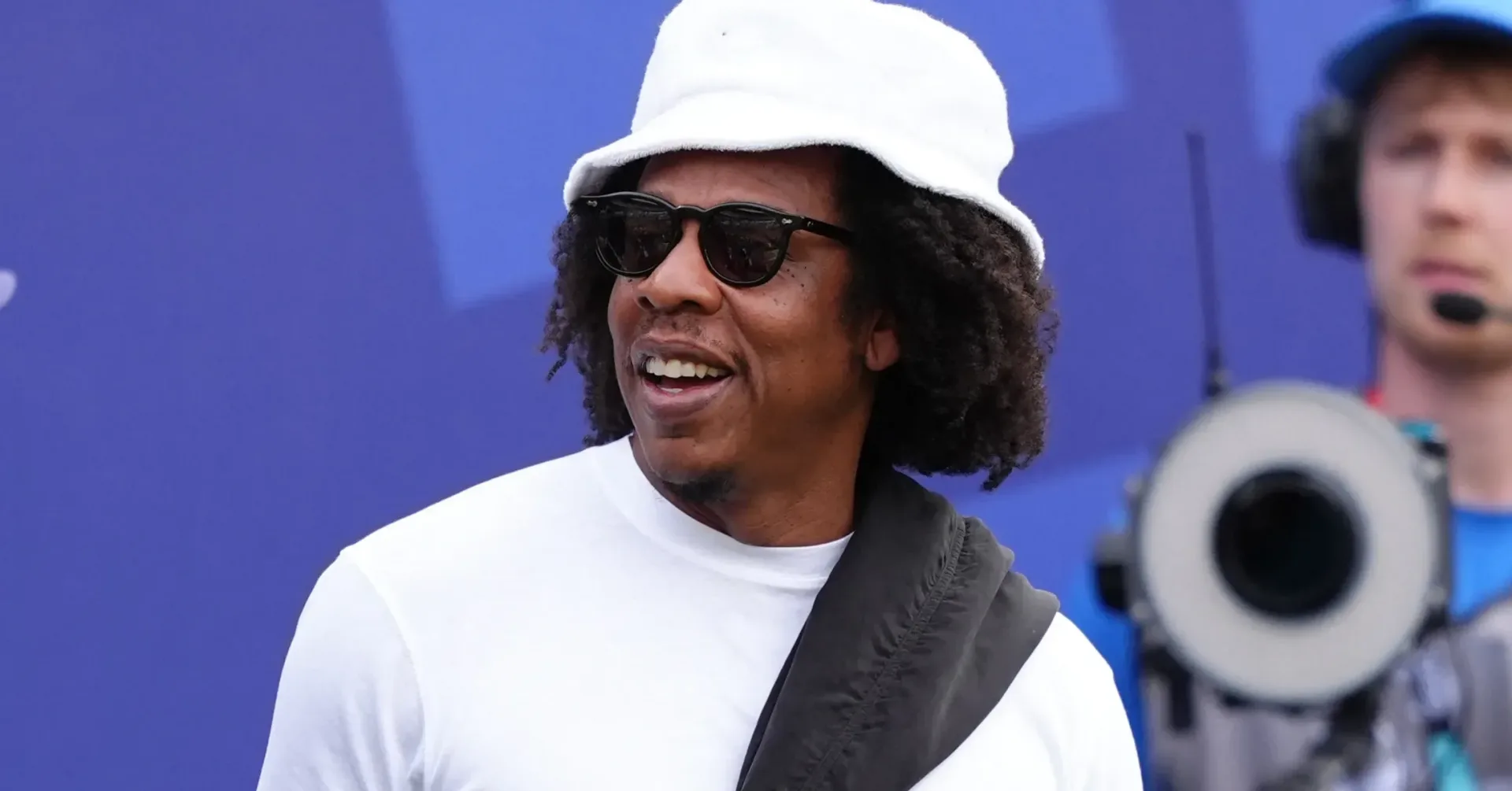
Speculation around JAY-Z’s reported Super Bowl halftime show has moved quickly from the headline booking to a more complicated question: who, if anyone, might share the stage with him? On a recent episode of The Joe Budden Podcast, Joe Budden suggested that Kanye West could make an appearance. Co-hosts Ice and Ish agreed, specifically pointing to the possibility of a performance of “In Paris.”
It is a prediction, not a confirmed guest booking. That distinction matters here. A halftime-show appearance carries far more than musical significance, and the discussion around West illustrates why a theoretically obvious collaboration can still be difficult to make happen.
Budden had initially been less enthusiastic about JAY-Z as the prospective selection. Although he described himself as a major JAY-Z fan, he and his co-hosts worried that the choice could feel overly dependent on surprise guests. After the booking was described as official, the conversation shifted from whether the show should happen to what a setlist might look like—and which appearances would fit it.
Why “In Paris” is central to the debate
“In Paris” is the natural focal point for anyone imagining a JAY-Z and West reunion on a major stage. The song is associated with both artists, so its inclusion without West could prompt a very different kind of audience conversation than a performance of a JAY-Z solo record. Budden, Ice and Ish’s argument is essentially that JAY-Z would not want the song—and potentially other material tied closely to West—performed without West present.
That is an artistic argument, however, rather than evidence that an appearance is planned. A halftime production has to make choices about song length, guest roles, staging and broadcast timing. The existence of a famous collaboration does not create a requirement for both performers to appear. A featured artist can be represented by the recorded track, omitted from a medley, or replaced by another arrangement. None of those possibilities have been confirmed for this show.
Still, the appeal of the idea is easy to understand. Halftime shows are built around instantly recognizable moments, and a reunion between two enormously influential rap figures would create one. The larger point is not merely nostalgia. It would turn the performance into a statement about a relationship that has been publicly scrutinized and repeatedly debated by fans.
The case against a West appearance
Marc Lamont Hill pushed back on the prediction during the same discussion. His first objection was personal: he cited West’s comments about JAY-Z’s child and questioned whether JAY-Z would be willing to give West a place on such a prominent platform, even if forgiveness existed privately.
That distinction is important. Reconciliation, if it occurred, would not necessarily mean collaboration. Artists can restore personal contact without reviving a creative partnership, and they can collaborate without turning that moment into a global television event. The Super Bowl’s halftime stage makes those two questions inseparable in the public imagination, but they are not automatically the same decision.
Hill also raised a broader issue surrounding NFL acceptability. He compared the question to an account involving Robert Kraft and Macklemore, arguing that West’s previous antisemitic remarks would make his participation hard to reconcile with the standards expected at an NFL event. His argument was not that a guest spot is categorically impossible; it was that the scale and visibility of the event would intensify the reputational considerations around it.
That is the obstacle Budden, Ice and Ish do not see as decisive. Their counterargument is that JAY-Z’s influence would be sufficient to clear a path for West. Yet influence is not the same thing as unilateral control. A televised event of this size generally involves several stakeholders and a wide range of considerations beyond a performer’s preferred setlist. The supplied discussion does not establish what approvals would be required, whether West has been considered, or whether any conversations have taken place.
What a guest prediction actually tells us
Celebrity-guest predictions often sound like reporting because the imagined pairing feels musically logical. But “logical” is not “scheduled.” In this case, the podcast debate rests on interpretations of JAY-Z’s relationship with West, the importance of shared records and JAY-Z’s perceived leverage—not on a disclosed production plan.
For fans, that means keeping three separate ideas apart:
- Possibility: West is a recognizable collaborator whose appearance would make immediate musical sense in a JAY-Z-centered show.
- Desirability: Some viewers may want the reunion, particularly if the setlist draws heavily from their shared catalog.
- Confirmation: There is no confirmation in the available information that West will appear, that “In Paris” will be performed, or that a final guest list has been set.
The third point is the one that should govern expectations. Speculation can be entertaining, and halftime shows are designed to generate it, but treating a predicted cameo as settled risks obscuring the real uncertainty at the center of the story.
A setlist question with larger stakes
The debate also exposes the pressure on any JAY-Z halftime set. A performer with a deep catalog can take several directions: a solo-focused retrospective, a sequence of collaborations, or a mix designed to maximize recognition across generations. The concern Budden expressed earlier—that the show could lean too heavily on guests—comes from that exact tension.
Guests can make a short performance feel expansive. They can also reshape its authorship. A show structured around appearances by collaborators may deliver huge individual moments, but it can leave viewers debating the cameos as much as the headliner. That would be especially true if West appeared, because his participation would likely dominate much of the reaction regardless of how many songs he performed.
There is a related practical issue for the public conversation around music events: the guest list is not only a creative tool. It becomes part of the show’s message. Bringing out West would likely be viewed through the lens of the pair’s shared work, their personal history and the concerns Hill identified. Leaving him out, particularly if familiar collaborative songs are included or referenced, could generate a different wave of discussion. Either route would be interpreted.
The episode’s disagreement therefore has more value as a map of the questions surrounding the show than as a forecast. Budden, Ice and Ish see the shared musical history and JAY-Z’s standing as reasons an appearance could happen. Hill sees the personal history and the consequences of West’s past remarks as reasons it should not be expected. Both sides are reacting to the same basic fact: a cameo of this magnitude would be impossible to separate from its context.
What remains unknown
At this point, the key details remain unverified. There is no confirmed West appearance, no confirmed performance of “In Paris,” and no confirmed explanation of how closely the halftime show will rely on guest performers. Until official performance details emerge, the idea belongs in the realm of informed fan and podcast speculation.
That uncertainty is not unusual for an event built to preserve surprises. It does mean that the strongest claim currently supported is a narrow one: Budden and two of his co-hosts believe West could join JAY-Z, while Hill strongly doubts it for personal and NFL-related reasons. The actual stage, setlist and guest list remain to be revealed.
For more music-industry discussion on the site, see our coverage of Symba’s comments on J. Cole’s “7 Minute Drill” exit.