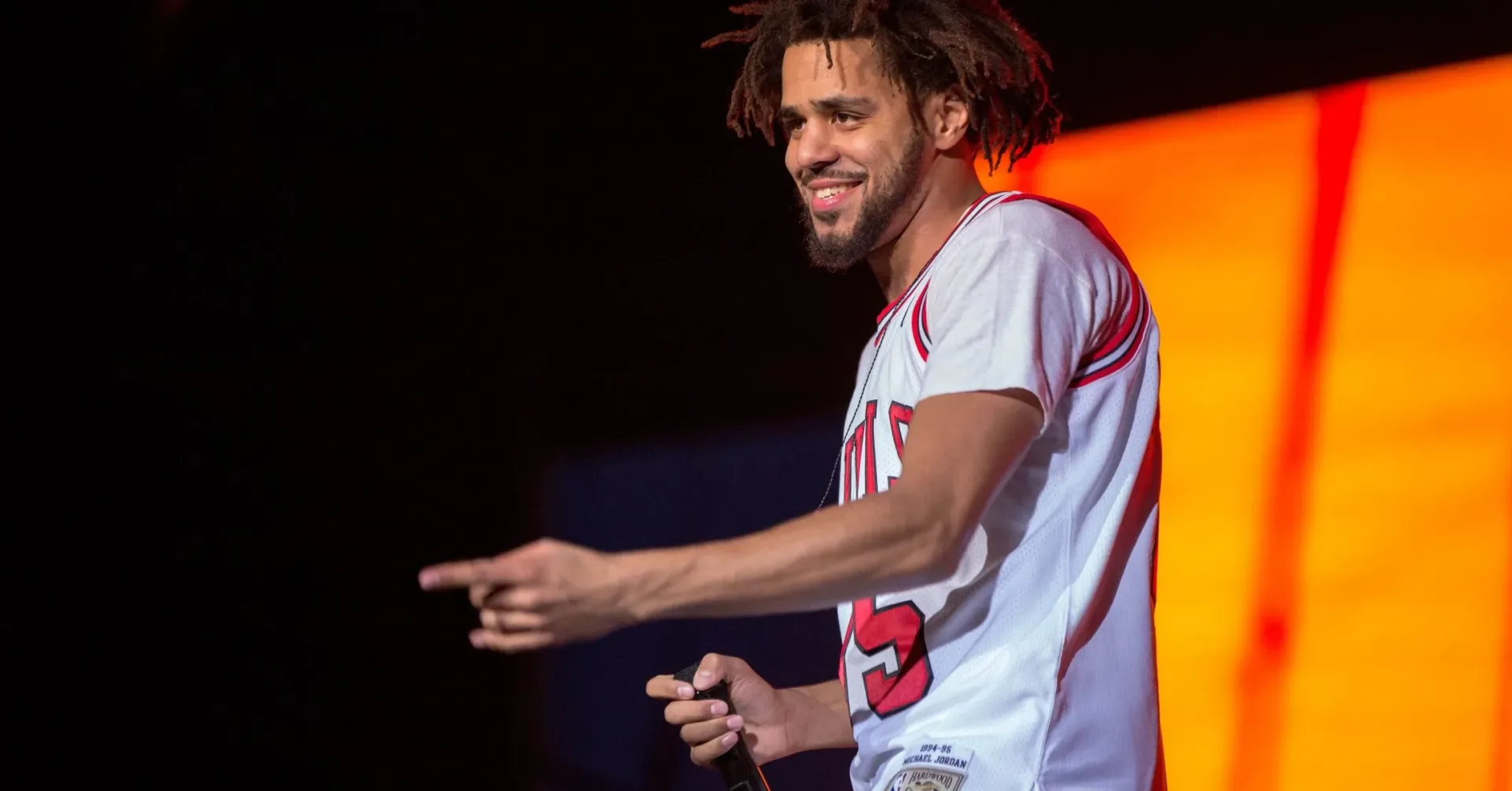
Symba has revisited the shots he took at J. Cole during the Drake-Kendrick Lamar conflict, framing them as an impulsive reaction from a disappointed fan rather than a genuine attempt to tear down Cole’s body of work.
The West Coast rapper said the frustration had a very specific source: he had publicly argued that Cole could stand up to both Drake and Kendrick Lamar, only to see Cole step back after releasing and then apologizing for “7 Minute Drill.” In Symba’s telling, that decision did not merely end a song cycle; it wrecked the case he had been making in barbershop conversations.
“My only problem with J. Cole is, bruh, you just f*cked up my barbershop argument,” Symba said, explaining that he had expected Cole to handle both rivals.
That distinction matters. Symba is not presenting his later music as a calculated campaign against Cole’s catalog, influence, or ability. Instead, he describes it as the kind of immediate, emotionally charged response that competitive rap culture can encourage: an artist sees an opening, feels let down, records a verse, and puts it into the conversation before the feelings have cooled.
He now calls that response immature and impulsive. At the same time, he maintains that the disappointment itself was real. The issue, for Symba, was not whether Cole is a talented rapper. It was whether a rapper held to such a high competitive standard should have removed himself from the most closely watched lyrical conflict in recent memory.
The barbershop argument is bigger than a casual debate
“Barbershop argument” is shorthand for the informal, often intense debates that shape rap fandom: who has the stronger pen, who can win a head-to-head exchange, and whose reputation holds up under pressure. These conversations are not official scorecards, and they are not always fair to the artists involved. But they can be a powerful measure of expectations.
For Symba, the argument depended on his belief that Cole could take on Drake and Kendrick. When Cole withdrew, Symba felt that he had misread not Cole’s skill, but Cole’s willingness to engage in that particular kind of contest. That is a key difference. A fan can respect an artist’s technical ability while still believing an important competitive moment ended before it reached its potential.
Symba also said he had studied Cole over the years. He noted that he did not object when Cole referenced him on “Bronx Zoo Freestyle.” That detail helps explain why Symba’s account is more complicated than a simple artist-versus-artist feud. He sees Cole as an artist worthy of close attention and praise, which made his decision to leave the battle feel more personal to fans who had championed him as a possible winner.
What happened after “7 Minute Drill”
The sequence outlined by Symba centers on Cole’s apology after “7 Minute Drill.” In the wake of that apology, Symba released a freestyle over the beat from Big Sean’s “Control,” arguing that the Fayetteville rapper had surrendered his place in the moment.
A freestyle in this context does not necessarily mean a verse created entirely off the top of the head. In rap, the term is also commonly used for a new performance over an existing instrumental, often delivered outside an artist’s main album rollout. It is a direct, efficient format for responding to a current conversation, because listeners immediately recognize the musical framework while focusing on the new bars.
Symba’s use of the “Control” beat gave his criticism an especially competitive frame. He later became part of a back-and-forth that included Cole’s “Birthday Blizzard ‘26” response and Symba’s subsequent retort, “Father Figure.” The titles and release sequence establish that there was an exchange, but Symba’s newer comments indicate he does not want that exchange interpreted as proof that he dismisses Cole altogether.
Instead, he says he reacted too fast. That is a meaningful revision of tone, not a denial that he made the records. He is owning the aggression while explaining the feeling that drove it.
Symba apologizes while keeping the criticism clear
Symba acknowledged that his words could have landed aggressively and apologized for that. He also praised Cole directly, calling Jermaine Cole an amazing artist and offering him respect.
There is no contradiction in those two positions. An apology can address how criticism was delivered without erasing the underlying opinion. Symba’s position appears to be: he still felt hurt when Cole exited the confrontation, but he no longer wants that hurt to be mistaken for contempt toward Cole’s legacy.
He also connected part of the sharpness to the sense of humor he associates with the West Coast, where jokes can become confrontational in tone. That comment is explanation rather than a complete excuse. Symba did not say the setting made the remarks harmless; he said they could have been aggressive, then apologized.
For audiences, that nuance is useful. Rap disputes are frequently flattened into winners, losers, and viral one-liners. Yet a diss, a response, or a heated freestyle can originate in admiration as much as animosity. Symba’s account is a reminder that fans and peers can put artists on pedestals so high that an unexpected decision feels like a personal letdown.
Why Cole’s choice still invites debate
Cole’s decision to apologize and step away has remained a flashpoint because it cuts against one common expectation of battle rap: once an artist enters a public lyrical fight, listeners expect escalation or at least a final defense. Symba’s reaction reflects that expectation. He believed Cole had the ability to compete at the highest level, and he wanted to see that ability tested in the moment.
But ability and participation are not identical. Symba’s current comments do not provide new details about Cole’s reasons, and it would be speculative to assign them. What they do show is how fans interpreted the withdrawal: some treated it as a refusal to compete, while others could separate Cole’s decision from his broader artistic reputation.
Symba has moved closer to the latter view. His criticism is aimed at a decision made during a particular battle, while his praise is aimed at the full career. That separation is important when evaluating any artist’s standing. A single competitive moment can become culturally huge, especially when it involves rappers of this profile, but it does not automatically summarize everything the artist has created.
A dispute shaped by expectation, not a verdict on legacy
The clearest takeaway from Symba’s explanation is that he was speaking as someone whose expectations had been disrupted. He wanted a three-way clash. He had vocally backed Cole. When the situation changed, he turned that disappointment into music before taking time to consider the wider implications.
Now, Symba is explicitly rejecting the idea that he was trying to diminish Cole’s legacy. He says he respects Cole, has long paid attention to his work, and accepts that his own response went too far in tone.
That does not make the original criticism disappear, nor does it resolve the larger fan debate about what Cole should have done. It does, however, make Symba’s intent clearer. His bars came from an argument he believed in, an expectation he held, and a fan’s frustration when the outcome did not match the matchup he had imagined.
The episode also fits a broader pattern in contemporary music discussion, where artists can respond to each other rapidly and audiences can turn those responses into permanent markers of reputation. For another recent example of how claims and replies can become part of the wider music conversation, see this report on Jason Paul’s response to the A$AP Rocky “Shroom Clouds” AI-video claim.
Symba’s revised framing is ultimately less about declaring who won and more about taking responsibility for his own part in the noise. He says he jumped the gun. He says he was hurt as a fan. And he says J. Cole remains an artist he salutes.