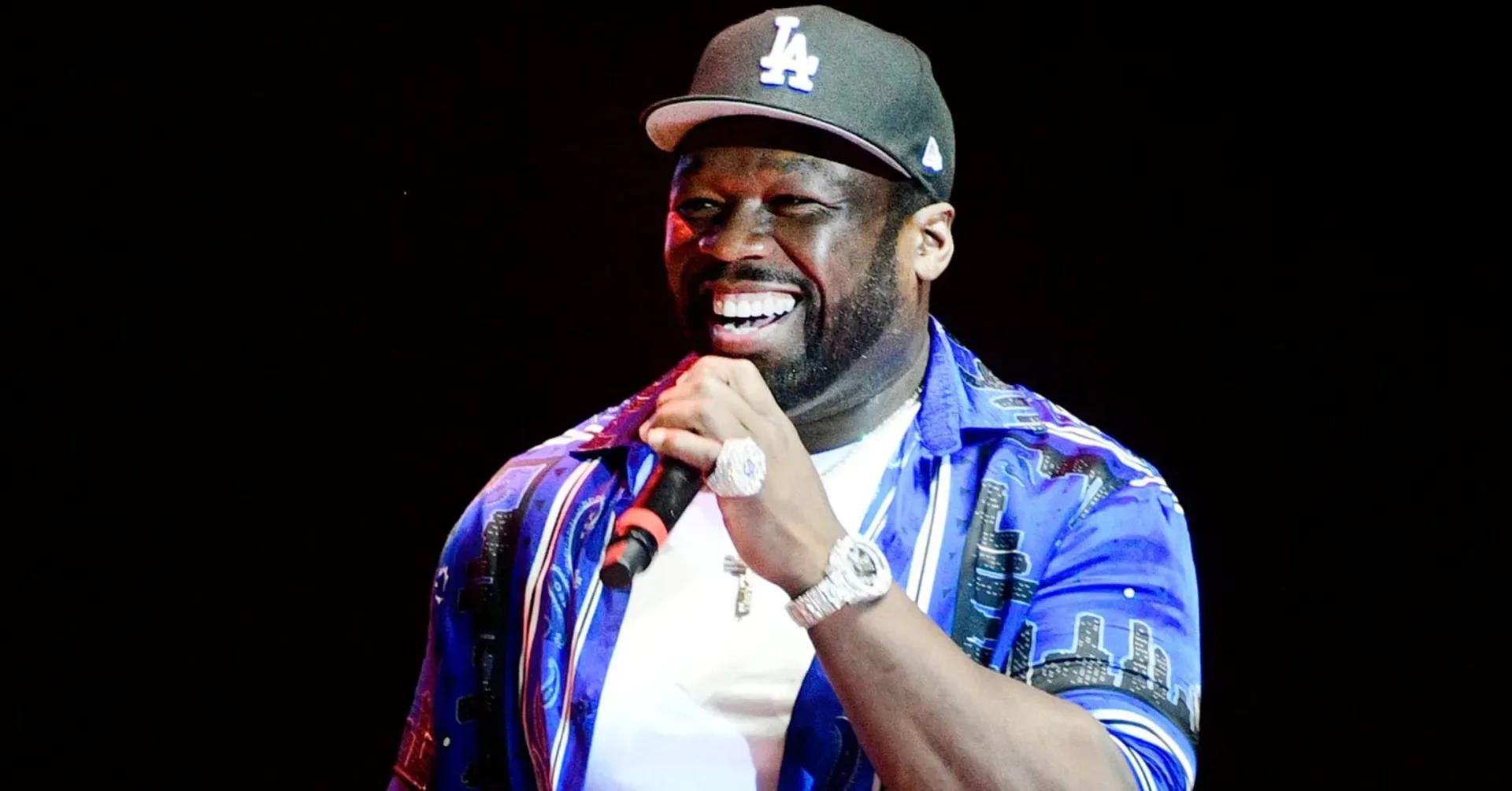
50 Cent has offered a blunt verdict on the long-running debate around the Drake and Kendrick Lamar conflict: in his view, J. Cole was the person who paid the steepest price.
Speaking on The Crew Has It podcast alongside Andrew Schulz, 50 Cent framed the issue less as a question of which rapper delivered the decisive blow and more as one of hip-hop’s expectations around competition. His argument is that Drake and Kendrick each retained committed fan support, while Cole’s choice to enter the exchange briefly and then withdraw created a different, more enduring kind of backlash.
“I think it’s a part of hip-hop culture to compete,” 50 Cent said. “The mistake is when you opt out of the competition. I think J. Cole paid the most.”
It is an opinion, not an objective scoreboard for a dispute that continues to produce competing interpretations. Still, it identifies why Cole’s role has remained distinct from the central Drake-Kendrick clash. He did not simply avoid participating: he released a response, “7 Minute Drill,” on Might Delete Later, then rescinded it after publicly apologizing to Kendrick Lamar at Dreamville Festival days later. That sequence gave audiences a concrete decision to debate, and it altered the conversation from lyrical rivalry to whether a performer should remain in a battle once it has begun.
Why withdrawal became the sticking point
In rap, a diss track is a song built around criticism, insults, challenges, or competitive claims aimed at another artist. Its importance is not limited to technical rapping. Listeners also scrutinize timing, confidence, response strategy, perceived authenticity, and whether an artist follows through after issuing a challenge.
That context explains 50 Cent’s emphasis on “opting out.” For some listeners, Cole’s apology represented self-awareness and an unwillingness to turn a relationship he valued into something more destructive. For others, the removal of “7 Minute Drill” after its release made the decision appear less like declining a conflict and more like retreating from one after joining it.
Those two readings can coexist. Cole’s decision was plainly personal—he later explained that it had been weighing on him for several days—and it also carried professional consequences in a culture where battle narratives can be judged as much by posture as by the music itself. 50 Cent’s argument rests on the latter: he believes the social and reputational penalty attached to leaving outweighed the damage suffered by either of the two artists who continued through the wider dispute.
“He’s one of the coolest people to grace hip-hop culture, and he’s been able to do things that show you his confidence is not connected to the little things.”
Related coverage includes 50 Cent Says J. Cole Paid the Highest Price in Drake-Kendrick Feud.
That qualification matters. 50 Cent was not presenting Cole as an artist without stature or confidence. Instead, he contrasted Cole’s relatively understated public image with the expectations placed on him once the competition became public. He pointed to Cole’s lack of emphasis on jewelry and said the rapper would ride a bike to the studio, presenting those details as signs that Cole’s identity is not built around easily challenged displays of status.
In other words, the criticism described here is not that Cole lacks a body of work or a recognizable persona. It is that his move away from the confrontation became a defining talking point precisely because he had been considered capable of participating at a high level.
“7 Minute Drill” turned a three-way possibility into a separate story
The Drake-Kendrick dispute became the dominant frame, but Cole’s brief involvement shaped a parallel narrative. “7 Minute Drill” placed him inside the moment, and its subsequent removal made his departure a major topic in its own right.
That is a significant distinction from merely staying neutral. An artist who never releases a response may still be asked why they did not engage, but there is no reversal for audiences to interpret. Cole supplied both an entry point and an exit point in public. The speed of that transition is why criticism has continued to surface even as attention repeatedly returns to Drake and Kendrick.
50 Cent believes the continued attention is also sustained by fan communities around the two central figures. His view is that the narratives attached to Drake and Kendrick Lamar are kept active by their respective supporters. That does not settle whose music or strategy was strongest; it does suggest why a final consensus remains elusive. Fandoms do not only revisit songs. They revisit motives, alliances, outcomes, and the cultural meaning assigned to each decision.
For Cole, the argument has often focused on a different question: whether refusing to escalate should be regarded as wisdom or weakness. There is no single answer embedded in the facts. The source material establishes that he apologized and withdrew the song; the interpretation of that act remains dependent on what a listener expects from competitive rap.
Cole has described the choice as emotionally difficult
Cole has previously shared a personal account of the decision to apologize. In an interview with Apple Music, he said he told his wife before taking the stage and that she became emotional because she knew how strongly he felt about Kendrick Lamar. He said the situation had weighed on him during the preceding two or three days.
“I told my wife. She’s the only one I told; I ain’t tell nobody else. I’m like, ‘Yo, this what I’m about to go do.’ She starts crying because she knows how I feel about him.”
This account complicates the easy version of the story. It does not erase the backlash, nor does it require listeners to approve of his initial response or its removal. But it makes clear that Cole described the apology as something driven by personal feeling rather than a casual change of promotional direction.
That personal dimension also helps explain why arguments about the episode tend to become unusually rigid. One side can view an apology as an act of integrity: an artist realizing he does not want to attack someone he respects and correcting course in public. Another can see it as a competitive misstep: a rapper releasing a diss, inviting the standards of a battle, then yielding the field. Both positions are responding to the same sequence of events while applying different values to it.
Drake’s relationship with Cole remains unclear
The available account does not establish where Cole and Kendrick stand now. It similarly does not offer a full accounting of Cole’s relationship with Drake. Drake has suggested they are no longer on good terms, but the precise status of that relationship is unclear.
That uncertainty is worth keeping intact. Major music disputes often encourage audiences to turn partial signals into firm conclusions, especially when songs, interviews, and online fan debate all pull in different directions. Here, the supported point is narrower: Cole’s withdrawal drew backlash; his own explanation emphasized the emotional burden of going forward; and Drake has indicated that the connection between the two artists may be strained.
50 Cent’s remarks do not resolve any of those relationships. They offer a particular reading of the public cost. His larger point is that rap competition has its own expectations, and that an artist who publicly steps back can face a different kind of scrutiny than artists who remain in the exchange.
The practical lesson in 50 Cent’s reading
Whether or not listeners agree that Cole “paid the most,” the comment identifies a practical reality of high-profile disputes: participation changes the stakes. Once a response record is released, the conversation is no longer just about avoiding drama. It becomes about the decision to engage, the terms of engagement, and any later decision to reverse course.
That is why Cole’s episode has endured as a separate chapter rather than a footnote. The debate is not only about who won a lyrical contest. It is about whether competition should override personal conviction, and what an artist owes an audience after making a move that audiences read as a challenge.
For 50 Cent, the answer is clear: the cost of leaving the contest was steepest for Cole. For everyone else, the enduring split may be the real reason the subject keeps returning—because it sits at the intersection of rap’s competitive traditions, personal loyalty, and the pressure placed on every public decision in a widely watched feud.
For more music-and-celebrity coverage, see the latest update involving Rick Ross.