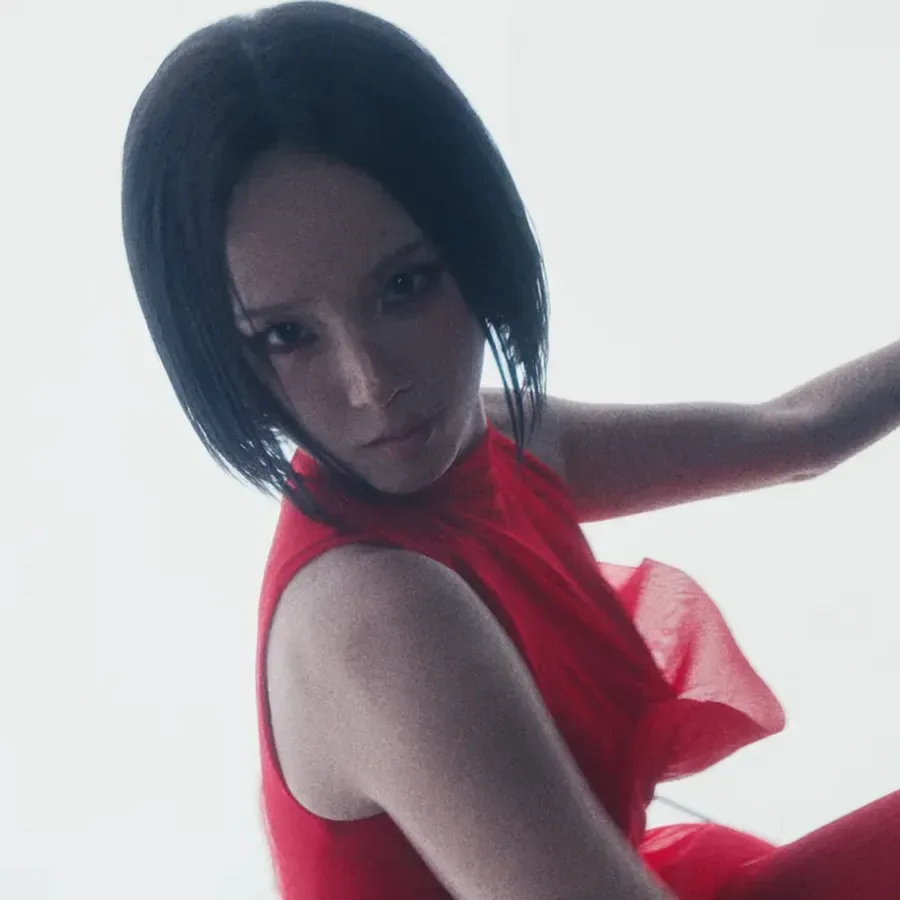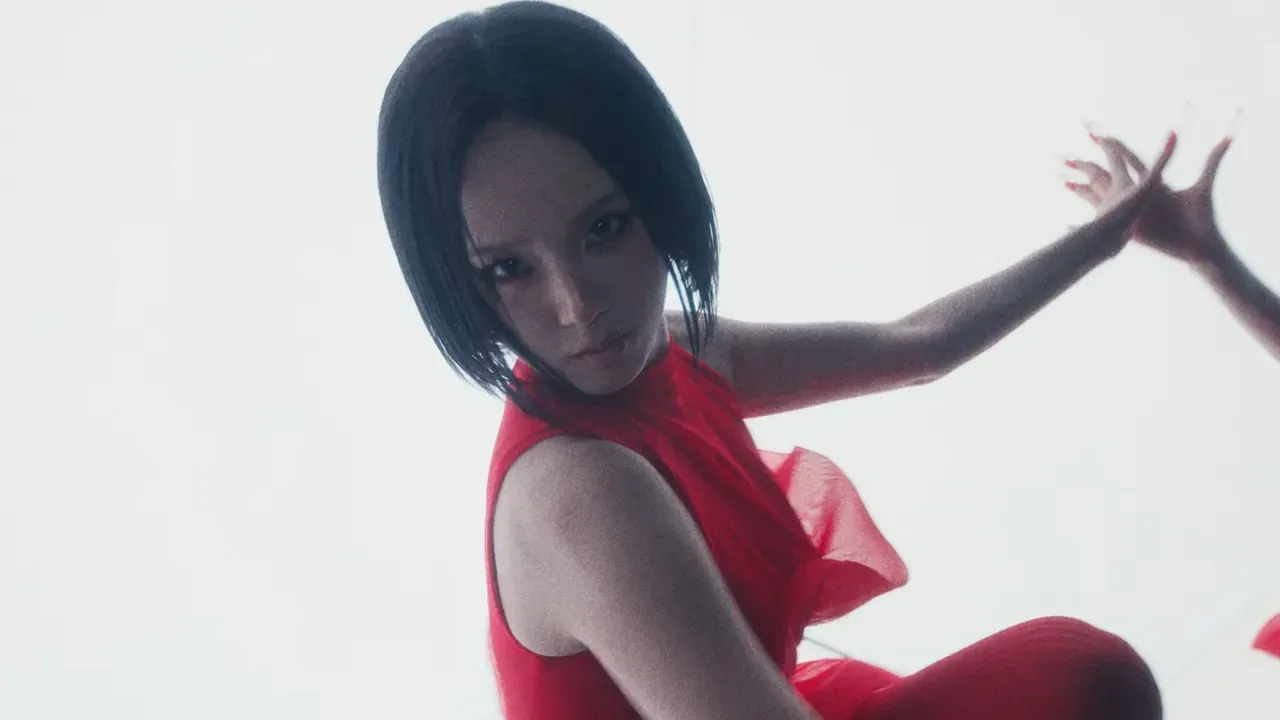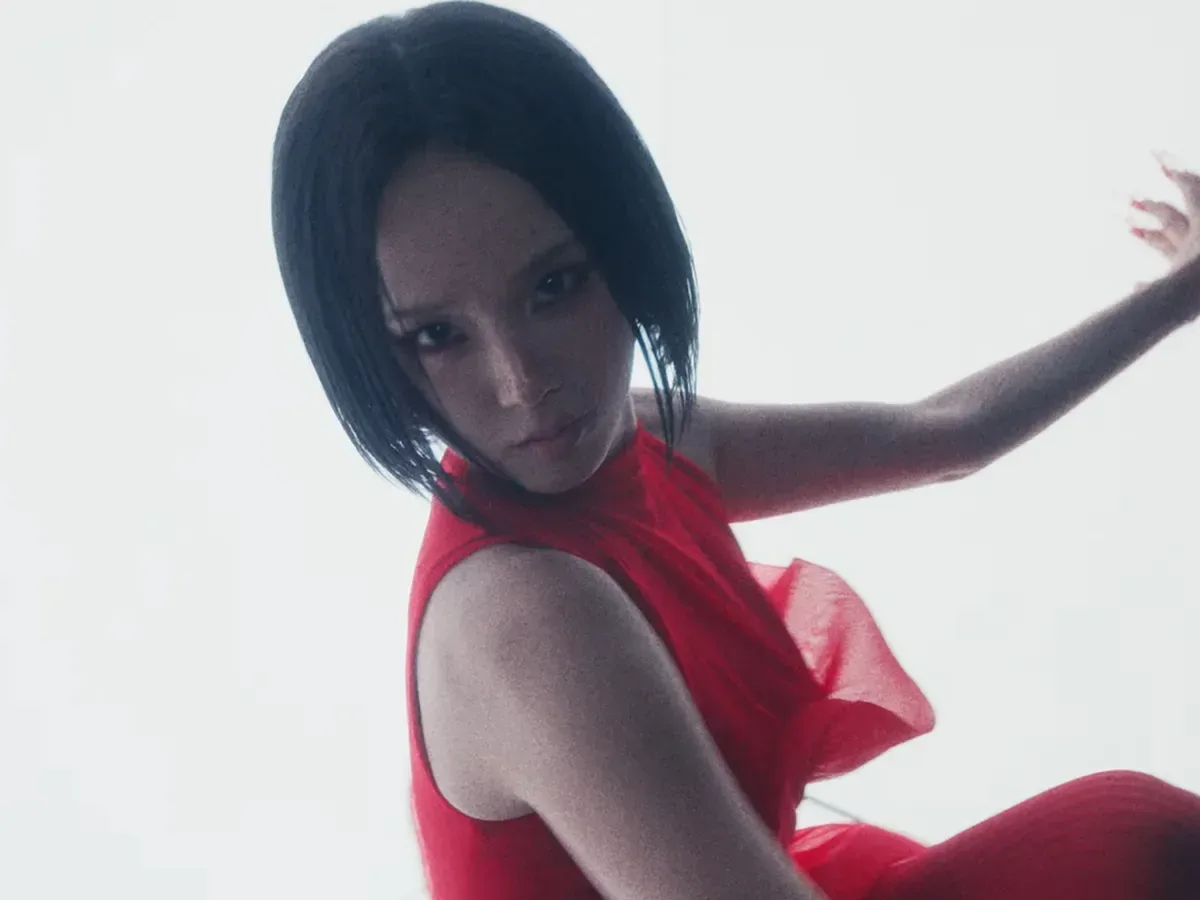
Jisoo has put the mystery to bed: the red dress and black bob worn at the beginning of her solo music video for Addicted are an intentional reference to Ada Wong from Resident Evil.
The visual connection was immediately recognizable to viewers familiar with Capcom’s survival-horror series. Ada is closely associated with versions of that silhouette across her game appearances: a short dark hairstyle paired with a striking red dress. Jisoo’s opening look in Addicted uses those same broad visual cues, making it more than a coincidental overlap in music-video styling.
After fans raised the comparison on Jisoo’s app, she confirmed the inspiration directly. She said she loves Biohazard—the name used for Resident Evil—and wanted to recreate the look.
A reference that works because the visual language is so clear
Not every costume resemblance is necessarily an homage. Black hair and a red outfit are common fashion elements on their own, and music videos routinely move through multiple looks without each one pointing to a specific character. In this case, though, the placement of the outfit at the video’s start, the bob haircut, the fitted red dress, and Jisoo’s confirmation collectively remove that ambiguity.
That is the practical value of a well-chosen character reference. It can communicate quickly to people who recognize it while still functioning as a self-contained fashion look for everyone else. A viewer does not need a detailed knowledge of Ada Wong’s role in the games to understand the look as sleek, dramatic and deliberate. For players, meanwhile, the combination is specific enough to trigger an immediate association.
Ada’s visual identity has endured because it relies on a compact set of recognizable elements rather than one single, rigid costume. The red-and-black contrast is particularly important. It gives the character a polished, memorable presence that can be translated into another medium without requiring a literal game-accurate recreation. Jisoo’s video uses that shorthand as a pop-culture signal, not as a claim that the music video is part of the game universe.
Jisoo’s fandom makes the nod more meaningful
The confirmation also fits with Jisoo’s previously stated enthusiasm for the series. Earlier this year, she described herself as “addicted” to the games and explained why their pace holds her attention. She pointed to the sudden threats that demand quick reactions and rapid decision-making, saying that the need to process what is happening and handle the situation makes time pass quickly.
That description gets at a central part of Resident Evil’s appeal. The series is often grouped under the term survival horror, a genre built around tension, danger and constrained decision-making. In this context, “fast-paced” does not simply mean constant action. It can mean the pressure created when a new threat appears without warning and the player has to respond before panic, poor positioning or a bad choice becomes costly.
Related coverage includes Jisoo Confirms Ada Wong Inspired Her Look in 'Addicted' Music Video.
Jisoo’s explanation focuses on that moment-to-moment attention demand rather than on an abstract celebrity endorsement. The Ada-inspired look therefore reads as fan expression: a performer using a familiar piece of character iconography in her own visual work because the games have made a real impression on her.
Why Ada Wong is a natural crossover symbol
Video-game references in music and fashion often depend on whether a character can be recognized outside the mechanics of their original game. A costume, weapon, color scheme or hairstyle can become a kind of cultural shorthand. Ada Wong has that quality. Her visual identity is sufficiently established that fans identified the reference from a brief description of the Addicted look before Jisoo confirmed it.
That recognizability matters because it lets the homage work at two levels. On the surface, it is one look among several in a music video released over Halloween weekend. Beneath that surface, it is a direct invitation to an audience that understands why the short black hair and red dress belong together in the first place.
It also illustrates the difference between inspiration and a full adaptation. A full adaptation would attempt to bring the character, setting or narrative of Resident Evil into a new form. Jisoo’s choice is narrower: she borrows an identifiable visual motif. That restraint is likely why the reference lands so cleanly. It acknowledges Ada without requiring the song, video or performer to become something else.
Fans had already been making the comparison
Jisoo was not the only K-pop performer recently compared with Ada Wong. In August, fans drew similar parallels after Babymonster’s Asa shared photos featuring a black bob and red dress. The response even produced the fan-made “Asa Wong” nickname. Asa has not responded to those comparisons.
The two cases are importantly different. Asa’s comparison remains a fan interpretation, while Jisoo has explicitly said her look was intended as a tribute. Still, the overlap shows how quickly Ada’s design can travel between gaming communities and music fandoms. It is an example of fans using shared visual literacy to create a connection, whether or not the person wearing the outfit set out to make one.
What this says about Resident Evil’s reach
The moment is small, but it reflects the broad cultural afterlife of long-running game series. A character does not need to appear in a new release at the exact moment a reference is made for the association to be powerful. If the design remains distinctive and the games remain personally meaningful to players, it can surface in places far beyond gameplay: videos, social posts, fan conversation and fashion styling.
For Resident Evil, that visibility sits alongside continued expansion of the broader property through merchandise, new content and films. A further movie has not been confirmed, although Zach Cregger—director of the most recent film adaptation—has indicated that he would be interested in participating in a sequel in some capacity, just not as its director.
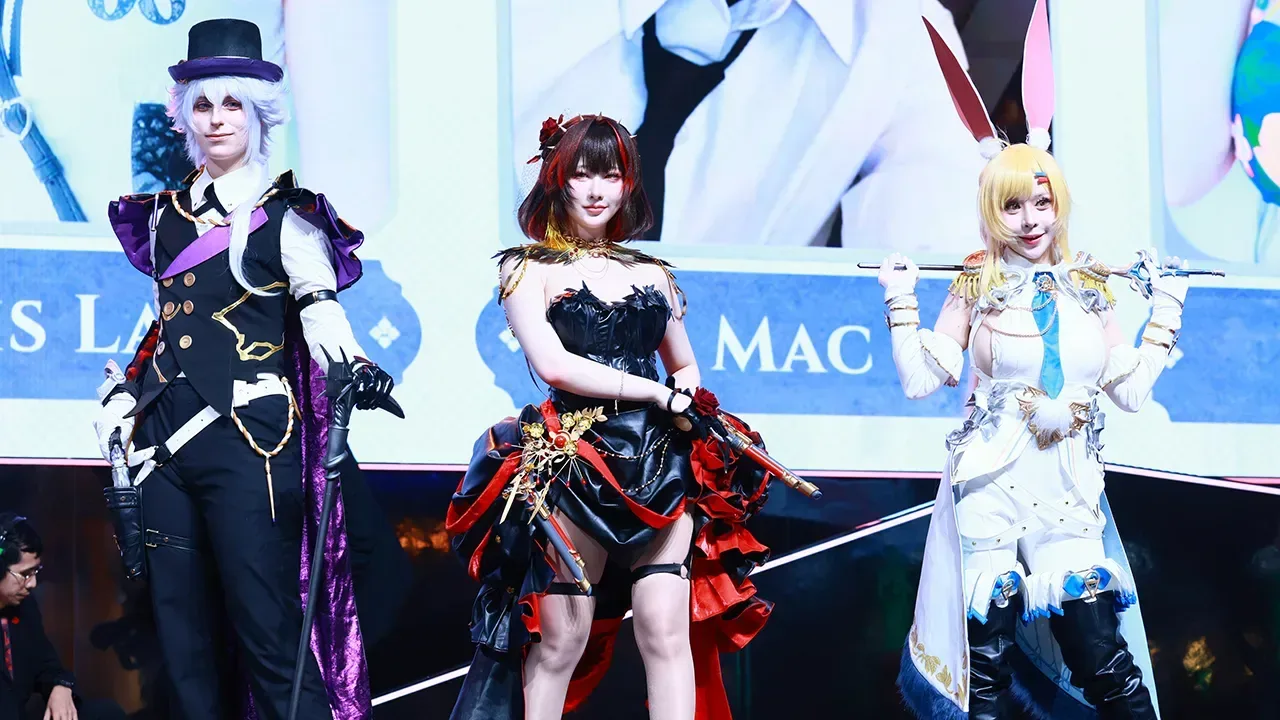
None of that is needed to explain Jisoo’s reference, but it provides useful context for why Ada Wong remains such an easy character to recognize. The franchise is not confined to one audience or one format, and its visual ideas continue to circulate. As gaming’s global audience and industry presence expand—something visible in events such as the growing role of Bangkok’s game-show scene—those crossovers between games, music and style are likely to remain a familiar part of fandom.
For now, Jisoo’s confirmation gives fans the straightforward answer they wanted. The resemblance was intentional, the reference was personal, and Ada Wong has added another memorable appearance to her long list of influences beyond the screen.