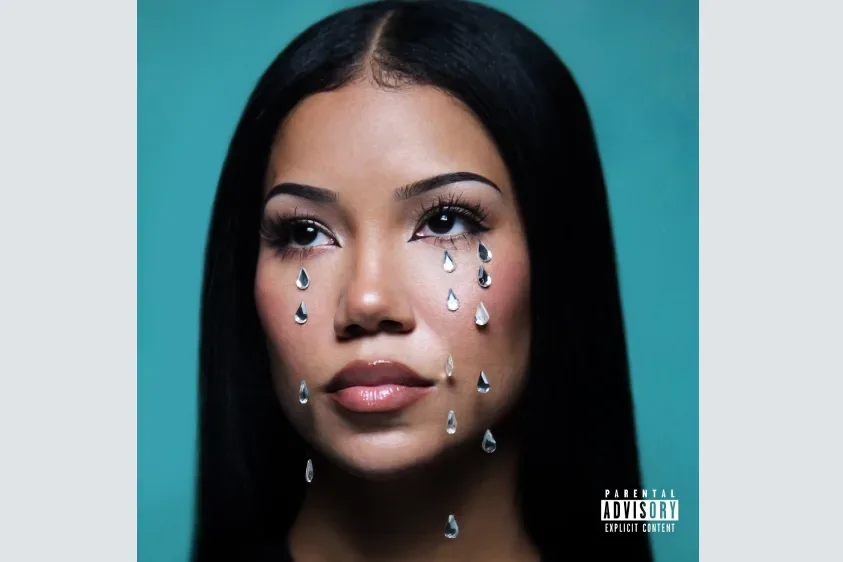
Jhené Aiko and Kendrick Lamar have only a handful of released songs together, but the pairing has accumulated the kind of expectation usually reserved for far more frequent collaborators. Their shared recording history stretches from Kendrick’s 2010 mixtape period through Jhené’s 2013 breakthrough era, a later appearance alongside Playboi Carti, and now “So Good” from Westside Whimsy.
That limited catalog matters. When artists collaborate repeatedly, listeners can more easily accept a detour: one song can be the rap-forward one, another can be a softer experiment, and a third can restore the familiar formula. Aiko and Lamar do not have that buffer. Each reunion arrives after a long gap and has to contend with the memory of the songs that came before it.
That context helps explain the divided reaction to “So Good.” The point of disagreement is not simply that Lamar sings for much of the track. It is that listeners accustomed to the contrast on the duo’s earlier work expected him to arrive with a more conventionally rapped, sharply defined verse. Instead, the newer song places him closer to Aiko’s melodic space. For some, that makes the record a natural evolution; for others, it removes the friction that made the old records memorable.
A concise timeline of their recorded collaborations
The available shared catalog can be approached as four distinct moments rather than a continuous series:
For more context, explore Canon EOS R8 II Adds EOS 650-Inspired Styling, 40 fps Bursts and In-Body Stabilization.
- “Growing Apart (To Get Closer)” from Kendrick Lamar’s 2010 mixtape Overly Dedicated.
- “Stay Ready (What a Life)” from Jhené Aiko’s 2013 Sail Out EP.
- “BACKD00R” by Playboi Carti, from 2025’s MUSIC, where both artists appear in supporting roles.
- “So Good” from Aiko’s Westside Whimsy.
Four songs across 16 years is a remarkably small number for two Los Angeles artists whose careers developed in overlapping time frames. Yet scarcity can make a collaboration feel bigger, not smaller. With fewer examples to compare, fans turn the strongest prior track into a template. In this case, “Stay Ready” has become that template.
“Growing Apart” established the basic balance
The first release, “Growing Apart (To Get Closer),” arrived when both artists were still building toward the work that would define their wider profiles. Lamar was developing an audience before Section.80 and good kid, m.A.A.d city. Aiko was still years away from Sail Out becoming her mainstream breakthrough.
On the song, Aiko handles the hook while Lamar’s verses examine a relationship coming undone. This division of labor is straightforward, but it established an effective balance: Aiko gives the track an airy, steady emotional center, while Lamar supplies the more detailed and unsettled perspective.
It is worth distinguishing a hook from a verse here. A hook is the recurring vocal or lyrical passage designed to anchor a track in the listener’s memory. A verse typically carries more narrative movement, changing from section to section. Aiko’s role on “Growing Apart” works because the refrain supports the song without competing with Lamar’s storytelling. Lamar, in turn, has room to intensify the emotional tension suggested by the title.
The track does not need the performers to imitate one another. Its appeal comes from complementary roles. That principle would become even more important on their next major collaboration.
Why “Stay Ready” remains the reference point
“Stay Ready (What a Life)” arrived on Sail Out in 2013, during a period when Aiko was expanding into a larger space and Lamar was coming off the success of good kid, m.A.A.d city. It is their best-known collaboration for a reason: it lets each artist retain a distinct identity while making those differences central to the song’s shape.
Aiko’s performance is restrained and intimate. Lamar’s contribution is comparatively dense and restless. Rather than overpowering the song, that difference produces a jolt. His presence changes the temperature without forcing the record to abandon Aiko’s atmosphere.
This is what listeners often mean when they describe musical contrast or texture. Contrast is the audible difference between elements: a calm vocal beside a more urgent verse, or spacious phrasing beside tightly packed bars. Texture describes how those elements sit together and create a fuller impression. “Stay Ready” is not compelling because the performers sound identical; it is compelling because their approaches create movement against each other.
It also avoids the feeling of a feature added only for profile. Lamar does not flatten the song into a showcase for his own style, and Aiko does not have to abandon her own approach to accommodate him. Their roles are separate but connected. That is a difficult balance to reproduce, particularly years later when both artists’ creative habits have changed.
“BACKD00R” was a reunion, not a return to the old formula
More than a decade after Sail Out, Aiko and Lamar appeared on Playboi Carti’s “BACKD00R” from 2025’s MUSIC. The circumstances were different from either earlier collaboration. It was not a Lamar track built around Aiko’s hook, nor an Aiko track into which Lamar brought a contrasting verse. Both were guests within a Playboi Carti record that already had its own loose, unusual energy.
That distinction is practical when judging the song’s place in their history. Sharing a track does not automatically mean two performers are building a new duet dynamic. On “BACKD00R,” neither artist is positioned as the project’s central host. The record functions more as an unexpected overlap than as a declaration of what their partnership should sound like next.
Still, it suggested that a future Aiko-and-Lamar reunion might not be a direct sequel to “Stay Ready.” Lamar had become more willing to alter his cadence, stretch his voice and sing. Cadence refers to the rhythm and flow of vocal delivery—the way syllables are arranged and paced over the beat. A change in cadence can dramatically alter how a performer feels on a song even when the voice itself remains recognizable. Aiko, meanwhile, could enter the song without pulling its mood entirely toward her own established sound.
“So Good” moves toward blend instead of interruption
“So Good” makes the shift implied by “BACKD00R” clearer. Lamar spends much of the track singing and using melody rather than delivering the kind of rap feature many listeners associate with his earlier work alongside Aiko. That puts him nearer to her lane.
There is nothing inherently lesser about a blended collaboration. In many songs, shared melodic language is precisely what creates intimacy. The issue is one of expectation. Aiko and Lamar’s earlier tracks trained part of their audience to value the moment when a different energy entered an otherwise delicate space. On “So Good,” they meet in the middle more often, creating a softer and more unified sound.
That is why reactions can be split without requiring a simple verdict that the artists no longer fit together. Listeners who wanted the earlier chemistry may be responding to the loss of dramatic contrast. Listeners open to Lamar’s more melodic approach may hear the same decision as an attempt to create a different form of closeness.
In other words, “So Good” is being judged against two different standards. One asks whether it recreates the vivid push-and-pull of “Stay Ready.” The other asks whether it succeeds on its own terms as a more blended performance. Those are related questions, but they are not interchangeable.
What the response says about collaboration expectations
The cool response from some listeners is understandable because reunion records carry a built-in historical burden. A long wait can turn a prior song into more than a favorite—it becomes a promise of what the next meeting should deliver. This is especially true when the earlier collaboration is remembered for a very specific quality: Aiko’s restrained mood meeting Lamar’s more disruptive, lyrical energy.
But a reunion is not automatically a recreation. The years between “Stay Ready” and “So Good” include major changes in both artists’ careers and approaches. The presence of singing, melodic phrasing and less obvious separation between their roles reflects that evolution. It may not align with the version of the pairing some fans wanted, but it does not erase why the earlier tracks connected.
The small size of the catalog makes every entry unusually visible. “Growing Apart” captures an early balance of hook and verse. “Stay Ready” turns difference into a strength. “BACKD00R” places both artists inside another performer’s world. “So Good” tests what happens when the contrast is deliberately reduced.
That sequence offers a clearer way to hear the new track. It is not “Stay Ready” part two, and it does not appear designed to be. Whether audiences warm to it over time remains uncertain, but the reaction already demonstrates how powerfully remembered chemistry can shape a song before the first note is heard.