Jethro Sheeran has taken a family dispute involving Ed Sheeran into a highly public arena, connecting it to the reported removal of Macklemore from Ed Sheeran’s tour and promising a musical answer of his own. In a television interview, Jethro called his cousin a “snake” and a “coward,” said he does not accept Ed’s account of how the Macklemore decision was made, and said a rap track titled Eject will arrive in two weeks.
The central point is not simply that two relatives disagree. It is that Jethro is disputing responsibility in a controversy that reportedly led to an artist leaving a major tour, other opening acts withdrawing in solidarity, and fans voicing frustration. Ed Sheeran has said the decision to remove Macklemore came from promoter Messina Touring Group rather than from him personally. Jethro, however, has alleged that Ed was responsible.
Those are competing accounts, and the available information does not independently establish who made the final decision. That distinction matters, especially as the disagreement broadens into allegations about family history, artistic intent and the public messages both men have delivered.
What reportedly happened with Macklemore
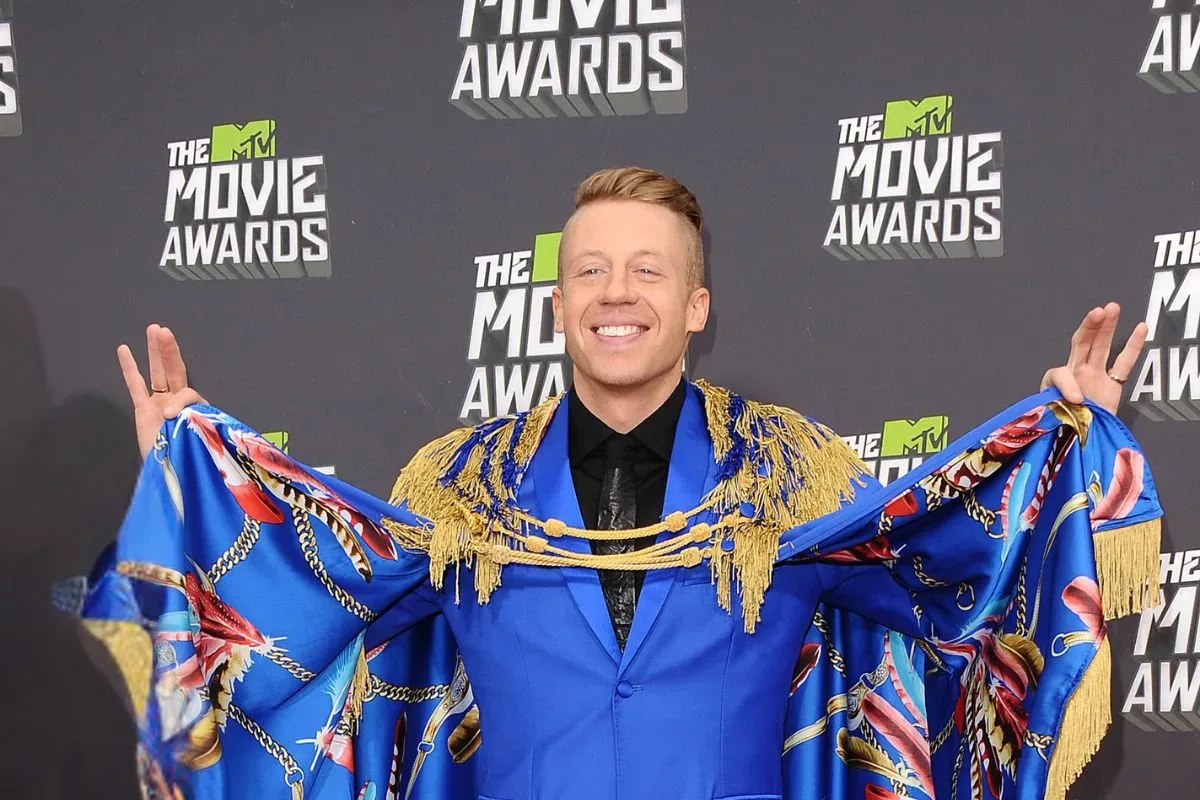
The dispute follows Macklemore’s reported pro-Palestine statements at Ed Sheeran’s New Jersey shows on September 4 and 5, 2026. Macklemore said “Free Palestine” and displayed images of devastation in Gaza. The ensuing controversy reportedly involved an ultimatum from Robert Kraft, identified as the owner of Gillette Stadium and the New England Patriots: remove Macklemore or do not perform at venues connected to him.
Macklemore was then removed from the tour on September 14. The fallout did not end with that booking change. Lukas Graham, Aaron Rowe, Finneas and Beoga were among the opening acts reported to have dropped out in solidarity. That sequence has turned what might otherwise have been a behind-the-scenes dispute between a performer, promoter and venue interests into a larger question about agency on a stadium-scale tour.
In touring, the public face of a show is not necessarily the only party making operational decisions. Promoters, venue owners, artists, management teams and contractual partners can all hold leverage. A promoter is the business entity that organizes and presents a concert or tour, often handling venue arrangements and local logistics. But the fact that several parties may be involved does not resolve the specific disagreement here: whether Ed Sheeran merely relayed a decision, had influence over it, or made it himself.
Jethro Sheeran has rejected the idea that Ed lacked control. He said he had seen what he characterized as cowardice and dishonesty over nearly a decade, and cited the Macklemore episode as evidence for his view. That is an accusation from a family member, not a finding verified by the material available.
A family argument becomes an artistic feud
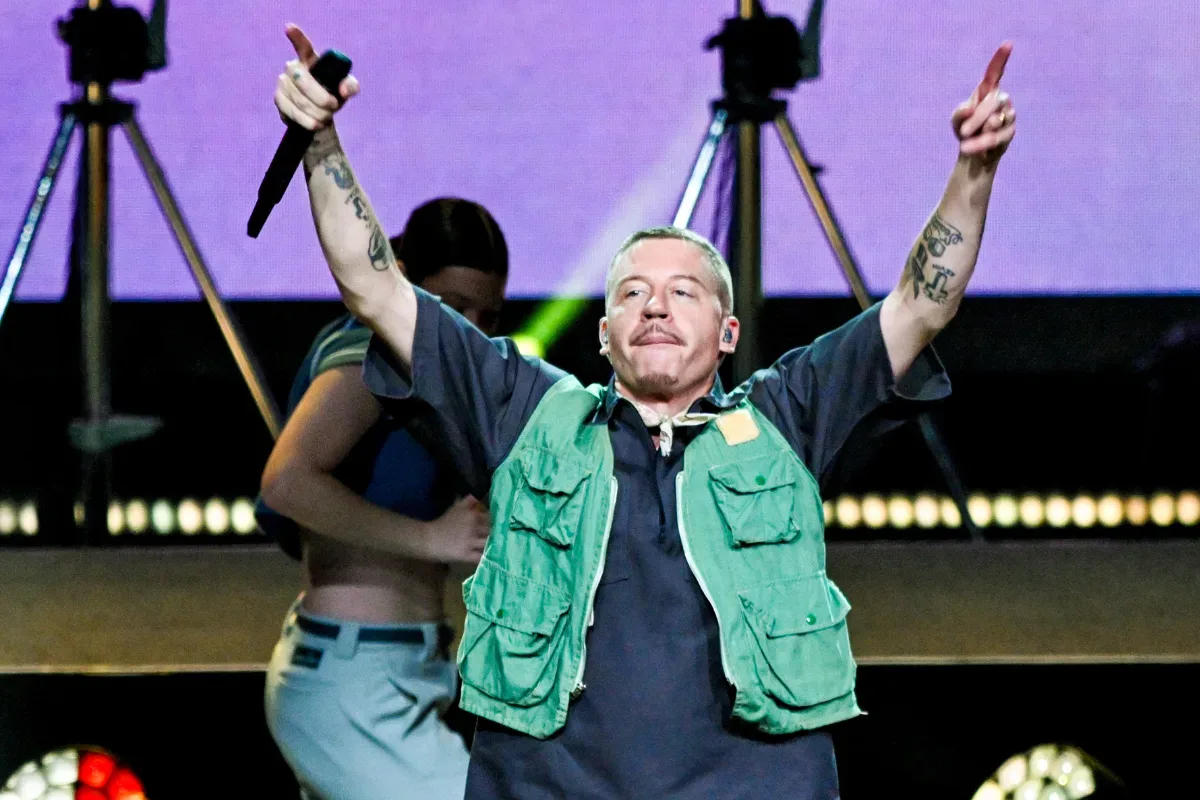
Jethro’s planned song, Eject, is expected to turn the conflict into a diss track: a rap song made to criticize, challenge or ridicule another person. The format has a long association with personal rivalry, but it also creates a lasting, shareable record of claims that might otherwise remain in interviews or social-media posts.
Related coverage includes Jethro Sheeran Targets Ed Sheeran Over Macklemore Split, Plans ‘Eject’.
Jethro previewed his rapping during the interview and argued that he is the stronger rapper and writer, despite Ed Sheeran’s global success. The interview also included a pointed suggestion that the gap in fame between the cousins demonstrated why Ed has become a major star and Jethro has not. Jethro did not concede that point, framing the disagreement as one of creative ability rather than commercial stature.
That distinction is familiar in music debates, but it is particularly sharp in a public family dispute. Popularity, songwriting, performance and rap technique are overlapping but different measures. One artist’s reach does not objectively settle who writes better verses, while claims of lyrical superiority do not automatically translate to audience size. In this instance, those arguments are inseparable from the personal grievances Jethro says he has carried for years.
Jethro has also claimed that Ed’s song A Little Bit More was directed at him, pointing specifically to lyrics about hatred lasting until death. No confirmation is provided that the song concerns Jethro, so it should be treated as his interpretation rather than established fact. Songs often invite listeners to identify a real-world target, particularly when a performer’s private relationships have become public, but interpretation is not proof of intent.
Why the Wiley comparison needs care
As part of his criticism, Jethro invoked grime artist Wiley and alleged that Ed had behaved similarly around Wiley’s controversy. The comparison carries substantial weight because Wiley’s 2020 posts were not merely a professional falling-out or a disagreement over a concert appearance. Wiley made anti-Semitic statements that equated Jewish people with the Ku Klux Klan and “rednecks,” alongside stereotypes about Jewish control of banking and laws.
The consequences described in the available information were serious: Facebook and Instagram deactivated his accounts for repeated hate-speech violations, Twitter temporarily banned him, and A-List Management dropped him. Wiley later apologized.
It is important not to flatten those circumstances into a generic example of an artist being removed or isolated. Allegations of anti-Semitism and platform enforcement over hate speech involve a separate and severe set of issues from a dispute over political speech at concerts. Jethro’s attempt to link the episodes is part of his broader case against Ed; it does not make the two situations equivalent.
Ed’s onstage remarks add to the speculation
Ed has returned to performing and reportedly told a recent crowd that friends and family had abandoned him, but that he still had 50,000 fans. Many observers have taken the statement as a reference to Jethro, who has been outspoken online during the dispute. Yet no direct identification of Jethro was included in the remark, leaving the target unconfirmed.
That ambiguity is likely to keep the story moving. A broad onstage comment can read as a personal response without naming anyone, while a diss track can make an artist’s position much more explicit—or can simply add another layer of implication. Until Eject is released, its specific subject matter and allegations remain unknown.
Jethro has claimed that 80 percent of the family supports him in his public criticism of Ed. That figure cannot be independently verified from the available material, and it is best understood as Jethro’s characterization of the family divide rather than a confirmed tally.
For fans, the immediate practical takeaway is straightforward: the tour dispute has already had visible effects, including Macklemore’s removal and the departures of multiple opening acts, while the family feud is now poised to continue through music. The unresolved question is whether more clarity emerges about the decision-making behind the tour change—or whether the argument remains driven by competing personal accounts.
The episode also fits a wider pattern in public entertainment disputes, where relatives can become active participants rather than distant observers. In another recent example, a former TV cast member called for calm amid a dispute involving a prominent former collaborator. Here, though, Jethro’s announced track means the disagreement may soon have a formal artistic rebuttal attached to it.
For now, several facts are clear within the competing narratives: Macklemore was removed from the tour on September 14; several openers reportedly left in solidarity; Ed has attributed the decision to Messina Touring Group; and Jethro sharply disputes that explanation. Everything beyond that—who held decisive authority, whether particular songs are aimed at relatives, and how much of the family shares Jethro’s view—remains contested.