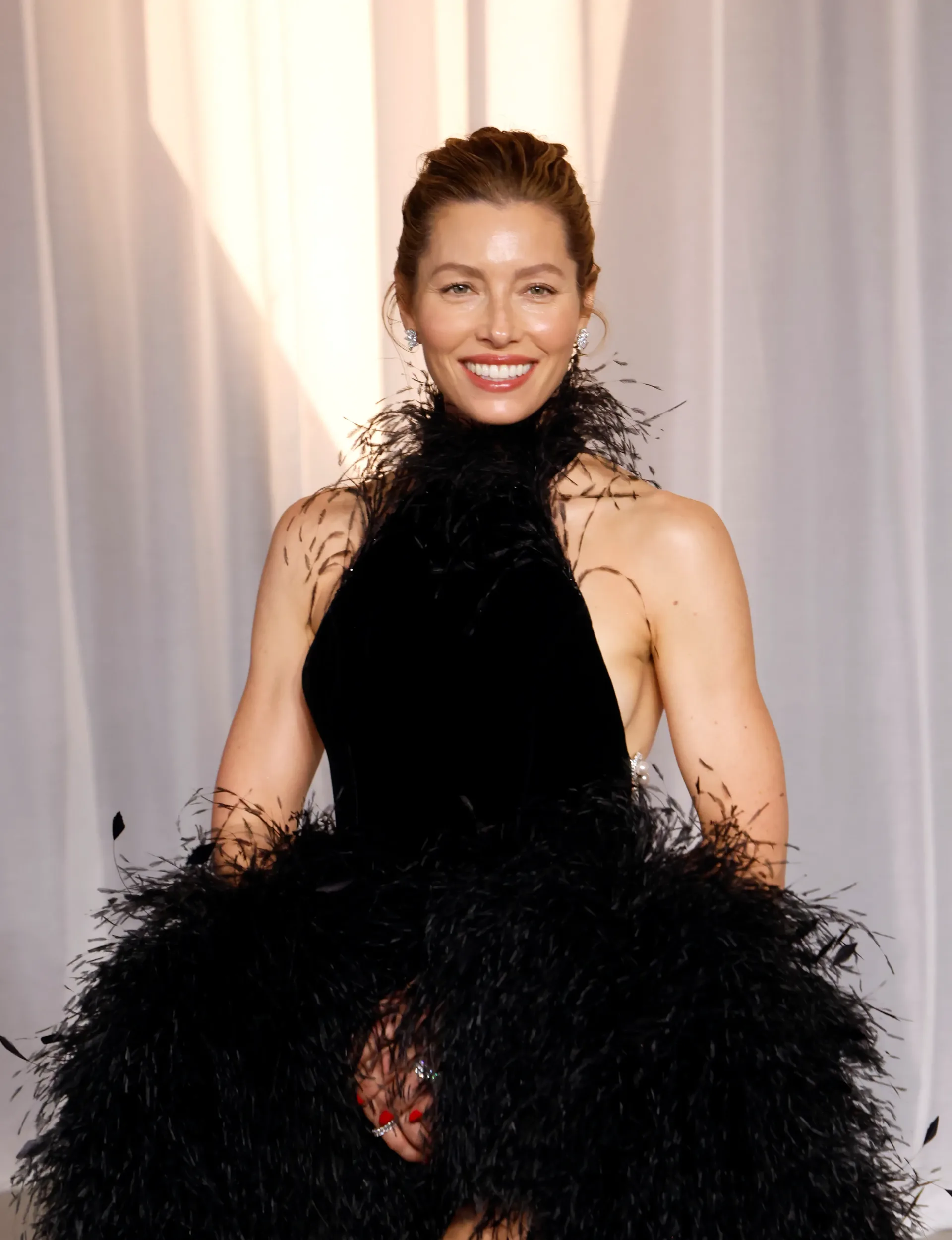
Jessica Biel is drawing a hard line around how her son Silas might pursue acting: interest and family proximity may open a conversation, but they should not substitute for preparation or merit.
Speaking about conversations at home, Biel said her 11-year-old son has shown creative interests in music, comedy and performance, and has talked about wanting to act. Silas recently appeared in Matchbox: The Movie, a film in which Biel also stars. Yet Biel characterized that appearance as a very small, specific opportunity—not a template for being handed prominent work.
Her position is notably direct. Biel said she and Justin Timberlake try to keep their children away from the entertainment business, even as they do not want to dismiss a child’s ambitions outright. The tension is understandable: acting can be a genuine interest for a young person, but it is also a difficult profession whose access points are especially unequal when a parent is already well known.
Biel’s proposed boundary is that a bigger part, particularly one with a substantial monologue, would need to be earned. In her view, it would be unfair to take an opportunity from a young performer who has put in work through acting or theater classes simply because Silas belongs to a famous family.
A small appearance, not an automatic career path
The important distinction in Biel’s comments is between allowing a limited participation and treating family access as entitlement. She did permit the small Matchbox: The Movie role, despite initial hesitation. But she also made clear that she does not intend for that decision to become an open-ended pipeline to larger roles.
That is a useful distinction because “nepotism” can describe several different things at once. At its simplest, it means an advantage received through relatives or close connections rather than through an open, merit-based process. In entertainment, the issue is often not merely whether someone gets a first chance. It is whether they continue to receive desirable roles, resources and forgiveness for inexperience that other performers must spend years trying to secure.
Biel is not claiming her son can somehow be disconnected from his parents’ public profiles. That would be impossible. Rather, she is describing an attempt to set expectations inside the family: a recognizable surname should not be treated as a replacement for training, effort and suitability for the role.
For viewers, it also helps to separate a child’s single, small on-screen credit from evidence of a fully launched acting career. Young people can participate in a production for many reasons, including a narrowly defined part connected to a parent’s project. Biel’s own account places Silas’ appearance in that limited category.
Related coverage includes Jessica Biel Says Silas Will Have to Earn Future Acting Roles.
Why Biel’s concern goes beyond a label
The “nepo baby” label has become a shorthand for public debates about inherited opportunity in creative industries. It can be used loosely, and at times it reduces an individual’s work to family background alone. Still, the underlying concern is concrete: acting roles are finite, and many aspiring performers pursue training, auditions and theater work without a direct link to influential people in the business.
Biel’s comments center that scarcity. Her point was not simply that her son must avoid criticism online. She framed it in terms of other young actors who work on their craft and could lose out when an opportunity is assigned through a family relationship.
That perspective does not eliminate the advantage Silas has. Being the child of Biel and Timberlake necessarily puts him closer to the industry than most aspiring child performers. But Biel’s standard recognizes a difference between exposure to the profession and being awarded meaningful work without having developed the skills the work demands.
It also acknowledges the practical reality that acting is hard. Biel recalled reacting protectively to Silas’ interest, essentially wishing he would choose almost anything else. That response is not a declaration that he cannot act; it is a parent’s concern about a high-pressure, uncertain field. The same industry that can make an early appearance possible can also place a child under attention and expectations long before they have decided whether performing is truly what they want.
Music, comedy and an interest in performing
Biel described Silas as a DJ who is very engaged with music. She also pointed to his comic and theatrical qualities. Those details matter because they suggest his creative interests are broader than a single acting credit.
A young person interested in performance does not need to turn every talent into an immediate professional pursuit. Music, comedy and theater can be interests in their own right, and Biel’s comments imply that the family is still working through what Silas wants and what a responsible route into acting would look like. The report does not establish any future casting plans or formal training; it establishes only that the subject has become a recurring family discussion.
For a child considering an entertainment career, “earning” a role can refer to more than one thing. It may mean learning technique, showing discipline, being prepared for an audition, understanding direction, and demonstrating that the part suits the performer. Biel specifically referenced acting and theater classes as examples of work other children do. Her stated standard places value on that process rather than treating a parent’s connections as the qualification.
Biel’s own television past and present work
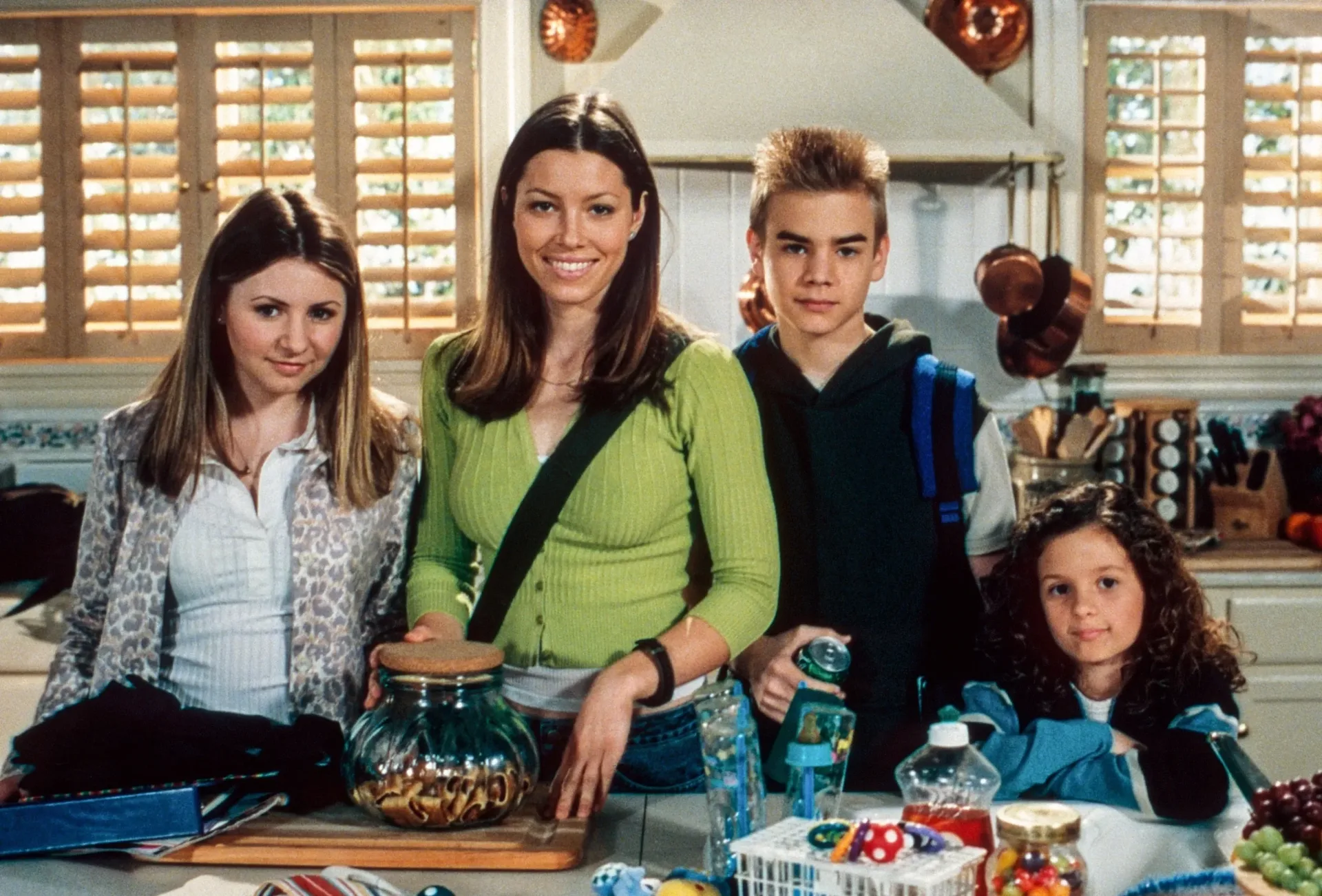
Biel knows the industry from both sides of the camera. She broke through as Mary Camden on the long-running family drama 7th Heaven. She is now producing a reboot of that series, which she has said will update the premise for contemporary teenagers and families.
The planned modernization is intended to address issues including technology, school, bullying, drugs and alcohol. Those themes indicate that the new project is looking toward the pressures shaping young people’s lives now, rather than simply reproducing the earlier show unchanged. As a producer, Biel’s involvement also means her current work extends beyond acting into the creative and organizational side of television.
Her comments about Silas arrive alongside that producer role, which makes the fairness question especially interesting. Producers and other decision-makers influence which performers receive opportunities. Biel’s stated approach is that family membership should not decide a substantive part. It is an aspiration that speaks to a wider industry conversation, while also remaining a parental rule about one particular child’s possible future.
Biel is also set to appear in the forthcoming Searchlight film Playmates, playing Hugh Hefner’s wife. Together with her work on the 7th Heaven reboot and her role in Matchbox: The Movie, those projects show a career that spans acting and production—exactly the kind of proximity to the business that makes her stance on her son’s ambitions worth noting.
What Biel is, and is not, promising
Biel is not saying Silas will never act again. She is saying that future opportunities should be proportionate to his preparation and should not come at the expense of a child who has independently worked toward the same goal. That leaves room for him to explore a genuine interest while rejecting the idea that he is owed major parts.
It is also not a promise that celebrity families can make industry advantages disappear. Connections affect access, visibility and opportunity in ways parents cannot completely erase. What Biel can control is the standard she sets when a role connected to her own work is presented to her family.
That clarity is the central takeaway. Silas’ small role is being treated as an exception with limits, while any larger acting step would need to be built on effort. In an industry frequently challenged over access and inherited privilege, Biel is arguing for a basic rule that is easy to state and harder to consistently practice: opportunity may be nearby, but the job still has to be earned.
For another recent entertainment-industry story, see Melanie Lynskey’s upcoming limited-series role and executive-producer work.