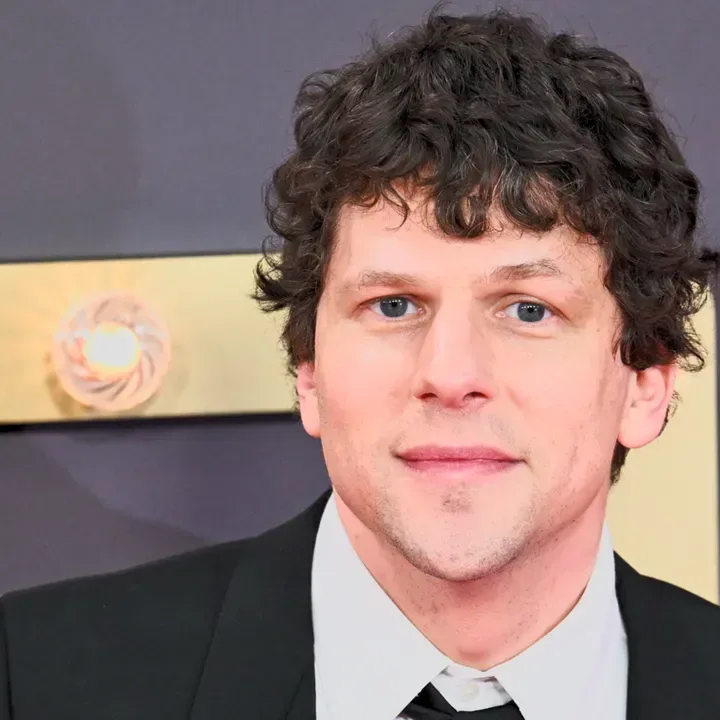
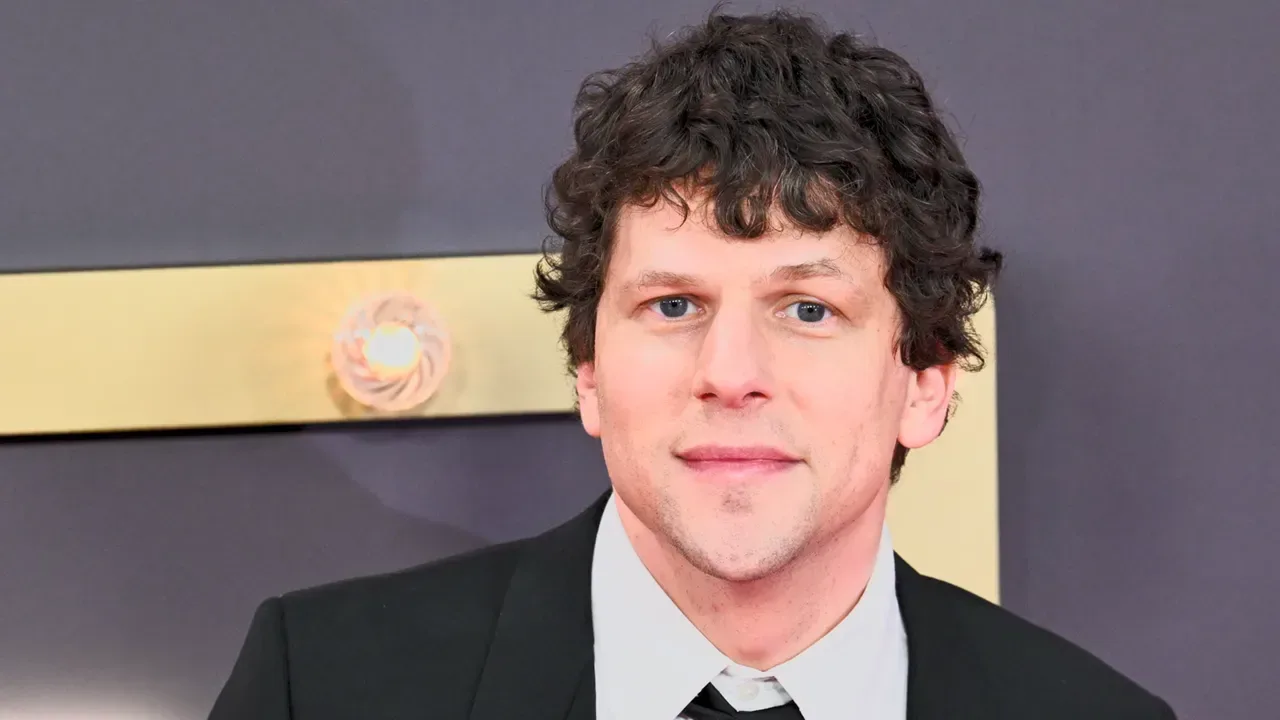
Jesse Eisenberg is not treating artificial intelligence as a novelty writing partner. He says he occasionally prompts AI because he wants reassurance that it is still bad at writing.
The actor, writer and director described a deeply uneasy relationship with the technology: curiosity mixed with active suspicion. Eisenberg says he will ask it to create a scene in a specified style, not because he is looking for material to use, but because he is checking whether the system has reached a creative standard he finds threatening. For now, he says, it has not.
“I sometimes experiment with AI to see whether it’s good at writing. And it’s still not.”
That is a funny premise with a serious concern underneath it. Eisenberg is not merely asking whether generated prose can produce tidy dialogue or imitate a familiar dramatic rhythm. He is asking how close automated systems may be to making screen stories that audiences will accept in place of work made by people.
His example of that future is unusually specific: a child using goggles, supplying images of themself and someone they like, and immediately receiving a film built around their own bank-robbing fantasy and romantic wish fulfillment. It is a vision of entertainment tailored to one viewer at a time—not simply choosing a story from a library, but generating the story on demand around personal inputs.
Eisenberg’s immediate verdict on the writing may be dismissive, but his broader position is plainly not complacent. He says he feels paranoid about where the technology could go and how quickly it might improve.
What Eisenberg is actually worried about
“AI” can describe a wide range of systems, but the concern Eisenberg raises is centered on generative AI: software that produces new text, images, audio or video in response to a user’s prompt. In the creative context, the promise often presented is speed and scale. A user asks for a scene, a voice, a character image, or eventually an entire movie, and the system returns an output without the conventional chain of writers, performers, crew members and post-production workers.
That does not mean an output is automatically compelling, coherent or artistically meaningful. Eisenberg’s experiments are a reminder that these are different questions. A system can generate pages of dialogue while still failing at the more elusive qualities people mean when they say a scene is good: character intention, subtext, rhythm, surprise, emotional precision and an understanding of why a moment matters.
His worry is therefore bigger than whether an AI can write a plausible exchange today. It is whether audiences and businesses will eventually accept sufficiently convincing automated entertainment, particularly when it can be customized at will. The potential change is economic as much as aesthetic. Eisenberg says he believes people will continue to value live, shared storytelling, but he is less certain that people who make art will be able to earn a living from it.
“People want to be in the same room as other people, watching and listening to stories… What I do worry about is whether we’ll still be able to make a living from it.”
That distinction matters. “Will stories survive?” and “Will storytellers be paid?” are not the same issue. A culture can continue consuming stories while the conditions that support writers, actors and directors become more precarious. Eisenberg does not claim to know the answer; he says he is not fully sure about it. But the uncertainty is precisely what makes the subject feel urgent to him.
His answer is not only technological
Eisenberg points to two sources of confidence. The first is the creative spirit: his belief that people will continue finding ways to delight, communicate and say things machines may not. The second is longevity. He notes that Greek plays written roughly 2,500 years ago are still performed, and sees that survival as evidence that durable art does not simply disappear when a newer delivery system arrives.
It is a useful counterweight to the tendency to frame every new tool as an instant replacement for everything that came before it. A play is not only text on a page. It is performers and audience members occupying the same space, responding in real time to a shared act. The same script can change as different people stage it, speak it and receive it. Eisenberg’s point is not that old work is immune to technological change; it is that the appetite for communal, human performance has proven remarkably persistent.
For readers interested in how live work can keep changing without losing its human core, the story of “Passing Strange” reaching Los Angeles offers a related reminder that theater remains a living form rather than a museum piece.
A wider creative-industry argument
Eisenberg’s apprehension lands within an entertainment debate that already includes sharply different views. George Lucas has expressed support for AI. Other performers and creators have objected to uses that touch directly on identity, consent and compensation.
Masako Nozawa, the voice behind Goku in Dragon Ball, has criticized people who used AI to take her voice for their own purposes. Nicolas Cage has said he would probably not work with Amazon again after declining to sign an AI waiver. Shigeru Miyamoto has said Nintendo would rather take a different direction on AI.
Those examples should not be flattened into one identical objection. A discussion about generated writing is not automatically the same as a dispute over voice replication, and neither is identical to a company’s broader production strategy. But they share a core tension: creative work is often attached to recognizably human contributions—an individual performer’s voice, a writer’s choices, a creator’s reputation—and people are asking what happens when those contributions can be simulated, reproduced or substituted at scale.
For game players, the questions are familiar even if the medium-specific details differ. Personalized stories, reactive characters and fast-generated dialogue could sound exciting in the abstract. Yet those possibilities bring difficult questions about whose material informed the system, whose voice or likeness is being used, who is responsible when generated content crosses a line, and whether a cheaper pipeline reduces opportunities for the people who make games and films in the first place.
Why “it’s still bad” is not the whole story
Eisenberg’s observation is a personal assessment rather than a technical benchmark. He is not offering a test methodology, a measurement of model performance or a prediction date for a major leap. His point is experiential: he tries the tools, finds the writing inadequate, feels relieved, and remains worried that this could change.
That combination is more useful than either extreme. It avoids pretending that generated text is already artistically interchangeable with a carefully made scene. It also avoids assuming that present limitations settle the question forever. In a field described as rapidly advancing, today’s awkward output and tomorrow’s business decisions are separate things to watch.
The most practical takeaway for audiences is to keep the discussion specific. When someone says AI is “good” or “bad,” ask: good at what? Generating a first-pass outline? Mimicking a surface style? Producing a credible performance? Building a feature-length film from personal images? Replacing paid creative labor? Each is a different claim with different consequences.
Eisenberg’s own focus stays on the human stakes. He sees value in art that has lasted for millennia and in people gathering to watch one another tell stories. That faith does not erase his anxiety. Rather, it explains it: if the shared experience of storytelling matters, then the systems used to make, distribute and finance stories matter too.
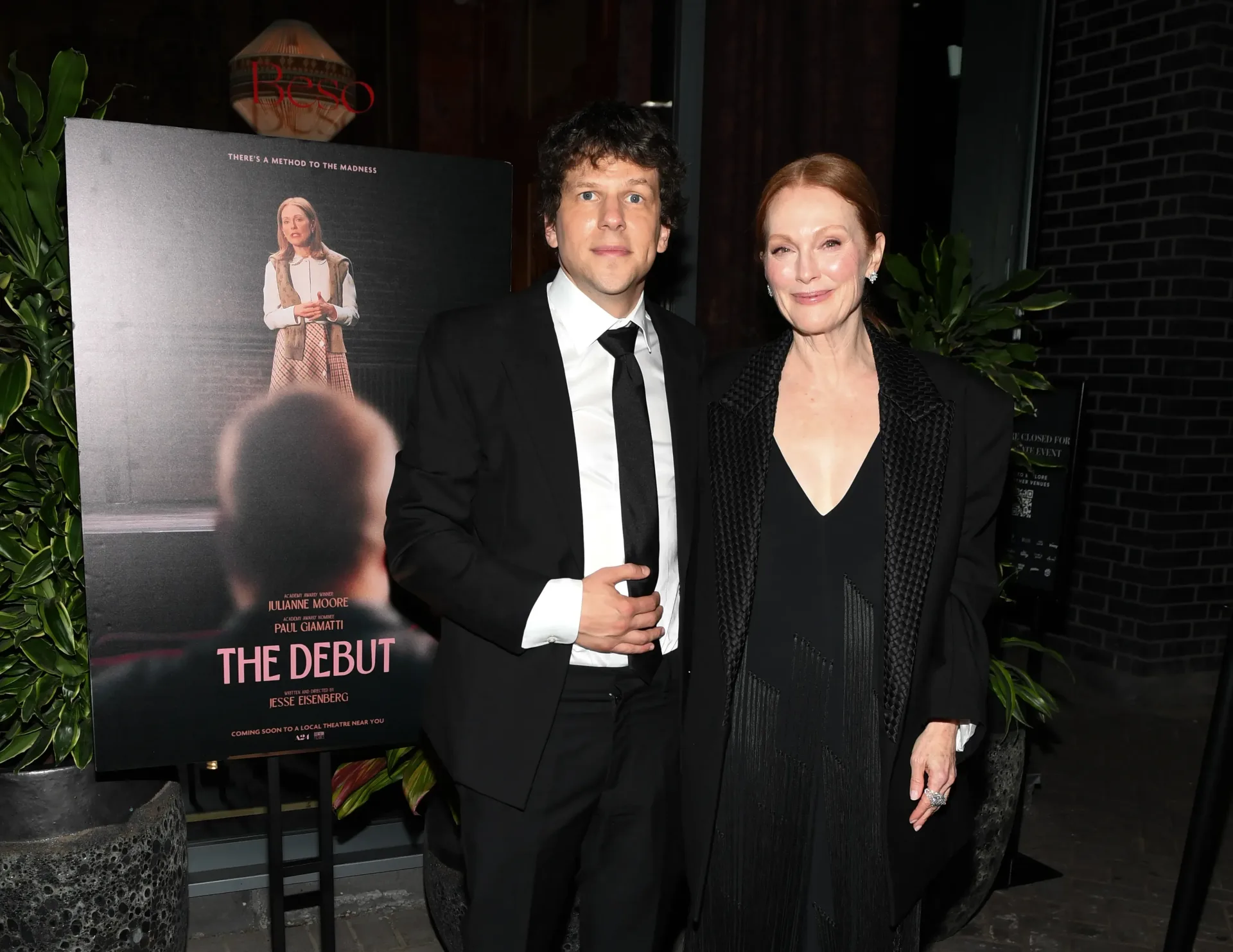
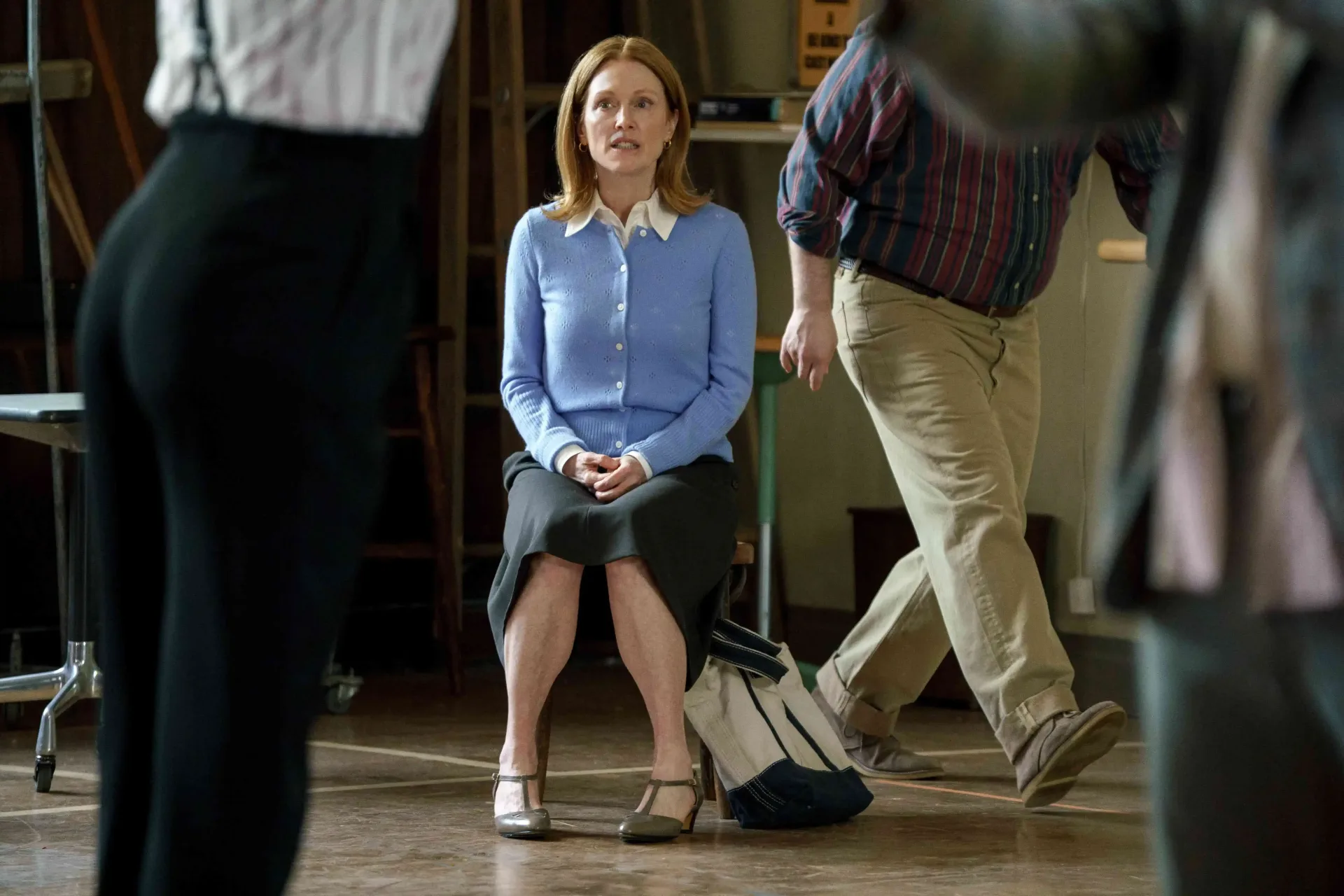
Eisenberg’s next film, The Debut, is scheduled to arrive on December 11, 2026. His comments do not offer a neat forecast for AI’s future in Hollywood. They offer something more candid: an artist checking the machinery, hoping its limitations hold, and trying to separate confidence in human creativity from confidence in the industry’s ability to support human creators.