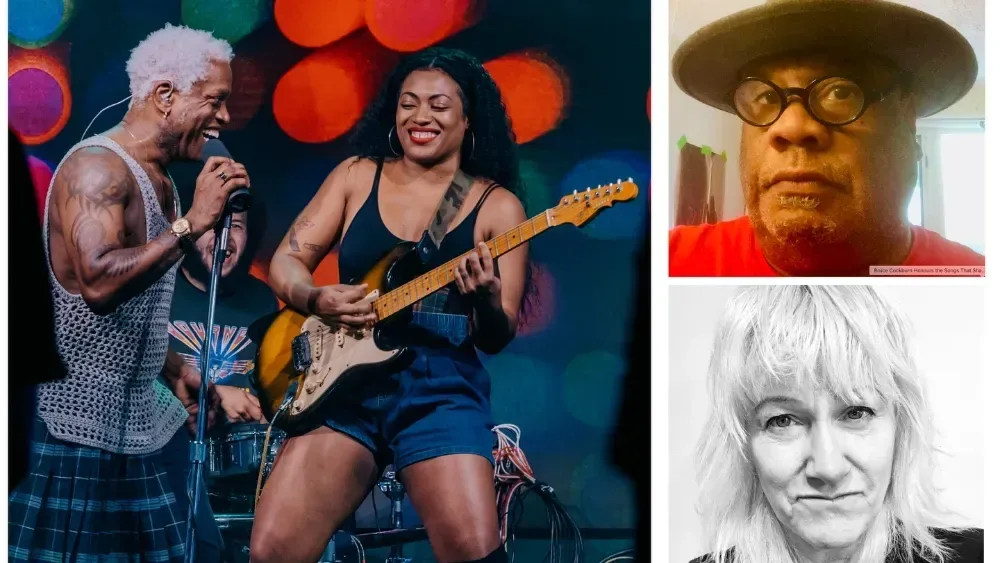
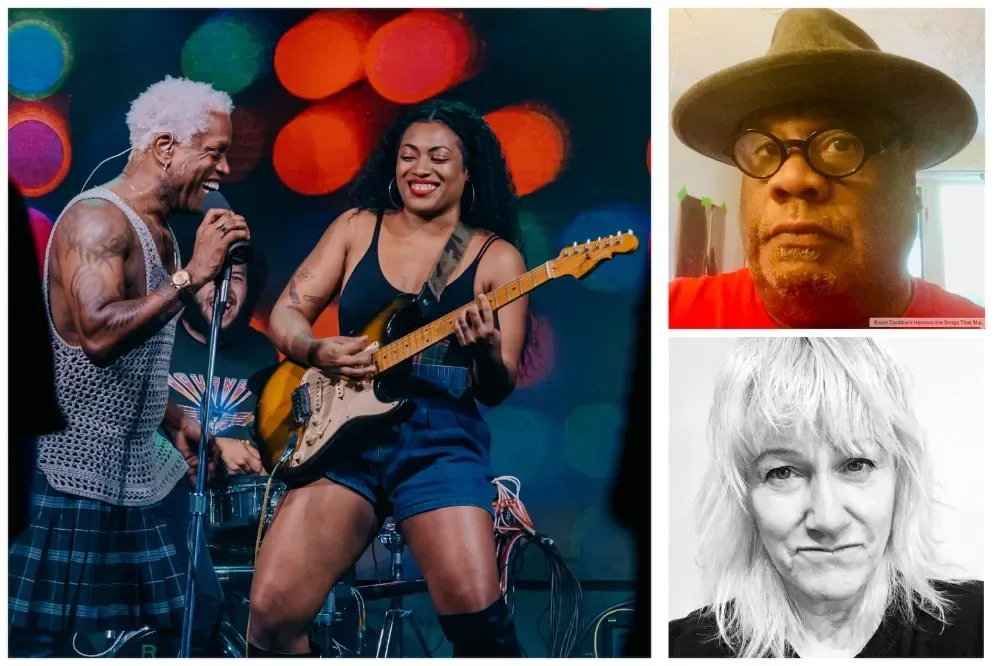
Nearly two decades after Passing Strange reached Broadway, the rock musical is finally getting the Los Angeles production that once seemed inevitable. Instead, its hometown arrival has become a notably long detour: Stew and Heidi Rodewald built their early reputation in the city through their band the Negro Problem, then developed the work in New York, where it became an acclaimed theatrical success.
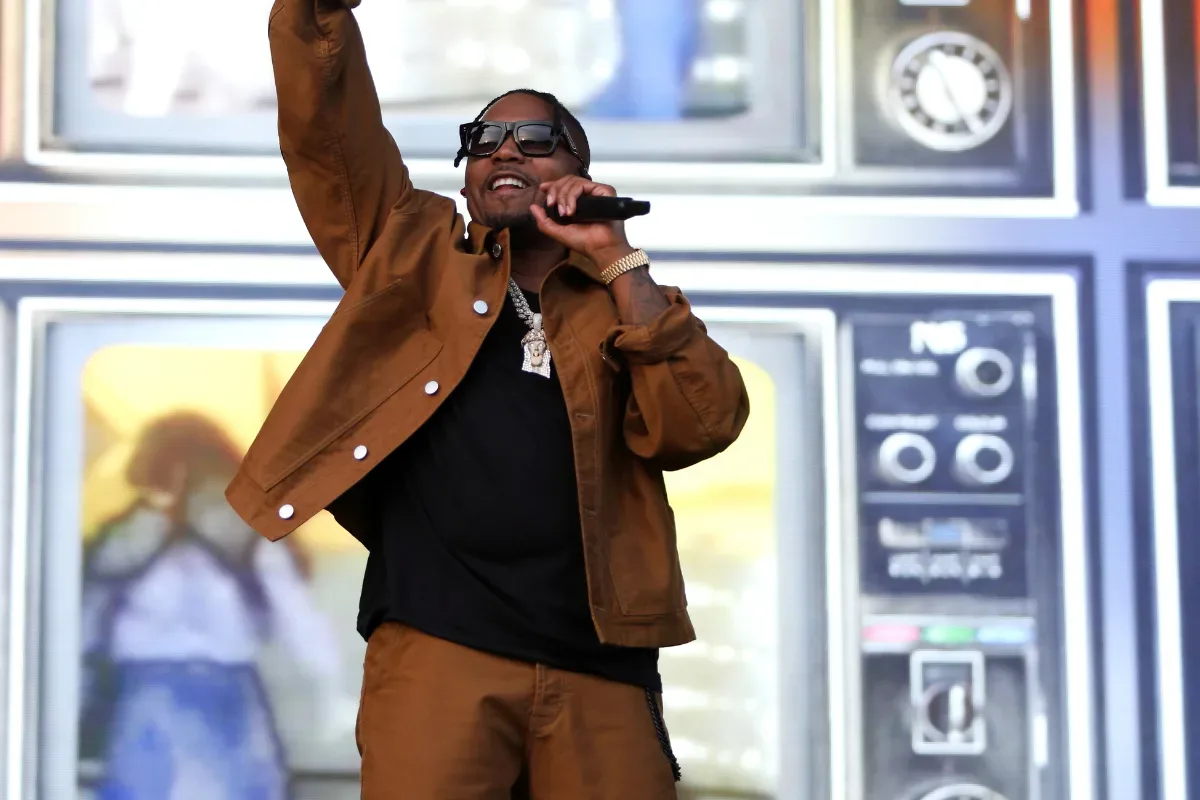
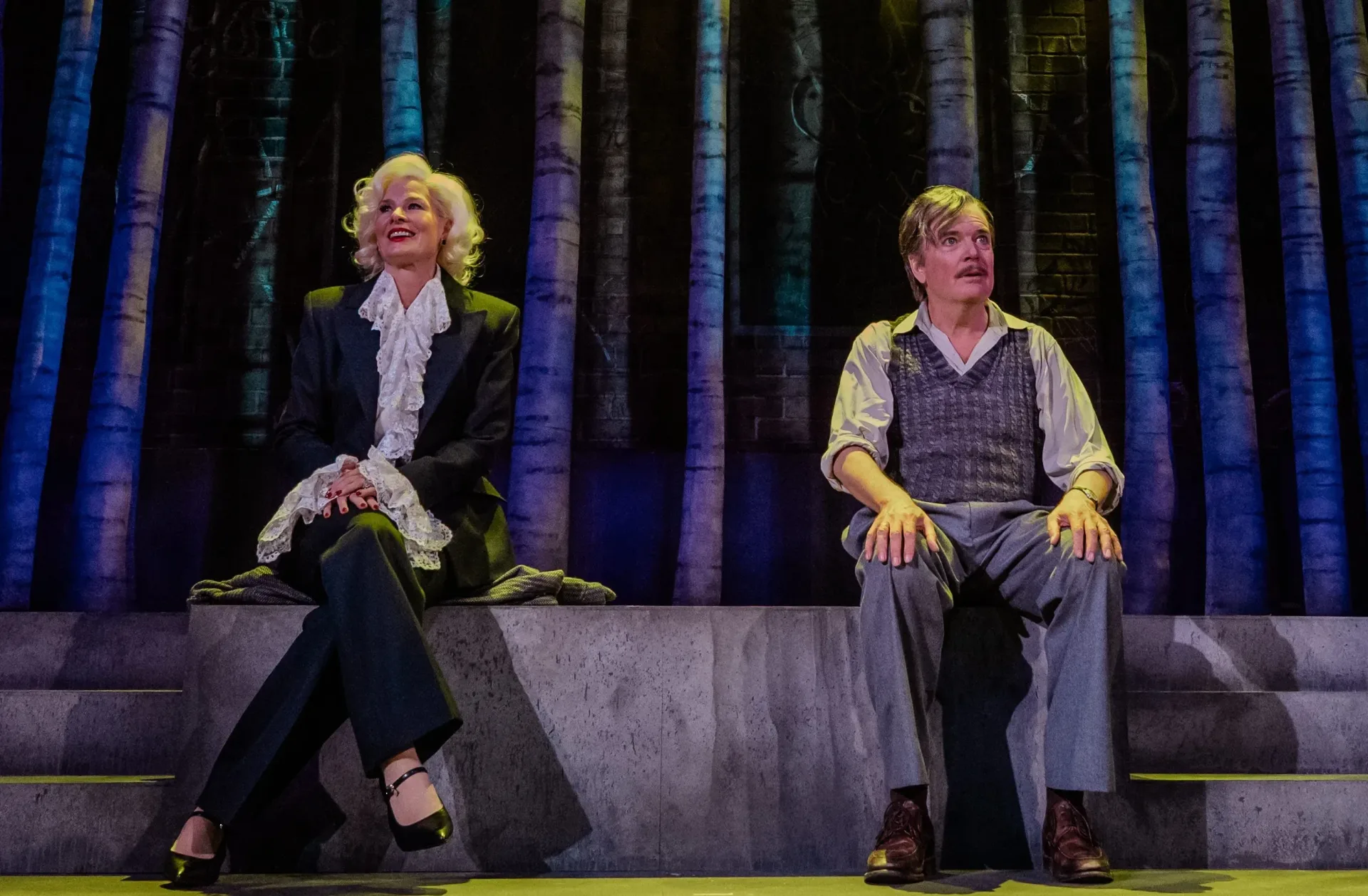
The Pasadena Playhouse production puts the material in the hands of director Zhailon Levingston, whose recent work on Cats: The Jellicle Ball earned him a Tony Award for best direction of a musical. Vintage Trouble singer Ty Taylor plays Narrator, the role previously performed by Stew, alongside Brittany Campbell, Britton Smith and Saycon Sengbloh. Stew and Rodewald, who appeared in the Broadway and pre-Broadway versions, are not performing in this staging.
That distinction is central to why this premiere matters. Passing Strange began with its writers’ own voices and stage presence at the center. Its latest production asks what happens when a piece born from a particular pair of artists is given room to be interpreted by a new director and cast. Rather than treat that handoff as a compromise, Stew and Rodewald have described it as one of theater’s real pleasures: the possibility that a new production can work like a great cover version, recognizable but not merely imitative.
A hometown premiere that took an unexpectedly long route
Passing Strange opened on Broadway in 2007 and subsequently earned major recognition from the Tony Awards, Drama Desk Awards and New York Drama Critics’ Circle Awards. It also received a filmed version directed by Spike Lee, preserving performances by Stew, Rodewald and a then-early-career Colman Domingo.
Yet the show’s success elsewhere did not rapidly lead to a full Los Angeles staging. The musical has been produced in major cities, as well as in Europe and South America, making the absence of a proper Los Angeles run especially conspicuous given its creators’ local history. Stew and Rodewald had played regularly in Los Angeles before spending more time in New York around 2000. They recall selling out Spaceland while still encountering a ceiling around the kind of recording-industry support that might have turned a devoted local following into a sustainable career.
New York theater offered a different structure. A preliminary club-based piece called Travelogue, in which the pair talked and sang about places they had lived and experiences they had had, brought them to the attention of the Public Theater. They did not initially seek to turn it into a theatrical work; Stew says they declined the invitation three times before agreeing.
That origin is useful context for audiences encountering the musical now. It was not designed as a calculated route to Broadway. Rodewald has said the team’s priority was pleasing themselves instead of building an efficient crowd-pleaser. Their music career continued alongside the workshops and commissions that supported the show’s development, rather than being abandoned in favor of a conventional theater trajectory.
The writers also found the theater world unusually receptive to a part of their work that they felt had often been overlooked in the music business: the lyrics. Theater development offered practical support, time and workshop opportunities, rather than the high-risk mythology attached to a large record advance. For Stew and Rodewald, that exchange appears to have been creatively consequential. It gave a rock band enough support to make a musical without first requiring it to behave like a Broadway institution.
Related coverage includes ‘Passing Strange’ Finally Reaches Los Angeles With a New Pasadena Production.
What “rock musical” means here
The term “rock musical” can be misleading. At its most superficial, it simply describes a stage work that uses amplified guitars, drums or a band-oriented sound. Stew’s definition is more demanding. For him, a rock-and-roll ethos is not mainly a musical genre. It is an insistence on immediacy, risk, presence and emotional exposure.
That is a useful way to understand the creative tension around Passing Strange. The work combines rock music with a coming-of-age story that draws elements from Stew’s life, and it places a fourth-wall-breaking protagonist at its center. Fourth-wall breaking means a performer directly acknowledges or addresses the audience rather than maintaining the illusion that viewers are invisible observers of a self-contained world. In this case, the device makes the narrator’s perspective impossible to ignore; the story is not just being presented but actively mediated, questioned and reframed in front of the crowd.
That approach also places social and racial issues in the foreground, instead of turning them into background texture. The material’s form matters as much as its subject: a live band onstage, a narrator in dialogue with the audience and a refusal to smooth every transition into a tidy theatrical payoff. Rodewald has recalled that the creators deliberately resisted familiar Broadway habits, including the impulse to place an obvious applause cue—or “button”—at the end of every song.
A button is a final emphatic musical or dramatic beat designed to announce that a moment is over and invite applause. Avoiding buttons does not automatically make a musical more adventurous. But it can change the rhythm of a performance, allowing a song to lead directly into the next scene without stopping to collect validation. In the context of Passing Strange, that choice reflects a broader resistance to treating each number as a sealed showcase.
Stew believes the show’s influence has sometimes been visible in production choices: more musicals putting bands onstage, for example, and lighting approaches that once felt unusual becoming familiar. But he is less certain that the deeper principle has traveled as far. In his view, a fuzzed-out guitar alone does not create rock-and-roll theater. The more difficult challenge is to make work that feels alive enough that neither performer nor audience can coast on established gestures.
Levingston’s production is not a recreation
Levingston’s involvement is significant precisely because Stew and Rodewald are not attempting to oversee every artistic decision. Both have expressed confidence in his reading of the piece and have resisted offering direction from the sidelines. That posture recognizes that theater is a living form, not a recording to be replicated at identical settings.
For Taylor, the Narrator role comes with an especially visible challenge. The character is a Stew stand-in, but the production does not ask Taylor to become an impersonator. Stew’s own response to earlier productions suggests a more productive goal: bring an individual sensibility to the role, as a musician interpreting a song would. That is an important distinction for a show built from autobiography-adjacent material. Fidelity can mean preserving the work’s emotional and structural purpose rather than copying the voice, timing and physical mannerisms of its first performer.
The Pasadena staging also gives Los Angeles audiences a chance to encounter the show first as theater, rather than only as a landmark associated with its Broadway history or Lee’s film. The filmed version remains a valuable document of a particular cast and period. A stage production, however, makes room for live variation: the changing energy of a band, the specific rapport between actors and the audience’s role in a fourth-wall-breaking work.
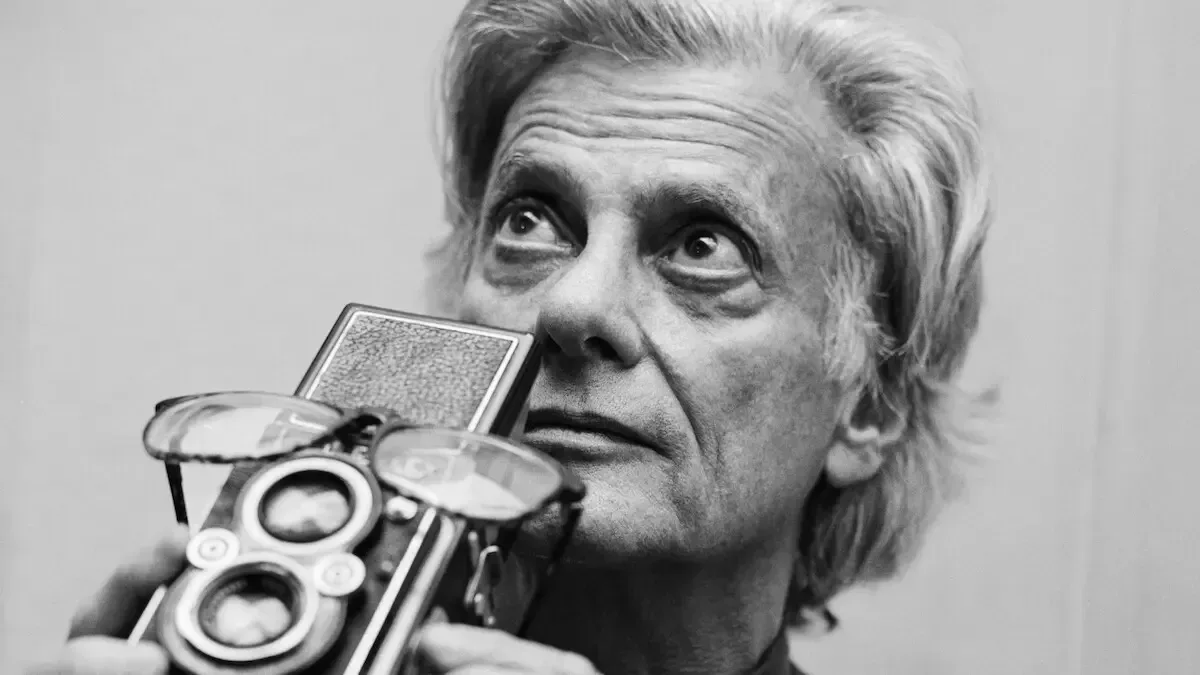
That difference between document and performance is worth keeping in mind when thinking about adaptations and artistic legacy more broadly. A film can preserve an interpretation; it cannot replace the evolving exchange of a live production. The same question of how an artist’s work changes when moved across formats is also central to stories about creative figures and their archives, including Ron Howard’s film about Richard Avedon.
From a cult-band mentality to Broadway recognition
Stew calls the Negro Problem and Passing Strange “3 a.m.” art: the kind of work one person excitedly introduces another person to late at night, rather than something supplied by the mainstream. The phrase is not a claim to obscurity for its own sake. It describes an artistic relationship built on discovery, recommendation and strong personal attachment.
That sensibility helps explain why Broadway was not initially the goal. Stew and Rodewald came from a band culture shaped by the music industry’s decline and by the growing need for artists to make records independently. Stew has recalled using money intended for demos to make a record instead. Their skepticism toward traditional music-business promises may have protected the musical from being engineered around an imagined commercial formula.
It also puts the later scale of Broadway in perspective. Rodewald noted the difference between years of playing concerts and a production reaching roughly 1,200 people per show, eight times a week. Even a limited Broadway run can place a work before a large, concentrated audience. That helps account for the long afterlife of Passing Strange: people continue to identify its fingerprints in theater, while performers in different cities keep finding ways to make it their own.
What Stew and Rodewald are making next
The Pasadena premiere is not a reunion campaign or a resting point for its creators. The Negro Problem is expected to release a record in 2027. Rodewald is writing songs for a project about Aileen Wuornos, though she has not yet settled whether it will become a song cycle or a full musical.
Together, Stew and Rodewald also run Stewdio Zero, a recurring performance project made with younger collaborators, including former students connected to The New School, Harvard and LaGuardia. The group develops a show roughly every four months and performs at JACK in New York. Stew describes the process as reciprocal: veteran artists bring their experience while younger performers keep the work in contact with the present.
Other works in progress include a film version of High Substitute for the Head Lecturer, a Harlem Stage project about Amiri Baraka and Allen Ginsberg. Stew is also working on projects involving Muhammad Ali and Thelonious Monk, while he and Rodewald are developing a live song cycle about Detroit activists Grace Lee Boggs and Jimmy Boggs.
Stew teaches both theater and music at Harvard in a course called Singer Plus Song Equals Story. Its underlying premise echoes the principle behind Passing Strange: songs should not simply decorate a narrative; a singer and a song can generate story themselves. In practical terms, that means approaching musical theater less as a delivery system for set-piece numbers and more as an art form capable of surprise, friction and vulnerability.
Los Angeles is receiving Passing Strange late, but perhaps at the right moment for a production that has never depended on staying fixed. The point is not to finally place the show in the city where its creators once played clubs. It is to see what the work becomes when its original spirit meets a new director, a new cast and an audience that has waited a very long time to hear it live.