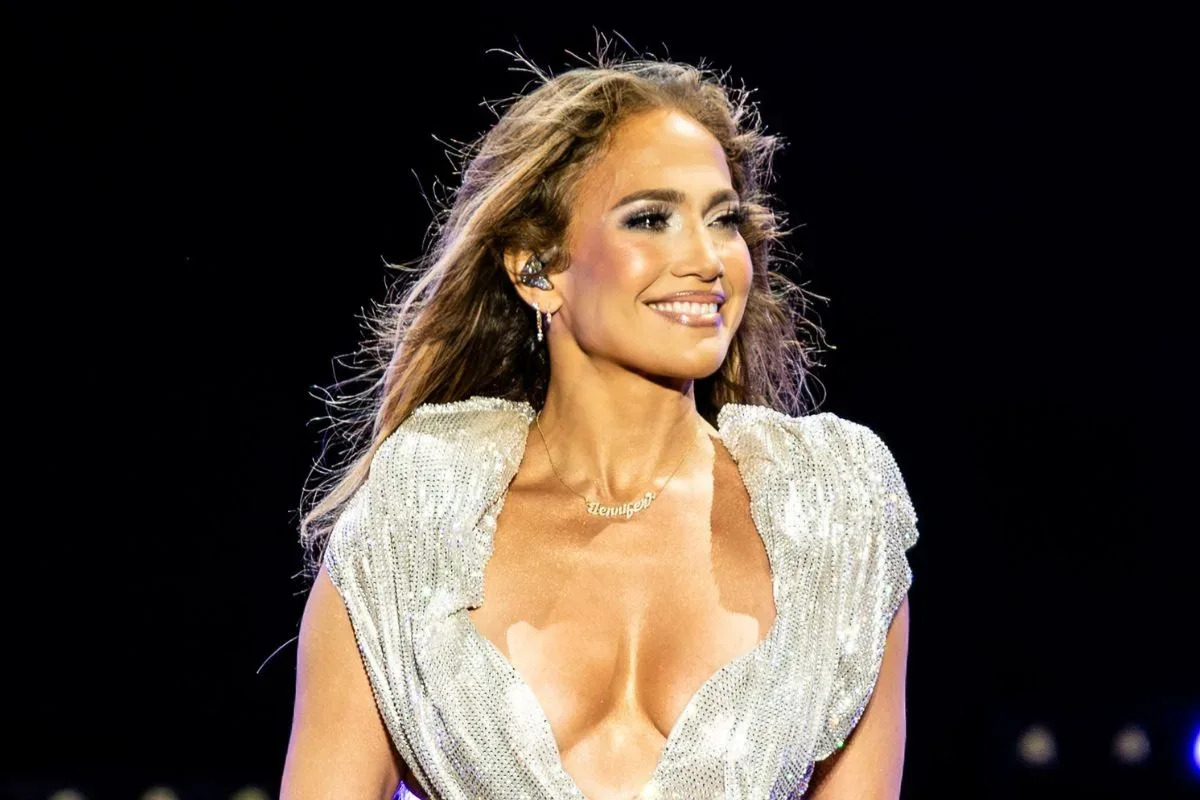
Jennifer Lopez, director Robert Zemeckis and Netflix have jointly rejected claims of a behind-the-scenes dispute over The Last Mrs. Parrish, the streaming thriller now in post-production.
The three parties responded after an account attributed the supposed disagreement to unnamed people and alleged that Lopez sought greater control over the editing process following weak test-screening results. Their shared position is unequivocal: “Any suggestion that the filmmakers are not working in unison is without merit.”
Netflix also challenged the characterization of the screenings, saying the film tested well, especially among Jennifer Lopez fans. The exchange leaves one firm public fact and several unresolved private claims: the production says its principal collaborators are aligned, while the assertions about a conflict and the details of internal screenings have not been substantiated publicly.
What the denial does—and does not—establish
The statement is significant because it comes from the movie’s lead actor-producer, its director and the platform releasing it. Rather than offering separate, narrowly worded responses, Lopez, Zemeckis and Netflix issued a unified denial. That is the clearest available indication of their public stance on the reported editing friction.
It does not provide a scene-by-scene account of the post-production process, nor does it say who makes each creative decision. It also does not establish what individual cuts may have been discussed in the ordinary course of finishing a feature film. Those distinctions matter. A film can have active conversations about pacing, performances, music, structure and audience response without those conversations amounting to a clash.
Post-production is the period after filming wraps in which footage is shaped into the completed movie. Editing is central to that work: filmmakers select takes, decide the order and length of scenes, refine transitions and build the final rhythm of a story. Sound, music, visual work and color finishing can also be part of the process. For a thriller built around shifting relationships and deception, timing can be especially important, because the order and duration of information can influence suspense.
Test screenings, meanwhile, are audience viewings used to gather reactions before release. The supplied information includes competing descriptions of how The Last Mrs. Parrish performed in those screenings: Netflix says it tested well, particularly with Lopez’s fans, while the disputed account described them negatively. No scores, audience breakdowns, methodology or specific feedback have been publicly provided here. It would therefore be a leap to treat either account as a full assessment of the movie’s reception.
Lopez’s dual role places her in the creative conversation
Lopez is not attached to The Last Mrs. Parrish solely as its leading performer. She is also a producer, an arrangement that naturally makes her one of the people with a stake in how the project is developed and completed.
Her production company, Nuyorican Productions, is represented among the producers by Elaine Goldsmith-Thomas and Benny Medina. Molly Sims is producing through Something Happy Productions, while Liza Chasin is producing through 3dot Productions. The project’s producing structure means the film has multiple senior collaborators working across its development and delivery.
That producer credit should not be confused with a specific public claim about editorial authority. The available information identifies Lopez as a producer, but does not spell out a contractual role in the edit or a division of decision-making responsibilities. What it does show is that she occupies two meaningful positions on the project: she plays a key character on screen and has a producing role behind the scenes.
This is not new territory for Lopez. She was both a producer and star of 2019’s Hustlers, directed by Lorene Scafaria. That film opened to $33.2 million, which was then the largest opening weekend for a live-action movie led by Lopez. It surpassed the $23 million opening of Monster-in-Law. Hustlers debuted at No. 2, behind It: Chapter Two, with an ensemble that included Constance Wu, Julia Stiles, Keke Palmer, Cardi B and Lizzo.
The comparison does not predict anything about the Netflix film’s eventual viewership or reception. It does, however, provide relevant context for why Lopez’s producer credit is more than a decorative line in the credits: she has previously worked in both capacities on a high-profile feature.
The story at the center of the adaptation
The Last Mrs. Parrish adapts the novel by Lynne Constantine and Valerie Constantine, the sisters who write as Liv Constantine. Their website lists the Netflix adaptation as being in post-production.
Lopez plays Daphne Parrish, who is married to Jackson Parrish, played by Nikolaj Coster-Waldau. Isabel May plays Amber Patterson, an outsider drawn to the Parrishes’ wealthy world. Amber forms a friendship with Daphne while pursuing Jackson, with the aim of taking Daphne’s place.
That premise establishes a triangular social conflict: status, intimacy, ambition and manipulation are all embedded in Amber’s path into the Parrishes’ lives. It also clarifies why the adaptation has been positioned as a thriller rather than merely a relationship drama. The narrative engine is not simply that a friendship develops, but that one participant enters it with a concealed agenda.
Andrea Berloff, John Gatins and Lisa Rubin are attached as writers. Debi Mazar and Denis O’Hare are also in the cast. Zemeckis directs.
Where the production stands
Filming on The Last Mrs. Parrish ended in November 2025, with production taking place in New York and New Jersey. The project is now listed as being in post-production, which is consistent with the public discussion centering on editing.
No release date is included in the available information, and Netflix has not publicly detailed the film’s final cut, running time or release plan here. Viewers should be cautious about reading a denial of a reported dispute as a release update. The statement addresses collaboration, not a timetable.
For now, the most reliable takeaway is straightforward: Lopez, Zemeckis and Netflix deny that the filmmakers are at odds, and Netflix disputes the claim that the film’s tests were poor. The project remains an adaptation in post-production, led by Lopez as Daphne Parrish alongside Coster-Waldau and May. For more on the work that shapes movies before audiences see them, see our look at why contemporary film wardrobes involve far more than shopping.