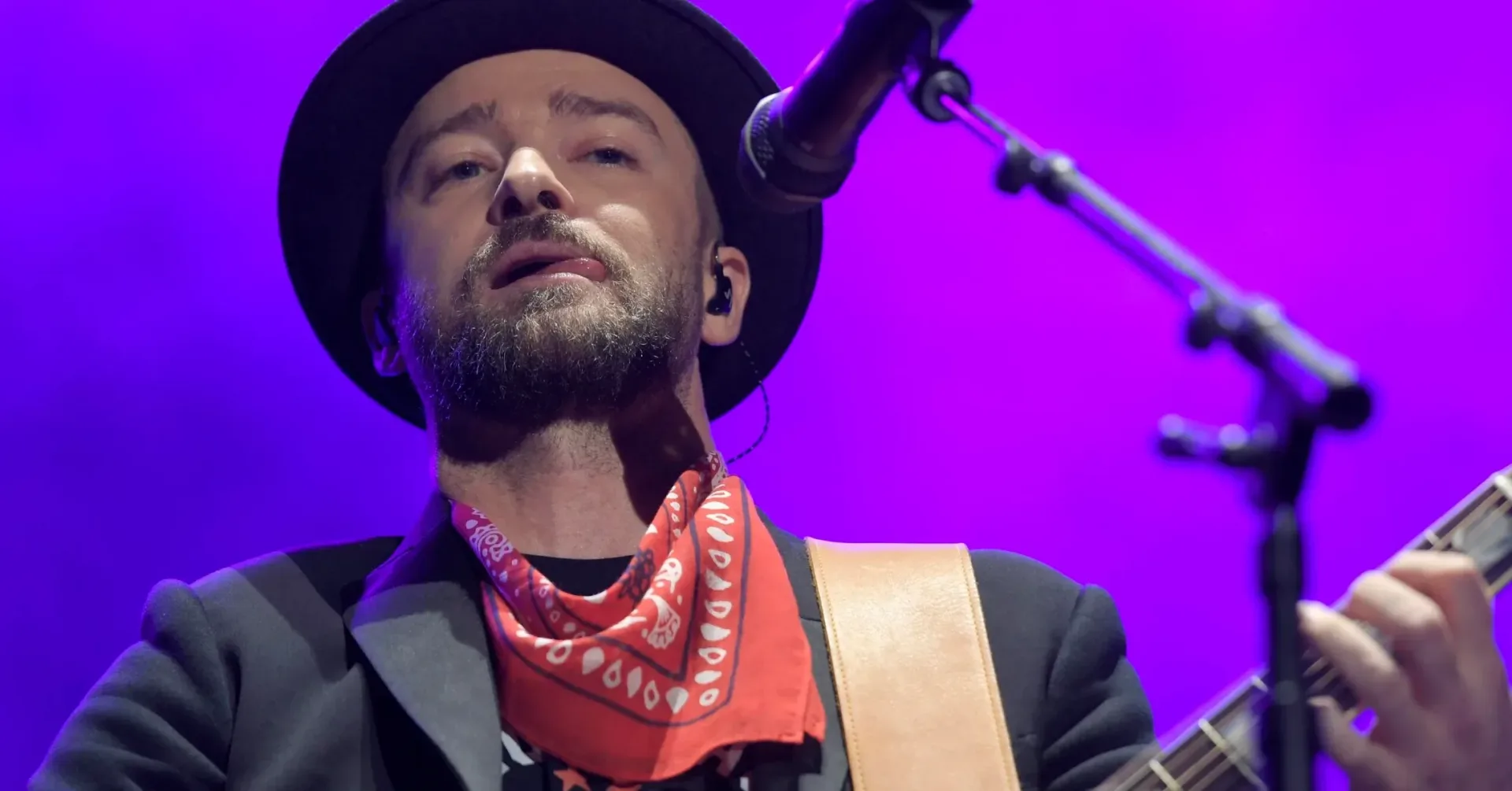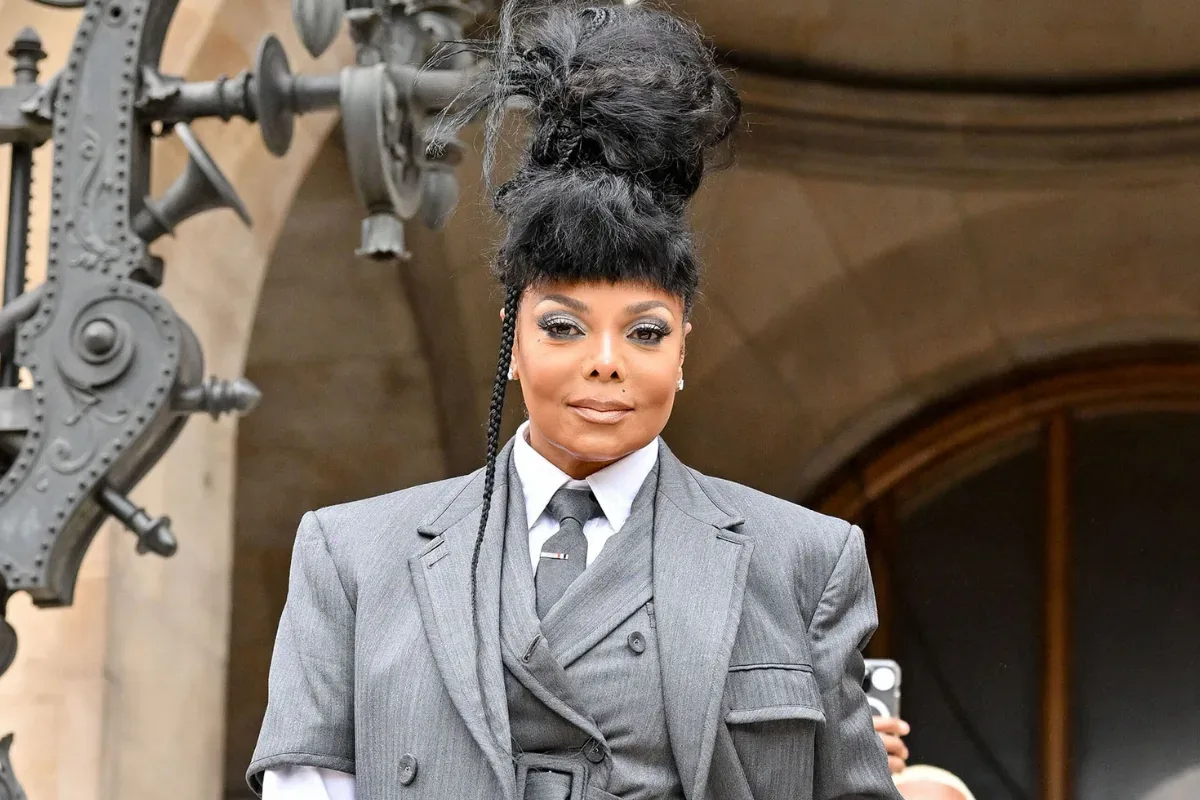
More than two decades after the 2004 Super Bowl halftime show, the brief moment in which Justin Timberlake tore away part of Janet Jackson’s costume remains among the most disputed seconds in American television. Wayne Scot Lukas, Jackson’s longtime designer, has now restated his view that the reveal was intentional—not a wardrobe failure.
Lukas says the bustier performed as designed when Timberlake removed part of it during the show. In his telling, the costume concept had been altered close to the performance, and the planned reveal was meant to be substantially more dramatic than the image that reached viewers.
That account matters because it is not simply a new detail attached to an old story. It clashes with key elements of the accounts previously associated with both Jackson and CBS, while also arriving as Timberlake is reportedly preparing a four-part Apple TV docuseries for December that will return to the controversy. Jackson is expected to address the incident in that project. Lukas says he was not invited to take part and wants the series to present what he considers the complete version of events.
What Lukas is claiming—and what remains contested
Lukas’s central assertion is direct: the moment was not a malfunction. But “planned” can mean several different things in a production context, and the public record has never offered a single uncontested answer.
CBS maintained that the exposure was unauthorized and unscripted. Jackson’s own description was more qualified: she said a costume reveal had been introduced after the final rehearsal, but that the full exposure itself was accidental. Those details distinguish a planned stage beat from the specific outcome broadcast to an audience of nearly 90 million people.
That distinction is essential. A performer, designer or production team can prepare a reveal without intending the final extent of what viewers see. Conversely, Lukas’s position is that the costume functioned as it was designed to function. The competing accounts leave a major factual disagreement at the center of the story, rather than a loose end that can be settled by describing the event as either wholly planned or wholly accidental.
The event is commonly remembered as lasting less than a second, yet it produced years of regulatory, legal and cultural fallout. Its persistence is partly about the moment itself, but also about who bore the heaviest consequences afterward.
A dispute with consequences far beyond a costume
The halftime exposure prompted more than 500,000 complaints to the Federal Communications Commission. CBS stations were hit with a $550,000 fine, a penalty later vacated by a federal appeals court.
Related coverage includes Janet Jackson Designer Reasserts Planned Super Bowl Reveal Claim.
The court’s ruling did not establish a definitive account of the costume planning. Instead, it focused on the regulator’s enforcement approach, finding that the FCC had changed that approach without giving adequate notice. In practical terms, the legal fight was about whether broadcasters had fair warning of the standard being applied—not a final ruling on every claim surrounding the performance.
Still, the scale of the response reshaped broadcast practice. Broadcast delays changed in the aftermath, illustrating how a single live-TV incident can affect the systems designed to manage risk across major events. A delay gives broadcasters a short buffer between a live performance and the signal received by viewers, creating an opportunity to interrupt or alter unexpected material before it airs.
The incident also became inseparable from arguments about unequal accountability. Jackson’s career was widely understood to have taken a far greater hit than Timberlake’s. That imbalance is a central reason each new recollection of planning, approval and responsibility attracts fresh attention rather than functioning as mere pop-culture trivia.
The apology question has its own conflict
Lukas also says Timberlake never apologized to Jackson, a claim that requires an important qualification. Timberlake publicly apologized to both Jackson and Britney Spears in 2021. In that statement, he acknowledged benefiting from an entertainment system shaped by racism and misogyny.
Public apologies and private apologies are not necessarily the same thing, so Lukas may be referring to a different kind of contact or accountability. But the available record supports that Timberlake made a public apology in 2021. Any discussion of the designer’s assertion should keep that distinction clear rather than treating it as proof that no apology of any kind was ever made.
The broader issue is not only whether an apology occurred; it is what an apology can address years after the professional damage has been done. The Super Bowl moment has long been cited as an example of a backlash distributed unevenly between collaborators. Lukas’s latest comments return the focus to that imbalance, as well as to the extent of Timberlake’s knowledge and responsibility.
Why a documentary can reopen an old record
A new docuseries has the potential to assemble a clearer chronology: when the costume idea changed, what happened in the final rehearsal, who approved which version of the reveal, and what each participant understood would occur on stage. But a documentary cannot automatically eliminate contradictions, particularly when significant participants offer materially different accounts.
The most useful version of a retrospective would identify which claims are firsthand recollections, which are supported by production material, and where the record remains uncertain. That is especially relevant here because Lukas is saying he was not asked to participate. His absence would not invalidate the series, but it would mean viewers should recognize that a significant dissenting account is being aired elsewhere.
There is also a practical media lesson in the continuing dispute. Major live broadcasts are collaborative productions involving artists, costuming, choreography, network standards and broadcast operations. When something goes wrong—or is perceived to have gone wrong—the public often receives a simplified explanation before the production process can be fully understood. The 2004 controversy shows how hard it can be to revise that first explanation once regulatory action, legal filings and professional consequences have followed.
The regulatory dimension also remains relevant in broader conversations about communications policy and FCC oversight, including the issues explored in this look at media questions involving FCC oversight. The Jackson-Timberlake controversy is a high-profile reminder that enforcement standards, advance notice and institutional decisions can matter as much as the on-air event that triggers them.
What can be said with confidence
- The 2004 halftime-show exposure occurred during a performance involving Jackson and Timberlake and was seen by an audience of nearly 90 million people.
- Lukas now maintains that the reveal was planned and that the costume worked as intended.
- CBS said the exposure was unscripted and unauthorized.
- Jackson said there was a late-added costume reveal, while maintaining that the full exposure was accidental.
- The broadcast drew more than 500,000 FCC complaints and resulted in a $550,000 fine against CBS stations that a federal appeals court later threw out.
- Timberlake made a public apology to Jackson and Spears in 2021.
What remains unresolved is whether the accounts can be reconciled: a late change to a planned reveal, an alleged costume design intended to go further, and an outcome Jackson characterized as accidental. With a Timberlake series reportedly on the way and Jackson expected to participate, that divide is likely to be examined again—not because the event was long, but because its consequences were.