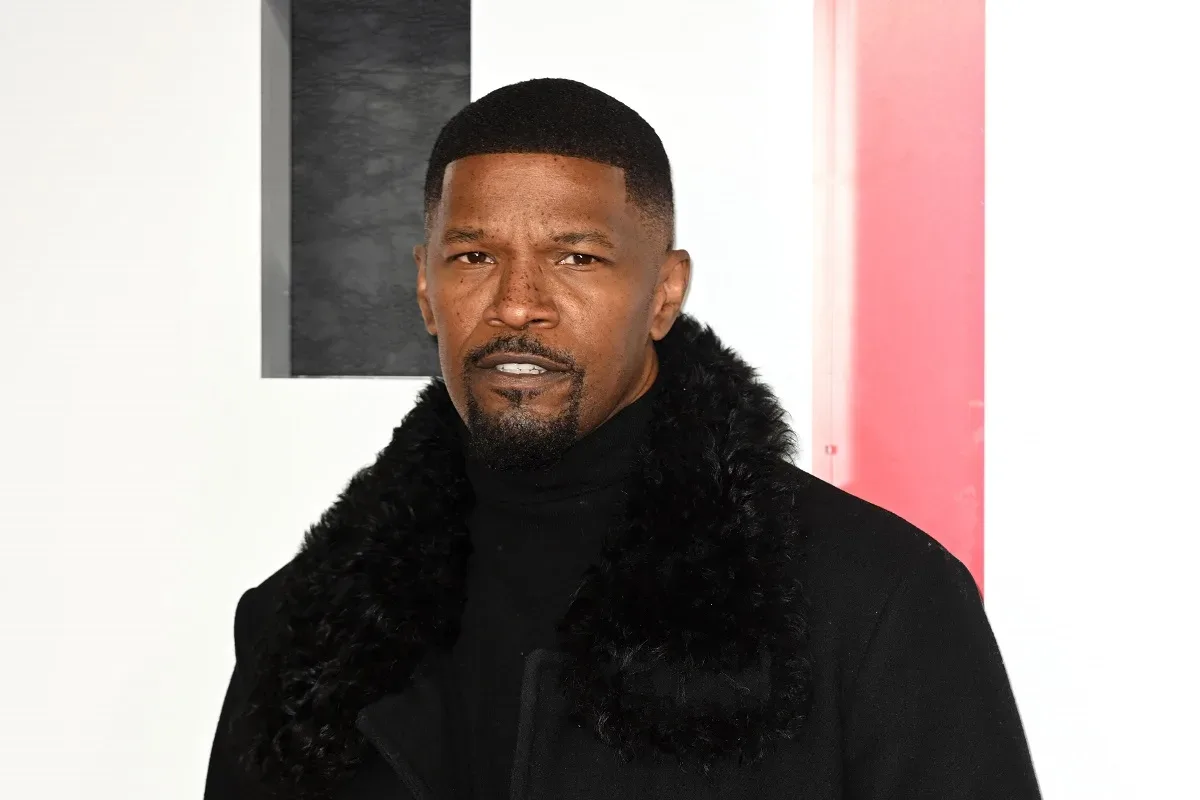
Jamie Foxx is drawing a line between promoting his work and feeding the kind of online conversation that can turn a celebrity interview into a weeklong spectacle. While discussing the possibility of appearing on Shannon Sharpe’s Club Shay Shay, Foxx said he is not planning to go on the show anytime soon—not because he dismissed its appeal, but because he is wary of what algorithm-driven platforms can reward.
“It seems like you get in trouble,” Foxx said. “It seems like if you don’t say something really crazy, you can’t really affect the algorithm.”
The remark arrives as Foxx returns to the interview circuit around Take Care Of Yourself, a new comedy special scheduled to release Wednesday, October 7, on Hulu and Disney+. After a serious health scare several years ago and a period of private recovery, Foxx’s public work carries a different context. The focus is now his special and his return, rather than a willingness to manufacture an explosive sound bite.
What Foxx appears to be criticizing
Foxx’s point is broader than a complaint about a single interviewer or program. Club Shay Shay is a highly visible interview destination, and comedians including Katt Williams have appeared there. But Foxx’s concern is with the incentives surrounding internet distribution: when a conversation lives on a major video platform, attention can be disproportionately concentrated around confrontation, surprise, insults, revelations, and clips stripped from a longer discussion.
That is what people generally mean when they invoke “the algorithm” in this context. An algorithm is the automated system a platform uses to decide what material to recommend, surface, or otherwise put in front of viewers. Its exact workings are not publicly reduced to one simple rule. Still, creators understandably watch what generates clicks, shares, comments, headlines, and continued viewing. The practical result can be a pressure to make each guest appearance feel like an event with a quote built to travel.
Foxx’s wording identifies the downside of that pressure. A guest may feel that being thoughtful, measured, or simply funny is no longer enough; a conversation has to create “trouble” to achieve comparable attention. His stated lack of interest in that bargain is notable because he is not a personality who needs to introduce himself to an audience. His career spans music, television, and film, and his current promotional run already has a clear project at its center.
A promotional cycle does not have to become a controversy cycle
There is an important distinction between visibility and virality. Visibility means getting the word out about a project, connecting with audiences, and giving people a reason to watch. Virality is more volatile: it can produce enormous reach, but the item that spreads may be a provocative fragment rather than the work a guest intended to discuss.
For an entertainer promoting a comedy special, those two goals can overlap, but they do not have to. Foxx can discuss the perspective behind Take Care Of Yourself, the experience of returning to performance, or the role comedy plays in his life. None of that requires a public feud or a deliberately combustible statement. His comments suggest that he sees the cost of pursuing the latter as too high.
This is also why his comments should not automatically be read as an attack on Sharpe. Foxx acknowledged the dynamic that makes high-profile interview spaces appealing: they can deliver a large audience and place a guest at the center of a fast-moving cultural conversation. His objection is to the perceived expectation that guests must say something outrageous to “affect the algorithm,” not necessarily to the format of a long-form interview itself.
That distinction matters in an era when a full interview and its most inflammatory short clip can lead very different lives online. The longer conversation may contain nuance, qualifications, humor, and reflection. A clip, by design, is usually optimized around one sharply defined moment. It can be entertaining and useful, but it may also reward the statement most likely to spark a reaction rather than the one that best represents the entire exchange.
Why the timing changes the tone
Foxx has kept much of his recovery private following the health scare referenced in his recent promotional activity. That privacy makes his stated preference for restraint feel consistent rather than evasive. A comeback does not obligate someone to make every aspect of their life available for debate, or to package personal experiences as a viral confession.
Instead, Take Care Of Yourself provides a defined public occasion: a new comedy special arriving on two streaming services. The title itself gives the return an obvious thematic resonance, although no details about the special’s material are established here. It would be a mistake to assume that the special is a direct account of Foxx’s health experience or to assign it a particular comedic approach before audiences can see it.
What is clear is that Foxx is once again placing new work in front of viewers. That is substantial news on its own. The entertainment economy can often make the interview around a project feel bigger than the project itself, particularly when a guest’s comments ignite a separate debate. Foxx’s position pushes against that hierarchy. The special is the product being promoted; potential controversy is not an obligation attached to it.
The practical stakes of saying no
Declining a particular platform, or saying it is not the right fit at the moment, is not the same as rejecting interviews altogether. Foxx has been speaking publicly as part of the campaign for his special. The choice is more specific: he appears unwilling to enter an environment he believes may favor outrageousness over a normal conversation.
For viewers, that is a useful reminder not to confuse access with entitlement. Audiences can be interested in an artist’s recovery, career, and views without assuming they are owed the most dramatic possible version of those subjects. A celebrity interview is still a choice made by both sides, and a guest can decide that a venue’s incentives do not match the story they wish to tell.
It is also a reminder that huge numbers are not the only meaningful measure of promotion. A viral moment can make a guest ubiquitous for a few days, but it can steer coverage toward conflict and away from the work. Foxx’s calculation, as expressed in his comments, appears to favor control of the message over the possibility of becoming the internet’s loudest topic.
That tension is not confined to comedy or celebrity interviews. The broader media conversation is full of claims, clips, and reactions competing for attention, including disputes where key details are still uncertain. Readers can see a related example in this look at unverified festival-price figures. The common lesson is simple: high engagement does not automatically make the loudest claim the most useful or complete one.
Foxx’s return can stand on its own terms
There is no indication that Foxx has ruled out every major interview opportunity forever, or that a future conversation with Sharpe is impossible. His statement is narrower: he does not intend to do Club Shay Shay anytime soon, because he believes internet algorithms can create a demand for extreme remarks.
That answer may not produce the kind of headline-grabbing conflict he is describing. It does, however, clarify his priorities during this phase of his return. Foxx is promoting Take Care Of Yourself, scheduled for Hulu and Disney+ on October 7, and he is doing so without committing to an interview culture he feels can punish normality.
In a system that can treat outrage as a promotional tool, a calm refusal is its own message. Foxx does not seem interested in proving he can dominate a news cycle by saying the wildest possible thing. He is interested in getting back to work.