Maxwell Lord may be one of the most consequential wild cards in the developing DCU—and James Gunn is making it clear that comic readers should not assume they already know where Sean Gunn’s version is headed.
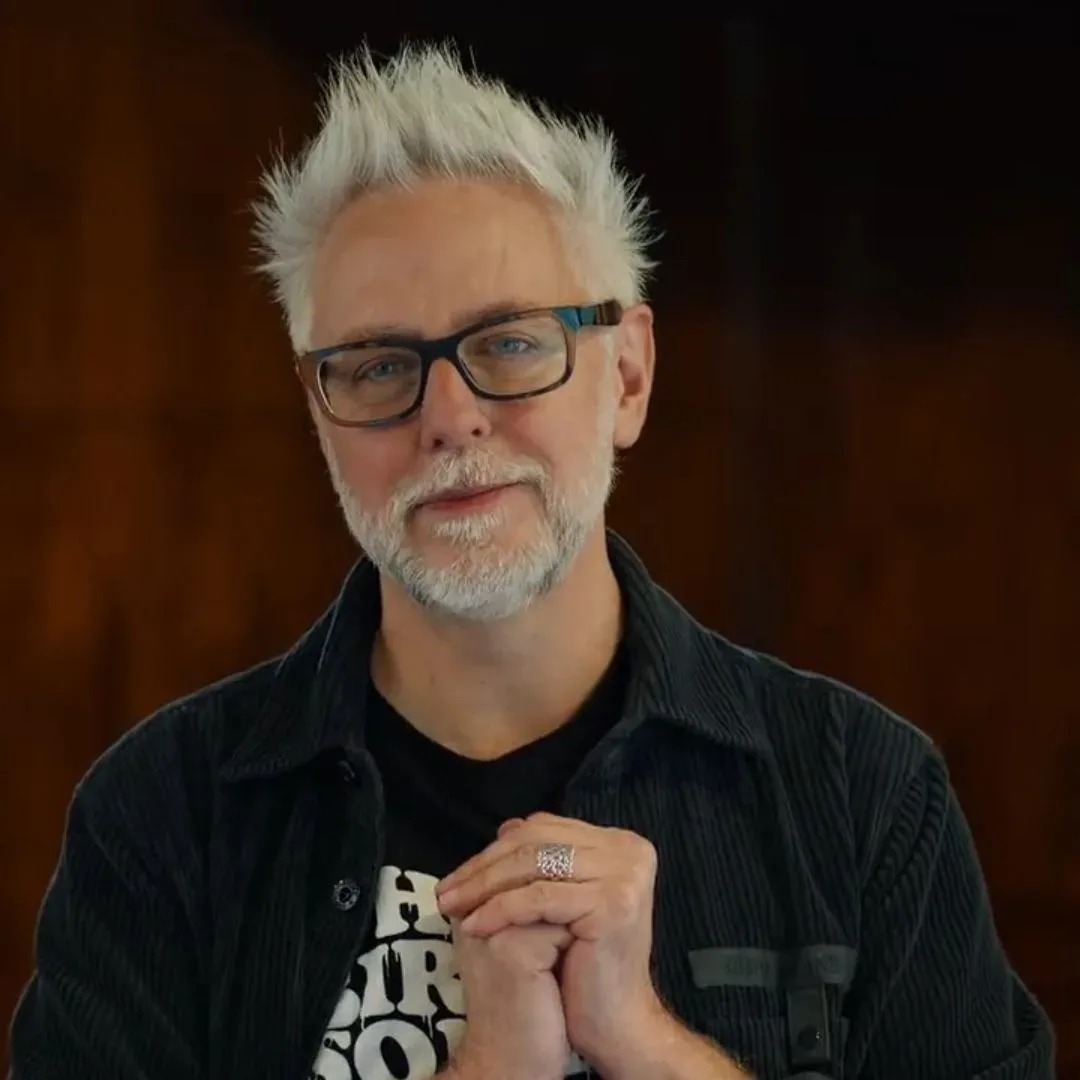
Responding to a fan’s question about Guy Gardner’s place in the Lord-funded Justice Gang, Gunn said the DCU is an alternate universe rather than a direct replication of comic continuity. More specifically, he pointed to the earlier interpretation of Maxwell Lord associated with Keith DeMatteis, J.M. Giffen, and Kevin Maguire: a character Gunn described as deeply flawed, but not fundamentally malevolent.
“The DCU is not a Xerox of DC Comics. It’s an alternate universe,” Gunn wrote, adding that the original Justice League International-era Max was among his favorite characters.
That is a meaningful distinction. Maxwell Lord’s comic-book history contains a dramatic evolution from a Justice League ally and organizer into a formidable enemy. Gunn’s remarks do not establish that the screen character will remain heroic, nor do they rule out a darker turn later. They do establish that the well-known version of Lord as an uncomplicated big bad is not the template Gunn is most enthusiastic about.
Why the Justice Gang question matters
The discussion began with Guy Gardner, the bowl-cut Green Lantern played by Nathan Fillion. In Superman, Gardner works in the Justice Gang, a superhero team funded by Lord. For a reader who associates Maxwell Lord with treachery and violence, that affiliation can look like an alarm bell: why would a recognizable hero work for him?
Gunn’s answer effectively challenges the premise. Being associated with Lord in this universe is not automatic proof that Guy Gardner has walked into a villain’s operation. The Justice Gang may still be questionable, compromised, corporate, chaotic, or all of the above—none of that has been settled by the exchange—but Lord’s reputation from later comics cannot be treated as a spoiler for the films.
That approach also fits a practical need for a new shared universe. If every major plot point were copied beat-for-beat from decades of comics, longtime readers would have a map while newcomers would inherit an enormous amount of presumed context. An adaptation can retain the emotional usefulness of a character’s history without treating each prior event as mandatory destiny.
“Alternate universe” does not mean no comic-book influence
It is worth separating two ideas that can easily get blurred together. An alternate universe is not a declaration that the comics no longer matter. Gunn cited specific creators and a specific earlier characterization of Lord, which demonstrates the opposite: the comics are an important creative reference point.
What changes is the relationship between reference and outcome. A screen version can borrow a character’s premise, personality traits, alliances, and thematic role while rearranging the order of events or omitting a famous twist. In this case, the stated point of reference is not the version of Lord defined principally by evil acts. It is the flawed operator connected to the formation of Justice League International.
That leaves room for contradictions, mistakes, selfishness, and difficult decisions without forcing the character into a fixed hero-or-villain box. “Deeply flawed” is especially important language here. It suggests Gunn is not necessarily positioning Lord as a saintly benefactor. Rather, he is drawing a line between imperfection and outright malice.
The two comic-book Maxwells behind the reaction
The concern from fans makes sense because Maxwell Lord has occupied very different places in DC stories. He began as an ally of the Justice League and was a key figure in Justice League International’s formation. That history creates a version of the character who belongs inside the machinery of superhero teams, funding, organization, and the odd interpersonal friction that comes with bringing powerful people together.
Over time, Lord became an enemy of the original League. His later history included the killing of Ted Kord, the Blue Beetle, and a pivotal confrontation in Infinite Crisis in which Wonder Woman snapped his neck. Those events loom large because they reframe a former ally as a direct and lethal threat.
Gunn’s comments favor the former foundation without pretending the latter does not exist. For viewers, that should encourage caution around two equally simplistic readings: “Maxwell Lord must be evil because of the comics,” and “Maxwell Lord must be good because Gunn likes the older characterization.” Neither conclusion follows. The more defensible reading is that the DCU wants the freedom to make its own choices.
What Superman has already put on the board
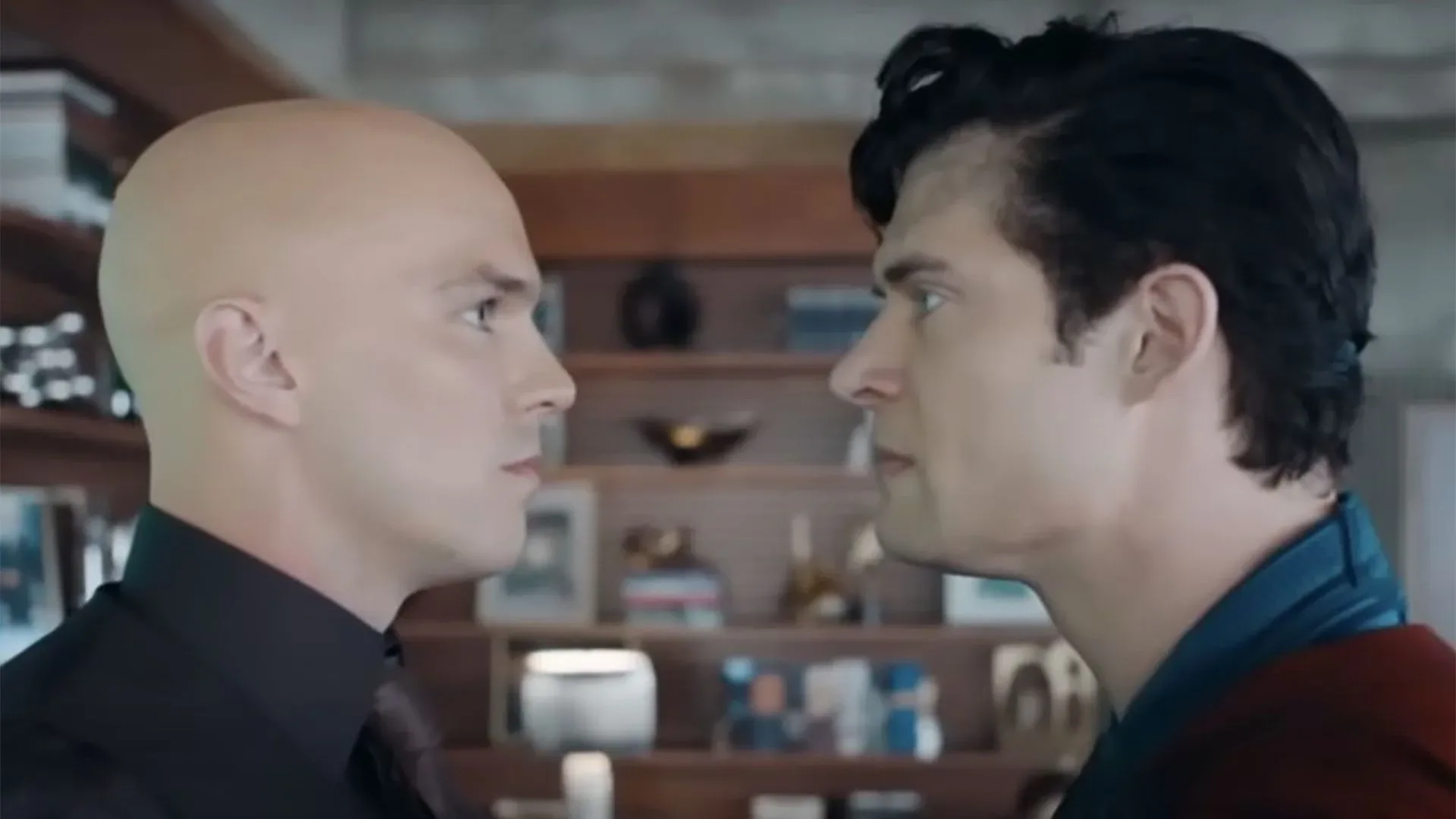
The final act of Superman provided a concrete reason for the question to arise. Guy Gardner recruits Metamorpho, played by Anthony Carrigan, into Lord’s funded hero group. The team also adopts the Justice Gang name.
That sequence matters because it ties Lord to active superhero infrastructure rather than leaving him as an offscreen businessman whose influence is only implied. Funding is power in a superhero setting: it can provide resources, visibility, technology, and a public-facing structure for people who may otherwise operate independently. It can also create obligations and disagreements. The supplied details establish the funding relationship, but they do not reveal Lord’s long-term purpose for the team.
Metamorpho’s recruitment further makes the Justice Gang feel like an evolving roster instead of a one-off collection of cameos. Still, it would be a leap to assume that its eventual path must match the Justice League’s comic-book journey. Gunn’s central point is that the DCU is not locked to that route.
What this could mean for Blue Beetle—without calling it a prediction
One especially charged thread in Lord’s comic history is Ted Kord’s death. Ted is Blue Beetle in the comics, while Xolo Maridueña is returning as Blue Beetle in the DCU. That connection naturally invites speculation about whether Lord and Blue Beetle could someday intersect on screen.
But the details currently available do not confirm a DCU version of the Ted Kord storyline, a conflict with Maridueña’s character, or any recreation of Infinite Crisis. Indeed, Gunn’s remarks are a reminder that a familiar comic-book tragedy should not be treated as inevitable simply because the relevant names exist in the same broad franchise.
The useful takeaway is more modest: Lord’s past makes any future Blue Beetle association narratively interesting, while Gunn’s creative preference makes a straight retelling uncertain. That uncertainty is arguably more valuable than an early answer. A character with a public role in supporting heroes can become dramatically compelling precisely because audiences cannot reduce him to a label before the story earns it.
A shared universe needs room for different kinds of tension
Superhero stories often use secret villainy as a shortcut. A wealthy sponsor turns out to be corrupt, a friendly official was manipulating the team, and the apparent ally was a threat all along. Those plots can work, but they are less effective when the audience feels it has been handed the answer in advance.
A Maxwell Lord who is compromised yet not cruel by default opens other possibilities. He can clash with heroes over methods, image, funding, authority, or personal ego. He can make choices that create damage without every action being part of a grand evil plan. He can be useful and exasperating at once. Those are analytical possibilities suggested by Gunn’s description of the character’s preferred comic basis, not confirmed details of forthcoming films.
There is a broader storytelling value in that ambiguity, too. The Justice Gang’s heroes can have agency in their association with Lord. Their choices do not have to be framed merely as an obvious failure to notice that their patron is secretly a monster. The conflict, if one develops, can be about trust and judgment rather than just a delayed reveal.
Questions about how creators plan large fictional worlds extend well beyond capes; another recent discussion of a mapped-out second season highlights why audiences closely parse even limited comments about future story direction. Gunn’s statement is not a roadmap, but it is a useful signal about the kind of ambiguity he values here.
What is confirmed and what remains unknown
Confirmed: Sean Gunn’s Maxwell Lord is connected to the Justice Gang’s funding; Nathan Fillion’s Guy Gardner and Anthony Carrigan’s Metamorpho are part of that team’s on-screen setup; and James Gunn has identified the early Justice League International-era Lord as his preferred interpretation.
Unknown: whether Lord becomes an antagonist, whether the Justice Gang changes again, how closely any future Justice League arc follows comic events, and what role Blue Beetle may have alongside these characters. Those gaps matter. They are the difference between a filmmaker naming an influence and a filmmaker announcing a plot.
For now, viewers have a better reason to look at Maxwell Lord as more than a familiar warning sign from comic continuity. He may be a benefactor with sharp edges, an ally capable of poor judgment, or something that changes over time. The DCU has not shown its full hand—and, by Gunn’s own framing, it is not obligated to play the hand readers remember.
Man of Tomorrow, directed by James Gunn, is scheduled for theaters on July 9.