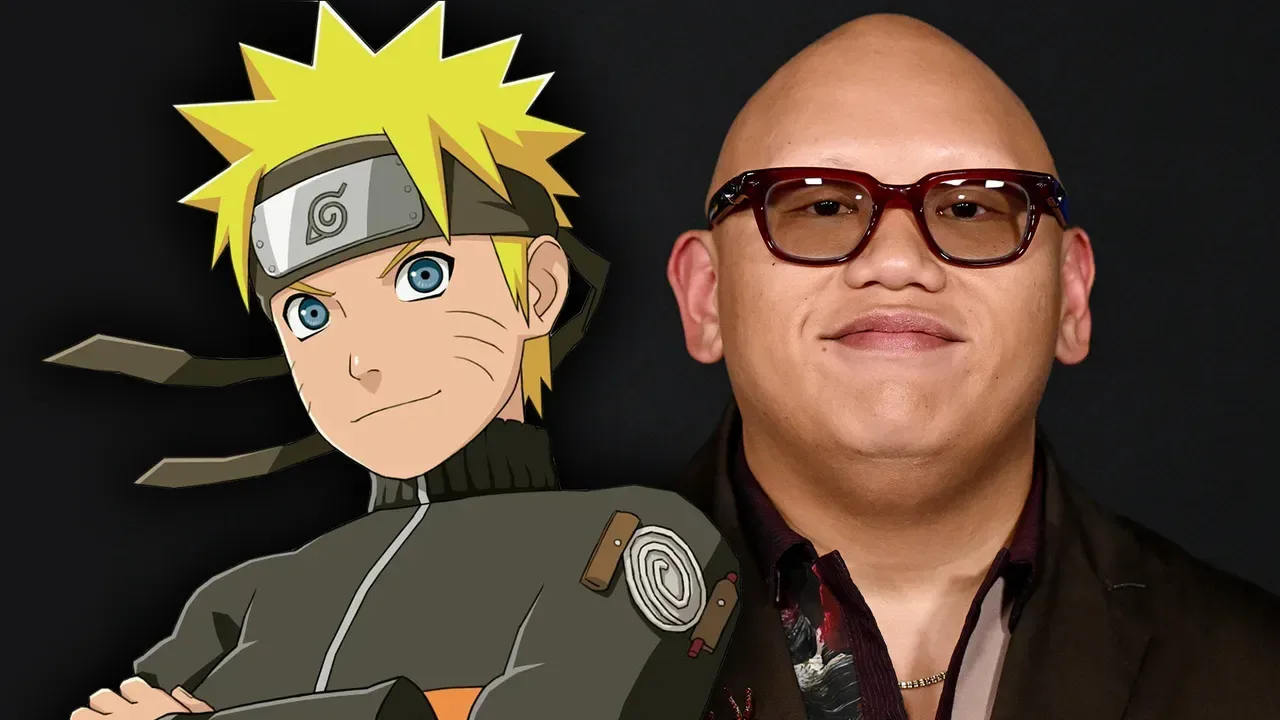
One of the biggest questions around a live-action Naruto movie is not whether its world can be put on screen, but where a film should begin. Jacob Batalon has offered a potentially useful clue—while also making clear it is only his personal read, not a confirmation of the finished story.
Batalon said he thinks director Destin Daniel Cretton is especially interested in Team 7 and its formative journey. In the original series, Team 7 begins with Naruto, Sasuke and Sakura under the leadership of Kakashi. That core setup provides an immediate human entry point into a much larger fictional setting.
“I think he likes the aspect of Team 7 and their coming-up story,” Batalon said during an anime-focused podcast appearance on September 19. He framed an origin-style story as a practical way to introduce an established property to viewers who may not already know its characters and rules.
The important qualifier is that Batalon did not present this as a plot reveal. He openly said he does not know what Cretton is making now and joked that the filmmaker could have changed direction entirely—even to the extent of centering Orochimaru. Fans should therefore treat Team 7 as a plausible creative focus, not a confirmed synopsis, villain lineup, adaptation arc or casting roadmap.
Why Team 7 is a logical opening point
For a feature film, an origin story does not simply mean showing the earliest event in a chronology. It means establishing the audience’s relationship with the central characters: what they want, what stands in their way, and why their partnership matters. Team 7 offers a clean version of that framework.
Naruto, Sasuke and Sakura start as a group rather than as a fully settled team. Kakashi’s role as their leader gives the story a natural mentor-student structure. A movie built around their early dynamic could introduce the emotional and interpersonal foundations before asking newcomers to absorb the broader scale of the franchise.
That is the value in Batalon’s observation. A live-action adaptation has to work for longtime followers as well as people encountering the material for the first time. Focusing on a small central unit can help a screenplay establish personalities and relationships before expanding outward.
It also gives the film a concrete dramatic engine. Rather than treating the property as a checklist of familiar names, techniques and locations, an early Team 7 story could put the characters’ development first. Naruto, Sasuke, Sakura and Kakashi would then be more than recognizable figures; they would be the audience’s route into the story.
Related coverage includes Jacob Batalon Thinks Team 7's Origin Could Shape Destin Daniel Cretton's Naruto Movie.
What “IP” adaptation means here
Batalon referred to the challenge of moving a specific IP into a film intended for a broad audience. IP, short for intellectual property, is commonly used in entertainment to describe an existing fictional creation that can be adapted across media. In this case, the film is being developed from Masashi Kishimoto’s Naruto manga and its associated animated series.
An adaptation does not automatically need to reproduce every story event or piece of worldbuilding. The more immediate question is which element best communicates the property’s identity within a single film. Batalon’s comments suggest he sees the central team’s beginnings as that accessible starting point for Cretton—but again, that is his perspective rather than an official statement of the movie’s content.
What is known about the project
Cretton is attached to direct the live-action Naruto movie. Kishimoto has expressed strong excitement that his work is becoming a major Hollywood film and specifically celebrated Cretton’s involvement.
There are also signs that casting work is moving forward, although the available information remains limited. Charles Melton was reported in August to be in final negotiations for Kakashi. A reported open casting call for Naruto sought male actors aged 16 to 20 who are athletic, energetic, expressive and fluent in English.
Neither item establishes a completed cast, a production schedule, a release date, or the final characters who will appear. “Final negotiations” is not the same thing as a publicly confirmed casting announcement, while an open call describes the type of performer being sought rather than revealing who has been selected.
Those distinctions matter with high-profile adaptations. Casting reports and broad searches can signal momentum, but they are not substitutes for confirmed details from the production. In particular, neither Batalon’s comments nor the reported casting activity confirms that Team 7 will be the movie’s exclusive focus.
The practical stakes of an origin-focused approach
If Cretton does prioritize the group’s beginnings, the choice would have a few clear implications. The film could devote its limited runtime to the chemistry between four defining characters instead of attempting to introduce too many allies, rivals and threats at once. It could also make Kakashi’s potential casting especially significant, since the character is the leader connecting the three younger members.
For Naruto, a casting search aimed at younger performers fits the broad idea of an early-stage story, but it does not prove a specific plot. The reported age range, athletic criteria and emphasis on expressiveness point to a role expected to carry physical and emotional demands. That remains different from knowing what scenes, conflicts or abilities the screenplay will use.
For audiences unfamiliar with the series, the benefit of a Team 7 framing is clarity. The movie could define its stakes through a handful of relationships rather than relying on existing fandom knowledge. For established fans, the challenge would be whether the film captures the specific tensions that make the group compelling, not merely whether it presents familiar names and costumes.
That balancing act is central to any adaptation of a beloved manga and anime. Recognition can bring people to a film, but drama is what gives a movie a reason to stand on its own. Batalon’s point about an understandable starting place speaks directly to that divide: an origin story can preserve a recognizable foundation while offering a first chapter that does not require homework.
What fans should not assume yet
- Team 7 has not been officially confirmed as the movie’s story focus.
- Orochimaru was mentioned jokingly, not as a reported lead character or plot point.
- Charles Melton’s reported negotiations do not equal finalized public confirmation that he will play Kakashi.
- The Naruto casting call does not identify the actor who will receive the part.
- No release date, full cast, plot description or production timeline is established by these comments.
For now, the strongest takeaway is modest but meaningful: someone familiar with Cretton’s interest in Naruto believes the director appreciates Team 7’s rise. That makes the group’s early story a sensible lens through which to view the project’s development, not a spoiler for what the film will ultimately be.
It is also a reminder that a successful live-action version may depend less on trying to represent every corner of the franchise immediately and more on giving its key relationships enough room to matter. Cretton’s eventual choices—particularly the final cast and the scope of the story—will determine whether that possibility becomes the movie’s actual direction.
For more film adaptation coverage, see our report on Robert Pattinson’s uncertainty about bringing his Batman into a wider Superman universe.