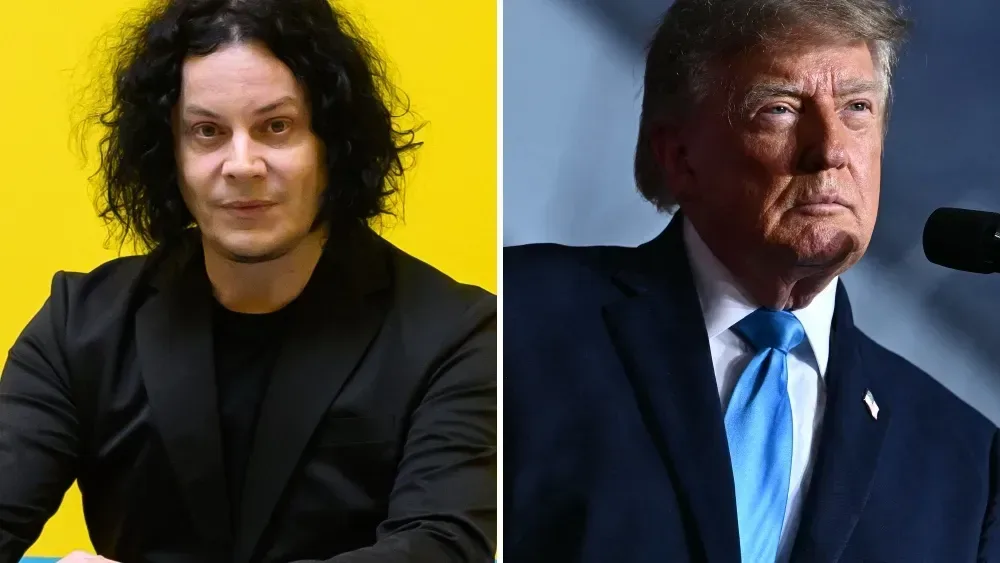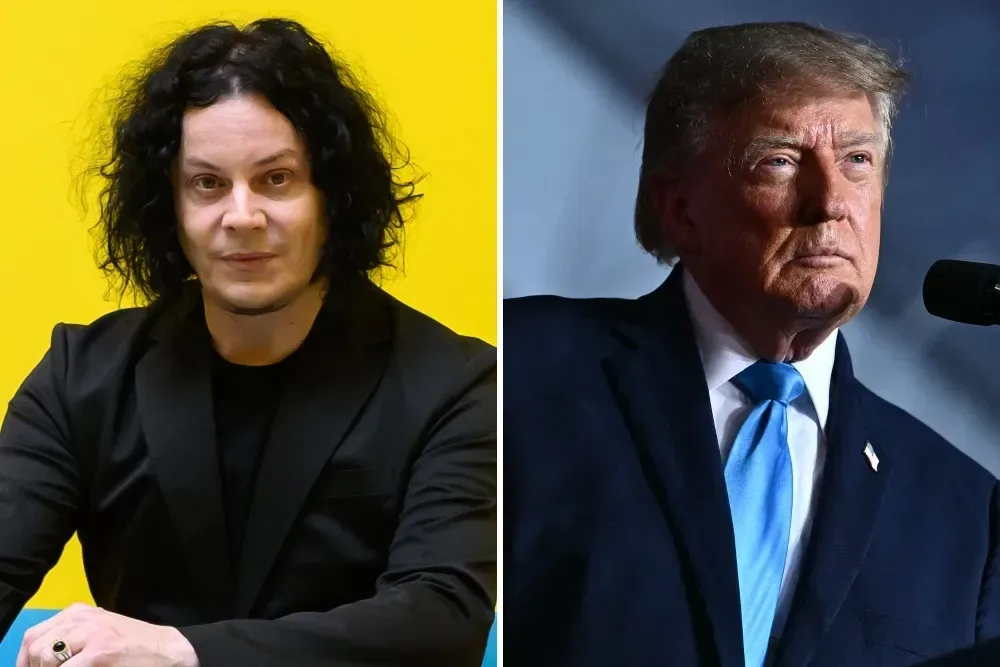
Jack White has publicly condemned Donald Trump after remarks attributed to the president at a Nebraska rally about Los Angeles and San Diego. White shared a video of the appearance on Instagram and directed his response toward Republicans and conservatives living in the two Southern California cities.
The dispute centers on language used while Trump was discussing an international conflict and the economic effects of war. He said that higher prices were a “small price to pay” for security, then stated that a city could be taken out before naming Los Angeles and San Diego. The supplied account does not establish what precise military, diplomatic, or hypothetical scenario Trump intended with the comments. What is clear is that White and California Gov. Gavin Newsom interpreted the words as alarming references to potential harm against major American cities.
White’s response focused on the stakes for the two cities
White’s Instagram post was direct and confrontational. He asked supporters of Trump in Los Angeles and San Diego how they felt about remarks he characterized as recommending attacks on the places where they live. He also criticized the audience response heard in the video he reposted, arguing that people were applauding and cheering the statement.
The musician’s post goes beyond criticism of a single rally line. White framed it as part of a broader objection to Trump’s political leadership, using highly charged language about Trump and his supporters. He also speculated about future actions around the midterm elections. Those claims and predictions are White’s political opinion, not facts established by the information provided.
For more context, explore AMC+ Premium Annual Plan Is $39.99 Until Oct. 12, With Shudder and BBC America Included.
“They can take out a city,” Trump said at the rally. “Let them take out Los Angeles. Let them take out San Diego.”
That wording is why the reaction has centered less on the usual celebrity-versus-politician exchange and more on the practical emotional weight carried by the names of two densely populated American cities. Even where a political speaker is invoking a hypothetical, an analogy, or a statement of geopolitical risk, plainly naming locations makes the rhetoric far more immediate for residents.
What was said at the Nebraska rally
Trump’s comments came during remarks about the international conflict and price increases connected to the war. In the account provided, he argued that the increased costs were worth bearing for the sake of global and national security. He then pivoted to the possibility of a city being taken out and named Los Angeles and San Diego.
Related coverage includes Jack White Criticizes Trump Over Los Angeles and San Diego Remarks.
The available material does not provide a full transcript of the rally, details of the conflict being discussed, or an official clarification from Trump. That missing context matters. A clipped line can be interpreted differently depending on the preceding argument, the intended subject, and any remarks that followed. At the same time, White’s post specifically encouraged people to watch the video he shared, meaning his criticism rests on the recorded moment as he presented it to followers.
In political communication, rhetoric means the deliberate use of language to persuade, provoke, reassure, or energize an audience. It is not automatically a policy statement or an operational threat. But rhetoric can still matter substantially, particularly when it concerns war, cities, civilians, and national security. Critics can reasonably respond to the likely effect of a statement even when they do not claim it amounts to a literal order or a formally announced policy.
Newsom also denounces the comments
Newsom, whose state includes both Los Angeles and San Diego, posted several responses on X. In one, he called Trump “deranged and dangerous.” In another, he said an American president was talking about Los Angeles and San Diego being “taken out,” asked where Congress was, and urged people to stand up.
Newsom and White arrived at the same broad conclusion from different public roles. White spoke as a musician and longtime Trump critic with a large social-media platform. Newsom spoke as California’s governor, with a direct political connection to the two cities named. Their reactions amplify the story beyond a celebrity post: it became a clash over how presidential speech about conflict should be understood and challenged.
Neither reaction, however, supplies an official explanation of Trump’s intent. The distinction is important. A public figure’s condemnation tells readers how that person interprets a statement; it does not, by itself, settle what the speaker meant. The core documented point is narrower: Trump named Los Angeles and San Diego while talking about war-related prices and security, and both White and Newsom publicly objected in unusually forceful terms.
A familiar political role for White
White’s intervention is consistent with his prior public opposition to Trump. In August 2025, the White Stripes vocalist described Trump on social media as a danger to America and the wider world. In February, White also mocked Trump’s appearance and record on international conflict in a post that referenced a “Board of Peace.”
That history provides useful context for the tone of the new post. White did not present his response as a reluctant break from political silence, nor as a measured request for clarification. He wrote from an already established position of opposition, using sarcasm and condemnation to make the point. Readers should therefore see the post as both a reaction to the rally language and another entry in an ongoing political conflict between the musician and the president.
Celebrity political speech is often dismissed as peripheral, but its practical function is straightforward: it can direct attention toward a clip, statement, or issue that audiences may not otherwise encounter. White’s post asked followers to view the video rather than relying solely on his characterization. That is a more useful starting point for readers than reducing the event to dueling headlines. Watching the available footage, seeking fuller remarks where possible, and separating direct quotations from reactions are basic steps for judging a dispute built around a short but volatile passage of speech.
Why the wording has drawn such a sharp response
Los Angeles and San Diego are not abstract examples in this exchange. Naming a real place changes the perceived stakes of a geopolitical argument because it invokes residents, families, infrastructure, local government, and everyday life. The two cities also carry particular symbolic force as prominent California population centers. That helps explain why White addressed people living there directly and why Newsom treated the line as a matter requiring an immediate political response.
The conflict also illustrates a recurring problem in the social-media era: a public figure’s quote can spread rapidly alongside increasingly strong interpretations of it. White used his post to argue that Trump was endorsing an attack on the cities. Newsom described the language as dangerous. Supporters might interpret the comments differently or argue that Trump was making a hypothetical point about the costs of conflict. The supplied material does not include a response from Trump or his representatives addressing the backlash, so there is no stated clarification to weigh against those readings here.
For now, the available record is a rally statement, a video reposted by White, and public denunciations from White and Newsom. It is a reminder that language about war can become politically consequential before any formal policy is announced—especially when that language invokes identifiable places at home.