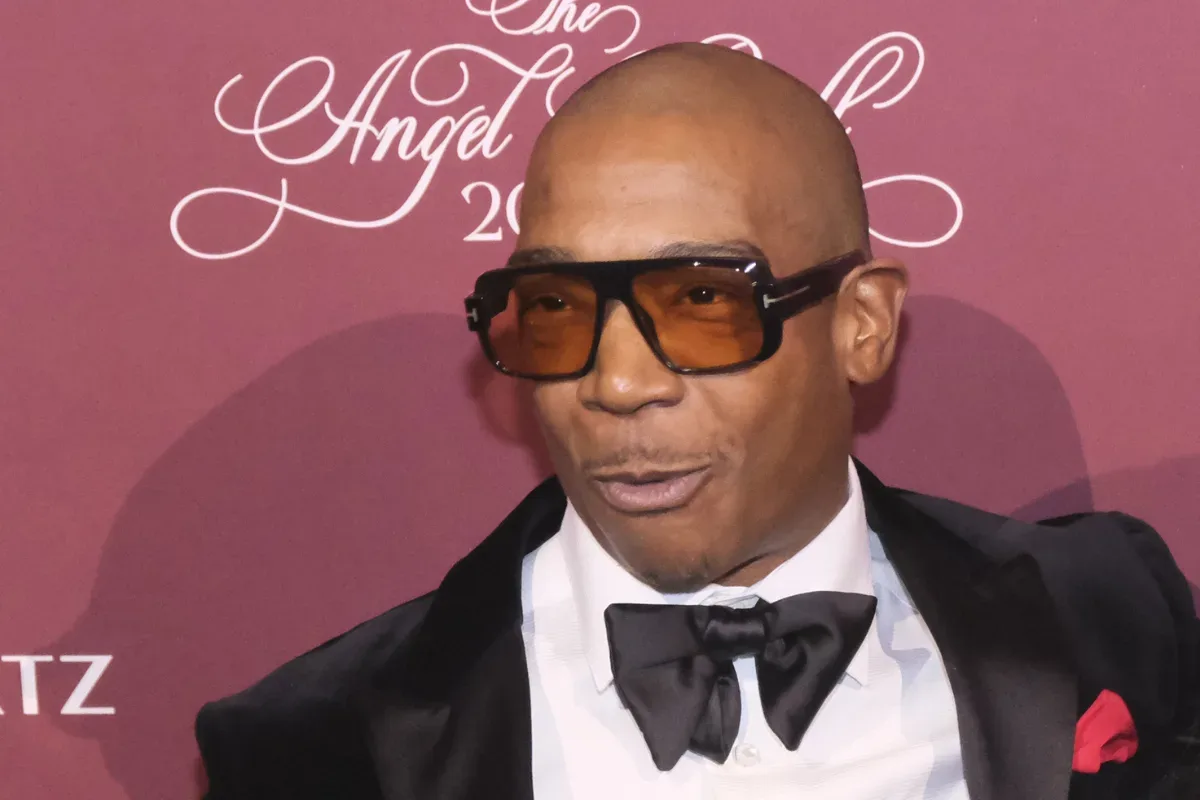
Ja Rule’s Amber & Opal whiskey brand is choosing a smaller, more hands-on route before attempting a major retail jump. The company has held back a possible expansion into 238 stores, even though Ja Rule said it could make that move now. Instead, the four co-founders are concentrating on seven markets where they can personally visit accounts, host tastings and help stores keep the product moving.
The decision is less about whether the brand can place bottles on shelves and more about whether a four-person founding team can support those shelves afterward. Ja Rule, Herb Rice, Sandy Sandiford and Kelvin Barton are seeking between $5 million and $7 million to expand the business, with staffing identified as the key next step for reaching more markets over roughly the coming year.
That distinction matters. A broad footprint can sound like the obvious win for a celebrity-backed product, but retail placement is only the start of a relationship with a store, its staff and the people deciding whether to try an unfamiliar bottle. Amber & Opal’s founders appear to be treating those relationships as work that cannot simply be scaled by putting more cases into more locations.
Why the team is keeping the rollout smaller
Rice’s concern is practical: nationwide distribution could stretch the founders too thin. Tastings and visits to bars require time, and a bottle that does not sell can be removed from a store’s lineup. In other words, the downside is not merely slow growth. It is the possibility that a brand loses the shelf space it worked to secure because it was unable to give each market enough attention.
Ja Rule described the workload as having “17 hats” divided among four people. The phrase captures a familiar early-stage business problem without requiring an assumption that any one job has been neglected. Founders can be responsible for product decisions, retailer outreach, events, marketing and operational planning at once. The more markets a product enters, the more those responsibilities multiply.
For Amber & Opal, in-person promotion is particularly central to the strategy. A tasting lets a prospective customer encounter the actual flavor profile rather than making a decision solely from a bottle, a celebrity name or a shelf tag. A bar visit can similarly introduce staff and guests to the drink. Those activities are labor-intensive, but they can help a young brand explain what it is and who it is for.
The approach also clarifies why a funding target is connected to growth rather than presented as a shortcut around the founders’ involvement. The planned capital would support additional hires. That could make it possible to extend the same market-by-market effort beyond the seven areas the team currently believes it can properly visit.
From barrel investment to a distinct bottled brand
The company’s path did not begin as a plan to launch Amber & Opal. In 2021, Ja Rule and Rice were investors in barrels that they hoped to sell after the liquid had aged. When other people in that investment group began producing bottles of their own, the pair recognized an opportunity to create a brand. Ja Rule then joined Rice, Sandiford and Barton in launching Amber & Opal.
An important detail is that the whiskey involved in the original barrel investment is not the rye used in Amber & Opal’s blend. The founders were advised by distillers not to use the older bourbon in the honey-focused recipe. They instead acquired Maryland rye for the finished brand.
That separation helps explain the product as a deliberate formulation rather than simply an old barrel investment rebottled under a new label. Bourbon and rye are separate whiskey categories, and the available account specifically identifies the older whiskey as bourbon and the Amber & Opal base as Maryland rye. The distinction is material to the brand’s development because the team selected the rye for the blend after receiving advice on how the honey recipe should be built.
It also illustrates a broader business lesson from the project: access to whiskey does not automatically determine a brand’s final product. The founders began with one investment concept, then changed course when a bottled-brand opportunity emerged and when the desired recipe called for a different base spirit.
A flavor profile designed with newcomers in mind
Ja Rule has said that his own lack of whiskey expertise influenced the direction of Amber & Opal. He wanted something he could enjoy as someone new to the category, while more experienced partners pushed for details including a smoky finish. The eventual blend came from testing honey, spices and tea in search of that balance.
The stated ingredients are orange blossom honey, fig, ginger, cinnamon and lapsang souchong black tea. Lapsang souchong is a black tea associated with a smoky character, making it a useful point of reference for the team’s stated aim of bringing a smokier note into a recipe intended to remain approachable.
A blend, in this context, is a product built by combining elements to achieve a targeted result. Here, the reported process was not framed as the team discovering a single predetermined taste in a barrel. It involved evaluating sweet, spiced and tea-based components alongside the rye. Orange blossom honey and fig point toward sweeter notes, while ginger and cinnamon introduce spice; the tea supplies another layer and, in the case of lapsang souchong, the smoky quality the partners wanted to retain.
That formulation gives the brand an accessible story for consumers who may not already speak the language of whiskey collecting or long-established spirits traditions. Its pitch is not that every buyer must arrive as an expert. Rather, it was created partly through the perspective of a founder who was learning the category himself. That can be a meaningful positioning choice when a brand is trying to invite fans of an artist into a new product space.
Celebrity access is useful, but it still needs retail follow-through
Ja Rule has already used his public profile in direct support of the product. In early 2025, he appeared at a Miami Beach store to sign bottles, take photographs and give people a chance to taste the whiskey. He has described such visits as an opportunity to connect with fans beyond music.
For the business, that kind of event does two jobs at the same time. It can create an immediate reason for people to visit a retailer, and it gives the product a face-to-face introduction. The latter is especially important for a flavored whiskey blend whose character includes several ingredients that may be easier to understand after a tasting than through a short label description.
But the founders’ decision not to pursue all 238 stores immediately recognizes the limits of that advantage. A single artist cannot personally maintain every market, and celebrity visibility alone does not ensure a bottle will continue selling after an event has passed. The team’s emphasis on hiring suggests it views personnel—not just placement—as the resource required to turn initial interest into durable market support.
The logic resembles the challenge facing other celebrity partnerships: attention can launch a conversation, but the underlying business needs people and processes to carry it forward. In a different consumer category, Megan Thee Stallion’s Gymshark ambassador role likewise shows how a public figure can become part of a brand’s customer-facing strategy. Amber & Opal’s case is distinct because its founders are describing an ongoing retail-support challenge tied to tastings, bar outreach and store-level sales.
What the pause says about the next phase
The held-back 238-store push should not be read as a retreat from expansion. The team has said it could take that leap now. Its choice is to delay the wider launch until it has the capacity to serve those accounts without leaving current and new markets under-supported.
There is a disciplined sequence to the plan as described: maintain focus in seven markets, use direct visits and tastings to build the brand there, pursue funding, then add staff capable of supporting more locations. The $5 million to $7 million target is therefore tied to a specific operational need rather than presented as an abstract valuation milestone.
There are still open questions that the available information does not answer. The founders have not specified which roles would be filled, when funding might be completed, or whether the eventual expansion would use the original 238-store plan unchanged. There is also no stated guarantee that the funding will be raised. What is clear is the priority: Amber & Opal wants its retail presence to be backed by enough human attention to keep bottles from becoming invisible once they reach shelves.
For fans, the most immediate implication is that the brand’s growth is being shaped around concentrated regional support instead of a rapid national push. For the founders, the challenge is to convert a product built around personal access—from tastings to bottle signings—into a business that can preserve that attention as it grows beyond four people wearing many jobs at once.