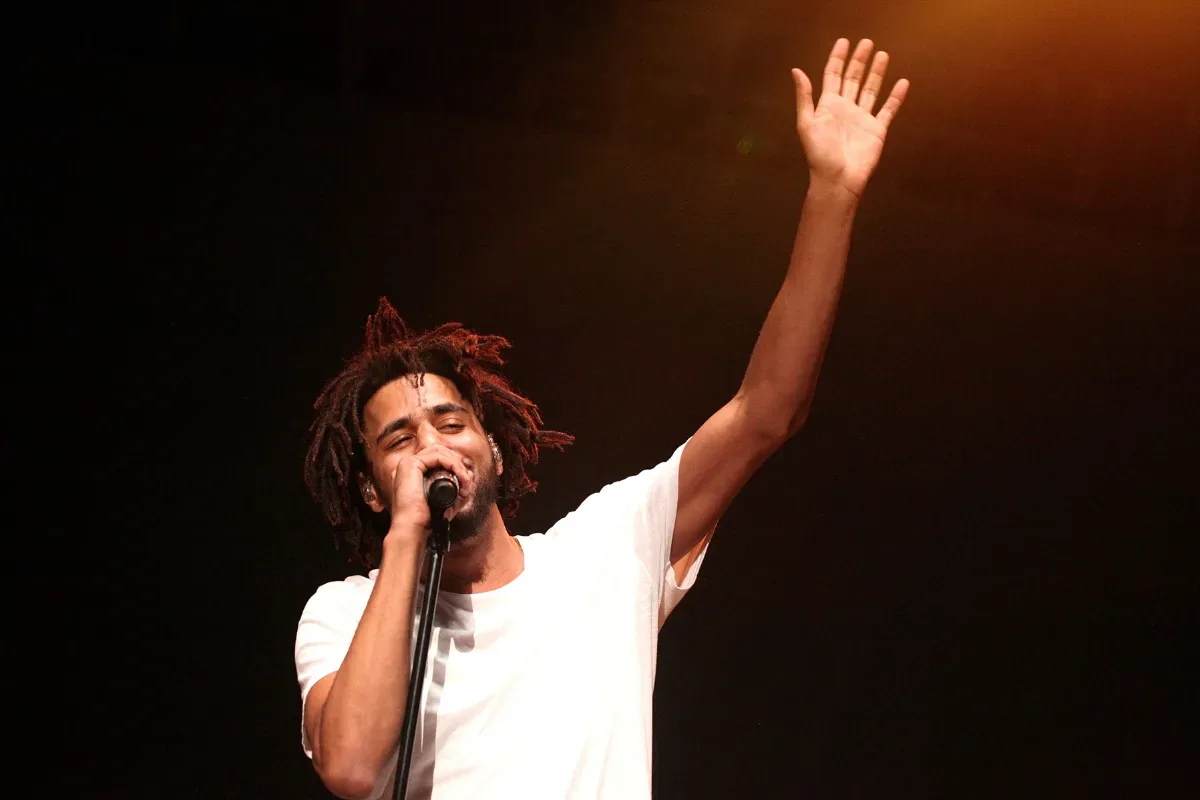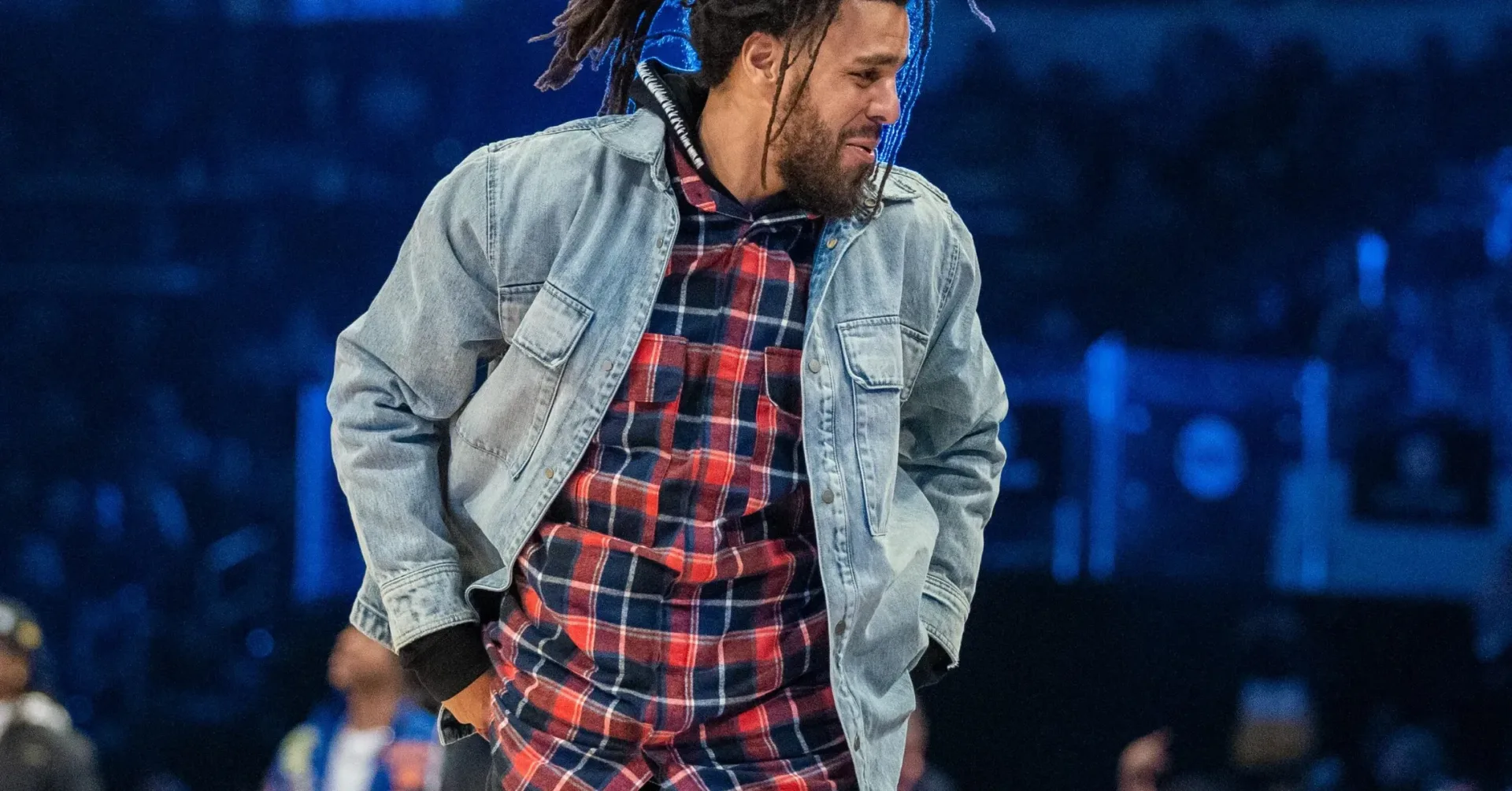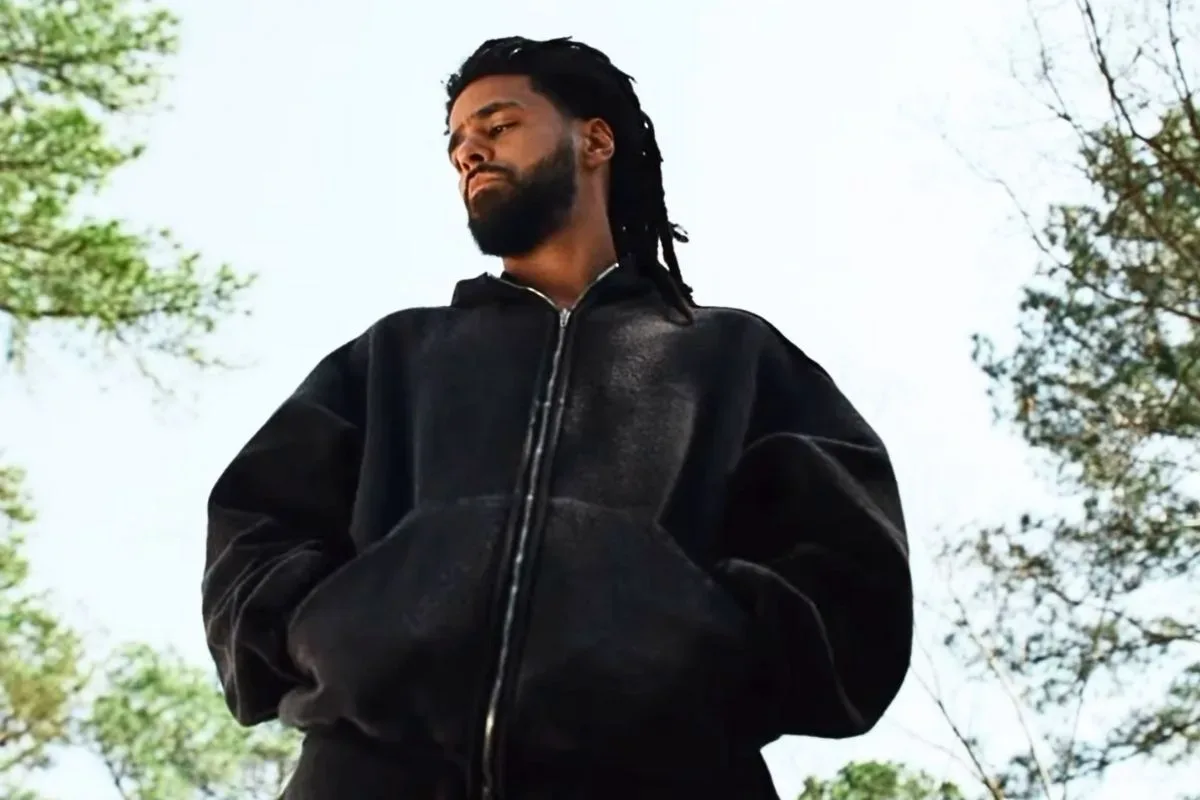
J. Cole is stepping away from the idea of calling time on his recording career. In a recent interview conducted in Las Vegas over Labor Day weekend, the rapper said The Fall-Off had at one point been intended as his final album. But the process of getting the project across the line altered that plan.
“No, I’m not using that word at all,” Cole said when asked whether retirement was the right label. His position is not a promise of an immediate new album, or a timetable for any next release. It is something more measured: he is declining to permanently close a creative door.
That distinction matters. Retirement language tends to turn an artist’s momentary exhaustion, satisfaction or curiosity about life beyond albums into a hard deadline fans are expected to remember forever. Cole’s remarks instead frame The Fall-Off as the completion of a long personal target rather than a lock on the studio door.
A long-running finish line that changed shape
The notion of The Fall-Off as a potential endpoint did not emerge overnight. In a 2021 cover interview, while the album remained in development, Cole explained that he wanted to test his abilities deeply enough as a writer and producer that he could be at peace if he never made another album. Completing that kind of work, he felt, could make room for other interests.
He traced those thoughts back to the period after 2014 Forest Hills Drive and its tour. Professional success had given him room to slow down, but it also prompted a harder question: had he done everything he was capable of as a songwriter and producer? He said he started work on The Fall-Off in early 2016, while making 4 Your Eyez Only.
That timeline makes the album’s arrival notably different from a quick sign-off. The project was imagined over years and developed alongside other work. More importantly, Cole’s earlier comments already contained some flexibility. Even while considering the possibility of a last album, he said he could not know whether he would feel compelled to record again years later.
In other words, the ambition was never simply to release an album named like an ending and then disappear. It was to reach a point of artistic satisfaction—one where stepping away would not feel like unfinished business—while accepting that inspiration does not operate on a permanent schedule.
Finishing the album renewed his motivation
Cole said he felt drained during the making of The Fall-Off. Creative fatigue is not the same as a lack of ability or interest, but it can make an endpoint feel attractive. Albums, particularly ones developed across a long span, require decisions about writing, recording, sequencing and how much more can usefully be changed. A musician can be tired of one lengthy process without being finished with music itself.
Related coverage includes J. Cole Steps Back From Retirement Talk as The Fall-Off Era Expands.
By the time the album was completed, Cole said circumstances had produced a different feeling. Rather than declare that he was done, he said he would not say he was going to retire. He does not know when a next project might happen, but he also is not ruling one out.
“I’ll never say I’m going to retire. I don’t know whenever the next thing is going to happen, but, I’m definitely not going to say no,” Cole said.
That is a narrower and more informative statement than a typical “comeback” narrative. There is no announced follow-up album, no release window and no claim that a new project is already underway. The news is that Cole has rejected the finality of retirement language after previously treating The Fall-Off as a possible final chapter.
His longtime mentor Mark Pitts had doubted that Cole was truly finished, and Cole’s new answer puts him closer to that view. The result is less a reversal than a clarification. A creative goal that once helped him pursue a standard of excellence has apparently stopped functioning as an exit plan.
What a “final album” can mean—and what it does not mean
The phrase final album can be misleading because it sounds contractual: one record, then no more. Cole’s own history with The Fall-Off suggests a more personal meaning. The album represented a benchmark he wanted to meet, a body of work that could let him leave without regret if he chose to do so.
That is different from saying every future creative impulse must be ignored. His account places the emphasis on readiness rather than prohibition. If no further album came, he wanted to feel he had pushed himself far enough. If the desire to make music returned, he did not want an old public declaration to become a reason not to follow it.
It also casts his practice habits in a clearer light. Cole has described daily writing as a discipline that helped him make The Warm Up. For artists who write and produce, routine is not solely a means to an immediate release; it is a way of maintaining the skills that make a future project possible. The supplied comments do not establish what he is writing now or whether he has begun a new album. They do establish why an all-or-nothing idea of retirement may not fit someone whose creative life has been built partly on continuing practice.
Fans should therefore separate three things that often get blended together: the completion of a major project, a break from album-making and a permanent retirement. Cole has completed the first. He has left the second open as a possibility. And he has expressly backed away from the third.
The Fall-Off moves from studio milestone to global tour
The Fall-Off arrived on February 6 as Cole’s seventh studio album. Its release was followed by plans for a broad concert run, giving a project with roots in 2016 a far larger public stage. The initially announced itinerary included more than 50 cities across over 15 countries, beginning July 11 in Charlotte, North Carolina, at Spectrum Center.
The routing was set to travel through Europe, Australia and New Zealand, with a December 12 finale at FNB Stadium in Johannesburg. It was billed as Cole’s first solo headlining trek since 2021’s The Off-Season Tour and his first full global run since the 4 Your Eyez Only World Tour in 2017.
Those details underline why the word “retirement” may have been especially unhelpful in this moment. Touring is not proof of future albums, but the scale of the planned run makes clear that The Fall-Off is not being treated as a quiet farewell. The record is serving as the centerpiece of an international live chapter, one that reconnects Cole with audiences across several regions.
There is a practical human element to the way he describes that chapter, too. Cole said he wants more time with family while touring. He also hopes to do more production. Neither point comes with specifics about collaborators, projects or a release plan, so it would be premature to treat them as announcements. Still, they show that his vision of continuing in music may not be limited to releasing another solo record on a predefined cadence.
Production, in this context, means the musical and technical work involved in shaping a song or record: helping build its sound, arrangement and overall direction. Cole has long discussed himself as both a writer and producer, and the desire to do more production leaves open a role that can be active and creative even when an artist is not prioritizing a new album of their own.
What listeners can reasonably take from the update
The clearest takeaway is simple: J. Cole is not retiring. The important qualifier is equally simple: he has not set a date for what comes next.
That uncertainty is not a gap in the story; it is the point of his answer. Cole’s old goal was to finish a record that would allow him to walk away contentedly. His current position is that achieving that goal gave him renewed energy rather than a fixed endpoint. The artist who wanted the option to stop without regret now wants to preserve the option to create again without contradiction.
For listeners following the wider hip-hop landscape, it is also a reminder that a major album cycle can have several lanes. A release can lead to touring, family priorities, production work and, eventually, more writing—without every stage needing to be declared a farewell or a new era on day one. Recent music news has likewise shown how much artists’ public plans can evolve, from tour adjustments to unexpected guest moments, as seen when Mary J. Blige paused a Las Vegas residency before welcoming Wyclef Jean.
For Cole, The Fall-Off remains a significant marker: a seventh studio album, a project many years in the making and the engine for an extensive global run. But it no longer carries the burden of being a final statement. He has completed the work he once imagined could be his last, and has chosen not to make that possibility a promise.