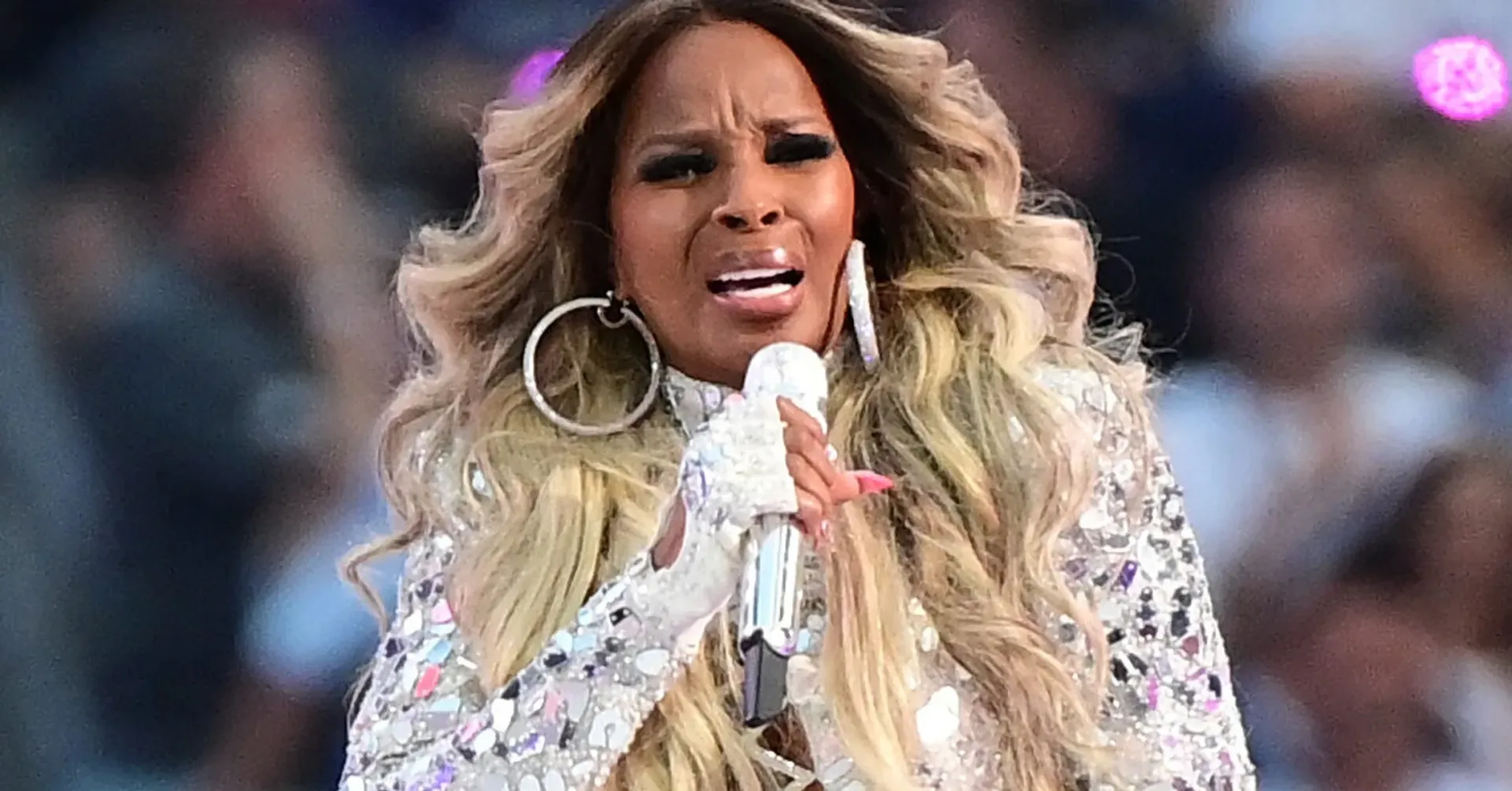
Mary J. Blige’s Las Vegas residency reportedly took an unexpected detour on October 28 when the singer stopped between songs to address an audience member who had been booing. The moment occurred during My Life, My Story at Dolby Live inside Park MGM, where Blige was said to be roughly halfway through a two-hour set.
Rather than attempting to talk over the interruption, Blige directly questioned why the person had attended the concert and called for them to be politely removed. Footage of the exchange has circulated, but a key detail remains unresolved: it is not clear what prompted the booing, or whether venue staff ultimately escorted the attendee out.
After voicing her frustration, Blige turned back to the rest of the room and apologized for losing her temper, saying, “Sometimes I have to go in.” The show continued, and its next major surprise was a musical one. About 20 minutes later, Wyclef Jean joined Blige onstage to perform their 2000 collaboration, “911.”
A brief interruption in a show built around connection
The reported exchange is notable not because live performers never encounter noise from a crowd, but because a residency is built on a different audience relationship than a one-night tour stop. A residency means an artist performs a continuing series of dates in one venue, rather than moving from city to city every night. That structure can give each performance a repeatable framework while leaving room for individual moments to make a particular evening distinct.
For Blige, My Life, My Story is her first Las Vegas residency. It launched in May and is framed as a celebration of more than three decades of music, with “Real Love” and “Be Without You” among the songs associated with the production. The premise matters here: this is a retrospective show designed around songs that have carried long relationships with listeners. A disruption in that environment is not simply a stray sound between numbers; it can cut across the communal atmosphere the performance is trying to create.
Blige’s response also had two parts. First came the confrontation with the person who was booing. Then came an acknowledgement to the larger audience that she had let her anger show. Those are separate actions. The first set a boundary around conduct during the performance; the second recognized that everyone else in the room had been pulled into the interruption as well.
Without a confirmed explanation from the attendee or the venue, it would be speculation to assign a motive to the booing. The available account supports only the basic sequence: Blige heard it while standing at a microphone between songs, addressed the person, requested their removal, apologized after the exchange, and resumed the set.
Why Wyclef Jean’s appearance changed the temperature of the night
Jean’s appearance gave the performance a clear pivot back toward the music. “911” is a 2000 collaboration between Blige and Jean, so its inclusion was more than a generic celebrity cameo. It reunited the artists around a song already connected to both of their catalogs.
That matters in a residency setting, where familiar material provides the core promise and a guest appearance can make one date feel singular without changing the show’s identity. The reported timing—around 20 minutes after the confrontation—also meant the evening was not defined solely by an audience conflict. The surprise performance supplied a different lasting image: two artists sharing a collaboration from the turn of the millennium.
For concertgoers, this is the practical distinction between an interruption and the complete character of a show. An interruption can be disruptive and memorable, especially when it leads to a direct exchange from the stage. But the rest of a set still has the opportunity to re-establish its intended focus. In this case, the reported Jean cameo returned the attention to Blige’s musical history and the performance itself.
The residency’s expanded run
My Life, My Story received additional dates after its sold-out opening weekend, extending its schedule through 2026 and into 2027. Blige is scheduled to perform two more October dates, on October 30 and 31, before returning to Dolby Live in February. The residency is currently set to run through February 20, 2027.
Blige has described the residency as a chance to gather the longtime supporters who have followed her through changes across her career. That framing helps explain the show’s emphasis on signature songs and its multi-decade scope. It is not positioned merely as a limited run of concerts in Las Vegas; it is a career-spanning presentation whose central material is closely tied to the audience’s shared memory of her work.
A longer calendar also adds perspective to one difficult moment. There are many dates still ahead, and the October 28 incident does not establish what will happen at future shows. What it does show is Blige’s willingness, at least in that reported exchange, to respond when she believes a member of the crowd is being disrespectful.
What remains unknown—and what does not
There is a temptation with any widely shared concert clip to turn a short fragment into a complete narrative. The facts available here are narrower. There is no established reason for the booing. There is no confirmation that the person was removed. And there is no basis to claim that the interruption reflected the experience of the audience as a whole.
There is, however, a more concrete outline: Blige paused her performance, made clear that the behavior was unwelcome, later apologized to the audience for her reaction, continued the show, and subsequently performed “911” with Jean. Those details preserve the difference between what is reported and what remains unverified.
For fans considering the remaining dates, the larger draw remains the residency’s stated purpose: a live look across Blige’s catalog, including enduring favorites, in a venue where the production will continue well into 2027. The reported confrontation was an unusually candid moment, but it was followed by a reminder of the show’s central point—songs, history, and the artists who helped shape it.
For more music-world coverage, see Too $hort’s account of signing The Pack.