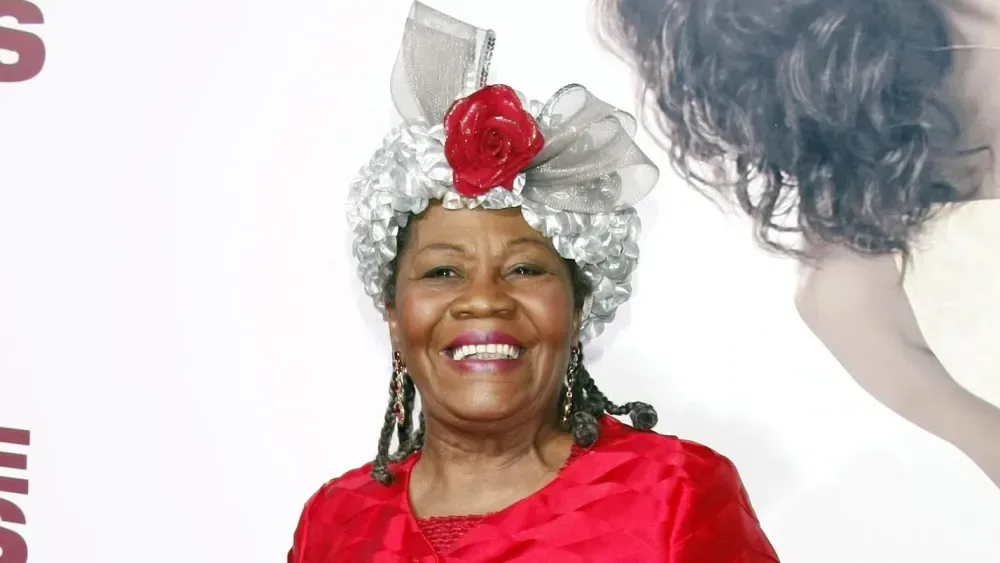
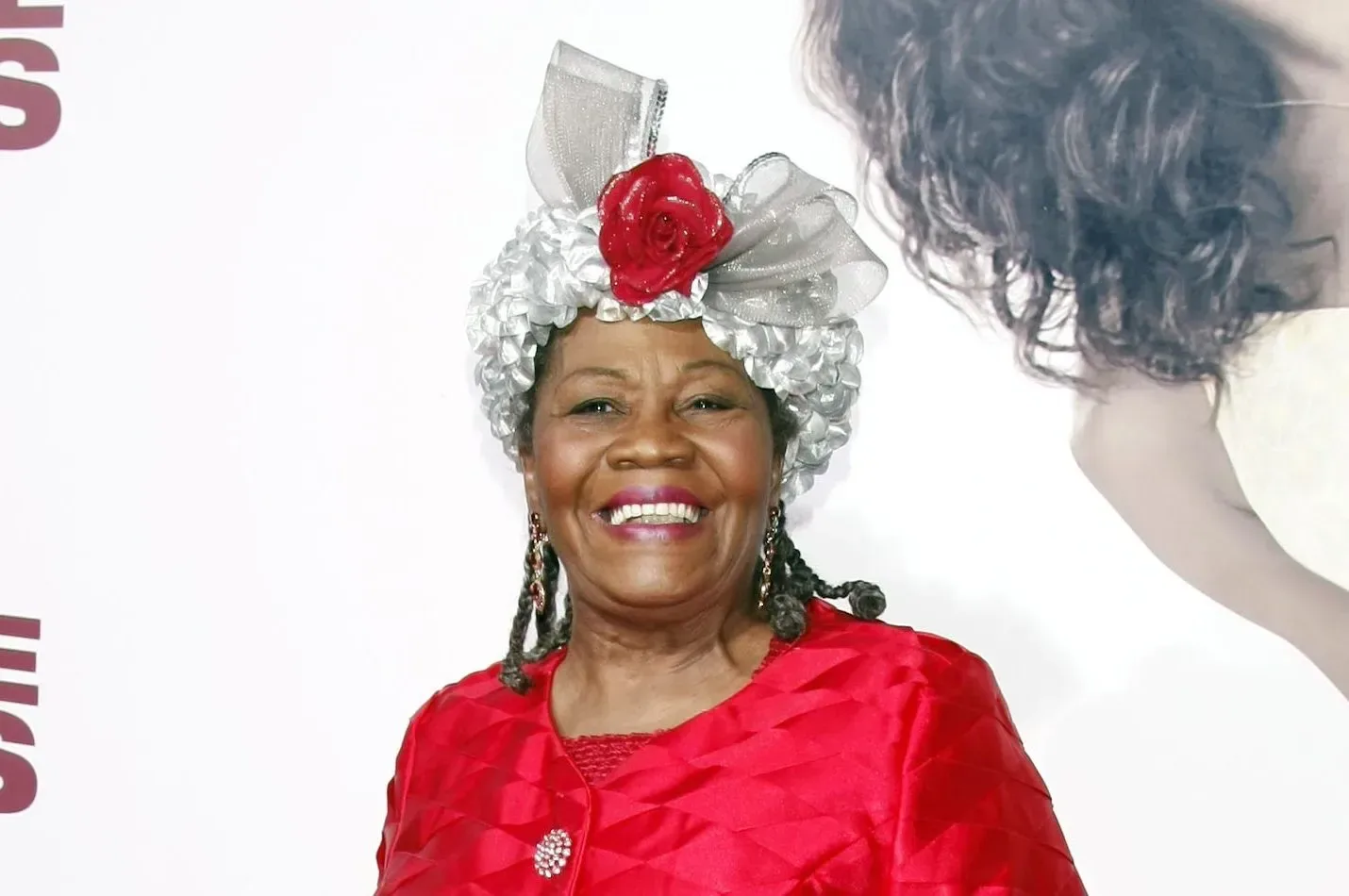
Irma P. Hall, the actor whose portrayal of Josephine “Big Mama” Joseph gave Soul Food one of its most enduring presences, has died at 91. Her family confirmed that Hall died Tuesday.
In a statement, Hall’s family remembered her as “a beloved actress, author, poet, educator and public speaker” and said her work, dedication and compassion would continue to inspire future generations.
That range is central to understanding Hall’s career. Although she became widely known through film and television, her path to acting was not a conventional early-Hollywood trajectory. Hall was born in Beaumont, Texas, was raised in Chicago, and graduated from Texas College in 1956. Before acting full time, she worked as a high-school teacher, teaching French, Spanish and other languages in Houston and Dallas. She did not begin acting full time until 1984.
Hall’s professional life therefore joined education, language, poetry and performance long before audiences knew her face from major films. It also places her among performers whose screen work arrived after substantial experience in other disciplines. Rather than treating acting as a separate chapter, the available record presents it as part of a larger vocation built around communication and public expression.
From poetry performance to film work
Hall’s first film role came in the independent feature Book of Numbers, directed by Raymond St. Jacques. The opportunity followed a poetry performance: St. Jacques saw Hall performing a poem, approached her and offered her the role of Georgia Brown on the spot. Hall found an immediate affinity for acting, beginning a screen career that would stretch across independent pictures, studio releases and television guest appearances.
Her early film credits included Ron Howard’s 1991 action thriller Backdraft and Peter Macdonald’s 1992 comedy-drama Mo’ Money. She later appeared in Family Thing, Nothing to Lose and Steel. Those credits preceded the role most associated with her: Big Mama in Soul Food.
The progression matters because a “character actor” is not simply an actor in a supporting part. The term generally describes a performer valued for making a specific person feel fully inhabited—through voice, timing, physicality, attitude and emotional detail—rather than being presented chiefly as a celebrity persona. Hall’s long sequence of roles, followed by Big Mama’s cultural staying power, illustrates why such performers are often essential to a film’s identity even when they are not its sole lead.
Big Mama’s place in Soul Food
Released in 1997, Soul Food is described as a dramedy, a term for a story that combines dramatic stakes with comic or warm human elements. Hall played Josephine “Big Mama” Joseph, a family matriarch whose presence became foundational to the film’s family-centered world. The performance brought Hall the NAACP Image Award for Outstanding Supporting Actress in a Motion Picture in 1998.
An award for supporting performance recognizes work outside the central lead category, but it should not be confused with minor importance. Ensemble stories often depend on supporting players to establish a family’s history, rules and tensions. In a film centered on relatives, the matriarch can function as an emotional anchor: the figure around whom different generations, personalities and disputes become legible. Hall’s Big Mama became the role through which many viewers identified her.
Soul Food also connected with audiences at the box office and later led to Soul Food: The Series. Hall returned as Big Mama in fantasy sequences. That continuation is notable not merely as another credit, but as evidence of how strongly the character remained tied to the larger screen world. A fantasy sequence permits a series to bring back a character outside ordinary chronological constraints, preserving an emotional connection to someone who may not be physically present in the story’s everyday timeline.
For audiences revisiting Hall’s work now, the film and series connection offers a clear place to recognize how a supporting character can retain narrative weight beyond a single production. Hall’s performance was honored formally, but its longevity also came from the way Big Mama remained meaningful enough to reappear in the television spinoff’s imagined scenes.
Recognition beyond a signature role
Hall’s accomplishments were not limited to Soul Food. In 2004, she received a Jury Prize at the Cannes Film Festival for her performance opposite Tom Hanks in The Ladykillers. Cannes is a major international film festival, and a jury prize is recognition conferred by a selected festival jury rather than a popular vote or box-office measure. The distinction underscores a different kind of acclaim: an evaluation of the performance within a festival setting.
She also continued working on television, with guest appearances on Law & Order: Special Victims Unit, The Game and Chicago Fire. Guest work can be particularly demanding for a character performer. A recurring regular has time to develop a role across many episodes; a guest actor often must establish a clear person, relationships and dramatic purpose within a shorter window. Hall’s credits across these shows reflect a career that moved comfortably between film and television formats.
Her family’s description of her as an author, poet, educator and speaker broadens the frame even further. It cautions against reducing Hall’s legacy to a list of screen titles, however beloved those titles are. Her education work came first, and poetry directly led to her first acting job. Those threads are inseparable from the later awards and recognizable roles.
A Texas-rooted career with broad reach
Hall’s biography also carries a clear Texas connection: Beaumont was her birthplace, Texas College was her alma mater, and Houston and Dallas were the cities where she taught languages. That regional arc is part of a wider cultural story in which teaching, artistic work and public life frequently overlap. Readers interested in another current example of Texas-based culture connecting art, conversation and student life can find it in this look at a Texas Southern event centered on art, beauty and music.
Hall’s own career cannot be narrowed to a regional label, of course. She was raised in Chicago, worked as an educator in Texas, and built a screen career encompassing prominent Hollywood productions, independent film, cable television and acclaimed festival work. Still, the details of where she studied and taught help explain the depth behind the public portrait offered by her family.
Why her body of work endures
There is a temptation, when marking the death of a familiar actor, to focus only on the most quoted role or most recognizable image. In Hall’s case, Big Mama is unquestionably the performance at the center of her public legacy. Yet the fuller career is more compelling: an educator who taught multiple languages; a poet noticed during performance; an actor who started full time in 1984; an NAACP Image Award recipient; and a Cannes Jury Prize honoree who continued to appear on television.
That career also offers a practical reminder about how audiences can revisit performers’ work. Start with Soul Food to see the role that made Hall a lasting presence in popular culture. Follow it with the series’ fantasy-sequence appearances for the continuation of Big Mama’s connection to that family. Then move backward to Backdraft and Mo’ Money, or forward to The Ladykillers and her television guest roles, to see the variety of projects that surrounded her signature performance.
Hall leaves behind a body of work defined by patience, range and a rare continuity between her artistic and educational lives. Her performance as Big Mama remains an especially vivid part of that legacy, but it is only one expression of a career that touched film, television, poetry, teaching and public speaking.